Is Green Dot Or Red Dot Better – Detailed Comparison Guide
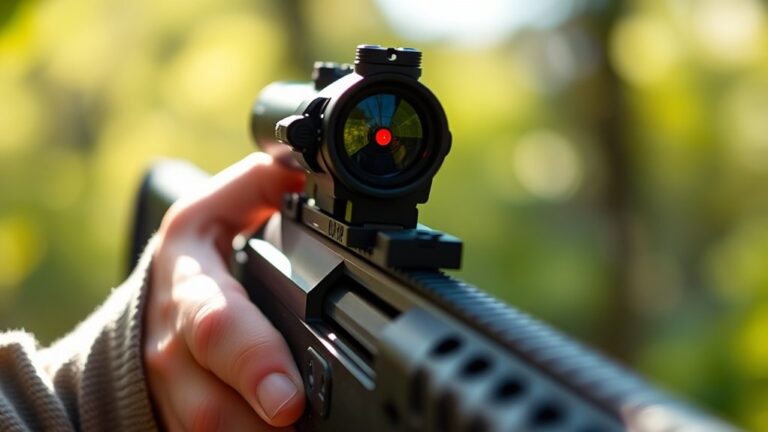
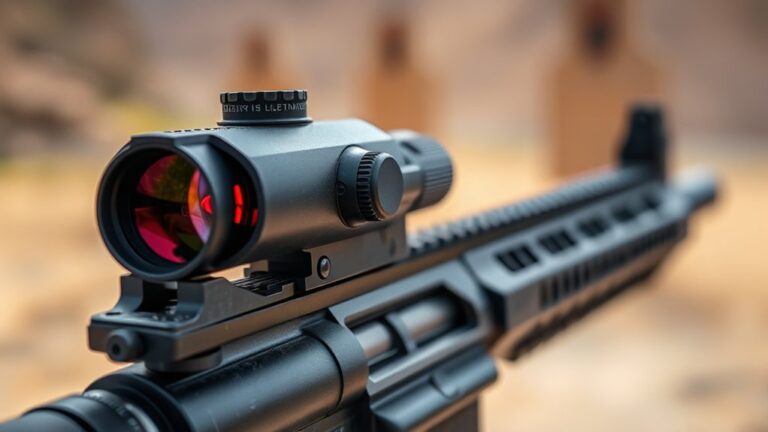
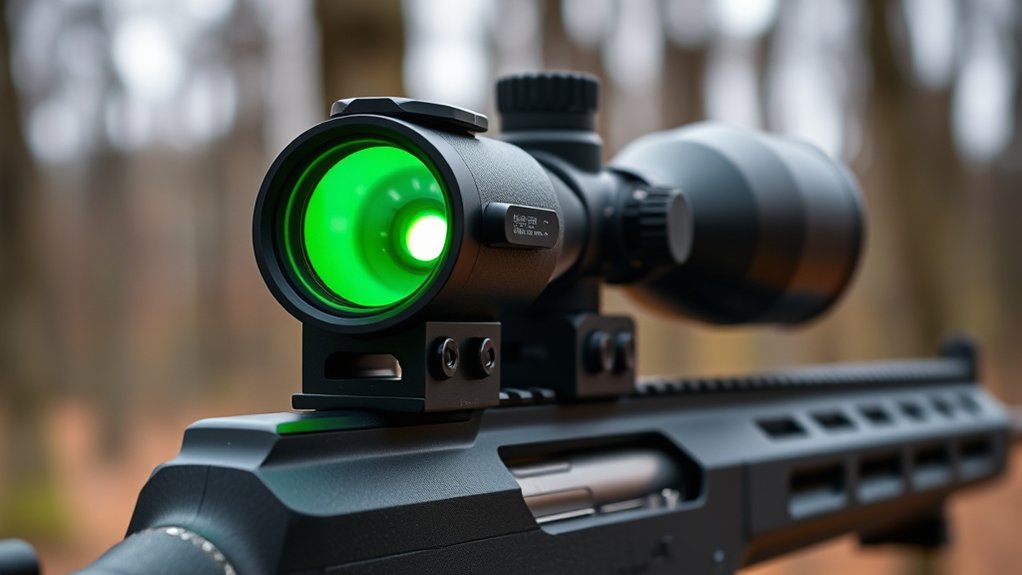
Choosing between a green or red dot sight depends on your shooting environment and vision needs. Green dots shine in bright daylight, offering higher contrast and less eye strain, especially if you have astigmatism.
Red dots excel in low-light settings with longer battery life and night vision compatibility. Your background, lighting, and personal comfort play key roles.
Keep exploring to understand how these factors and popular models can shape your best choice.
Key Takeaways
- Green dot sights offer superior visibility and contrast in bright outdoor conditions, aiding quick target acquisition and reducing eye strain.
- Red dot sights excel in low-light and indoor environments with brighter reticles and longer battery life.
- Green dots reduce distortion and improve clarity for astigmatic users, unlike red dots which may cause blurring.
- Red dots are more energy-efficient and often compatible with night vision devices, making them ideal for extended use in darkness.
- Choosing between green and red dots depends on lighting conditions, user vision needs, and battery life preferences.
Differences Between Green and Red Dot Sights
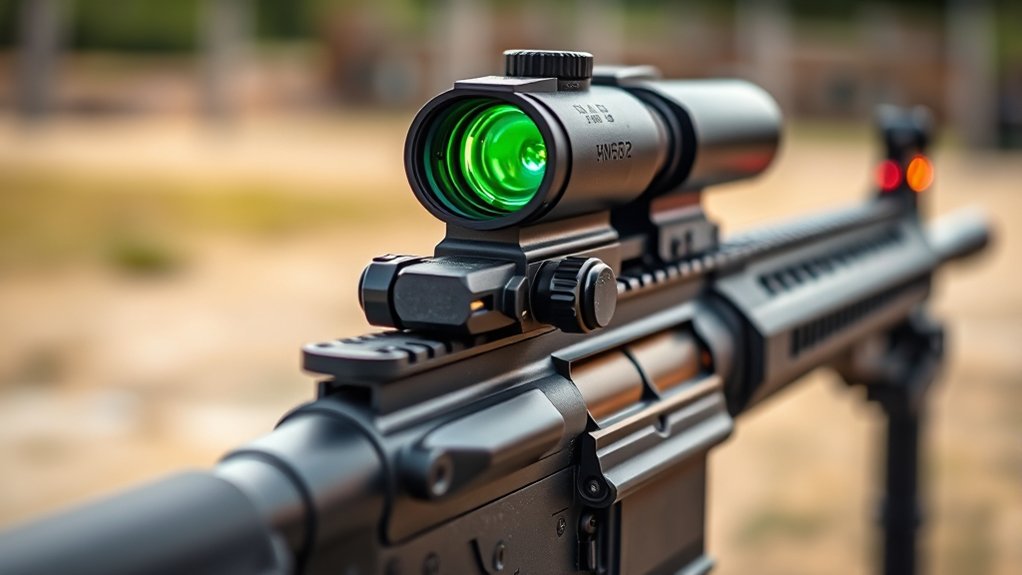
While both green and red dot sights serve the same basic function, you’ll notice key differences that affect their performance in various conditions.
The green dot offers superior visibility and contrast in bright outdoor environments, making its reticle easier to see against complex backgrounds. If you have astigmatism, you’ll find the green dot produces less distortion, providing a clearer aiming point.
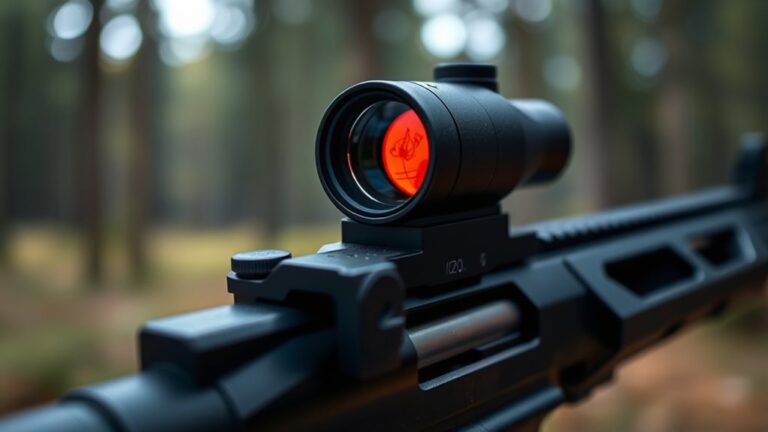
In contrast, the red dot excels in low-light or nighttime settings due to its high contrast and brightness. This enhances target acquisition when ambient light is minimal.
However, red dots are generally more energy-efficient, giving you longer battery life than green dots.
Ultimately, the choice between green and red dot sights depends on your environment, personal visual needs, and the visibility requirements of your shooting scenarios. It really comes down to what works best for you in different situations.
Advantages of Green Dot Sights for Daylight Use
You’ll notice green dot sights really stand out sharply in bright daylight, which makes picking up your target faster and more reliable. Plus, they help reduce eye strain if you’re using them for a long time.
And if you happen to have astigmatism, the reticle images appear much clearer with green dots. All these perks make green dot sights a popular choice for shooting outdoors when the lighting is good.
Enhanced Daylight Visibility
Because green dot sights emit light at wavelengths that stand out sharply against outdoor backgrounds, you’ll find them considerably easier to spot in bright daylight. This enhanced daylight visibility makes green dots ideal when you need quick, precise target acquisition under intense sunlight.
The green reticle offers higher contrast against natural environments like foliage, improving your aiming speed and accuracy. You’ll benefit from brighter green dot illumination compared to red dots, greater reticle visibility in direct sunlight, and wavelengths optimized for human eye sensitivity in daylight.
They also feature higher luminance settings for clear daytime aiming and make tracking and locating the reticle during outdoor activities easier. In bright conditions, green dot sights provide a distinct advantage, ensuring the reticle remains visible and sharply defined for reliable performance.
Astigmatism-Friendly Optics
Although visual distortions like astigmatism can make aiming challenging, green dot sights considerably reduce blurring and starburst effects compared to red dots. Their astigmatism-friendly optics deliver superior reticle clarity, giving you a sharper, more defined aiming point.
Thanks to advanced prism optics and fully multi-coated (FMC) lenses, green dot sights minimize visual distortion, enhancing accuracy for users with astigmatism.
You’ll find the green LED reticle easier to focus on and maintain, especially in bright daylight conditions where reticle clarity is vital. This improved daylight visibility guarantees consistent target acquisition without distracting visual artifacts.
If you struggle with astigmatism, green dot sights offer a clear advantage, providing a cohesive aiming experience that red dots often can’t match under the same conditions.
Reduced Eye Strain
When shooting in bright daylight, green dot sights reduce eye strain by offering high brightness and contrast that make focusing easier. This advantage enhances your visual comfort, especially during extended shooting sessions. The green dot sight demands less effort to track targets, helping you maintain clarity without fatigue.
People with sensitive eyes or astigmatism often find green reticles cause less distortion, which further reduces discomfort. Key benefits include high contrast that improves target visibility, lower visual strain in outdoor environments, and minimal eye fatigue during rapid target acquisition.
You also get enhanced clarity if you have sensitive vision, plus sustained comfort during prolonged daylight use. Choosing a green dot sight really helps optimize your shooting experience by minimizing eye strain and maximizing visual comfort for extended use.
Advantages of Red Dot Sights in Low Light
You’ll find red dot sights really shine in low-light conditions because they provide a bright, highly visible reticle that stands out against shadows. This makes it easier to pick up targets quickly and accurately, even when the lighting isn’t great.
Plus, they often work well with night vision devices, which can give you an extra edge in dark environments.
Enhanced Night Visibility
Because red dot sights feature brighter reticles and adjustable brightness settings, they considerably improve visibility in low-light conditions.
When you rely on enhanced night visibility, red dots outperform green dots by offering superior clarity and adaptability. Here’s why red dots excel:
They are compatible with night vision devices, ensuring clear targeting in darkness. Bright reticles maintain visibility in low light without overpowering night vision. Plus, adjustable brightness allows a seamless shift from bright daylight to night vision use.
High contrast red reticles stand out against dark backgrounds for quick identification. And with lower power consumption, they extend operational time during extended night sessions.
Quick Target Acquisition
Although low-light environments pose challenges for target acquisition, red dot sights give you a distinct advantage with their bright, high-contrast reticles that stand out clearly against dark backgrounds. This bright reticle improves quick target acquisition by providing immediate visual clarity, even in dim lighting.
Many red dot sights feature adjustable brightness settings, so you can fine-tune visibility to match varying low-light conditions.
Their lower power consumption ensures longer battery life during extended use, which is vital when relying on your sight in darkness.
Plus, compatibility with night vision devices further enhances the red dot sight’s effectiveness. This allows you to maintain rapid target engagement across diverse low-light scenarios.
Impact of Astigmatism on Choosing Dot Color
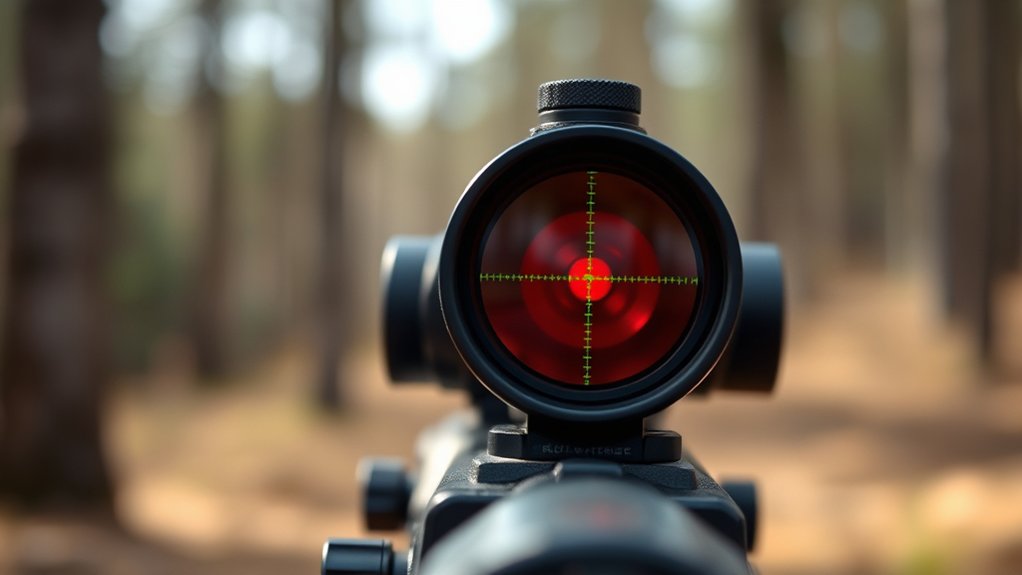
When selecting a dot color for your sight, astigmatism plays a crucial role in visual clarity and comfort. If you have astigmatism, green dot sights often provide a clearer, less distorted reticle image compared to red dot sights. Red dots may appear blurry or cause starburst effects, which can make target acquisition more complicated.
Consider these points: green dot sights offer superior visual clarity for astigmatic shooters. Prism optics in green sights help reduce ghosting and distortion.
Green dot sights improve clarity and reduce ghosting and distortion for shooters with astigmatism.
On the other hand, red dot sights can blur due to astigmatism-induced visual artifacts.
Green reticles are also known to reduce eye strain and improve aiming precision. Many people with astigmatism prefer green dots because they provide more consistent clarity.
Choosing green over red can really enhance your shooting accuracy and comfort when managing astigmatism.
How Environment Affects Green and Red Dot Sights
Environmental conditions play a critical role in determining the effectiveness of green and red dot sights. When you’re operating in bright sunlight or outdoor environments, green dot sights offer superior visibility due to their higher brightness and contrast.
However, if you’re in low-light or indoor settings, red dot sights perform better with energy-efficient illumination that helps you acquire targets quicker. The environment’s backgrounds also influence visibility: green dots can blend into foliage or green surroundings, which reduces contrast.
On the other hand, red dots maintain clear visibility regardless of natural backgrounds.
To optimize accuracy, you should carefully consider ambient lighting and environmental backgrounds when choosing between green and red dot sights. This way, your sight remains visible and effective across varying conditions.
Battery Life and Night Vision Compatibility of Dot Sights
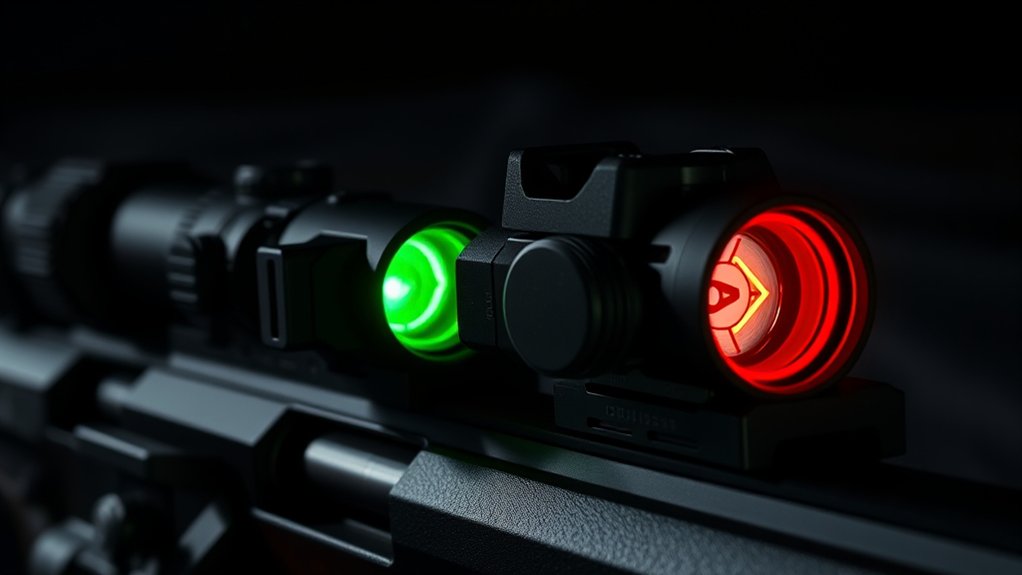
Since red dot sights use LEDs that consume less power, they typically offer longer battery life compared to green dot sights. This advantage makes red dots preferable for extended use without frequent battery changes.
Red dot sights use low-power LEDs, providing longer battery life for extended, uninterrupted use.
When thinking about night vision compatibility, red dots often do better. Many models operate at infrared wavelengths or have NV-compatible settings.
Green dot sights, while brighter, usually consume more power and may not always support night vision.
Here are some key points to keep in mind: red dot sights generally provide longer battery life. Green dot sights consume more power, which cuts down runtime.
Also, many red dots work well with night vision devices, but night vision compatibility in green dots varies by model.
So, it’s always a good idea to check the manufacturer’s specs to make sure you get proper NV compatibility.
Understanding these factors helps you pick the right dot sight for your needs.
Popular Red and Green Dot Sight Models Compared
Choosing the right dot sight means balancing features like battery life and night vision compatibility with your specific needs.
In this model comparison, the SIG Romeo-MSR stands out as a budget-friendly red dot with a 2 MOA dot and multiple brightness settings.
The Holosun 507C offers versatile reticle options, including a 2 MOA dot and a 32 MOA circle. It’s available in both red dot and green dot colors, making it suitable for various firearms.
For duty-grade performance, the Trijicon MRO boasts up to 5 years of battery life in red mode and excellent night vision compatibility.
Meanwhile, the Eotech XPS2 employs holographic tech for rapid target acquisition.
When comparing models, focus on reticle options, size, and compatibility to find the best fit for your needs.
How to Choose the Right Dot Color for Everyday Carry
When selecting a dot color for everyday carry, you’ll want to think about how well the sight performs under different lighting conditions. Choosing between a green dot and red dot really depends on your specific needs and the environment you’re usually in.
Here are some things to consider: green dot sights excel in daylight, offering quicker target acquisition and better visibility.
On the other hand, red dot sights perform better in low-light or nighttime situations and usually have longer battery life.
Visual comfort is important too. Green dots often reduce eye strain for those with astigmatism or other eye conditions.
Take a look at your typical environment—bright outdoor settings tend to favor green dots, while mixed lighting conditions work well with red dots.
Also, think about durability, battery longevity, and what feels right to you.
This way, you can make sure the sight matches your everyday carry needs perfectly.
Following this approach helps you pick the best dot color for reliable performance every time.
Frequently Asked Questions
Can Green or Red Dot Sights Be Used Effectively for Long-Range Shooting?
You can use green or red dot sights for long-range shooting, but they’re not ideal. Green dots offer better brightness and visibility at distance, which helps with target acquisition. Still, both lack precise holdover options.
For effective long-range shots, you’ll want magnified optics with calibrated reticles. While some advanced green dot sights improve performance, standard dots don’t provide the accuracy and adjustment features needed for consistent long-range precision.
Are There Any Health Risks Associated With Prolonged Use of Red or Green Dot Sights?
You won’t face serious health risks from prolonged use of red or green dot sights, but you might notice some visual fatigue or mild discomfort if you don’t adjust brightness properly.
If you have sensitive eyes or astigmatism, certain reticle colors could cause slight headaches. To keep your vision sharp and comfortable, take regular breaks and tweak the brightness to suit your environment.
Proper care prevents strain and keeps you shooting smoothly.
How Do Green and Red Dot Sights Perform in Rainy or Foggy Conditions?
You’ll find green dot sights perform better in rainy or foggy conditions because their higher brightness and contrast cut through low visibility more effectively. Red dot sights tend to scatter illumination, making the reticle dimmer or less clear in such weather.
However, keep in mind green dots consume more battery power, so make sure your device is well charged for ideal performance during extended use in adverse conditions. It’s always a good idea to check your battery before heading out, especially if you expect tough weather. That way, you won’t be caught off guard.
Can Color Blindness Affect the Choice Between Green and Red Dot Sights?
Imagine a painter choosing colors blindfolded. Some hues blend, others stand out. If you have red-green color blindness, green dots often pop clearer for you, like a bright beacon in fog.
Red dots might blur into the background and slow your aim. Since vision varies, you should test both reticles.
Modern sights offer brightness tweaks to help.
Ultimately, your choice depends on which color your eyes catch fastest and clearest.
Do Green or Red Dot Sights Require Special Maintenance or Cleaning Procedures?
Neither green nor red dot sights require special maintenance beyond standard care. You’ll want to clean both regularly with a lens-safe solution and soft cloth. Avoid abrasives or harsh chemicals to protect the coatings.
Check and tighten mounting screws often to keep your sight secure and zeroed.
Battery upkeep is important for both, too. Inspect internal components occasionally for moisture or corrosion, especially in humid conditions.
But honestly, they rarely need cleaning. Just a little regular care will keep them working great.
Conclusion
Choosing between a green or red dot sight often comes down to your unique environment and vision needs. Coincidentally, what works best for you might surprise you. If you spend more time in bright daylight, green dots offer superior visibility.
If low light dominates your scenario, red dots excel. Also, consider astigmatism and battery life. By weighing these factors carefully, you’ll confidently select a dot sight that enhances your accuracy and everyday carry effectiveness.