Why Is My Red Dot Blurry – Common Causes And Fixes
Your red dot looks blurry mainly because of incorrect brightness, dirt or smudges on the lenses, internal optic defects, or even eye conditions like astigmatism affecting how you see the reticle.
Adjust brightness and focus properly. Clean your lenses regularly with suitable tools, and inspect for scratches or misalignment inside the optic.
Choosing the right reticle color and style can also help. Explore these factors to improve clarity and optimize your sight’s performance effectively.
Key Takeaways
- Blurriness often results from improper brightness settings causing reticle glow or bloom, so adjust brightness to optimal levels for clarity.
- Dirt, smudges, and moisture on lenses scatter light and blur the reticle, requiring regular cleaning with microfiber cloth and lens-safe solutions.
- Internal defects like scratches, cracks, or misalignments distort the reticle, necessitating inspection and possible repair or replacement of the optic.
- Eye conditions such as astigmatism cause reticle distortion and starburst effects, which can be mitigated by trying different reticle colors and styles.
- Incorrect focus or eyepiece adjustments reduce sharpness; fine-tune focus by aligning on the target, not the reticle, for a clear sight picture.
How to Identify a Clear, Properly Functioning Red Dot
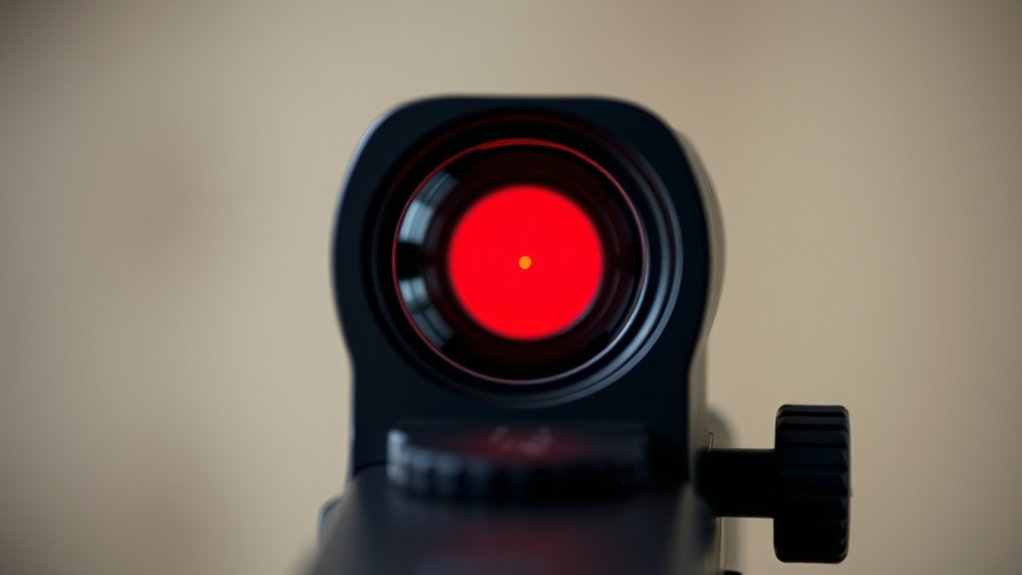
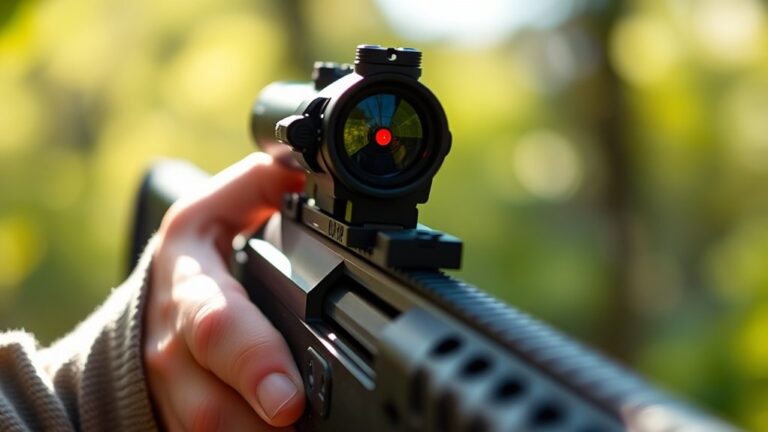
How can you tell if your red dot sight is functioning properly? First, observe the reticle’s shape and stability. A clear, properly functioning red dot appears mostly round, centered, and consistent while aiming.
Check the red dot’s shape and stability for a clear, round, centered reticle while aiming.
Make sure the dot remains well-defined without irregular shapes, blurriness, or halos. These often indicate dirt, misalignment, or even eye conditions like astigmatism.
Testing multiple red dot sights can help isolate the issue and confirm whether the dot’s appearance signals a functional problem.
Furthermore, a stable, well-aligned reticle suggests the sight is free from internal damage or debris. Proper cleaning and maintenance are essential to maintain clarity.
How Brightness Settings Affect Red Dot Clarity
Although adjusting brightness may seem straightforward, improper settings can considerably impair your red dot’s clarity. Excessive brightness causes the reticle to appear bloated, glowing, or starburst, which reduces sharpness and hinders precise aiming.
On the other hand, lowering brightness sharpens the dot, making it smaller and more defined. But if the brightness is too low, the reticle may become difficult to see, especially under bright ambient light.
To optimize red dot clarity, you need to calibrate brightness to enhance contrast between the reticle and the background. This balance helps minimize halo and glare effects while keeping the reticle visible.
It’s a good idea to regularly fine-tune brightness settings based on your environment. That way, the reticle stays crisp and distinct, improving your overall targeting accuracy.
How Dirt and Smudges Blur Your Red Dot Sight
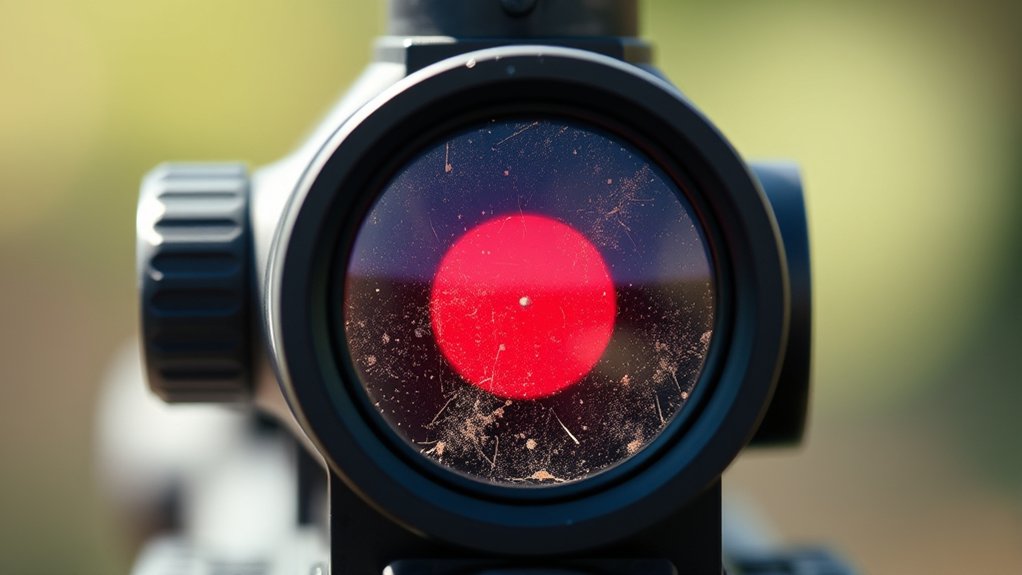
You’ll notice your red dot blurs when dirt, smudges, or fingerprints scatter light across the lens or emitter, messing with the reticle.
Things like dust or haze can diffuse the image, making it less sharp and hurting your accuracy.
So, to keep everything crystal clear, make sure to clean your sight regularly.
Just use a microfiber cloth and lens-safe solutions, and be gentle—avoid scratches or pressing too hard.
Lens Contamination Effects
When dirt, dust, or smudges build up on your red dot sight’s lens or emitter, they scatter the light and make the reticle lose its sharpness and clarity. Fingerprints, oil residues, or environmental debris create greasy spots that mess with the optical path, reducing contrast and crispness.
On top of that, moisture-induced haze or internal fogging can blur the red dot even more, making it harder to pick up your target quickly. Contaminants on the lens surface can also cause halos or starburst effects, especially when you crank up the brightness.
This distorts your sight picture and can be pretty distracting.
These optical issues happen because the lens surface gets compromised, which really shows how important it’s to keep your lens clean. Taking care of these problems quickly helps your red dot maintain sharp reticle definition and reliable targeting no matter the conditions.
Cleaning Best Practices
Lens contamination directly impacts the clarity of your red dot sight, making regular cleaning a key part of maintaining peak performance. Dirt, smudges, and fingerprints scatter light, blurring or distorting the reticle.
To guarantee maximum clarity, follow these cleaning best practices:
First, use a microfiber cloth with a lens-safe cleaning solution to gently remove debris without scratching optical surfaces. Avoid harsh chemicals, rough fabrics, or abrasive materials that can damage lens coatings and degrade performance.
Make it a habit to clean lenses and emitters regularly to prevent buildup that causes halos, glow, or reticle irregularities.
Consistent, proper cleaning preserves the sight’s sharpness. This way, your red dot remains clear and free from contaminants that impair visibility.
How to Clean Your Red Dot Sight for Clearer Viewing
You’ll want to clean your red dot sight using a microfiber cloth along with a lens-safe cleaning solution to keep things crystal clear.
Just be careful to avoid any harsh chemicals—they can actually damage the lens coatings and mess with how well your sight performs.
By sticking to proper cleaning methods, you’ll make sure your sight stays clear and reliable no matter the conditions.
It really helps maintain that sharp, precise view you need out in the field.
Proper Lens Cleaning
Although red dot sights are designed for durability, maintaining clear optics requires proper cleaning techniques. Dirt, smudges, and fingerprints on the lens can degrade your sight picture, so meticulous lens cleaning is vital.
Follow these steps for the best results: Use a microfiber cloth with a lens-safe cleaning solution to gently wipe both exterior and interior lens surfaces. Avoid abrasive materials that can scratch or damage coatings.
Inspect and clean the emitter and lens regularly to prevent haze buildup. This haze scatters light and causes blurriness, so keeping these parts clean really helps.
You can also use compressed air or a bulb blower to remove dust from hard-to-reach areas without touching the lens surface.
Consistent, careful cleaning ensures your red dot sight delivers a sharp, clear reticle every time. It’s a simple step that makes a big difference when you’re out in the field.
Avoiding Harsh Chemicals
When cleaning your red dot sight, steering clear of harsh chemicals is essential to preserve the integrity of the lens coatings. Avoid substances like ammonia, alcohol, or acetone, as they can degrade the coatings, compromising clarity and performance.
Instead, use a microfiber cloth paired with a lens-safe cleaning solution to gently remove dirt and smudges. Never clean the lenses with rough fabrics, paper towels, or abrasive materials, which risk scratching the surface and blurring your reticle.
Always power down your sight and remove batteries before cleaning to prevent accidental damage or residue buildup.
Regular, careful cleaning prevents haze and dust accumulation, ensuring your red dot remains crisp and precise.
Prioritizing these steps protects your sight from damage caused by harsh chemicals and improper handling. It’s a simple way to keep your equipment in top shape and ready for action.
Why Astigmatism Makes Your Red Dot Look Blurry
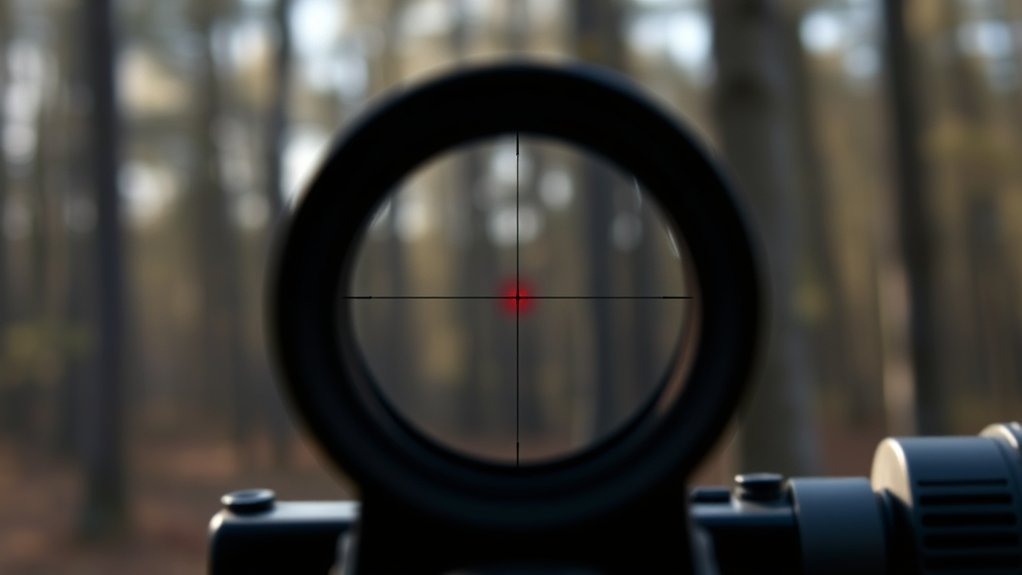
Because astigmatism causes the cornea to have an oval shape, light entering your eye focuses unevenly, distorting the appearance of the red dot reticle. This irregular focus alters the red dots you see, making them appear blurry or misshapen. You may notice the reticle looks starburst, comma-shaped, or surrounded by halos and multiple streaks of light.
Here’s why this happens:
- Uneven corneal curvature causes light rays to scatter, blurring the red dot’s edges.
- The distortion creates multiple focal points, producing halos or streaks around the reticle.
- Standard red dots struggle to maintain clarity due to this irregular light refraction.
Understanding these effects clarifies why your red dots don’t appear as crisp with astigmatism. It’s a common issue, but knowing what’s going on can help you find the right solution or adjustments.
Choosing the Right Red Dot Reticle for Your Eyes
Astigmatism can markedly affect how you perceive red dot reticles, so selecting the right type is key to improving clarity. If you have astigmatism, etched reticle red dot sights often deliver sharper images than traditional illuminated dots, as they don’t rely solely on projected light.
For users with color vision deficiencies, experimenting with reticle colors like green, blue, or orange can enhance contrast and visibility. High-quality red dot sights featuring adjustable brightness and illumination settings help minimize glare and halos, further sharpening your sight picture.
To optimize performance, systematically test various reticle styles and colors to identify which combination aligns best with your specific eye conditions. This tailored approach guarantees your red dot sight maximizes clarity and accuracy in diverse shooting scenarios.
When Optic Quality or Defects Cause Blurriness
If your red dot sight delivers a blurry image despite proper adjustment, the optic’s quality or internal defects may be the culprit. Low-quality optics often have poorly manufactured lenses or inferior coatings that reduce clarity.
Also, internal defects can distort the reticle shape or cause persistent blurriness. Consider these common issues:
- Lens defects or damage. Scratches, cracks, or poor manufacturing can scatter light and blur the image.
- Misaligned or improperly assembled components. Internal misalignments distort the reticle and degrade focus.
- Inferior coatings and inconsistent internal parts. They reduce sharpness and contrast, diminishing image quality.
Identifying these defects early helps determine whether repair or replacement is necessary to restore ideal red dot performance. It’s always better to catch these problems sooner rather than later.
How to Adjust Your Red Dot for Better Focus
Identifying lens defects or assembly issues is important, but many blurry red dot problems can be fixed with proper adjustments. Start by lowering the brightness setting to reduce glow and halos. These often make the reticle look less focused.
If your sight has a focus or eyepiece adjustment, use it to fine-tune the clarity. Keep adjusting until the reticle looks sharp and well-defined. Instead of staring at the dot itself, try focusing on your target. This helps reduce eye strain and makes the dot appear clearer.
Make sure to clean both the lens and emitter surfaces regularly. Dirt or smudges can scatter light and blur the reticle. You might also want to try different reticle colors or types, like etched versus projected, to see which one looks best for your vision.
Frequently Asked Questions
Can Temperature Changes Affect Red Dot Sight Clarity?
Yes, temperature changes can affect your red dot sight’s clarity. Extreme heat or cold causes internal components to expand or contract, which can misalign the reticle. Cold temperatures also thicken lubricants, making it harder to focus properly.
On the other hand, heat might cause internal fogging or condensation if the sight isn’t well sealed. Rapid temperature shifts put stress on the housing, increasing the risk of optical damage.
Plus, temperature-sensitive electronics might malfunction, leading to blurry or distorted reticle images.
Does Using a Screen Protector Impact Red Dot Visibility?
Yes, using a screen protector can impact red dot visibility. You might notice glare, reflections, or reduced clarity, especially with thick, tinted, or matte finishes that scatter light.
Dust and smudges on the protector can blur the reticle even more.
To keep your red dot sight clear, it’s best to choose a high-quality, anti-reflective screen protector. Also, make sure to keep it clean.
This way, you minimize distortion and preserve the sharpness and contrast of your red dot.
How Do Different Battery Types Influence Red Dot Performance?
Different battery types impact your red dot’s brightness and stability because of their voltage output. Lithium batteries deliver stable voltage and longer life, which means you get consistent illumination.
On the other hand, alkaline and rechargeable batteries might have fluctuating voltage, causing dimming or flickering.
Using the manufacturer-recommended battery helps prevent voltage drops that can degrade performance or even damage the electronics.
It’s always best to choose high-quality, compatible batteries. That way, you maintain peak red dot visibility and reliable aiming precision during use.
Can Mounting Height Cause Red Dot Distortion?
Absolutely, mounting height can cause red dot distortion. If your sight sits too high or too low, it disrupts the alignment between your eye and the optic’s lens, creating parallax errors.
This misalignment makes the reticle appear blurry, doubled, or off-center at various distances.
To keep your aiming point crisp and consistent, you need to mount the red dot at the correct height. That means ensuring proper eye relief and minimizing distortion.
It’s really all about getting that alignment just right.
Is Red Dot Blurriness Affected by Ambient Lighting Conditions?
Yes, ambient lighting conditions substantially affect red dot clarity. Bright light, especially direct sunlight, causes glare and reflections that blur the reticle. High contrast or uneven lighting distorts its sharpness.
Excessive brightness creates halos or starbursts around the dot. To maintain clarity, adjust your red dot’s brightness setting based on the environment. This helps minimize glare and improves reticle visibility under varying light conditions.
Doing this ensures precise targeting no matter where you’re or what time of day it is. Just keep an eye on the light and tweak your settings accordingly.
Conclusion
Understanding why your red dot appears blurry is vital for peak performance. Studies show that over 60% of red dot issues stem from improper brightness settings or dirty lenses. By regularly cleaning your sight, adjusting brightness, and considering eye conditions like astigmatism, you can maintain crisp clarity.
Don’t overlook optic quality or reticle choice, as these factors greatly impact focus. Taking these precise steps guarantees your red dot sight functions reliably every time. It’s all about keeping things clear and simple so you can trust your gear when it counts.