How To Build A Backstop For Shooting Range – Complete Guide
To build a safe backstop for your shooting range, first pick a location at least a mile from roads and buildings, ensuring clear, level terrain. Use dense, sturdy materials like stacked railroad ties or cinder blocks at least 20 feet high to stop bullets effectively.
Secure the structure with strong supports and clear debris behind it. Follow local laws, maintain safety buffers, and inspect regularly to keep it reliable. Keep going, and you’ll find detailed steps to create a professional-quality backstop.
What Is a Backstop and Why It Matters
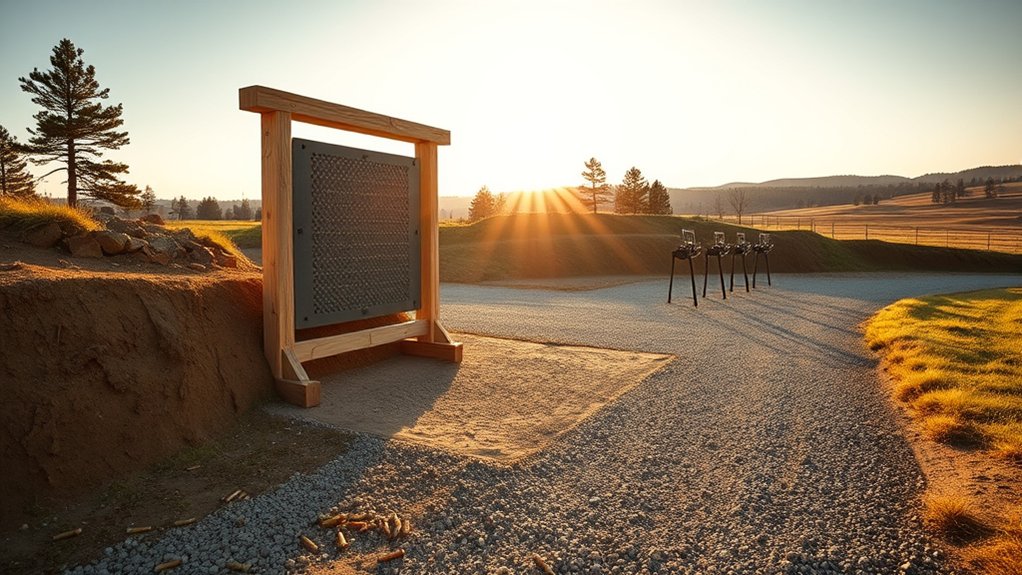
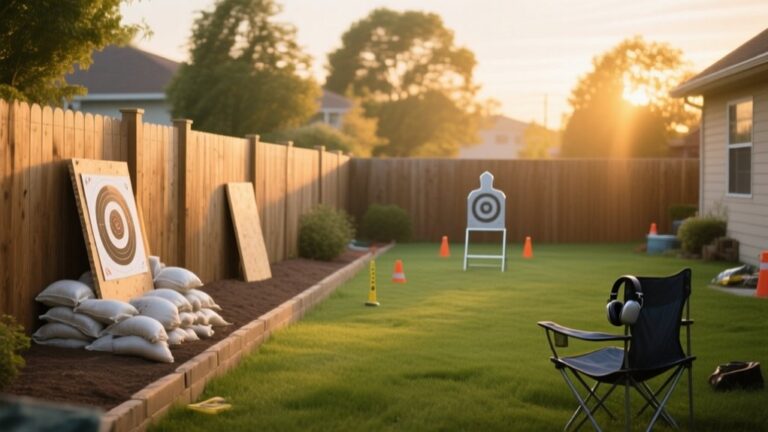
A backstop acts as a critical safety barrier that catches bullets and stops them from traveling beyond the shooting range. When you build a backstop, you’re creating a protective shield that keeps people and property safe downrange.
To do this effectively, use durable materials like packed dirt or railroad ties, which absorb bullet energy and reduce ricochet risks. Your backstop should be at least 20 feet high and free of large rocks to guarantee bullets are contained properly.
Beyond safety, a well-designed backstop can also help manage noise, minimizing disturbance to nearby residents and wildlife.
Meeting Legal and Safety Requirements for Your Backstop
Before you build your backstop, make sure to check local zoning laws, noise ordinances, and any permits you might need to stay compliant.
It’s really important to get these details sorted out ahead of time.
Also, keep a safe buffer zone of at least one mile downrange for small-bore shooting. This helps protect others and keeps things safe.
Don’t forget to use durable materials and put up proper signage.
That way, your range will meet all the safety standards it needs to.
Legal Compliance Essentials
Although building a backstop might seem straightforward, you’ll need to assure it meets all local legal and safety requirements to avoid complications. Start by checking zoning laws and noise ordinances, and secure any necessary permits.
Maintain a safe distance from property lines, ideally over a mile for small-bore shooting. Construct your backstop at least 20 feet high using durable materials like packed dirt or railroad ties.
Regular inspections assure ongoing compliance and safety.
| Concern | Action Required | Impact |
|---|---|---|
| Zoning & Permits | Consult local authorities | Avoid legal penalties |
| Distance from Neighbors | Keep >1 mile downrange | Prevent conflicts |
| Backstop Height | Minimum 20 feet | Contain bullets effectively |
| Materials | Use packed dirt or railroad ties | Safety and durability |
| Inspections | Regularly check structure | Maintain legal compliance |
Safety Buffer Zones
When you build your backstop, you must maintain a safety buffer zone that meets legal and safety requirements to protect yourself and others. Establishing a safe backstop means considering distances, barriers, and potential hazards to keep everyone secure.
Here’s what you need to focus on:
Keep at least 1 mile downrange for small-bore and muzzleloader shooting to comply with safety standards. Maintain distance from property lines and neighboring buildings to avoid accidents and noise issues.
Construct a backstop at least 20 feet high, free of large rocks, to effectively stop projectiles and prevent ricochets. Use natural features like hills or berms to bolster safety and reduce noise.
Regularly inspect your safe backstop and surroundings to address any new risks promptly.
Permits And Regulations
To build a safe and legal backstop, you’ll need to check local zoning laws and noise ordinances carefully. These permits and regulations vary by area, so verifying whether you need earthwork permits before construction is crucial.
Make certain your backstop is at least 20 feet high and free of large rocks to capture all rounds effectively and minimize ricochets.
Also, maintain a safe distance from property lines and neighbors, as many local ordinances require minimum setbacks for shooting ranges.
Don’t forget to display clear signage indicating live fire activity and establish defined range boundaries.
Following these permits and regulations guarantees your backstop meets legal and safety standards, protecting you and those around your shooting range.
Choosing the Best Location for Your Backstop
When you’re picking the best spot for your backstop, safety should be your top priority. Make sure to keep it at least a mile away from roads, buildings, and homes.
Also, take a look at the environment around you. Natural barriers can help reduce noise and make the area safer.
And before you start building, double-check that the area downrange is free of people, animals, and any potential hazards.
It’s always better to be safe than sorry!
Prioritize Safety Distances
Although selecting the perfect spot for your backstop might seem straightforward, prioritizing safety distances is essential to protecting people, animals, and property.
You need to guarantee that your backstop location respects safe boundaries to avoid accidents and legal issues.
Keep these key points in mind when choosing your site:
- Position your backstop at least 1 mile away from roads, buildings, and homes to maintain adequate safety distances.
- Verify that the area behind the backstop is clear of obstacles and potential hazards.
- Scout thoroughly to confirm no people or animals are within the shooting vicinity.
- Create a buffer zone considering local noise ordinances and nearby property lines.
Assess Environmental Factors
Since your backstop’s location directly affects safety and noise levels, you should carefully assess environmental factors before building. Start by choosing a spot at least one mile downrange from roads, buildings, and homes to keep the surrounding area safe.
Scout the area thoroughly to guarantee no people or animals are downrange, and confirm the terrain behind the backstop is clear and level for stable construction. Use the natural landscape like hills or berms to enhance safety and reduce noise.
Don’t forget to check local zoning laws and noise ordinances to make certain your shooting range complies with regulations.
Confirm Downrange Clearance
After evaluating environmental factors, the next step is to confirm downrange clearance to verify your backstop’s location maximizes safety.
You need to guarantee a minimum of one mile of clear space downrange, especially for small-bore and muzzleloader shooting, to prevent accidents.
Scout the area thoroughly, checking for roads, buildings, or homes nearby. Also, verify that no people or animals occupy the downrange zone during shooting.
Use natural features like hills or trees to enhance safety and reduce noise.
Before building, assess any ricochet risks and confirm the site supports a stable backstop.
Focus on these key points:
- Maintain at least one mile of clear downrange space
- Avoid roads, homes, and buildings near the backstop
- Verify no people or animals are downrange during use
- Utilize natural barriers to improve safety and noise control
Determining Backstop Size and Dimensions
When determining the size and dimensions of your backstop, you’ll want to make certain it stands at least 20 feet high to effectively capture bullets and prevent ricochets.
For most shooting ranges, a backstop made with railroad ties should measure about 35 feet wide and 7 feet tall to stop various calibers.
Stacking the ties two deep, with the long sides facing out and seams offset, provides added stability and better bullet containment. These dimensions guarantee your backstop size is adequate for safety and durability.
Remember, the backstop must be constructed from sturdy materials to withstand repeated impacts.
Choosing Safe Materials for Your Backstop
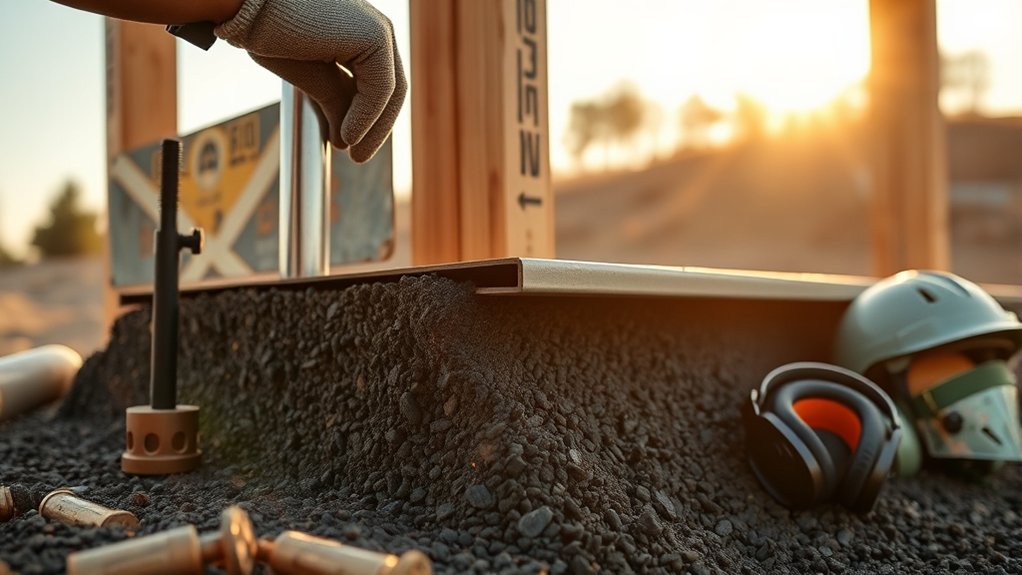
Although selecting materials might seem straightforward, choosing safe and reliable components for your backstop is essential to protect everyone at your shooting range. You want materials that effectively stop bullets and minimize ricochet risks.
Choosing safe, reliable backstop materials is crucial to protect everyone and reduce ricochet hazards at your range.
When picking safe materials, keep these points in mind:
- Use sturdy options like railroad crossties, cinder blocks, or packed dirt and sand for strong bullet containment.
- Make sure all materials are in good condition; damaged items can compromise safety.
- Choose heavier, dense materials, as they better absorb impacts compared to lighter ones.
- Verify your materials meet local safety regulations and standards to stay compliant.
Preparing the Site for Your Backstop
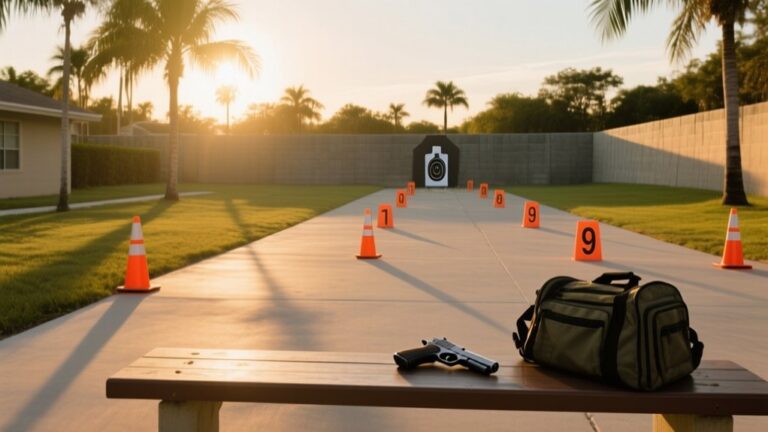
To prepare the site for your backstop, start by selecting a secure location at least one mile away from roads, buildings, and homes to reduce risks during shooting.
Verify the area behind the backstop is clear of people and animals to maintain safety at your shooting range.
Choose a level section of land because uneven terrain can affect the backstop’s stability.
Remove trees and brush from the shooting lane to create a clear line of sight and minimize hazards.
Before proceeding, check local zoning laws and noise ordinances to confirm your shooting range complies with regulations.
Taking these steps will help you create a safe, effective foundation for your backstop and provide a secure environment for all shooting activities.
Constructing the Backstop Frame and Support
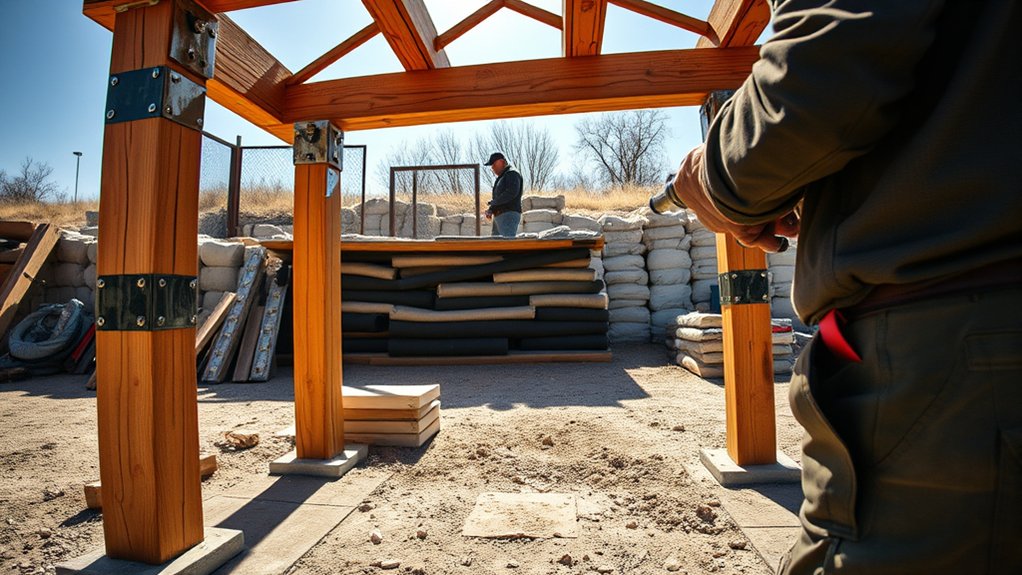
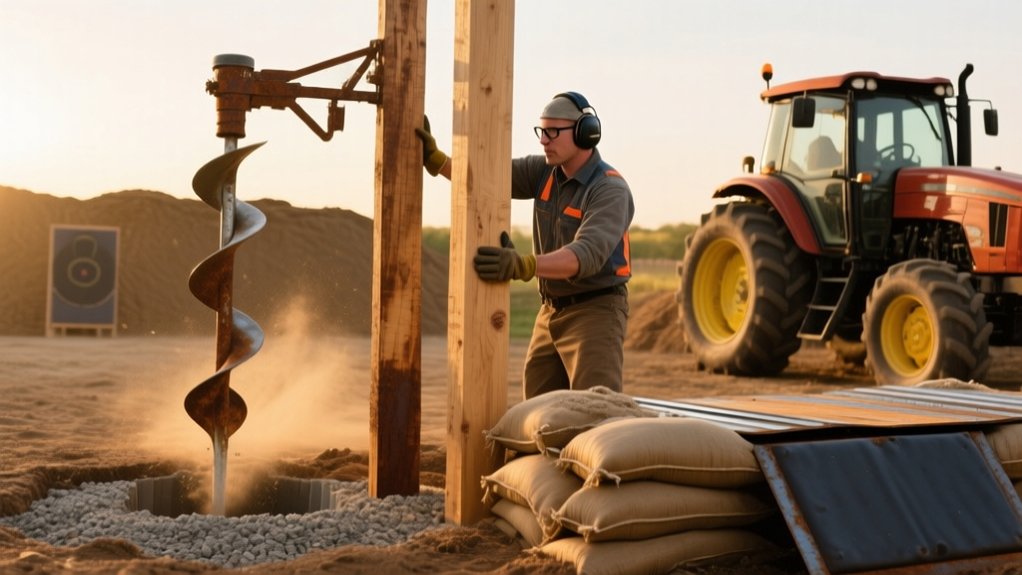
Constructing a sturdy backstop frame starts with choosing durable materials like railroad ties or cinder blocks that can effectively contain bullets and prevent ricochets.
To build a reliable backstop, focus on solid support and stability. Here’s what you should do:
Ensure your backstop has strong support and stability for safe, long-lasting performance.
Stack railroad crossties two deep with the long side facing outward, offsetting seams to boost strength and containment.
Drive two 8-foot fence T-posts into the ground at the back corners of the cinder block layout for extra support.
Dig 1 inch of dirt from behind the cinder blocks before replacing them to create a firm foundation and prevent erosion.
Regularly inspect the backstop for leaning or instability and reinforce it as needed to maintain safety during shooting.
This approach guarantees your backstop remains secure and effective over time.
Stacking and Securing Backstop Layers
Once you’ve established a solid frame and support system, the next step is stacking and securing the backstop layers properly. Stack railroad crossties two deep with the long side facing out to guarantee a strong backstop. Offset the seams between crossties to minimize gaps that could let bullets escape or ricochet.
Drive T-posts into the cinder blocks at the back corners for extra support. Make sure each layer sits level to prevent shifting during use.
| Safety | Stability | Confidence |
|---|---|---|
| Strong hold | No gaps | Peace of mind |
| Secure fit | Even layers | Reliable |
| Firm posts | Solid base | Protection |
| Lasts long | Safe setup | Ready to shoot |
Maintaining and Inspecting Your Backstop Over Time
Although building a sturdy backstop is essential, maintaining and inspecting it regularly guarantees it stays safe and effective over time.
You need to keep a close eye on its condition to prevent any hazards or failures during use.
Focus on these key maintenance tasks:
- Inspect the backstop for signs of leaning, cracks, or erosion that could weaken its structure.
- Check materials like railroad ties or cinder blocks, replacing any that show wear or damage.
- Monitor the backstop after heavy use or bad weather to ensure stability isn’t compromised.
- Keep the area behind the backstop clear of debris or obstacles that might cause hazards.
Document all inspections and repairs to track your backstop’s condition and remain compliant with safety standards.
Frequently Asked Questions
How Do Weather Conditions Affect Backstop Durability?
Weather conditions greatly impact your backstop’s durability factors. Heavy rain can erode soil backstops, forcing you to maintain them often.
Extreme heat or cold causes materials like wood and rubber to expand or contract, risking damage. UV rays break down plastics and rubber, making them fragile.
Snow and ice add weight, requiring reinforcement, while strong winds can shift loose materials.
You’ll need to secure and inspect your backstop regularly to keep it solid and effective.
Can I Build a Portable Backstop for Temporary Ranges?
Of course, you can’t build a portable backstop for temporary ranges said no responsible shooter ever.
Portable solutions like heavy-duty tarps filled with sand or dirt make moving your backstop a breeze.
You’ll want it sturdy, around 20 feet high, with interlocking rubber mats or ballistic blocks to absorb impacts.
Just make sure you regularly inspect it so it stays safe and effective no matter where you set up next.
What Tools Are Essential for Backstop Construction?
For tool selection, you’ll need a quality chainsaw like the Stihl MS261 C-M to fell trees and clear land.
A shovel or post hole digger helps prepare and stabilize posts. Don’t forget a level to keep everything flat and sturdy.
Use a sledgehammer or mallet to secure railroad ties, and a tape measure for accurate dimensions and spacing.
With these tools, you’ll build a safe, reliable backstop efficiently.
How to Dispose of Old or Damaged Backstop Materials Safely?
Don’t throw the baby out with the bathwater when disposing of old backstop materials. You should first check local regulations to guarantee proper Material Recycling methods.
Repurpose what you can, like using cinder blocks for landscaping. For damaged ballistic blocks, contact recycling facilities that accept rubber or synthetic materials.
Handle hazardous materials carefully by following disposal guidelines, and always transport everything safely in a sturdy vehicle to avoid spills.
Are There Noise Reduction Options When Building a Backstop?
Yes, you can definitely add noise barriers when building a backstop to reduce sound.
Using materials like rubber or dense foam helps absorb gunfire noise. You can also layer earth or sand in front to muffle sound naturally.
Building a taller berm deflects noise upwards, while planting trees around your range creates natural noise barriers.
Combining these options lets you effectively minimize noise disturbance for nearby areas.
Conclusion
Building a reliable backstop is essential for safe shooting practice. Did you know that properly constructed backstops reduce ricochet incidents by over 70%?
By following the steps to choose the right location, materials, and size, you’re not just protecting yourself but everyone around you. Keep your backstop well-maintained and inspected regularly to guarantee it stays effective.
With the right care, your shooting range will be safer and more enjoyable every time you use it.