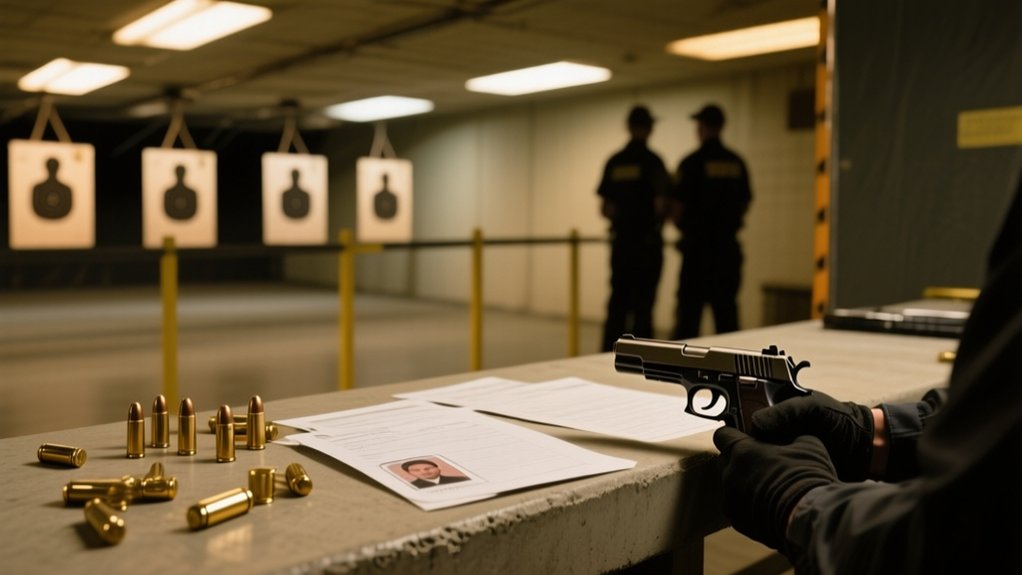
Do Shooting Ranges Do Background Checks – What You Need To Know
Shooting ranges usually require a valid government-issued photo ID to verify your age and identity, but they rarely perform full background checks just to enter or use a lane. Background checks typically happen only if you’re renting a firearm off-site or joining private clubs with stricter rules.
Your ID is scanned to confirm it’s authentic and not expired, helping verify you’re legally allowed to shoot. Keep exploring to understand all the rules and prepare for your visit.
Why Shooting Ranges Ask for Your ID Before Shooting
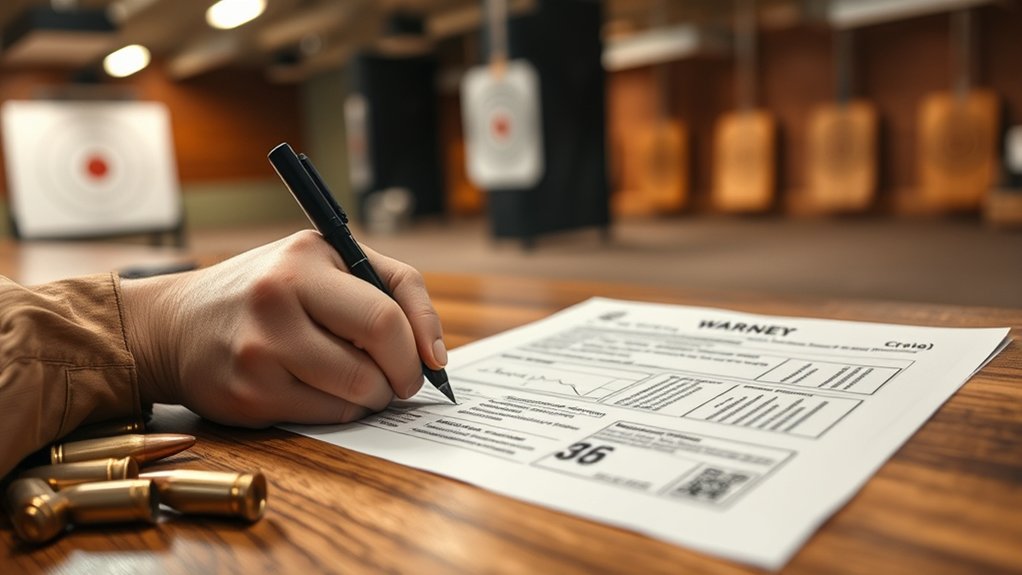
Because shooting ranges must follow strict legal guidelines, they ask for your government-issued photo ID before you shoot. This ID check verifies your age and identity to guarantee you meet legal requirements for firearm possession.
Shooting ranges often require visitors to be at least 21 to rent firearms, even though federal law allows handgun possession at 18. They also make certain your ID is valid and matches your appearance to prevent identity fraud.
By confirming these details, shooting ranges maintain a safe environment and follow regulations.
Furthermore, keeping records of participants through ID checks helps with safety audits and supports law enforcement monitoring, promoting responsible firearm ownership every time you visit.
Do Shooting Ranges Perform Background Checks on Visitors?
When you visit a shooting range, don’t expect them to run a full background check just to get in—most places will just ask to see your ID.
That said, if you’re planning to rent a firearm and take it off the premises, the law requires a background check.
Entry Background Check Policies
Although shooting ranges prioritize safety, they usually don’t perform background checks on visitors before entry or lane use. Instead, they focus on verifying your valid ID to confirm your identity and age.
The staff typically checks that your government-issued photo ID isn’t expired and matches the person present, but this process doesn’t involve any thorough background checks.
While some private clubs might require background checks for membership, this isn’t common at most public shooting ranges.
It’s important to note that policies can vary, so you should always review the specific range’s rules before visiting.
Rental Background Check Requirements
While shooting ranges usually don’t run full background checks just to let you use a lane, the rules change if you want to rent a firearm.
Gun ranges enforce rental background check requirements differently depending on whether the rental is on-site or off-site.
For on-premises rentals, most ranges only verify your government-issued ID to confirm your identity.
However, if you’re renting a gun to take off the premises, a NICS background check is mandatory by law.
Here’s what you need to know about rental background check requirements at gun ranges:
- On-site rentals typically require only ID verification, not a full background check.
- Off-premises rentals demand a NICS check due to firearm transfer laws.
- Private clubs may ask for additional checks for membership, but this is rare.
How Federal and State Laws Affect Background Checks
Because federal law focuses mainly on verifying identity rather than conducting background checks for shooting range users, you won’t typically undergo a full screening just to enter or use a lane.
Federal regulations don’t require background checks simply to access a gun range, but some private clubs might’ve stricter rules and perform their own screenings.
While federal law doesn’t mandate background checks for gun range access, private clubs may enforce their own screenings.
State laws can add complexity. Certain states mandate additional background checks or have unique rules you should know before visiting.
Understanding both federal and state law is essential to guarantee you comply with all requirements and help maintain a safe environment at the range.
When Are Background Checks Mandatory for Firearm Rentals?
When you rent a firearm off-premises, background checks are mandatory to comply with federal transfer laws.
But if you’re renting on-site at a shooting range, usually you just need to show some ID—full background checks aren’t typically required.
That said, it’s important to remember that state laws and individual range policies can affect how these rules are applied.
Off-Premises Rental Checks
If you plan to rent a firearm for use outside the shooting range, you’ll need to undergo a National Instant Criminal Background Check System (NICS) screening. This is mandatory for all off-premises rentals to comply with federal transfer laws and guarantee you’re legally allowed to possess the firearm beyond the range.
Here’s what you should know about off-premises background checks: They verify your eligibility to own or rent firearms outside the range’s property.
Ranges don’t perform these checks for on-premises use, focusing instead on ID verification. Also, local laws and range policies might add extra requirements or restrictions for off-premises rentals.
Understanding these rules helps you avoid legal issues and guarantees safe, responsible firearm rental off-premises.
On-Premises Rental Policies
Shooting ranges typically don’t require a background check for on-premises firearm rentals, but you’ll need to show a valid government-issued photo ID to verify your identity. For on-premises rentals, ranges focus on confirming who you’re rather than running a NICS background check.
You’ll often encounter age restrictions, especially for handgun rentals, which usually require you to be at least 21 years old. While no formal background check happens on-site, the ID helps guarantee you meet local legal requirements to handle firearms.
Policies on on-premises rentals can vary by location, so it’s important you check the specific rules at the range you visit. This approach balances safety with convenience while complying with applicable laws and age restrictions.
State-Specific Background Laws
Although federal law doesn’t require background checks for firearm rentals at ranges, many states have their own rules that make checks mandatory, especially for off-premises rentals.
When you visit a shooting range, it’s important to understand these state-specific background laws. They can affect rental policies and your eligibility.
Here are key points to keep in mind:
- Off-premises firearm rentals often require mandatory background checks due to state transfer regulations.
- On-premises rentals usually don’t need background checks but may require identity verification.
- Some states mandate additional credentials like FOID or LTC, which influence rental access at shooting ranges.
Before heading out, research your state’s laws and the specific shooting range policies to make sure you comply with all requirements.
What Information Do Ranges Verify From Your ID?
Ranges typically verify several key details from your government-issued photo ID before allowing access. They guarantee your ID is valid, not expired, and that the name matches you.
This ID verification confirms you’re legally allowed to possess firearms according to local laws. Some ranges also check residency when required, helping them comply with state regulations.
By verifying these details, ranges maintain accurate participant records for safety audits and support law enforcement efforts. These checks are essential for promoting a safe shooting environment and identifying any risks related to firearm use.
Background Check Rules for Felons and Restricted Persons
While gun ranges typically don’t run full background checks like NICS for entry, they do require valid photo ID to verify your identity and legal eligibility.
If you’re a felon or fall under restricted persons, understand that range rules often prohibit your access. Handling firearms can lead to serious legal trouble, even if you’re just on the premises.
Felons and restricted persons are often prohibited from gun ranges to avoid serious legal risks.
Some private clubs may run background checks for memberships, further limiting access.
Here’s what you should know about background check rules for felons and restricted persons:
- Felons are generally barred from gun ranges due to firearm possession laws.
- Liability concerns drive strict range rules, sometimes denying felons entry altogether.
- Restoring firearm rights through pardons might allow access but varies by state.
How to Prepare for Your First Visit to a Shooting Range
Before you head to a shooting range for the first time, make certain you bring a valid government-issued photo ID to verify your age and identity. Check that it’s not expired, as shooting ranges strictly verify this.
If you have a License to Carry (LTC) or similar state credential, bring it along to comply with range policies. Wear closed-toe shoes and dress comfortably.
Most shooting ranges require eye and ear protection, so bring your own or rent on-site. If you’re new, consider signing up for introductory lessons to learn safety basics and handling skills.
Finally, review local laws regarding firearms and range access to confirm you’re following all rules. Preparing this way guarantees a smooth, safe first visit.
What Happens When a Range Scans Your ID Digitally
Bringing a valid ID to the shooting range isn’t just about proving your age. It often triggers a digital scan that verifies your ID’s validity and expiration date.
When ranges scan your ID, they confirm you meet entry requirements and check for any firearm possession restrictions. This process helps maintain a safe shooting environment and supports responsible firearm use.
Scanning your ID ensures you meet entry rules and helps maintain a safe, responsible shooting environment.
Here’s what happens when your ID is scanned digitally:
- The system confirms your ID’s authenticity and expiration.
- Your name is cross-checked against firearm restriction lists.
- Information may be recorded for safety audits or sent to authorities to verify compliance.
Frequently Asked Questions
Can Minors Shoot at Ranges Without Background Checks?
Yes, minors can shoot at ranges without background checks, but you must follow minors regulations and have parental consent.
Most ranges require an adult to supervise minors, especially those under 18, due to federal laws on handgun possession.
While background checks aren’t typically done for entry, each range has specific rules.
Are Private Shooting Clubs Subject to Background Check Laws?
Think of private shooting clubs as gardens behind locked gates, where the gardener sets the rules.
You’ll find that private club regulations don’t always require background checks like public ranges do.
Shooting range policies at these clubs vary widely. Some check, others don’t, depending on their insurance and safety standards.
Do Ranges Share Background Check Data With Law Enforcement?
Ranges generally don’t share background check data because most don’t perform full checks, focusing on ID verification instead.
However, their background check policies may include recording participant info for safety, which law enforcement can access if legally required.
If you’re concerned about law enforcement cooperation, it’s smart to check local regulations and the specific range’s policies.
Sharing practices can vary depending on jurisdiction and legal obligations.
How Long Do Background Check Records Stay on File?
Think of background check records like footprints in the sand; they don’t last forever. Typically, the FBI keeps these records for up to 20 years, but state laws can change that timeline.
The NICS system only holds transaction data for 24 hours. Because record retention varies, you should stay aware of privacy concerns.
Shooting ranges often don’t keep these records, but if they do, it’s mainly for liability and safety audits.
Are Background Checks Required for Using Personal Firearms at Ranges?
No, background checks aren’t usually required for using your personal firearms at ranges.
Instead, ranges focus on verifying your identity and making certain you follow local laws.
Since firearm ownership is already regulated, many ranges rely on your valid ID rather than conducting full background checks.
However, you should always check specific range policies because some places might’ve different rules or membership requirements.
Staying informed guarantees a smooth experience.
Conclusion
So, you’re curious if shooting ranges run background checks before you take a shot? Well, it’s not like they’re auditioning you for a secret agent role. They mostly just want to make sure you’re legally allowed to handle firearms.
Sometimes, your ID gets a quick digital scan, but don’t expect a full FBI file. Ironically, the only “background check” you might face is proving you know how to keep your finger off the trigger until it’s your turn.