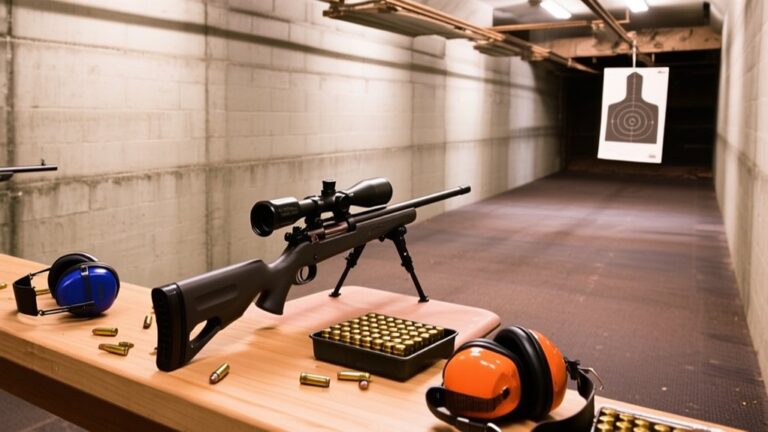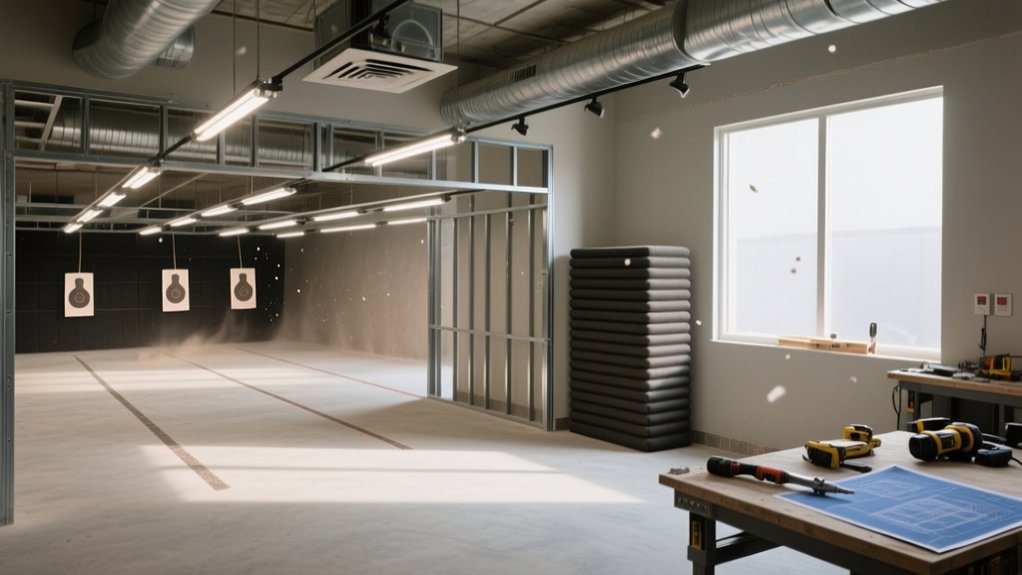
How To Build An Indoor Shooting Range – Planning And Construction Guide
To build an indoor shooting range, start by choosing a safe, accessible location with strong walls, proper ventilation, and enough ceiling height. Secure all local permits and stay updated on noise regulations.
Decide between new construction or repurposing an existing space, balancing budget and design needs. Plan your layout carefully, using durable materials and installing effective bullet traps and ventilation systems.
With these basics, you’ll be set to explore detailed design, safety features, and cost considerations for your project.
Indoor Shooting Range Location Selection
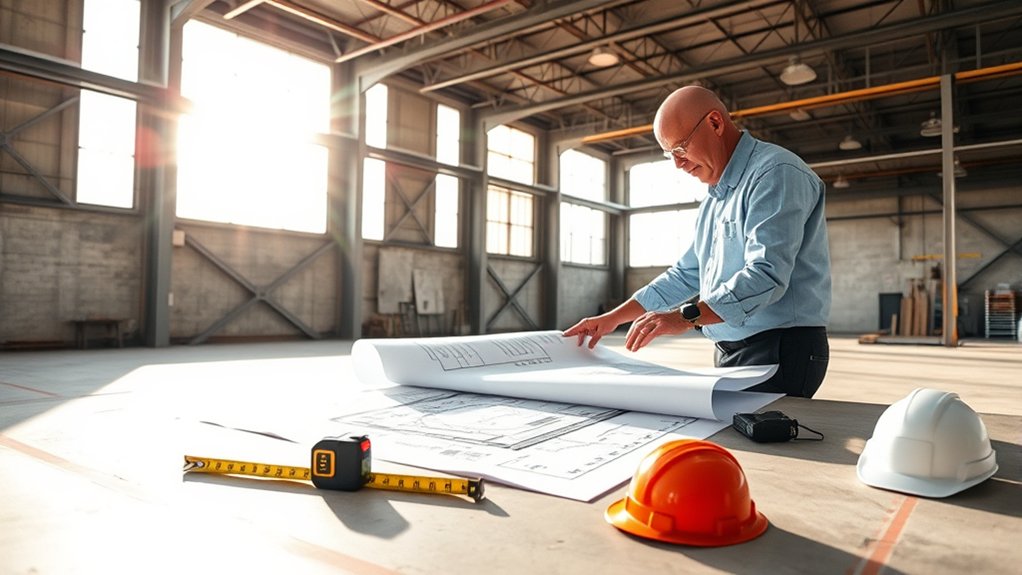
Where should you set up your indoor shooting range? Location selection is key for indoor ranges. Common spots include pole barns, garages, basements, storage buildings, or underground bunkers.
You’ll want to assess each option for accessibility, safety, and compliance with local noise ordinances to avoid disturbing neighbors. The space must have adequate ceiling height, strong walls, and proper ventilation to maintain air quality.
Evaluate accessibility, safety, noise compliance, ceiling height, wall strength, and ventilation to ensure a safe, neighbor-friendly indoor range.
Consider the “Box-within-a-Box” design, using concrete or cinder blocks to boost safety.
Also, make certain the location allows easy transport of materials and equipment, with suitable entry points for construction and daily use.
Thoughtful location selection guarantees your indoor range is safe, functional, and compliant, setting a solid foundation for your project.
Navigating Permits and Regulations for Your Range
Before you start building your indoor shooting range, it’s important to dig into the local permitting requirements since they can be very different depending on where you are.
You’ll also want to make sure your design meets noise ordinances to avoid any restrictions once you’re up and running.
Staying on top of these rules will help you steer clear of costly delays and legal headaches later on.
Local Permitting Requirements
Because local permitting requirements can differ widely by city, municipality, and county, you’ll need to thoroughly research the regulations that apply to your indoor shooting range. Understanding these local permitting requirements is vital to avoid costly delays or legal troubles.
As a range operator, you must secure permits for construction, environmental assessments, and safety compliance. Consulting with experienced shooting range providers can help you identify specific permits needed in your area.
Staying updated on local laws guarantees your range remains compliant, especially as regulations evolve.
Noise Ordinance Compliance
As you plan your indoor shooting range, you’ll need to carefully research local noise ordinances since they vary widely by location. These rules can greatly influence your design and operations.
Start by consulting your range provider early to guarantee your ventilation system and soundproofing meet all noise regulations. Obtain necessary permits to avoid delays and legal issues.
Incorporate sound attenuation measures from the start to keep noise levels compliant during operation.
| Task | Focus Area | Outcome |
|---|---|---|
| Research Local Ordinances | Noise restrictions | Tailored design and operation |
| Consult Provider | Ventilation system | Regulatory compliance |
| Obtain Permits | Construction & noise | Avoid legal delays |
New Construction vs. Existing Space for Shooting Ranges
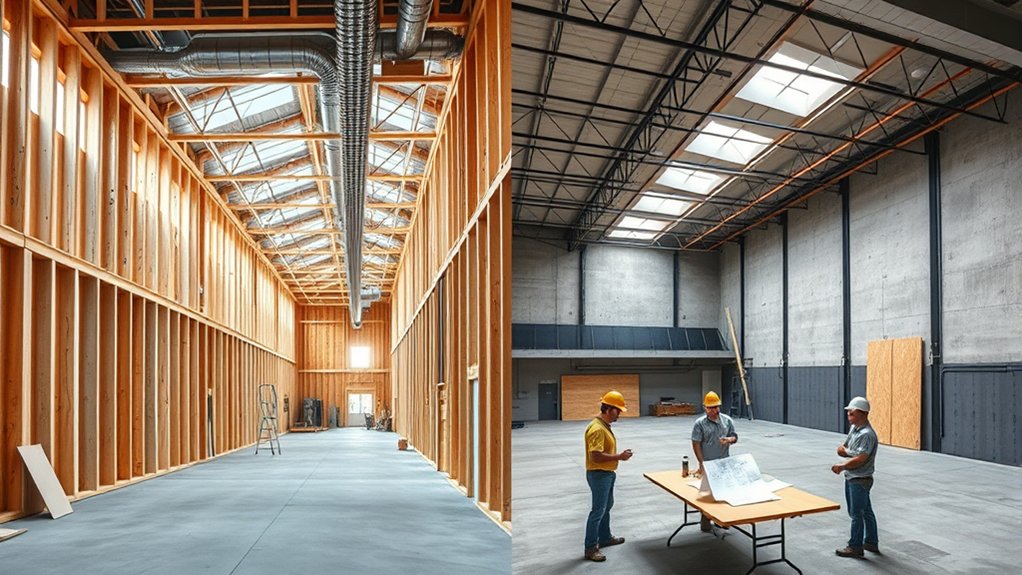
Whether you choose new construction or repurpose an existing space for your indoor shooting range, careful planning is key.
With new construction, you can work closely with an architect and shooting range provider to meet safety standards and design specifications from the ground up. This approach offers better ventilation and soundproofing options, helping you comply with noise ordinances effectively.
On the other hand, adapting an existing space like a garage or pole barn requires evaluating structural integrity and access for materials. You’ll need to implement the “Box-within-a-Box” concept using concrete or cinder blocks to guarantee safety.
Budget-wise, new construction can be costly, sometimes exceeding $200,000, while modifying existing spaces might be more affordable but could involve hidden challenges.
Ultimately, weigh your priorities carefully.
How to Plan Your Range Layout for Safety and Comfort
When you’re planning your range layout, a good place to start is by setting up lanes that are at least 36 inches wide. This gives everyone enough room to move around comfortably.
You’ll also want to think about installing safety barriers, like ballistic baffles. These help catch stray rounds and cut down on ricochet risks.
Taking these steps will help make sure the range is safe and comfortable for everyone using it.
Lane Configuration Essentials
Three key elements shape a safe and comfortable indoor shooting range layout: lane width, firing distance, and access points.
When planning lane configuration, guarantee each lane is between 36 and 69 inches wide to provide enough space for shooters and reduce crossfire risks.
Set firing distances at a minimum of 60 feet, with over 100 feet preferred to safely accommodate different shooting activities.
Include at least two access points behind the firing line to allow smooth movement for shooters and staff.
Proper lane configuration in your indoor shooting range also involves installing effective lighting to enhance visibility.
Safety Barrier Implementation
After setting up lane configurations, your next focus should be on implementing safety barriers that protect everyone inside the range. A proper safety barrier guarantees bullet containment and minimizes risks.
To plan your range layout for safety and comfort, consider these key steps:
- Use the “Box-within-a-Box” design to reduce sound and secure the bullet trap area.
- Construct lane dividers with at least 6-inch-thick concrete or cinder block walls to prevent bullet penetration.
- Install ballistic baffles on ceilings and walls to stop ricochets and contain all impacts.
- Maintain a 10-12 foot ceiling height to improve ventilation and reduce air turbulence, enhancing shooter comfort and safety.
Following these guidelines guarantees your indoor shooting range is both safe and comfortable for all users.
Choosing Durable, Safe Materials for Your Range
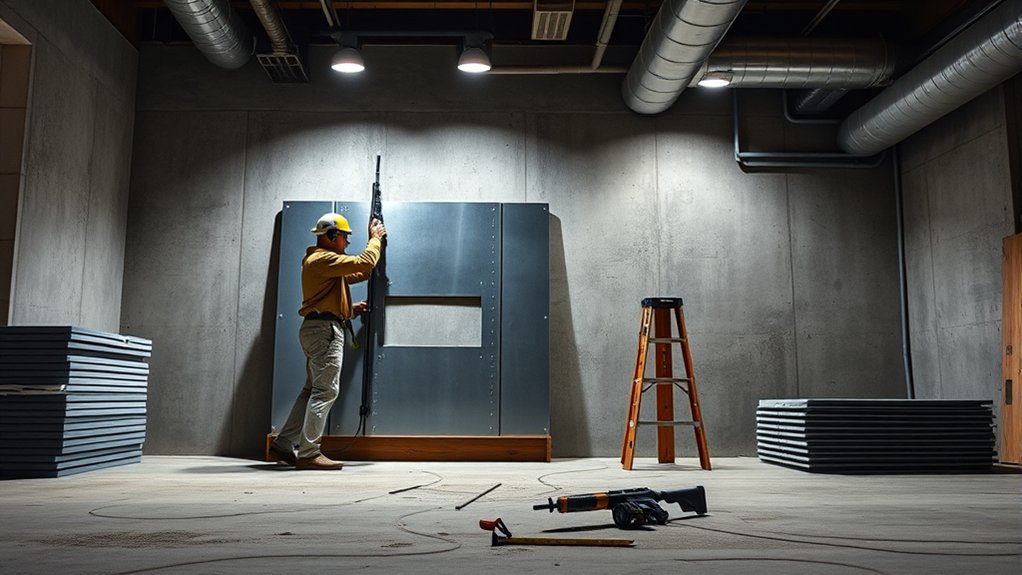
Choosing durable, safe materials for your indoor shooting range is essential to protect both users and the facility. Use hardened armor steel for walls and bullet traps to withstand high-velocity rounds and prevent penetration. Bullet traps made from this steel will safely capture rounds, reducing ricochet risks.
For smaller ranges, consider rubber, which captures bullets on impact and has self-healing properties, lowering maintenance costs. Confirm all surfaces, including walls and ceilings, are impenetrable with at least 6 inches of thickness for adequate protection.
Avoid wood, as it’s vulnerable to bullet damage and creates serious safety hazards.
Designing Ventilation and Noise Control Systems
You’ll want a ventilation system that meets OSHA standards to keep the air safe and clear of contaminants. It’s really important to make sure the air stays fresh and breathable.
When it comes to managing noise, you’ll need to focus on two things: reducing sound inside and preventing it from escaping outside. Both are key to keeping the environment comfortable.
Ventilation System Requirements
When designing an indoor shooting range, ensuring proper ventilation is critical to protect shooters from harmful lead exposure and airborne particulates. Effective ventilation in indoor shooting ranges must meet OSHA standards and maintain air quality by controlling contaminants.
Here’s what you need to focus on:
- Provide 60 to 100 CFM of airflow per shooter to keep air fresh and safe.
- Incorporate both general and targeted airflow systems to supply clean air and exhaust stale air efficiently.
- Design with high ceilings (10 to 12 feet) to improve air circulation and reduce turbulence.
- Use materials and layout that facilitate proper airflow without interfering with range operations.
Noise Reduction Techniques
Although effective ventilation is essential for safety, controlling noise levels in an indoor shooting range requires just as much attention. To achieve proper noise reduction, design your range with high ceilings, ideally 12 feet, to enhance ventilation and reduce sound turbulence.
Use a “Box-within-a-Box” construction to isolate noise and prevent sound from escaping the building. Incorporate acoustic panels, rubber, and dense insulation to absorb and dampen noise generated during shooting.
Make sure your ventilation system meets OSHA standards while including sound-dampening features to minimize airflow noise.
Don’t forget to install ballistic baffles and efficient target trap systems. These help contain sound and reduce ricochets.
Combining these strategies will create a safer, quieter environment for shooters and neighbors alike.
Integrated Airflow Management
Because effective ventilation directly impacts both safety and comfort, you need to design an integrated airflow management system that balances air quality and noise control.
Your ventilation systems must comply with OSHA standards to remove lead and harmful particulates efficiently.
Incorporate high ceilings (10 to 12 feet) to boost air circulation and reduce turbulence.
Soundproofing materials combined with ballistic baffles help contain noise and ricochets, guaranteeing a safer environment.
Focus your design on these essentials:
- Directional airflow that prevents contaminated air from recirculating toward shooters
- High ceilings to enhance ventilation systems’ efficiency
- Soundproofing integration for noise control inside and outside the range
- Ballistic baffles to improve safety and assist with noise reduction
These steps guarantee your airflow management supports a safe, comfortable indoor shooting range.
Installing Bullet Traps and Target Systems for Indoor Shooting Ranges
Installing bullet traps and target systems forms the backbone of a safe and efficient indoor shooting range. You’ll need to choose bullet traps that match your range size. Rubber traps work well for smaller setups, while hardened steel is better for larger ranges to prevent ricochet and guarantee durability.
Choosing the right bullet traps ensures safety and durability tailored to your shooting range size.
When installing target systems, consider flexible mounting options like ground or overhead setups. This allows dynamic target engagement. Advanced systems with 360-degree turning and hit sensing technology boost training realism and accommodate various shooting scenarios.
Make certain both bullet traps and target systems comply with safety regulations and suit your range’s caliber and shooting frequency.
Integrate target systems with communication tools to monitor range conditions in real-time. This facilitates clear communication between operators and shooters for smooth, safe operations.
Designing Safe Access and Preparation Areas for Your Indoor Shooting Range
When designing your indoor shooting range, you’ll want to separate entrance and exit points from the shooting lanes to keep access controlled and safe.
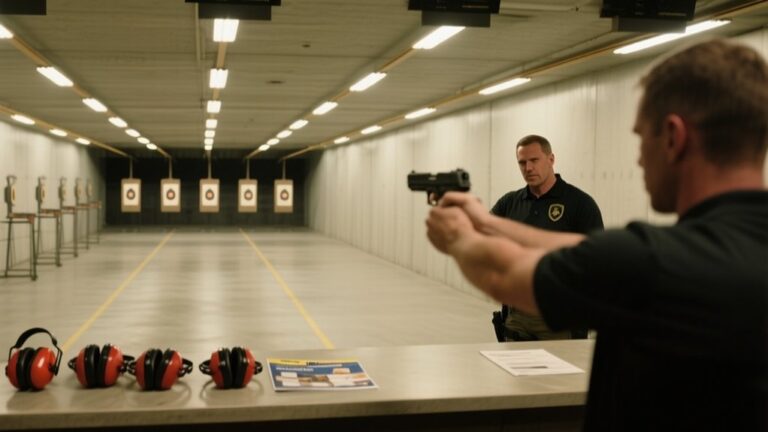
Establish a prep area where guests can put on ear protection and clean up, reducing distractions before entering shooting zones.
Use a “Box-within-a-Box” design to isolate shooting areas from other spaces.
Make sure you follow strict regulations to avoid guest-accessible doors leading directly to shooting lanes.
Key steps for designing safe access and preparation areas:
- Separate entrance and exit from shooting lanes to control access.
- Create a prep space for safety gear and cleaning.
- Include at least two access points behind the firing line.
- Use “Box-within-a-Box” construction for added isolation and safety.
Estimating Construction and Operating Costs for Your Shooting Range
Estimating the construction and operating costs for your indoor shooting range requires careful planning to avoid unexpected expenses. Construction costs range from $10,000 for basic setups to over $200,000 for complex ranges. Most home ranges average around $60,000.
Don’t forget to budget for essential range equipment like bullet traps, stalls, and target systems. Operating costs include ventilation maintenance, utilities, insurance, and staffing. Soundproofing and local permits also add to your expenses.
| Expense Category | Estimated Cost Range | Notes |
|---|---|---|
| Construction | $10,000 – $200,000+ | Includes soundproofing |
| Range Equipment | $5,000 – $30,000 | Quality affects price |
| Operating Costs | $1,000 – $5,000/month | Ventilation, utilities, staff |
Maintenance and Upgrades for Long-Term Range Use
After budgeting for construction and operating expenses, you’ll want to focus on maintaining your indoor shooting range to keep it safe and functional over time.
Regular maintenance guarantees your ventilation, bullet traps, and safety gear meet standards.
Upgrades are necessary too, especially as OSHA air quality rules evolve. To manage this effectively, consider:
- Schedule routine inspections of ventilation and safety equipment.
- Plan ventilation system upgrades every 5 to 10 years.
- Use tracking systems to monitor wear on stalls and targets.
- Invest in durable materials like hardened steel and self-healing rubber to reduce maintenance needs.
Staying proactive with maintenance and upgrades will extend your range’s lifespan and keep it compliant and user-friendly.
Frequently Asked Questions
What Types of Firearms Are Best Suited for Indoor Shooting Ranges?
The best firearm types for indoor shooting ranges are handguns, .22 caliber rifles, and airguns because they produce less noise and recoil, fitting range regulations.
You can also use shotguns and submachine guns in specialized indoor ranges with proper ventilation and safety measures.
Always follow range regulations closely to guarantee safety, especially with higher-powered firearms.
Choosing firearms that meet these requirements helps you enjoy shooting while minimizing risks indoors.
How to Train Staff for Emergency Situations at Shooting Ranges?
You train staff for emergency situations by conducting regular emergency drills that simulate real scenarios like firearm malfunctions or medical emergencies.
Make certain everyone knows their specific staff responsibilities and is familiar with exit routes and communication protocols.
Provide hands-on training in first aid, CPR, and safety equipment use.
Keep your emergency response plans updated with input from local authorities to guarantee your team is prepared and confident during any incident.
What Insurance Policies Are Recommended for Indoor Shooting Ranges?
Think of insurance coverage as your shooting range’s safety net, catching you when risks slip through.
You should start with general liability insurance for bodily injury and property damage.
Add property insurance to shield your assets and equipment insurance for specialized gear.
Workers’ compensation protects your team, while excess liability insurance covers costly claims beyond primary limits.
Conduct a thorough risk assessment to tailor these policies, ensuring your range stays secure no matter what.
How to Incorporate Technology for Interactive Shooting Practice?
You can incorporate technology for interactive shooting practice by integrating virtual reality systems that immerse you in realistic shooting simulations.
These setups allow you to engage with dynamic, reactive targets and customize scenarios based on your skill level.
Using AR and hit sensing tech, you’ll get instant accuracy feedback, helping you improve quickly.
Mobile apps can also let you control targets remotely and track your progress, making your training more efficient and engaging.
What Are Common Liability Issues and How to Mitigate Them?
Liability issues are like landmines you need to spot before stepping. To avoid costly fallout, you should conduct thorough risk assessments and require liability waivers from all users.
Implement strict safety protocols and guarantee everyone completes mandatory training.
Keep clear signage up and maintain your equipment regularly.
Staying compliant with laws and having extensive insurance further shields you from claims, creating a safer environment for shooters and protecting you from legal troubles.
Conclusion
So, you’re about to build an indoor shooting range because who doesn’t dream of launching lead indoors without redecorating their living room? With careful planning, savvy permits, and bullet traps that could catch a speeding bullet (almost), you’ll craft a fortress of safety and fun.
Just remember your neighbors might not appreciate the “popcorn” sounds, so keep that layout tight and those earplugs handy. Happy shooting, may your range be as smooth as a bullet’s flight!