How To Build A Backyard Shooting Range Backstop – Materials And Design Tips
To build a safe backyard shooting range backstop, start by choosing a location at least a mile from homes and roads. Ideally, use natural hills for a berm. Use sturdy, non-ricochet materials like compacted soil, pine logs, or railroad ties stacked securely.
Make your backstop at least 12 feet high for handguns and higher for rifles. Maintain a clear zone behind it. Regularly check and maintain it for safety. With some planning, you’ll create a reliable, effective backstop. There’s plenty more to contemplate to get it just right.
Choose the Right Location for Your Backyard Backstop
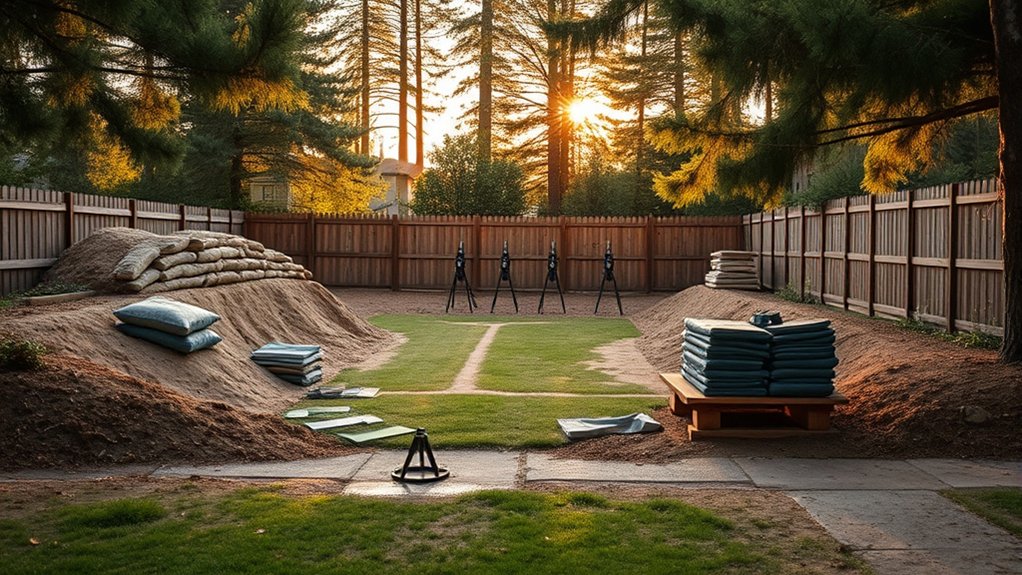
When choosing the right location for your backyard backstop, you’ll want to pick a spot at least one mile away from roads, buildings, and homes to keep everyone safe from stray bullets.
Look for an area where you can build a solid shooting berm, ideally using natural hills or terrain to add extra protection.
Select a location with natural hills to construct a sturdy shooting berm for enhanced safety.
Make certain the space behind your backstop is clear of people, animals, and any hazards to prevent accidents.
Scout the ground carefully to guarantee it’s stable enough to support your berm and complies with local regulations by maintaining adequate distance from neighbors.
Choosing the right spot sets the foundation for a safe, effective backyard shooting range and helps keep your shooting activities secure and responsible.
Select Effective Materials for Building a Safe Backstop
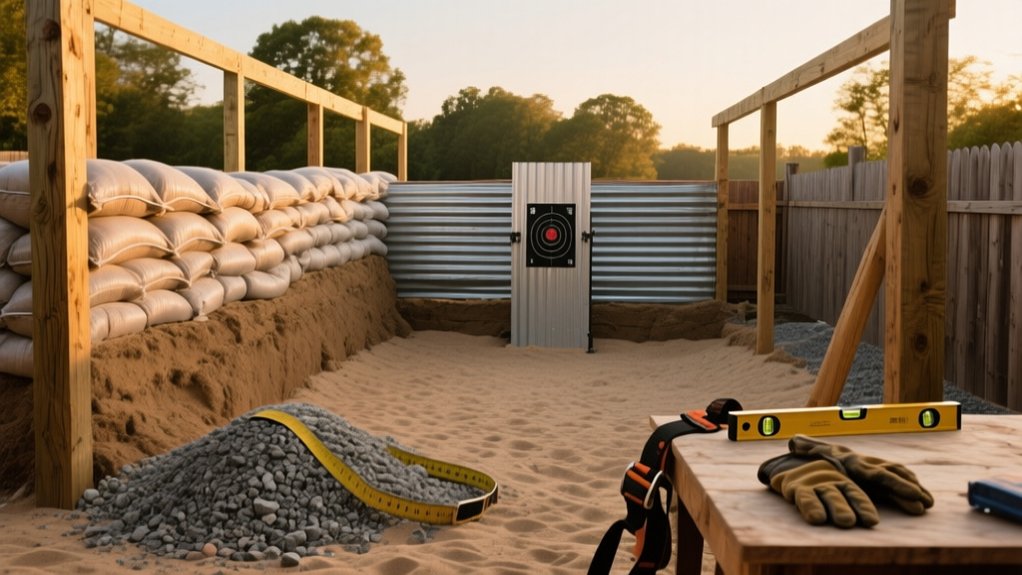
Choosing the right materials plays an essential role in building a safe and effective backstop for your backyard shooting range. Start with clean, compactable soil to form a berm that absorbs bullet impacts and stays stable.
Stack sturdy materials like pine logs or railroad ties tightly for extra strength. Avoid gravel or stones, as they can deflect bullets and create safety hazards. Adding a dirt layer behind hay bales also boosts protection and prevents erosion.
Your berm should be high enough, around 12 feet for handguns and 20 feet for rifles, to safely contain rounds.
| Material | Benefit |
|---|---|
| Compactable Soil | Absorbs bullets, forms berm |
| Pine Logs/Railroad Ties | Provides sturdy, stable support |
| Dirt behind Hay Bales | Enhances protection, prevents erosion |
Choose Backstop Size for Your Firearm
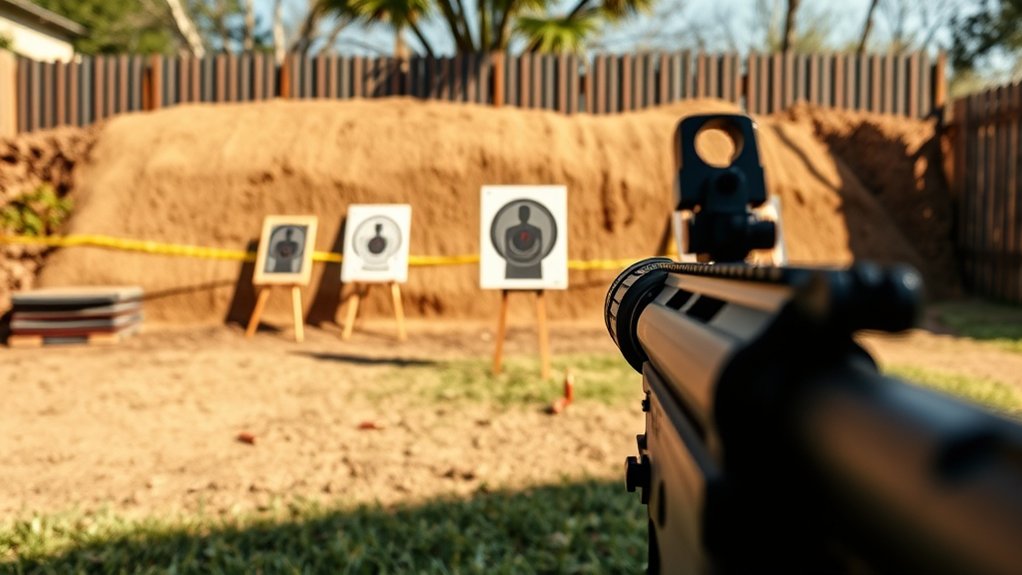
Now that you’ve selected the right materials for your backstop, it’s important to size it properly based on the firearm you’ll be using.
For handguns, aim for a backstop height of at least 12 feet to effectively capture rounds and prevent ricochets.
If you’re using centerfire rifles, increase the backstop height to about 20 feet to guarantee safety and stop bullets from traveling beyond your range.
Along with height, remember the width should be at least 35 feet to accommodate the spread of fired rounds.
Adjusting the backstop size according to your firearm and shooting distance is essential for maximum safety.
This guarantees your backstop can handle the impact without risking stray bullets or deflections.
Build Your Backstop Step-by-Step
You’ll want to start by choosing sturdy materials like pine logs or railroad ties—these will help make sure your backstop can safely absorb impacts.
Then, follow some tried-and-true construction techniques to stack and secure everything for maximum strength.
And don’t forget about safety: position your backstop correctly and check it regularly for any signs of wear or damage.
Selecting Suitable Materials
Selecting the right materials is essential for building a safe and effective backyard shooting range backstop. Use clean, compactable soil as your primary material since it absorbs energy and reduces erosion.
Stack sturdy railroad crossties two deep with seams offset for stability. Place four cinder blocks with holes facing down to support the structure.
For extra impact absorption, cover hay bales with sand or dirt. Verify your backstop height fits your firearms. It should be at least 7 feet for centerfire rifles and 12 feet for handguns.
| Material | Purpose | Tips |
|---|---|---|
| Compactable soil | Energy absorption & erosion | Use clean soil |
| Railroad crossties | Structure stability | Stack two deep, offset seams |
| Cinder blocks | Foundation support | Holes facing down |
| Sand/dirt | Impact absorption | Cover hay bales |
Construction Techniques Overview
Although choosing the right location and materials is essential, the success of your backyard shooting range backstop depends on following proper construction techniques. Start by selecting a level area away from roads and populated spaces, ensuring a clear zone behind for safety.
Then, build your backstop step-by-step:
- Stack six to eight railroad crossties two deep with seams offset for stability.
- Place four cinder blocks end to end with holes facing down to support the structure.
- Drive two 8-foot T-posts into the ground to reinforce stability.
- Dig out 1 inch of dirt behind the cinder blocks for a snug fit.
These steps create a durable, effective backstop for safe shooting sessions.
Regular maintenance will keep it reliable over time.
Ensuring Safety Measures
Because safety is paramount when building your backstop, you must use sturdy, well-maintained materials like railroad ties or cinder blocks that can absorb impacts effectively.
Construct the backstop at least 8 feet high and 10 feet wide to contain small-bore and muzzleloader shots safely.
Position your backstop at least a mile away from populated areas to limit risk and noise disturbance.
Add 2-3 feet of dirt behind any soft materials, like hay bales, to reduce ricochet hazards and improve projectile absorption.
Regularly inspect your backstop for erosion or settling, and promptly replace any displaced or damaged materials.
Position Targets at Your Backstop for Visibility and Safety
When you set up your targets, position them at eye level, around 4 to 5 feet off the ground. This helps you see them clearly without straining.
Place your targets at least 10 to 15 yards from the backstop. That distance lets you shoot accurately while making sure all projectiles safely hit the backstop.
Use bright colors or reflective materials for better visibility against your backstop and surroundings. Secure targets firmly on stable frames or logs to prevent movement during shooting.
To position your targets effectively:
- Mount targets at 4-5 feet for clear sightlines.
- Keep a safe 10-15 yard distance from the backstop.
- Choose bright or reflective targets for contrast.
- Use sturdy supports to hold targets steady.
Regular upkeep guarantees safety and visibility.
Use Dirt and Natural Materials to Strengthen Your Backstop
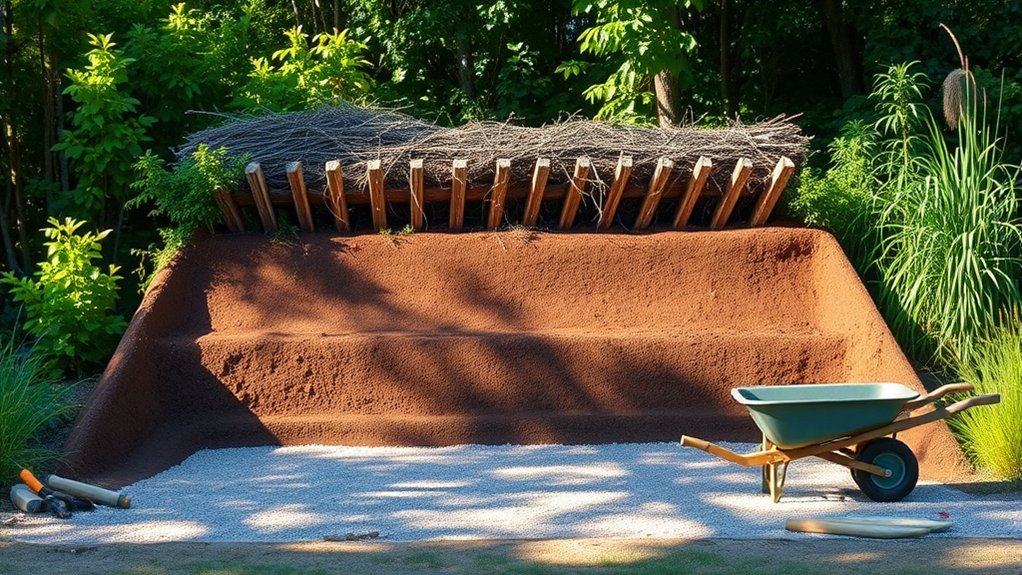
To strengthen your backstop, incorporate clean, compactable soil along with natural materials like sand, clay, pine logs, or hay bales covered with dirt.
Dirt absorbs bullet impact well and holds its shape, making it essential for durability.
Adding sand and clay improves energy absorption, but watch for sand erosion and clay cracking in dry conditions.
Stack pine logs or use round hay bales covered with at least 2-3 feet of dirt to add depth and stability, preventing projectiles from escaping.
Aim for a backstop height of at least 8 feet if you’re shooting rifles.
Using these natural materials effectively creates a safer, more reliable backstop that contains shots while blending into your backyard environment.
Maintain Your Backstop for Long-Term Safety and Performance
After building a sturdy backstop with natural materials, you need to keep it in good shape to assure it stays safe and effective.
To maintain your backstop for long-term safety and performance, focus on these key tasks:
- Regularly inspect for erosion or settling, and replenish soil as needed.
- Keep vegetation healthy to prevent soil loss and reinforce natural barriers.
- Check annually for cracks or damage in clay, logs, or other materials.
- Make sure side berms funnel rounds safely toward the center, and overhead baffles block high-angled shots.
Frequently Asked Questions
Can I Use Recycled Materials for My Backstop Construction?
Yes, you can use recycled materials for your backstop construction. They offer great sustainability options by reducing waste and conserving resources.
Just make certain the materials, like old railroad ties or sandbags filled with shredded tires, are durable and safe. Avoid anything hazardous, and guarantee your backstop effectively absorbs impact.
Using recycled materials not only supports the environment but also provides a cost-effective and sturdy solution for your shooting range.
How Do Weather Conditions Affect Backstop Durability?
You know what they say: “An ounce of prevention is worth a pound of cure.”
Weather conditions play a huge role in durability factors for your backstop. Heavy rain erodes soil, snow can cause cracking, and extreme heat dries out materials. Wind blows away loose dirt, while moisture encourages mold or decay in organic materials.
You’ll need regular maintenance to keep your backstop effective and durable through all these challenges.
What Legal Permits Are Required for a Backyard Shooting Range?
You’ll need to check local permit requirements before setting up your backyard shooting range.
These often include zoning permits and earthwork permits if you’re altering the land considerably.
Noise ordinances might also require you to get specific approvals.
Don’t forget to review HOA rules and consult local law enforcement or regulatory agencies for guidance.
Meeting these permit requirements guarantees your range is legal and safe, helping you avoid fines or shutdowns.
How Often Should I Inspect My Backstop for Damage?
You should inspect your backstop for damage at least once a month.
Studies show that 30% of shooting range incidents stem from overlooked maintenance.
Your inspection frequency should increase immediately after heavy rain or extreme weather. This helps catch any erosion or shifting early.
Regular checks help you spot cracks or soil displacement, keeping your range safe.
Don’t forget to document everything for safety compliance and peace of mind.
Are There Noise Reduction Methods for Backyard Shooting Ranges?
Yes, you can reduce noise at your backyard shooting range by using sound barriers like dense vegetation or earthen mounds to absorb sound.
Lining your backstop with sound-dampening materials such as rubber or dense foam also helps minimize noise from bullet impacts.
Building a high berm behind targets and designing the range with a downward slope can redirect sound away from neighbors.
Scheduling shooting during local quiet hours further reduces disturbances.
Conclusion
Building your backyard shooting range backstop is like planting a sturdy tree. It takes careful roots in the right location and strong materials to grow safely. By choosing the right size, following step-by-step building tips, and reinforcing with natural elements, you’re crafting a shield that stands firm against every shot.
Maintain it well, and your backstop will be the silent guardian of your range, offering peace of mind and a safe place to hone your skills for years to come.