Can Anyone Go To A Shooting Range – Access Rules Explained
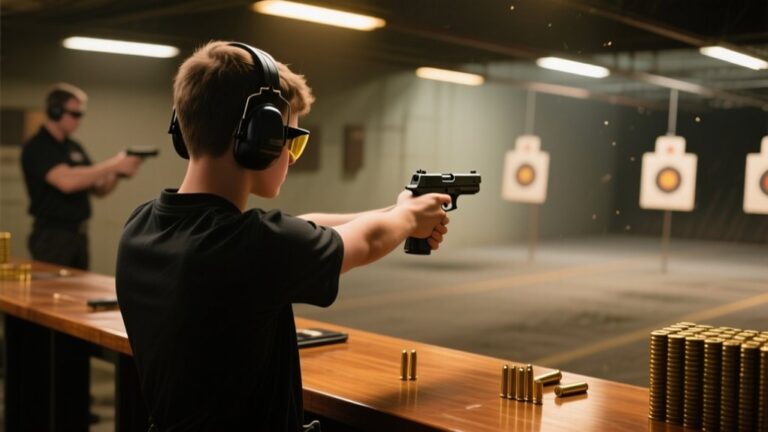
You can visit a shooting range if you meet specific age and ID requirements. You need to be at least 18 to shoot personal firearms, with under-18s requiring supervision and permissions.
Those 21 and older can rent firearms and use fully automatic weapons. You must carry valid government-issued ID, and some ranges have extra rules for foreign visitors. Safety gear and following strict handling protocols are mandatory.
Keep going to discover more about what else you should know before your visit.
Who Is Legally Allowed To Visit A Shooting Range?
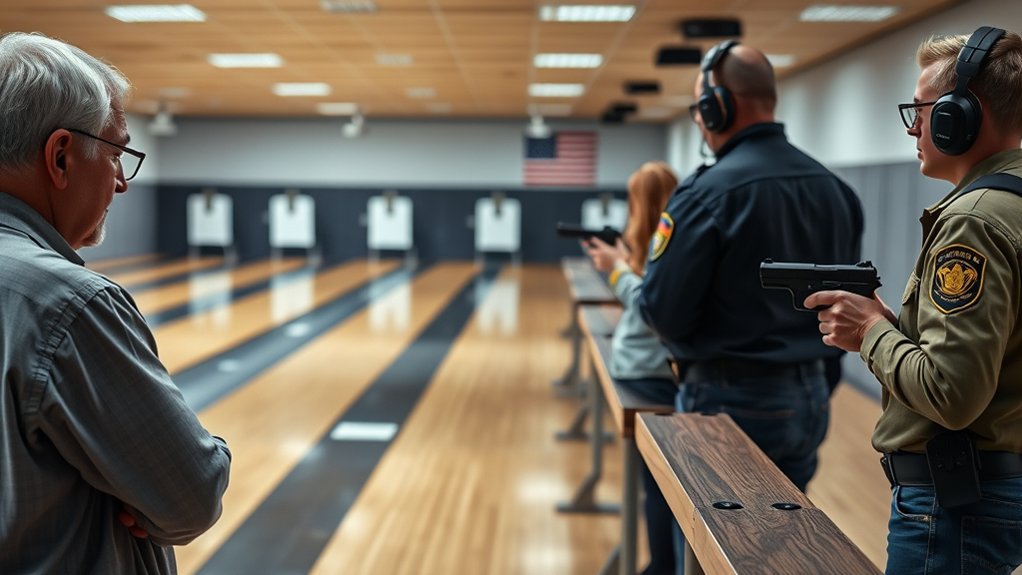
Who can legally visit a shooting range? To know who’s permitted, you first need to understand the age restrictions in place. You must be at least 18 years old to shoot your personal firearms.
If you’re under 18, you’ll need parental supervision and a signed release to enter.
Those 21 and older can rent firearms and shoot fully automatic weapons.
Every visitor has to show a government-issued photo ID to confirm their age and identity.
Keep in mind, some ranges may have stricter age restrictions than federal laws.
Before you can step onto the range, you’ll also need to sign a liability waiver and agree to a verbal safety briefing.
These rules guarantee everyone’s safety and legal compliance at the shooting range.
Age Limits And Supervision Rules At Shooting Ranges
Although shooting ranges welcome visitors of various ages, strict age limits and supervision rules keep everyone safe. Knowing these guidelines helps you enjoy your visit without surprises.
Shooting ranges ensure safety with clear age limits and supervision, so everyone can enjoy their visit confidently.
Here’s what you need to remember:
Kids under 10 aren’t allowed on the shooting range or simulators at all. Ages 10 to 17 must be with a parent or guardian and can’t rent firearms.
If you’re between 18 and 20, you can use your own firearms but can’t rent any.
Only those 21 and older can rent firearms and shoot fully automatic weapons. Unaccompanied rentals are prohibited under supervision rules due to safety policies.
What ID And Credentials Are Needed To Enter?
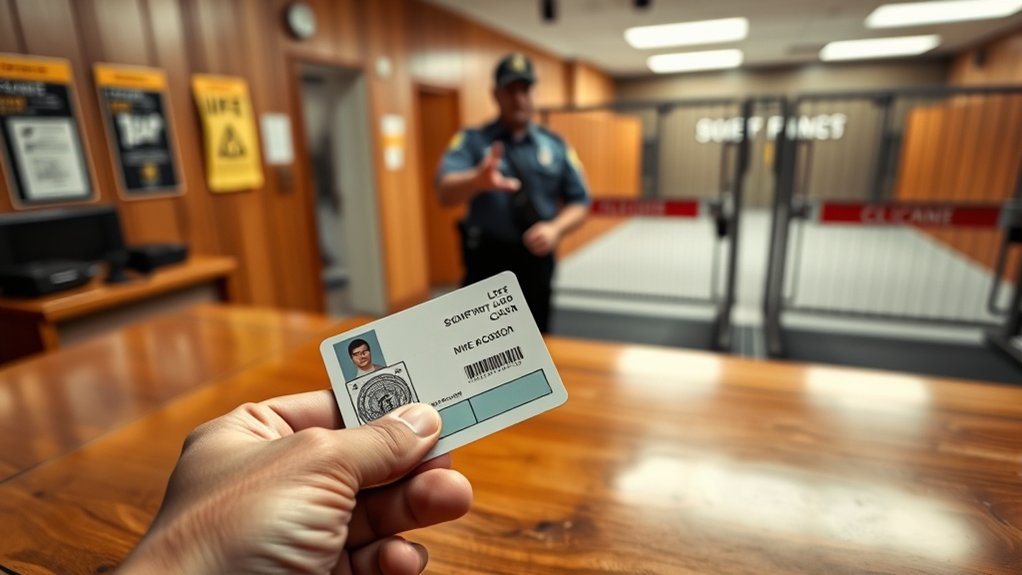
You’ll need to show a valid government-issued photo ID to verify your age and identity when you enter the range.
Depending on your location, you might also need additional credentials like a FOID or LTC card.
Just make sure your ID is current and matches you exactly to stay in line with all safety and legal requirements.
Required Government IDs
Before entering a shooting range, you’ll need to present a valid government-issued photo ID to verify your age and identity. This step is essential for age verification and helps the range comply with firearm laws through background checks.
Confirm that your ID is current and the name matches yours exactly. Here’s what you should know about required government IDs:
- Present an unexpired, government-issued photo ID like a driver’s license or passport.
- Be aware that some states may require additional credentials, but these vary and won’t be discussed here.
- Individuals under 18 generally can’t use handguns, and ranges may enforce stricter age policies.
These ID checks keep the range safe and guarantee everyone follows local regulations.
Additional State Credentials
Along with presenting a valid government-issued photo ID, you may need additional credentials depending on your state’s regulations.
Beyond verifying your age and identity, some states require you to show documents like a FOID, FID, or FPIC card before entering a shooting range.
These additional credentials confirm that you’re legally eligible to possess firearms in that jurisdiction. While a government-issued photo ID confirms who you are, these state-specific cards further validate your right to engage in shooting activities.
Also, if you plan to rent firearms off-premises, be prepared for a Background Check through the NICS system.
Verification And Compliance
Although requirements vary by location, bringing a valid government-issued photo ID is essential for entering any shooting range. This ID is important for verification and age verification, making sure you meet the Range Rules.
Before accessing the range, you’ll need to sign a liability waiver linked to your ID. Some states might also require additional credentials like FOID, FID/LTC, or FPIC, depending on local laws.
Here’s what you need to know for smooth verification and compliance:
- Present a current, government-issued photo ID with a matching name.
- Complete and sign the liability waiver before entry.
- Provide any extra credentials required by your state.
Following these steps guarantees you comply with all verification and Range Rules.
Shooting Range Policies For Foreign Nationals And Non-Residents
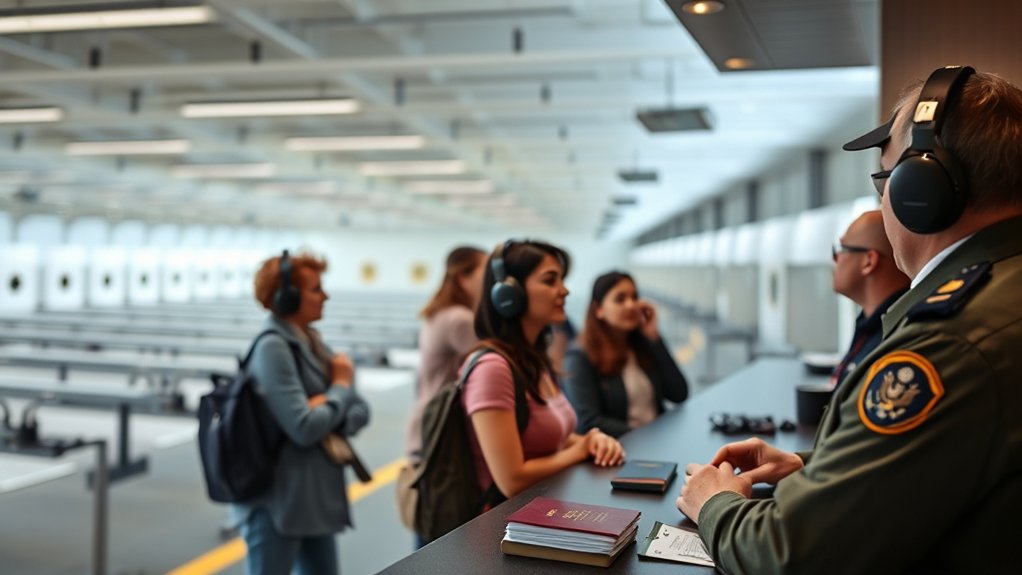
If you’re a foreign national or non-resident planning to visit a shooting range, you’ll need to bring a valid government-issued photo ID for age verification and possibly additional documents depending on local rules.
Foreign visitors must carry valid government-issued ID and may need extra documents per local firearm regulations.
Some ranges may ask for proof of residency or a background check before letting you use certain facilities.
While you can usually shoot your personal firearms, renting guns might be restricted.
Before you step onto the firing line, confirm the range’s age policies and local firearm laws.
Always wear proper eye protection and follow all range safety protocols to keep yourself and others safe.
Knowing these policies ahead of time guarantees a smooth experience, so check with the facility before your visit to avoid surprises.
Are Background Checks Required At Shooting Ranges?
Wondering whether shooting ranges require background checks? Generally, they don’t perform background checks like NICS for on-site lane use or rentals.
Instead, they focus on verifying your identity with a valid government-issued photo ID to confirm your age and eligibility.
However, some private clubs may require background checks before granting membership, but this varies by club.
Here’s what you should know:
- Background checks aren’t required for on-premises rental or lane use.
- Off-premises rentals do require background checks due to federal transfer rules.
- Private clubs might perform background checks depending on their policies.
Allowed Firearms And Ammunition At Shooting Ranges
Shooting ranges allow only certain firearms and ammunition to maintain safety and control. You’ll find pistols allowed on the range’s 6-lane Standard Bay, but high-caliber handguns are restricted to keep things safe.
Pistols are welcome in the 6-lane Standard Bay, while high-caliber handguns are limited for safety.
Rifles and shotguns using slugs only are permitted in the 8-lane Tactical Bay. Certain ammo types like steel, tracer, incendiary, or penetrating rounds aren’t allowed on the range to prevent damage and hazards.
Before entering, your firearms must be cased, unloaded, and have the action open unless you’re actively shooting.
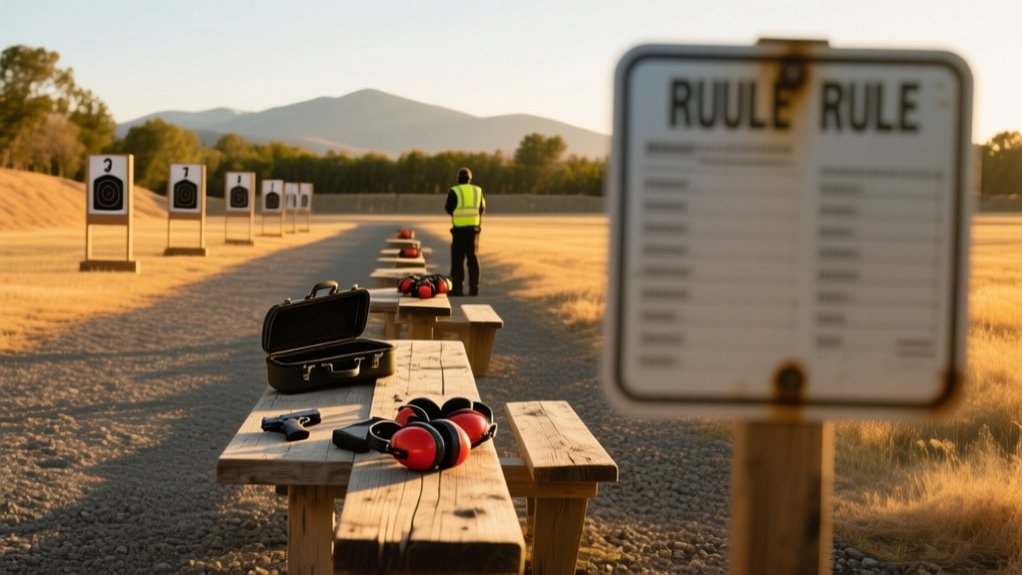
Also, eye and ear protection is mandatory for everyone on site to protect you from loud noises and flying debris. Following these rules helps keep the shooting environment safe and controlled for all visitors.
Safety Rules Every Shooting Range Visitor Must Follow
You always need to follow the range’s safety rules to keep yourself and others safe.
Make sure to keep your firearm pointed downrange and your finger off the trigger until you’re actually ready to shoot.
Also, wearing eye and ear protection is a must.
Just remember to handle your firearm responsibly at all times.
It’s all about staying safe and having a good time.
Mandatory Safety Compliance
Because safety is the top priority, you must follow all range rules and staff instructions without hesitation. Mandatory safety compliance guarantees everyone’s protection and a smooth experience. You’re required to acknowledge and understand these rules before entering.
To keep things safe and enjoyable, remember:
- Eye and ear protection must be worn at all times. No exceptions.
- Report any unsafe behavior immediately to staff to prevent accidents.
- Always keep firearms pointed downrange and fingers off triggers until ready to shoot.
Children under 18 need signed releases and direct supervision. Wearing closed-toed shoes and appropriate attire is also mandatory.
Firearm Handling Protocols
Although handling firearms demands strict attention, following clear protocols makes the process safe and straightforward. Adhering to firearm handling protocols means you must keep your finger off the trigger until you’re ready to shoot and always keep the muzzle pointed downrange.
When entering or exiting the range, confirm all firearms are unloaded and stored in their cases. At the shooting benches, only then should you load or unload your firearm, keeping the action open except when actively firing.
If you experience a misfire, report it immediately to range staff without leaving the firing line.
These rules protect you and others, maintaining a controlled environment where safety is the top priority. Following these steps guarantees a responsible and secure shooting experience every time.
Consequences Of Breaking Shooting Range Rules
When you break shooting range rules, staff won’t hesitate to enforce strict consequences to keep everyone safe.
Violators of safety regulations must check their behavior because immediate compliance with staff instructions is non-negotiable. Ignoring these rules can lead to serious repercussions.
Here are key consequences you should know:
- You may be expelled from the range without a refund for any safety violations or inappropriate behavior.
- Failure to follow instructions or report unsafe conduct can result in denial of access or removal.
- Breaches of policies like age restrictions or firearm handling can lead to immediate termination of membership or future access.
How To Prepare For Your First Shooting Range Visit
If you’re planning your first visit to a shooting range, preparing properly will make your experience safer and more enjoyable.
First to know, shooters must bring a valid government-issued photo ID to verify age, as entry depends on it.
Check the range’s specific policies and safety rules ahead of time to avoid surprises. You’ll also need eye and ear protection, which is mandatory and usually available for rent or purchase.
Dress appropriately; closed-toe shoes and a crew neck shirt are often required.
Finally, consider scheduling an introductory lesson if you’re new to shooting. This helps you get comfortable with firearm handling and range etiquette.
Frequently Asked Questions
Can I Bring My Own Firearm to a Shooting Range?
Yes, you can bring your own firearm to a shooting range, but you must follow firearm safety and range etiquette strictly.
Keep your firearm cased while entering and exiting. Make sure it’s unloaded with the action open unless you’re actively shooting.
Also, follow ammunition regulations specific to the range. Always carry a government-issued ID for verification and respect caliber restrictions.
Keep the muzzle pointed downrange to maintain a safe, respectful environment for everyone.
Are There Specific Hours When Shooting Ranges Are Open?
Shooting ranges usually have specific hours, so you’ll want to check before you go. They often operate longer on weekends but may close early on weekdays for maintenance or events.
Keep in mind, safety protocols, age restrictions, and membership requirements can affect your access during these hours.
Some ranges require reservations during peak times, so planning ahead guarantees you won’t miss out or run into unexpected closures.
Do Shooting Ranges Offer Firearm Rentals?
Yes, many shooting ranges offer firearm rentals, letting you try different guns without owning one.
You’ll want to follow rental policies carefully, as age restrictions usually require you to be at least 21 to rent a firearm.
Firearm safety is a top priority, so ranges often provide safety briefings before you shoot.
Keep in mind, some ranges restrict certain calibers or ammo types, so checking their rules ahead saves hassle.
Is Prior Shooting Experience Required to Use a Range?
No, prior shooting experience isn’t required to use a range. You’ll follow strict safety protocols and can join training sessions designed for beginners.
These sessions teach you essential firearm handling skills to keep you and others safe.
Just remember, age restrictions apply. If you’re under 18, a parent or guardian must accompany you.
Range staff are always there to help you feel comfortable and confident during your visit.
Can I Take Photos or Videos While at the Range?
Photography and filming face firm restrictions at ranges. You can’t casually click or capture without checking safety protocols and etiquette guidelines first.
Range restrictions usually prohibit photography to prevent distractions and protect privacy. Before you snap or shoot video, always ask range staff for approval.
If permitted, you’ll need to follow strict safety protocols carefully.
Conclusion
Now that you know the rules and requirements, you’re ready to visit a shooting range safely and confidently. Remember, “measure twice, cut once” applies here. Double-check your ID, understand the policies, and follow safety guidelines closely.
Whether you’re a first-timer or a seasoned shooter, respecting the rules keeps everyone safe and guarantees a great experience. So, prepare well, stay alert, and enjoy your time at the range responsibly.