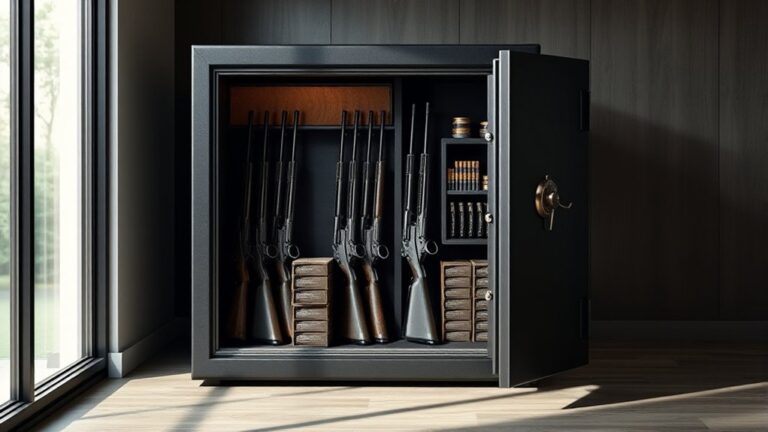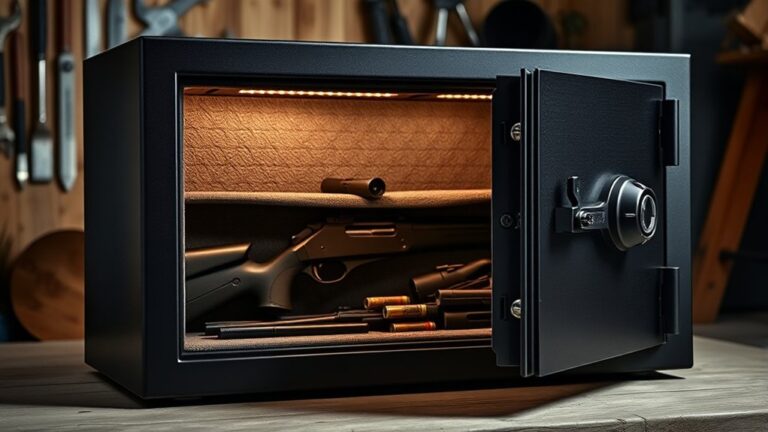
Which Gun Safe – Buying Guide And Recommendations
You want a gun safe that balances ample capacity by estimating current firearms and future additions. It should also have robust security with UL burglary and fire ratings. Choose lock types that match your access needs, whether mechanical for reliability, biometric for speed, or electronic for convenience.
Make sure to prioritize fire-resistant insulation and water-tight seals to protect your valuables. Proper installation and organization can maximize both security and usability.
Keep in mind how your budget impacts the quality and features you can get. Understanding these essentials will help you select the ideal safe tailored to your requirements.
Key Takeaways
- Choose a gun safe with sufficient interior space, considering future firearm additions and bulky accessories for organized storage.
- Prioritize safes with recognized burglary ratings like UL RSC-II and thick steel walls for enhanced security and insurance compliance.
- Select lock types based on convenience and security, including mechanical, biometric, or electronic keypad options with proper professional installation.
- Ensure the safe has a UL 72 Class 350 fire rating and quality insulation to protect contents from heat and fire damage.
- Set a realistic budget factoring in safe quality, mounting hardware, interior organization, and ongoing maintenance needs.
Determining the Right Gun Safe Size and Capacity
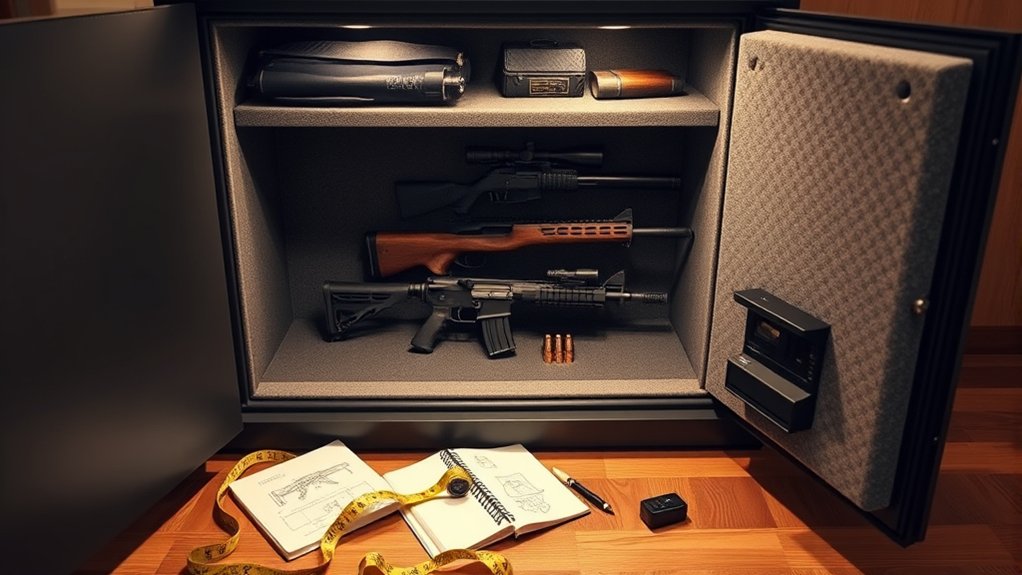
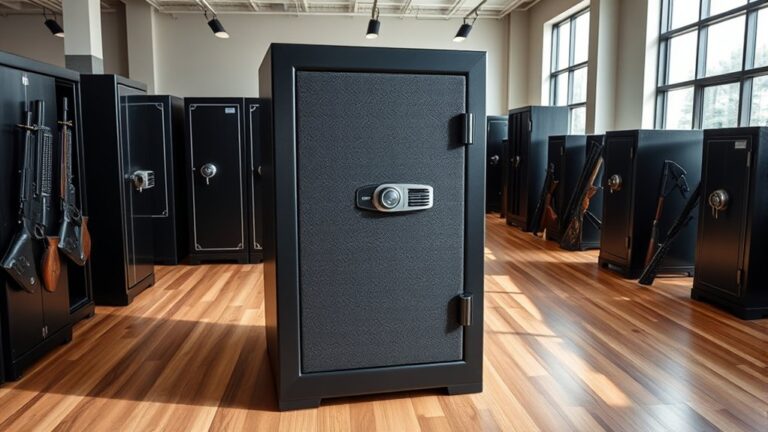
When determining the right gun safe size and capacity, start by estimating the number of firearms you currently own. Then double that figure to accommodate future additions. It’s a good way to plan ahead.
Begin by counting your firearms, then double that number to plan for future growth.
Focus on the safe’s interior dimensions rather than the external measurements. The usable storage space is what really matters for fitting your firearms and accessories comfortably.
Don’t forget to account for bulky items like magazines, scopes, and wide grips when planning the interior layout.
Choosing a gun safe size slightly larger than your current collection helps avoid overcrowding. Overcrowding can make access tricky and might even affect security.
Keep in mind, most owners fill their safes within two years, so it’s smart to prioritize expansion capacity.
This approach ensures your safe stays functional and adaptable. You’ll have ample storage space for your growing collection without sacrificing organization or protection.
It’s all about being prepared for what’s next.
Gun Safe Security and Burglary Ratings Explained
Although selecting the right size and capacity is essential, understanding gun safe security and burglary ratings is just as important to protect your firearms effectively. Burglary ratings like UL RSC-I and RSC-II certify a safe’s resistance against specific forced-entry techniques. Higher ratings offer enhanced protection, so it’s worth paying attention to them.
Also, keep an eye on the steel gauge. Outer sheets of 7 gauge combined with 10 gauge walls can significantly improve defense against attacks. True safes with robust bolt work and shear pin mechanisms generally outperform those made with sheet metal only when it comes to resisting brute force.
One thing to remember is that fire ratings like UL 72 Class 350 focus on heat resistance, not burglary protection. So, don’t confuse the two.
Plus, meeting established security standards like UL RSC is often mandatory to qualify for insurance, making these ratings a key factor when choosing your safe.
Which Gun Safe Lock Type Is Best?
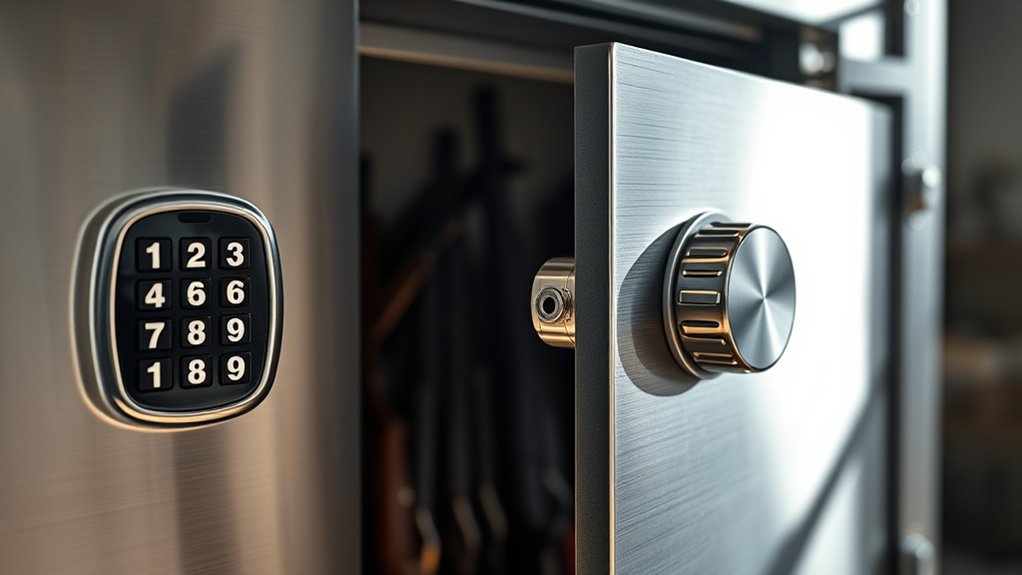
You’ll find that mechanical locks offer unmatched reliability because they don’t rely on batteries or electronics. This makes them highly tamper-resistant, which is a big plus.
On the other hand, biometric locks give you rapid, fingerprint-based access. When set up correctly, they provide strong security and are perfect if you need quick entry.
Then there are electronic keypad locks, which strike a nice balance between speed and convenience with customizable codes.
Just keep in mind they do come with some risks, like potential hacking and the need for power to operate.
Mechanical Locks Advantages
Since mechanical locks operate without electronic components, they offer unmatched reliability and durability for gun safes. When choosing mechanical locks, you benefit from:
- Reliability: No batteries or power sources mean these locks function consistently without failure risks.
- Security: Resistant to hacking and electronic sabotage, mechanical locks provide robust protection.
- Durability: Their simple mechanical design withstands wear and environmental factors over time.
- Quick Access: You can rapidly open the safe by turning dials or entering combinations, which is crucial during emergencies.
Mechanical locks remain a top choice if you prioritize proven security and longevity. Their mechanical nature ensures your safe stays secure and accessible without relying on electronic systems that can malfunction or be attacked.
Biometric Locks Features
Mechanical locks provide reliable and straightforward security, but biometric locks introduce a new level of convenience and advanced protection for gun safes. By employing a biometric fingerprint reader, these locks offer quick access while maintaining stringent security standards.
You can register multiple fingerprints, ensuring that only authorized users gain entry without fumbling for keys or codes. High-quality gun safes with biometric locks minimize false acceptance rates, preventing unauthorized access and reducing false rejections for reliable operation under pressure.
This technology eliminates risks associated with lost combinations, making it ideal for emergency scenarios. Some advanced models even track access via audit trails and can integrate with smart home systems, enhancing overall security.
Choosing a biometric lock means balancing cutting-edge convenience with uncompromised protection for your firearms. It’s a smart way to keep your guns safe while making access easier when you need it most.
Electronic Locks Security
How do electronic locks compare regarding security when choosing a gun safe? Electronic locks offer advanced security features and rapid access via keypad entry, often with backlit buttons for low-light conditions.
When evaluating electronic locks, consider these factors:
- Security features: Temporary access codes and audit trails enhance control and monitoring.
- Battery life: Reliable power is critical; low battery warnings prevent lockouts.
- Remote management: Smartphone app control allows you to grant or revoke access remotely.
- Tamper resistance: Robust encryption and physical safeguards minimize hacking or forced entry risks.
Electronic locks balance convenience and security well but they do require regular maintenance.
Knowing these things helps you pick the best lock type that fits your security needs and how you want to access your safe.
Fire and Water Protection for Gun Safes
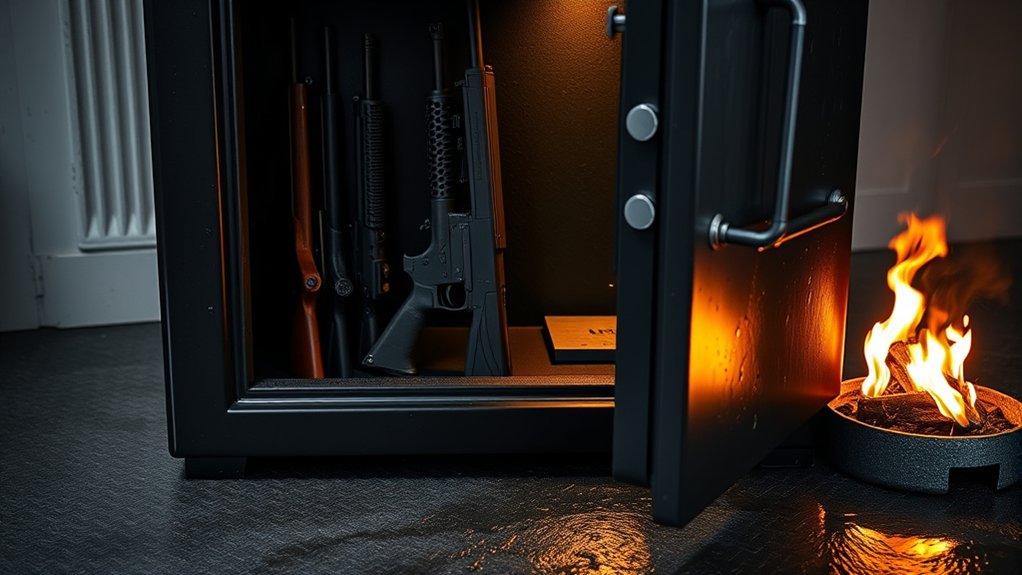
When choosing a gun safe, you’ll want to look for one that has a UL 72 Class 350 fire rating. This means it can protect your firearms from extreme heat for at least 30 minutes.
It’s also important to find safes that are insulated with at least 1.5 inches of fire-resistant materials, like fiberglass or ceramic wool, to keep your guns safe.
On top of that, don’t forget about water protection. Waterproof seals and sturdy construction are key to preventing damage from flooding or even water used during firefighting efforts.
This way, your firearms stay secure no matter what happens.
Fire Resistance Ratings
Although fire resistance ratings can vary, you should prioritize gun safes certified under UL 72 Class 350 standards. These certifications guarantee protection for either 30 minutes or one hour during intense fires. UL 72 is the definitive benchmark for fireproofing standards, ensuring reliable fire protection.
When evaluating fire resistance, consider these critical factors:
- Confirm the safe meets UL 72 Class 350 certification for tested fire durations.
- Verify the use of fire-rated insulation at least 1.5 inches thick, such as poured concrete amalgamates or ceramic wool.
- Guarantee the safe integrates a steel inner fire liner combined with fire-rated insulation for ideal fireproofing.
- Distinguish fire resistance from water resistance, as water protection features require separate verification.
Insulation Materials Used
When selecting a gun safe, understanding the insulation materials used for fire and water protection is essential to ensuring your firearms remain secure under extreme conditions.
Fire insulation typically involves fire-rated insulation materials like poured concrete amalgamate, fiberglass, or ceramic wool, with a minimum thickness of 1.5 inches for effective fire resistance. Steel inner fire liners maintain structural integrity during high heat. Proper welding techniques further enhance fire resistance.
Manufacturer fire ratings, such as UL 72 Class 350, indicate heat endurance but rely heavily on insulation quality.
| Insulation Type | Thickness | Role in Fire Resistance |
|---|---|---|
| Poured Concrete Amalgamate | ≥ 1.5 inches | Thermal barrier, structural |
| Fiberglass | ≥ 1.5 inches | Heat insulation, lightweight |
| Ceramic Wool | ≥ 1.5 inches | High-temp resistance, fire-rated |
| Steel Inner Liners | Thin steel sheets | Structural integrity under fire |
Water Damage Prevention
How can you guarantee your gun safe withstands not only fire but also water damage? To provide thorough protection, focus on these critical factors:
First, choose safes with certified fireproof ratings like UL 72 Class 350 for sustained fire protection. It’s a good idea to prioritize models featuring waterproof or water-resistant designs, including robust gasket seals on doors and seams.
Also, opt for safes equipped with internal water-resistant linings or coatings to block moisture from reaching firearms during water exposure.
Don’t forget to verify the integrity of seals remains intact after repeated use, ensuring continuous water resistance.
Organizing Guns and Accessories in Your Gun Safe
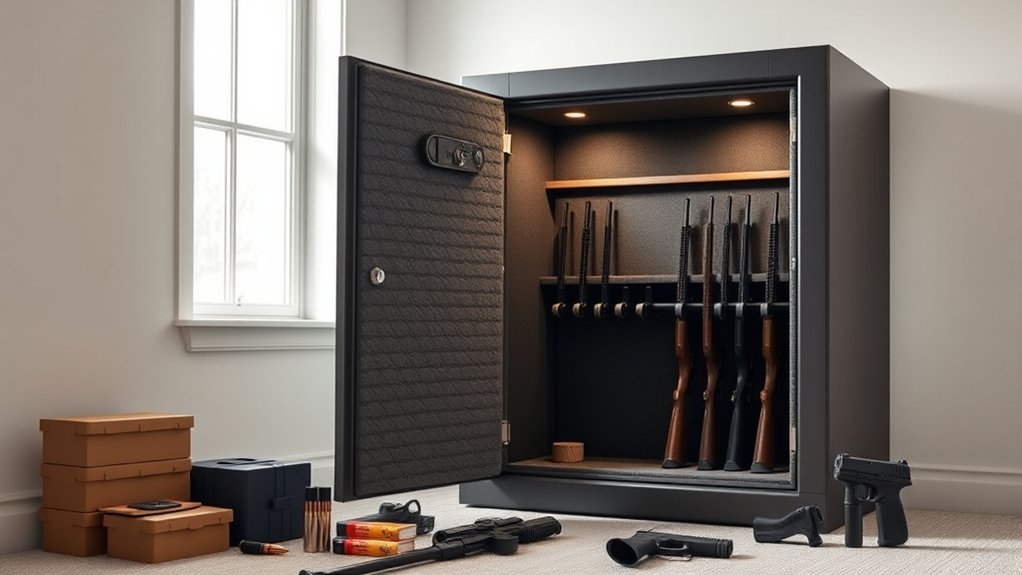
Where should you place your firearms and accessories to maximize both security and accessibility? Use custom foam inserts or adjustable shelving to securely separate and protect your guns while optimizing space.
Position frequently used firearms near the front or top of the safe for quick access. Store less-used ones deeper inside. This way, you’ll always grab what you need without hassle.
Organize accessories like magazines, scopes, and cleaning kits in labeled compartments or bins to prevent clutter and make retrieval easier. Consider vertical or tiered racks for long guns to avoid damage and make handling simpler.
Small, designated drawers or compartments are perfect for paperwork and cleaning supplies. Keeping everything tidy inside your safe not only saves space but also helps you stay organized.
This systematic setup guarantees quick access to essential items without sacrificing security or risking damage. It’s all about finding the right balance between order and convenience.
Installing Your Gun Safe Safely
After organizing your firearms and accessories efficiently inside the safe, the next step is securing the safe itself. For a secure installation, follow these critical steps:
First, choose a location with adequate structural support to bear the safe’s weight, especially if it’s several hundred pounds. You want to make sure the spot you pick can handle all that weight without any issues.
Next, use proper drilling techniques to avoid damaging electrical wiring, plumbing, or structural components during anchoring. It’s better to be safe and double-check before you start drilling.
Anchor the safe firmly to the floor or wall using heavy-duty bolts. This ensures it can’t tip or be removed easily, giving you that extra peace of mind.
Finally, strictly adhere to the manufacturer instructions for anchoring methods. This helps preserve the safe’s fire and security ratings, so you don’t compromise on protection.
Budgeting for a Secure Gun Safe
Because the level of protection you require directly influences your investment, budgeting for a secure gun safe begins with evaluating the total value of your firearms and the security risks you face.
High-quality safes range from $300 to over $10,000, so setting a realistic budget is essential.
High-quality safes vary widely in price, making a realistic budget crucial for choosing the right protection.
Budget-friendly options under $200 usually have thinner steel and lower UL ratings. This means they provide minimal security and limited theft resistance.
If you want better protection, it’s worth considering safes with UL ratings like RSC-II or TL-30. These typically cost between $1,000 and $3,000 and offer enhanced security and fire protection.
Don’t forget to factor in additional costs like mounting hardware, interior organization, and fireproofing.
Prioritizing a certified, durable safe helps you balance cost with long-term security and peace of mind.
It’s all about making sure your firearms are stored safely without breaking the bank.
Tips for Maintaining and Upgrading Your Gun Safe
To sustain the best security and functionality, you should regularly inspect and test your gun safe’s lock mechanisms, including biometric readers and electronic keypads. Proper safe maintenance ensures reliability and deters unauthorized access. Follow these key steps:
- Conduct routine testing of lock mechanisms to detect wear or malfunctions early.
- Maintain interior organization by cleaning and replacing worn foam padding or inserts to protect contents.
- Implement security upgrades such as firmware updates, additional biometric profiles, and reinforcement plates to counter evolving threats.
- Verify anchoring integrity after any modifications to prevent tampering or displacement.
Keeping your safe in top shape is easier than you might think. Just a little regular attention goes a long way. And it’s always better to catch any issues early before they become bigger problems.
Frequently Asked Questions
How Do I Dispose of an Old or Unwanted Gun Safe Safely?
You should first empty the gun safe completely, removing all firearms and ammunition.
Contact local law enforcement or a certified firearms dealer to inquire about safe disposal or recycling options.
If you decide to discard it yourself, dismantle the safe by removing bolts and hinges, then separate metal parts for scrap recycling.
Make certain you securely destroy locking mechanisms to prevent unauthorized use.
Always follow local regulations regarding firearm storage devices disposal.
It’s important to handle this process carefully to keep everyone safe.
Can Gun Safes Be Customized With Additional Security Features?
Yes, you can customize gun safes with additional security features to enhance protection. You might add reinforced locking bolts, biometric locks, or advanced electronic keypads.
Some safes allow integration with alarm systems or GPS tracking.
You can also upgrade fireproofing or install internal lighting and dehumidifiers.
When customizing, make sure the features are compatible with your safe’s design.
It’s also a good idea to have a professional install them to maintain your warranty and ensure maximum security performance.
What Are the Legal Requirements for Owning a Gun Safe in Different States?
You’ll find the legal requirements for owning a gun safe vary wildly across states, like maneuvering a maze of laws! Some states, like California, mandate gun safes or locking devices to prevent unauthorized access, especially when minors are involved.
Others have no specific safe laws but enforce general storage responsibilities. You must check your state’s statutes for specifics on safe types, locking mechanisms, and storage conditions.
This way, you guarantee full compliance and avoid hefty penalties. It’s always better to be safe and informed when it comes to gun storage.
How Does Humidity Inside the Safe Affect Firearms and Accessories?
Humidity inside your gun safe can cause metal parts on firearms and accessories to corrode. This leads to rust and pitting that degrade performance and safety.
It also promotes mold and mildew on leather, wood, and fabric components, damaging stocks and holsters.
You should maintain humidity levels between 30-50% using desiccants or dehumidifiers to protect your valuables.
Proper ventilation and regular monitoring help prevent moisture accumulation.
This way, you can preserve your firearms’ longevity.
Are There Portable Gun Safes Suitable for Travel or Temporary Use?
Yes, portable gun safes designed for travel or temporary use are like a fortress in your backpack. These compact safes often feature tamper-proof locks, reinforced steel construction, and foam interiors to protect your firearms from impact and unauthorized access.
Many include mounting options for vehicles or hotel rooms, ensuring stability. Look for models with biometric or keypad access for quick retrieval while maintaining security on the go. It’s all about keeping your firearm safe without slowing you down.
Conclusion
Choosing the right gun safe is like building a fortress tailored to your arsenal’s needs. Just as a knight wouldn’t enter battle with flimsy armor, you shouldn’t settle for a safe without the proper size, lock type, and protection ratings.
Remember, 60% of gun thefts happen from unsecured homes. Your safe is the critical barrier.
By investing thoughtfully and maintaining your safe, you guarantee your firearms stay secure, organized, and ready when you need them.