How Much Does A Gun Safe Weigh – Weight And Size Guide
A gun safe’s weight depends largely on its steel gauge, size, and fireboard layers. Thicker steel and more fireboard add significant weight and help improve security.
Larger safes with reinforced doors can weigh over 200 pounds. Because of this, they often require floor reinforcement to stay safe and stable.
Lighter safes are better suited for upper floors or spaces where weight is a concern. Heavy models, on the other hand, need professional installation to ensure safety and stability.
Knowing these factors can help you find the right balance between protection and practicality. It’s all about choosing a safe that fits your needs and space.
More insights reveal how to optimize both weight and security for your specific situation.
Key Factors That Determine Gun Safe Weight
Although many factors influence a gun safe’s weight, the steel gauge is a key player. Thicker steel with lower gauge numbers makes the safe much heavier.
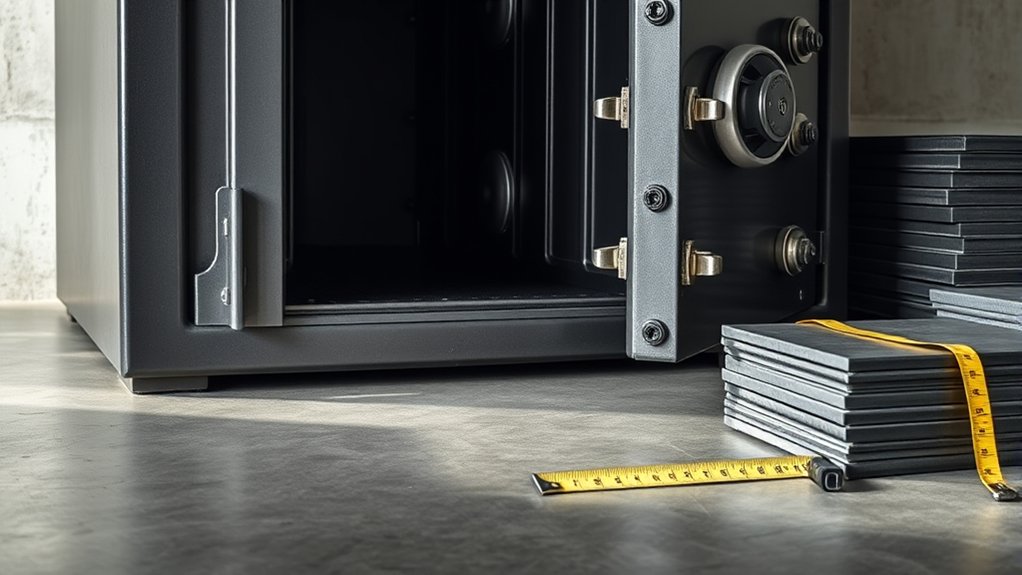
Steel gauge plays a crucial role—lower gauge means thicker, heavier, and sturdier gun safes.
For example, a 10-gauge steel safe weighs a lot more than a 14-gauge one because of the denser material. The overall size also matters a lot. Bigger safes mean more steel and fireboard layers, which add to the weight for better fire resistance.
Reinforced doors with thick bolts and steel reinforcements also increase the weight. These features boost security but make the safe heavier.
Don’t forget about interior features like shelves and compartments. They add extra material weight, making the safe even heavier overall.
How to Choose Gun Safe Weight for Your Floor
When choosing the weight of your gun safe, it’s important to think about the type of floor supporting it. You want to make sure your floor can handle the load to keep everything safe and steady.
Before installing, check your floor’s load capacity, especially if you’re opting for a heavy safe. If your safe weighs over 750 lbs, reinforced flooring becomes essential. Lighter safes, around 25-50 lbs, are usually fine on upper floors without any extra support.
For safes over 500 lbs, bolting them down is a good idea. This helps prevent tipping and theft, especially if you have a wooden floor.
| Gun Safe Weight (lbs) | Floor Support Needed | Installation Considerations |
|---|---|---|
| 25-50 | Standard flooring | Minimal, suitable for upper floors |
| 100-300 | Assess load capacity | May require reinforcement |
| 500+ | Reinforced flooring | Bolting recommended for security |
It’s always a good idea to consult a professional. They can make sure your floor can handle the weight securely. Better safe than sorry!
How Gun Safe Size Impacts Weight
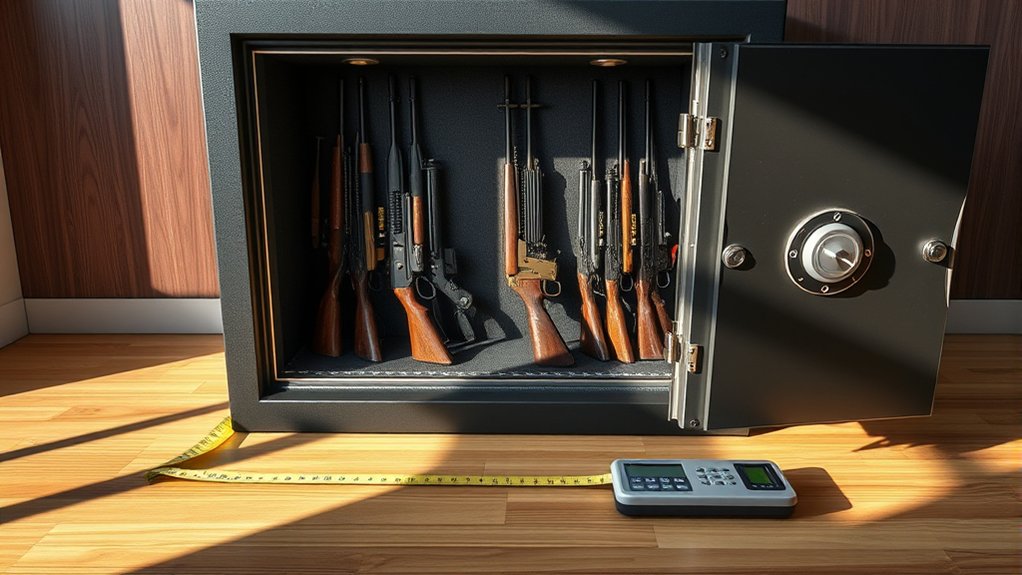
Since gun safes come in a wide range of sizes, it’s important to understand how size affects weight. The bigger the safe, the heavier it tends to be because it needs more steel, fireboard layers, and security features.
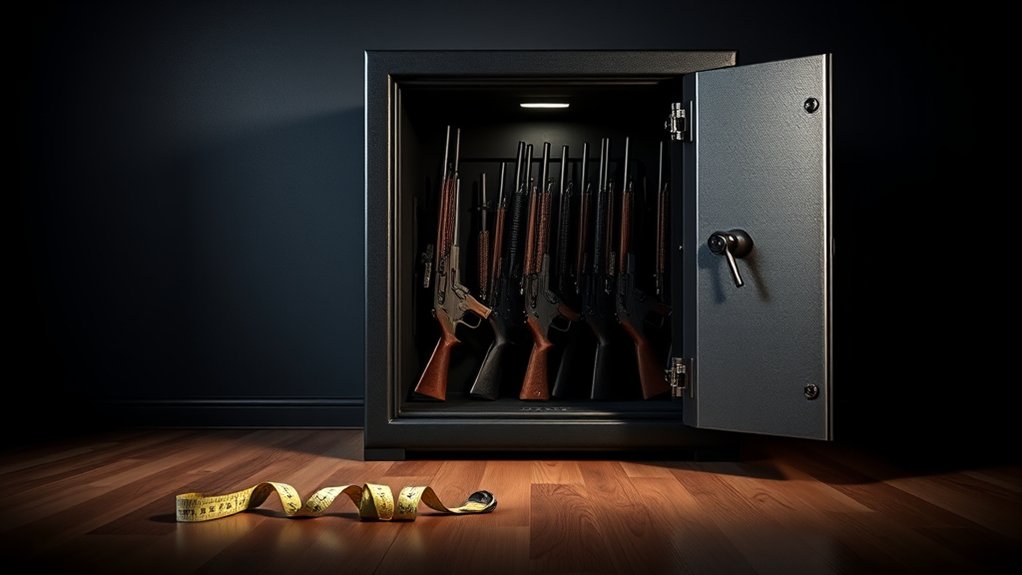
Small safes, designed for 1-5 guns, usually weigh between 8 and 50 pounds. They’re portable and easy to move around, but they don’t offer much storage space.
On the other hand, larger safes that hold 20 or more firearms can weigh over 200 pounds. These safes often require reinforced flooring and professional installation to keep them secure.
As your storage needs grow, so does the weight of your safe. This increase reflects the added security features and more robust construction.
Getting a clear picture of how size impacts weight helps you choose a safe that fits your protection needs and your space for installation.
Why Steel Gauge Matters for Weight and Security
Understanding steel gauge is essential because it directly impacts both the weight and security of your gun safe.
The steel gauge refers to the thickness of the steel used. A lower gauge number means thicker steel. Thicker steel, like 10-gauge, makes the safe significantly heavier compared to thinner options like 14-gauge.
This increased weight isn’t just about bulk—it also makes the safe more durable and resistant to tampering or forced entry. When you go for thicker steel, you’re investing in better security.
On the other hand, higher gauge steel reduces the weight of the safe but also lowers its protective strength. So, if you’re choosing a safe, consider how the steel gauge will affect both its weight and its ability to withstand an attack.
Prioritizing thicker steel might mean dealing with a heavier, more robust safe, but it offers greater security. It’s all about finding the right balance between weight and protection for your needs.
How Fireboard Layers Add Weight and Protect Your Safe
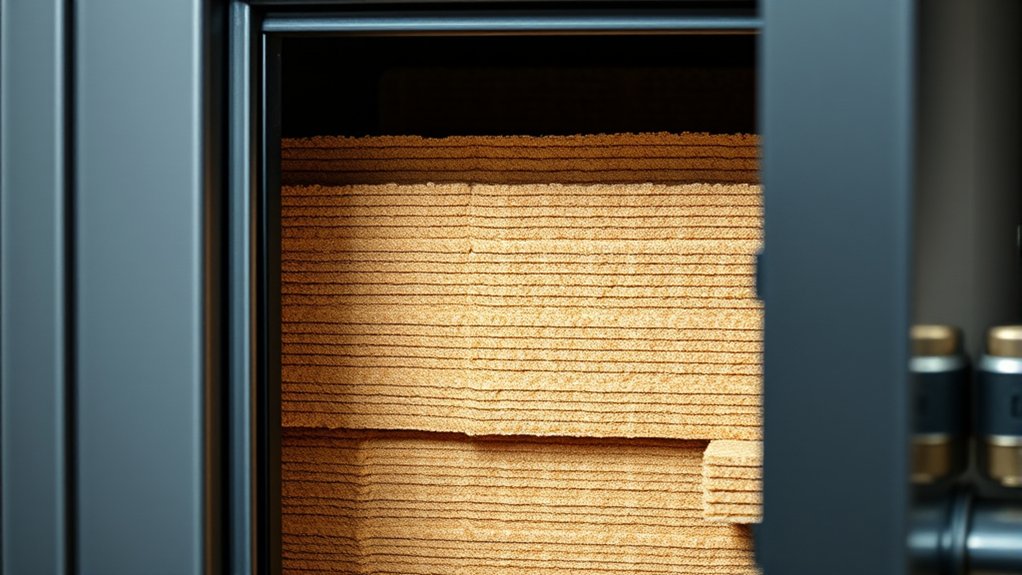
Beyond steel gauge, the materials used for fire protection play a big role in your gun safe’s overall weight and security.
Fireboard layers, usually made from gypsum or fire-retardant drywall, add a lot of mass while boosting fire protection. Each layer can increase the safe’s weight by 15-30 pounds. Full fireboard insulation systems can add anywhere from 100 to 200 pounds.
This extra weight impacts how you install and support your safe. It’s important to have sturdy flooring that can handle the load.
Keep in mind, more fireboard layers mean better fire protection. They can help your safe achieve 1-2 hours of fire resistance. But, the added layers also increase the total weight of the safe.
Understanding how fireboard insulation works helps you find the right balance. You want good fire safety without making your safe too heavy to handle or install easily.
How Design Features Influence Weight and Durability
While choosing a gun safe, you’ll notice that design features significantly impact both its weight and durability. Heavy safes usually have thick gauge steel on the doors and walls. They also include steel reinforcement around key areas like hinges and locking mechanisms.
These security features, such as multiple locking bolts and reinforced door frames, add a lot of weight. But they also make the safe much harder to force open.
Incorporating layers of fireboard and steel liners further increases the weight but provides important fire protection.
This combination of thick steel, fireboard, and reinforcement results in a safe that’s stronger and more durable. It can withstand both physical attacks and high temperatures.
Understanding how these design choices affect weight helps you pick a safe that offers good protection without being too heavy to handle easily. This way, your firearms stay secure without sacrificing structural integrity.
Balancing Gun Safe Weight With Security and Installation
Although heavier gun safes usually offer better security thanks to thicker steel and reinforced features, you need to consider your installation options carefully.
Weight directly affects how you install your safe. Heavy safes over 500 lbs require secure installation methods to prevent theft and damage to your flooring.
To find the right balance between security and ease of installation:
- First, check your flooring’s safe weight capacity before choosing a heavy-duty gun safe.
- Safes weighing between 100-300 lbs can provide good security and are easier to install.
- Always bolt heavy safes to reinforced flooring to keep them stable and secure from theft.
Frequently Asked Questions
Can I Move a Heavy Gun Safe by Myself Safely?
You shouldn’t move a heavy gun safe by yourself without following strict moving tips and safety precautions.
Always use proper lifting equipment and safety gear to prevent injuries.
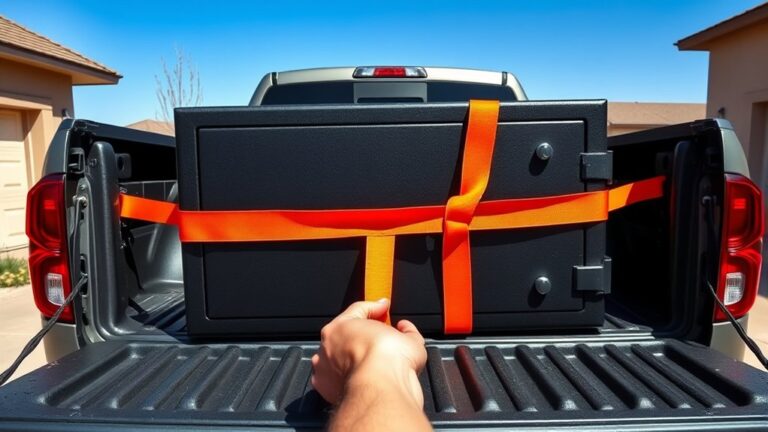
For safes over 500 pounds, consider using dollies or straps to help with transportation.
If the safe weighs more than 750 pounds, it’s best to seek professional help. Trying to move such a heavy item alone can cause damage or personal injury.
Disassembling parts of the safe can make it easier to handle, but never underestimate the risks involved.
Moving heavy safes on your own can be dangerous, so when in doubt, call in the experts.
How Does Climate Affect Gun Safe Weight Over Time?
You mightn’t realize it, but climate impact can subtly change your gun safe’s weight over time. Humidity effects cause corrosion, which can lead to rust buildup that adds weight or material loss that diminishes it.
Temperature fluctuations also play a role. They cause the metal to expand and contract, stressing the material and affecting weight distribution. Over time, these changes can impact the safe’s overall integrity.
To combat this, focus on rust prevention and corrosion resistance measures. Keeping your safe in a controlled environment helps minimize these effects.
Doing so guarantees your safe remains sturdy and reliable despite harsh environmental conditions.
Are Heavier Gun Safes More Expensive to Insure?
Yes, heavier gun safes often cost you more to insure because their material durability and fireproof features signal higher security.
Insurers see robust locking mechanisms, superior fire ratings, and enhanced theft resistance as indicators of better protection, which drives premiums up.
While interior organization adds value, weight primarily reflects these protective elements.
What Maintenance Is Required for Heavy Gun Safes?
Think of your heavy gun safe as a fortress that demands royal care. You’ll want to regularly inspect and lubricate the lock mechanism to keep it running smoothly.
Check the fire insulation and fireproof materials for any damage. This is key to making sure your safe provides maximum protection.
Maintain corrosion resistance by gently cleaning the metal surfaces. It’s a simple step that can extend the life of your safe.
Don’t forget about the interior lighting. Replace bulbs promptly to keep everything visible and easy to access.
Secure anchoring is essential for theft prevention. Tighten bolts and keep an eye on hinges for signs of wear to keep your fortress unyielding.
Do Heavier Gun Safes Affect Resale Value?
Yes, heavier gun safes can positively impact resale value because they often feature more robust materials, advanced locking mechanisms, and better security features. These qualities signal to buyers that the safe offers superior protection.
Fireproof safes with high fire resistance ratings and strong theft deterrents tend to appeal to safety-conscious buyers. They want to know their valuables are well-protected from both theft and fire.
However, if the safe’s weight means costly installation or requires reinforced flooring, it might turn some buyers away. The added difficulty and expense can be a downside.
Ultimately, the effect on resale value depends on how much buyers value these protective features versus the convenience of a lighter, easier-to-move safe.
Conclusion
When choosing a gun safe, keep in mind that weight isn’t just about size. It’s actually crucial for security. Did you know that increasing the steel gauge can add up to 50 pounds per square foot? That extra weight can significantly boost protection.
Balancing weight with your floor’s capacity and installation needs is key. You want the safe to be secure without putting too much strain on your space. Understanding how design, fireboard layers, and materials impact weight helps you make a smarter choice.
This way, you can find a safe that safeguards your valuables effectively without unnecessary bulk.