What Is A Good Fire Rating For A Gun Safe – Safety Standards Explained
You’ll want a gun safe with at least a 1-hour UL Class 350 fire rating to keep internal temperatures below 350°F. This helps protect your firearms and ammunition during typical house fires that can reach up to 1,700°F.
This rating guarantees the safe can withstand extreme heat and physical impacts. If you have sensitive electronics, look for UL Class 125 ratings instead. Understanding certifications, testing standards, and fire resistance factors will help you pick the safest option for your valuables.
Key Takeaways
- A good fire rating for a gun safe is at least 1 hour at 1,700°F, ensuring interior temperatures stay below 350°F to protect firearms.
- UL Class 350 certification is essential, maintaining internal heat under 350°F to prevent damage to guns and paper valuables.
- For digital media or sensitive electronics, a UL Class 125 rating keeps temperatures below 125°F during fire exposure.
- Longer fire ratings, such as 2 hours, offer extra protection but increase safe weight and cost.
- Verifying third-party certifications and proper safe placement enhances fire protection effectiveness for gun safes.
What Does a Fire Rating Mean for Gun Safes?
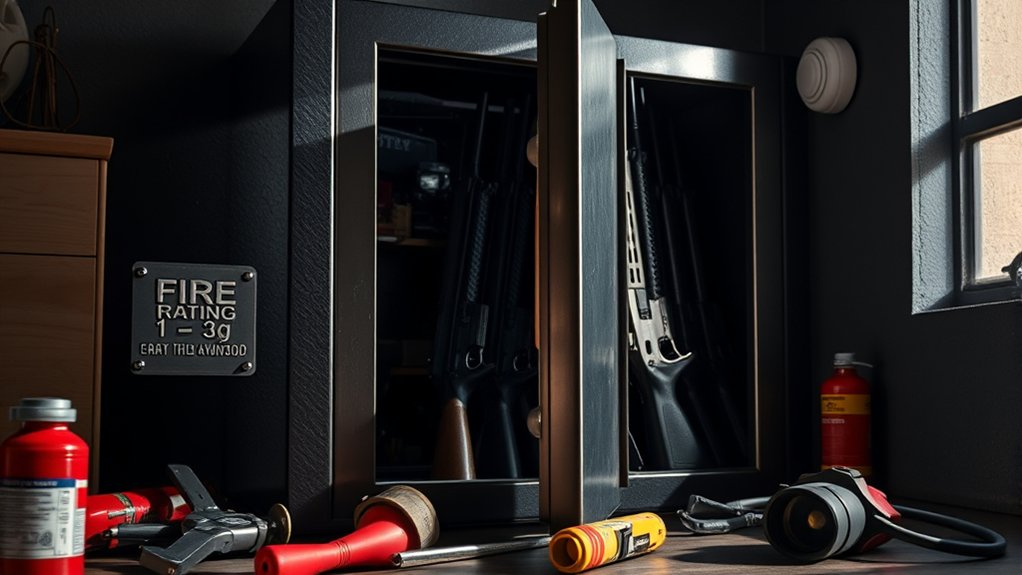
How long can a gun safe protect its contents during a fire? The fire rating answers this by showing how long the safe keeps its internal temperature below critical levels. Fire ratings are certified through tough fire tests and measure fire resistance against safety standards.
For example, a UL Class 350 rating means the safe keeps internal temperatures under 350°F. This protects paper and many valuables for the rated time, which is often between 30 minutes and 2 hours.
A UL Class 125 rating offers even stricter control. It ensures temperatures stay below 125°F to protect sensitive digital media and firearm components.
These fire ratings are key to knowing if a gun safe can protect your stuff during typical house fires, where outside temperatures can go over 1,100°F.
Why Interior Temperature Limits Matter More Than External Heat
You really need to pay attention to the interior temperature thresholds because they’re what actually determine if your valuables make it through a fire. This is especially true for sensitive items like paper and digital media.
Fire ratings are all about keeping the inside of the safe below key temperatures—350°F for paper and 125°F for digital files—no matter how hot it gets on the outside.
The way a safe is built and insulated is super important for keeping those protective temperatures steady during a fierce fire.
Interior Temperature Thresholds
Although external temperatures during a fire can soar well beyond safe limits, what truly matters is the interior temperature of the gun safe. The fire rating reflects how long the safe can maintain interior temperature below critical thresholds, ensuring safe protection of your valuables. Understanding these temperature thresholds is crucial for fire safety.
For example, paper documents require interior temperatures below 350°F to avoid ignition or damage. Digital media demands even stricter control, with temperatures under 125°F to prevent data loss.
So, you want a safe that can keep things cool inside, no matter how hot it gets outside.
A high fire rating guarantees that heat transfer is limited, keeping interior temperature within safe limits despite intense external heat. That way, you can trust your valuables will be protected when it counts the most.
Protecting Sensitive Contents
Three critical factors determine whether your gun safe truly protects sensitive contents during a fire: the interior temperature limits, the safe’s insulation quality, and its construction integrity.
Fire ratings focus on maintaining the interior temperature below critical thresholds, not just withstanding external heat.
For example, sensitive items like digital media and firearms with plastic components require UL Class 125 ratings to keep interior temperatures under 125°F.
A fire safe’s insulation and solid construction prevent heat transfer, ensuring the interior stays below these limits even when external temperatures exceed 1,700°F.
Fire testing measures how long a safe can protect the contents by maintaining safe interior conditions.
How Fire Ratings Affect Protection of Guns and Ammunition
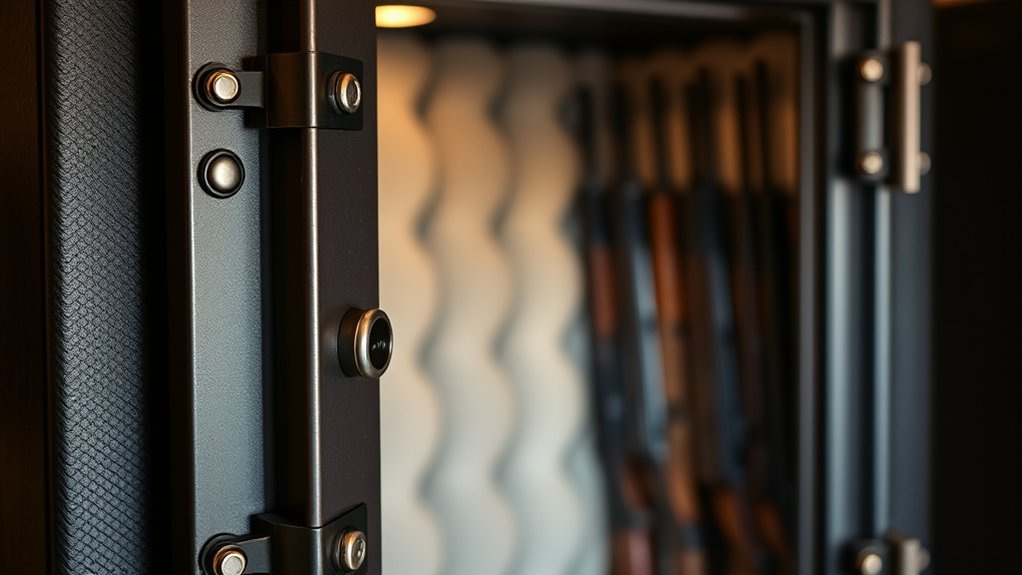
When selecting a gun safe, understanding how fire ratings impact the protection of your firearms and ammunition is critical. Fire ratings determine a safe’s fire resistance and its ability to maintain interior temperatures that prevent damage during a fire.
Certified fire safes with appropriate ratings ensure your guns and ammunition stay below ignition or deformation points.
Key factors include fire ratings of at least 1 hour at 1,700°F, which provide essential protection against extreme heat exposure. UL Class 350 certification guarantees interior temperatures remain under 350°F, safeguarding firearm components.
Also, maintaining interior temperatures below 125°F is crucial for digital media and electronic firearm accessories.
Choosing a safe with verified fire resistance certification guarantees maximum protection against fire damage. This way, you can preserve your firearms and ammunition even under severe conditions.
It’s definitely worth the investment for peace of mind.
Comparing 60-Minute and 2-Hour Fire Ratings for Gun Safes
You’ll want to think about whether the extra protection of a 2-hour fire rating is worth the higher price and heavier weight.
Both 60-minute and 2-hour safes keep internal temperatures below 350°F during most house fires, so they do a solid job.
But if you have really valuable or sensitive items, the longer fire rating can give you that extra peace of mind.
In the end, it’s all about finding the right balance between how much security you need and practical things like your budget and how easy it’s to move the safe around.
Duration Versus Protection
How long should your gun safe protect its contents from fire? Understanding the balance between fire rating and protection duration is crucial.
A 60-minute fire rating keeps the interior temperature below 350°F for one hour. This is mainly good for paper but less ideal for sensitive firearms or digital media.
A 2-hour rating doubles this fire exposure time. It offers better fire-resistant protection that meets stricter fire safety standards.
Think about these factors when checking safe ratings:
Real-world house fires can reach 1,100°F to 1,300°F within 15 to 30 minutes. So, you need prolonged protection.
Longer protection means better insulation and stronger construction.
The key difference is how long the safe can keep its interior temperature safe under extreme heat.
Choosing between 60-minute and 2-hour fire ratings really comes down to how much protection time you need.
Cost And Practicality
Although a 2-hour fire rating provides extended protection, most gun owners find that a 60-minute rating offers a more practical balance between cost, weight, and fire resistance.
A 60-minute fire rating adequately protects your firearms during typical home fires, which rarely exceed one hour or 1,200°F.
Achieving a 2-hour fire rating demands additional insulation and thicker walls, which considerably increase both the cost and safe weight. This added bulk can make installation more complicated and reduce mobility.
For the average user, the 60-minute fire rating delivers sufficient protection without excessive expense or cumbersome weight.
You might consider investing in a 2-hour rated safe only if you store highly valuable or irreplaceable items, where the higher cost and decreased practicality make sense for the enhanced fire protection.
Fire Rating Testing Standards and Certifications to Trust
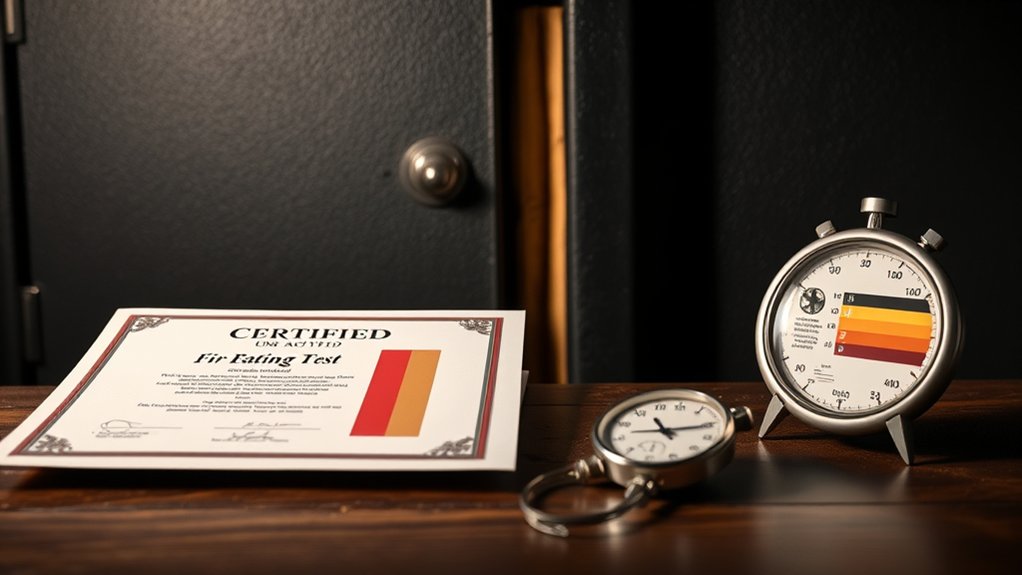
When selecting a gun safe, understanding the fire rating testing standards and certifications is essential to guarantee your valuables receive reliable protection. Fire ratings and certifications, such as those from UL, define a safe’s fire resistance by specifying the maximum interior temperature maintained during fire exposure. These standards rely on rigorous third-party testing to simulate real fire conditions, ensuring claims are verifiable.
Key certifications and testing standards to trust include:
- UL Certifications: UL Class 350, 150, and 125 ratings indicate protection duration and interior temperature limits.
- Independent Third-Party Testing: Organizations validate fire resistance through controlled heat exposure and temperature monitoring.
- International Standards (ETL, JIS, KIS): These offer additional benchmarks for fire resistance across various durations.
Always verify certifications to confirm the safe meets your required fire resistance level and temperature thresholds. It’s worth taking the time to double-check, so you know your valuables are truly protected.
How Impact and Explosion Tests Complement Fire Ratings
Because fire exposure alone doesn’t capture all real-world threats, impact and explosion tests play a crucial role in validating a gun safe’s overall resilience. Impact tests measure your safe’s ability to endure physical shocks and falls after intense heat exposure, ensuring it remains securely closed.
Explosion tests evaluate whether the safe can safely vent internal moisture without bursting during rapid temperature spikes, like flash fires.
Together, these tests complement fire ratings by addressing durability and structural integrity under combined thermal stress and mechanical forces. Safety standards incorporate these test results to confirm a safe’s capacity to withstand complex fire scenarios.
How to Choose the Right Fire Rating for Your Gun Safe
Selecting the right fire rating for your gun safe hinges on evaluating the value and sensitivity of your firearms and other valuables. To guarantee ideal contents protection and safe durability, consider these key factors:
Match the fire rating to typical fire temperature and fire duration in your region, usually between 1,100°F and 1,300°F.
Choose certified safes with UL certification specifying interior temperature limits (e.g., UL Class 350 or 125) that align with your valuables’ heat tolerance.
Balance your budget and practical concerns, recognizing that longer fire duration ratings increase cost and weight.
It’s all about finding the right fit for your needs without overspending.
Tips to Maximize Fire Safety Beyond Fire Ratings
Although choosing a fire-rated safe is essential, you can substantially enhance protection by implementing additional fire safety measures. Use multiple layers of fire-resistant insulation and high-quality seals, such as Palusol®, to reduce heat penetration beyond standard fire ratings.
Position your safe away from exterior walls, windows, and heat sources by placing it centrally in your home to minimize exposure to extreme temperatures.
Supplement your fire-rated safe with fireproof containers for especially valuable firearms to add a secondary protective barrier.
Regular maintenance is vital. Inspect seals, hinges, and insulation materials frequently to preserve ideal fire resistance.
Finally, integrate thorough fire safety measures like smoke detectors, fire extinguishers, and fire-resistant building materials to create a robust defense system, notably augmenting the safe’s inherent fire protection capabilities.
Frequently Asked Questions
How Often Should I Replace the Fireproof Seal in My Gun Safe?
You should replace the fireproof seal in your gun safe every 5 to 10 years, depending on usage and environmental exposure. Regularly inspect the seal for cracks, brittleness, or loss of flexibility. These signs indicate that the seal is degrading and needs attention.
If your safe experiences a fire or flood, replace the seal immediately. It’s also a good idea to change it during major maintenance.
Keeping an effective seal is really important. It helps preserve your safe’s fire resistance and protects your valuables. So, don’t overlook this small but crucial part!
Can a Fireproof Gun Safe Protect Against Smoke Damage?
You’d think a fireproof gun safe would block smoke too, right? Not necessarily. While these safes resist heat, smoke can slip through tiny gaps or compromised seals, damaging your firearms.
To truly protect against smoke, you need a safe with verified smoke-resistant seals or specialized fire and smoke certifications. Without these, your “fireproof” safe might just be a smoke magnet.
What Maintenance Is Required to Keep a Gun Safe Fire-Resistant?
You must regularly inspect the door seal to guarantee it remains intact and effective. Avoid excessive moisture or humidity, which can degrade insulation materials. Follow the manufacturer’s maintenance schedule strictly, and don’t modify the safe’s structure or fireproof components.
It’s a good idea to periodically test its fire resistance, especially after relocation or repairs. Also, maintain internal temperature and humidity within recommended ranges to preserve fireproof materials and ensure ongoing protection.
Keeping these steps in mind will help your gun safe stay fire-resistant for years to come.
Are Digital Locks More Fire-Resistant Than Mechanical Locks?
Digital locks aren’t more fire-resistant than mechanical locks. They’re like delicate circuits compared to sturdy gears. You’ll find mechanical locks withstand high heat better because they lack vulnerable electronics.
Digital locks’ components can fail above 125°F.
Whereas mechanical locks keep working even after intense heat exposure.
How Does Humidity Inside the Safe Affect Gun Preservation During a Fire?
Humidity inside your gun safe considerably impacts gun preservation during a fire. High humidity combined with heat accelerates corrosion and rust on your firearms. You’ll want a safe with proper insulation and moisture-resistant seals to regulate humidity and prevent condensation.
Without these features, moisture buildup forms during cooling, causing metal deterioration. Ensuring your safe controls humidity effectively reduces corrosion risks and preserves your firearms’ integrity during and after a fire event.
Conclusion
Choosing the right fire rating for your gun safe isn’t just about numbers. It’s about safeguarding your firearms and ammunition effectively. Would you settle for less protection when lives and valuables are at stake?
Prioritize safes with verified interior temperature limits and trusted certifications. Remember, combining fire ratings with impact and explosion resistance offers thorough security. Don’t overlook additional safety measures to enhance protection.
Ultimately, your choice should reflect a balance between fire endurance and real-world resilience.