What Is A Reflex Sight Vs Red Dot – Key Differences Explained
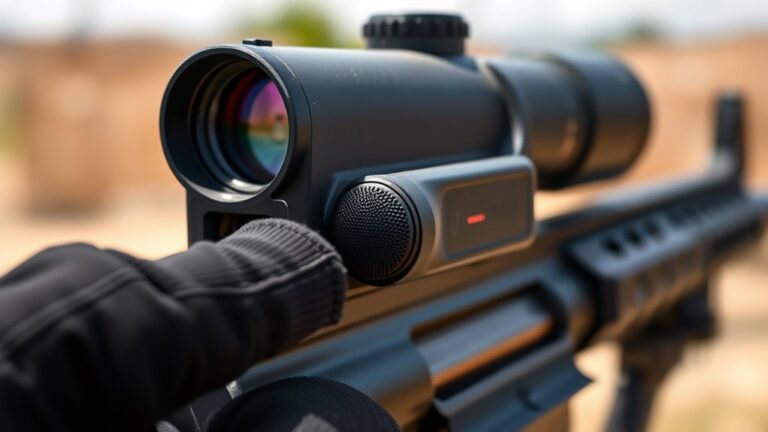
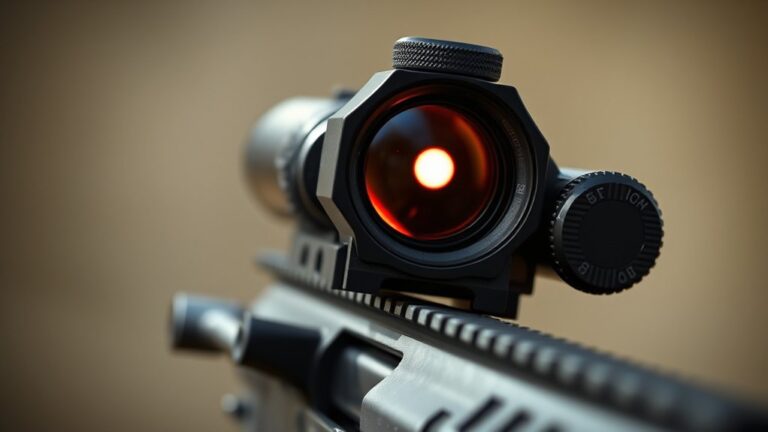
A reflex sight projects an illuminated reticle onto an open, reflective lens for quick target acquisition and a wide field of view. But it’s more exposed to dirt and has shorter battery life.
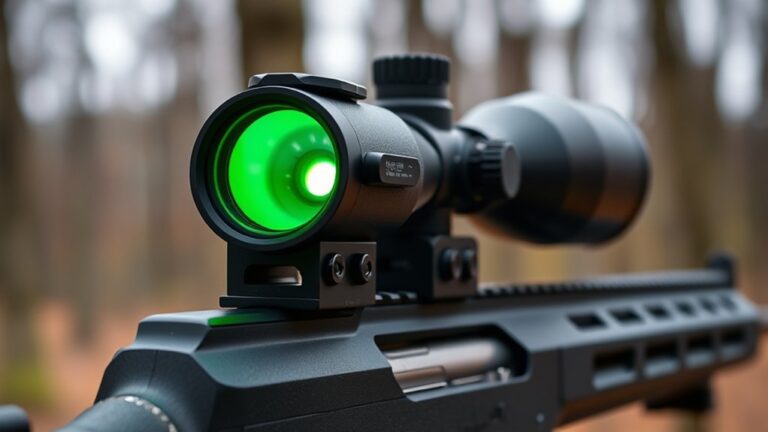
A red dot sight is a sealed, tube-style optic offering better durability, weather resistance, and longer battery life. It’s ideal for harsh environments.
Knowing these design and performance differences helps you choose the right sight to match your shooting needs. There are more insights available if you want to dive deeper.
Key Takeaways
- Reflex sights use an open, reflective lens projecting the reticle; red dot sights are enclosed tube-style reflex sights offering more protection.
- Red dot sights provide superior environmental durability and longer battery life compared to open reflex sights.
- Reflex sights offer a wider field of view and faster target acquisition but are more exposed to dirt and damage.
- Red dot sights are better suited for harsh weather and extended use due to sealed housings and less maintenance.
- Choose reflex sights for quick, close-range engagements and red dot sights for durability and longer-range accuracy.
What Is a Reflex Sight? How Does It Work?
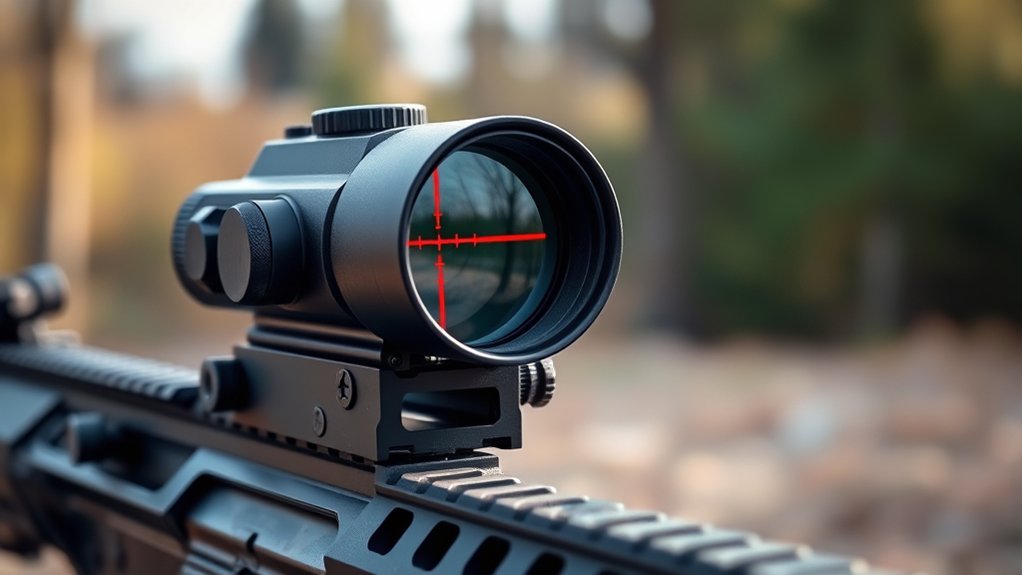
Although you might be familiar with traditional scopes, a reflex sight offers a distinct advantage by projecting an illuminated reticle onto a reflective lens. This allows you to quickly acquire targets.
This optical device uses a LED-generated reticle reflected on a semi-transparent mirror, so you see the reticle superimposed on your target. Thanks to the collimated light path, the reticle stays aligned regardless of your eye position, which enhances accuracy.
The reflex sight’s open design, either with an open emitter or enclosed lens, facilitates rapid target acquisition while maintaining a wide field of view. This design lets you engage targets with both eyes open, preserving peripheral vision and situational awareness.
Reflex sights combine speed, precision, and clarity, making them ideal for dynamic shooting scenarios.
Red Dot Sights: Definition and Core Features
When you choose a red dot sight, you get a specialized type of reflex sight designed for speed and simplicity. A red dot projects an illuminated reticle, usually a red or green dot, onto a lens. This gives you rapid target acquisition with a clear 1x sight picture.
This lets you shoot with both eyes open, which enhances situational awareness much like traditional open sights but with greater precision. The reticle size, measured in MOA, typically ranges from 1 to 5. This allows you to select the suitable dot for your shooting scenario.
Red dot sights feature a durable housing with fully enclosed dual lenses, protecting the emitter from dirt and rain. Their robust design and long battery life make them reliable in various lighting conditions and demanding environments.
How Reflex and Red Dot Sights Differ in Design
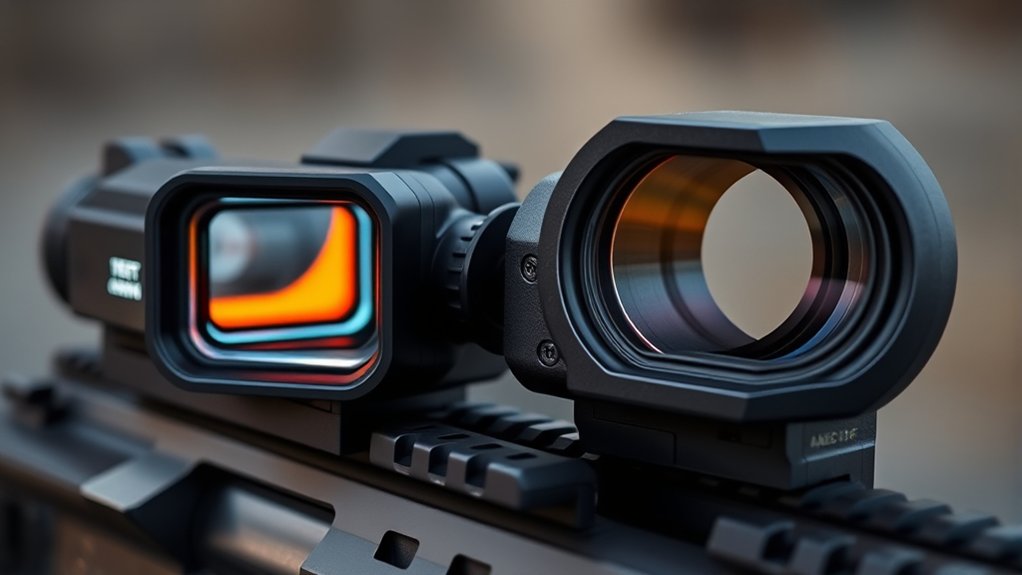
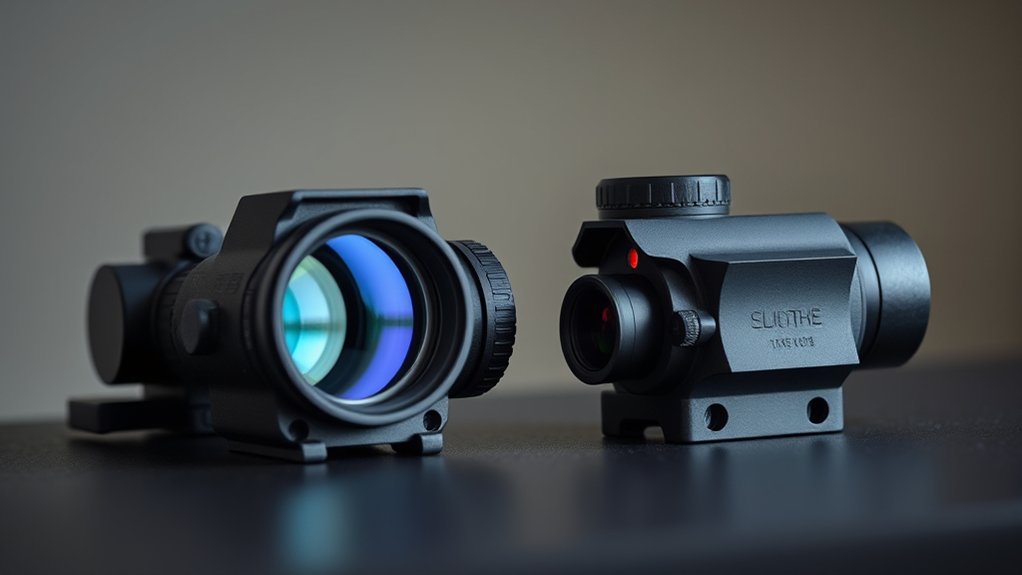
Understanding the design differences between reflex and red dot sights helps you choose the right optic for your needs. Reflex sights use reflective glass lenses with LED emitters to project the reticle.
Red dot sights are a subset of reflex sights, mostly in tube-style red dots.
Here’s how they differ: Reflex sights often feature open reflex sight designs for faster sight and target acquisition. Red dot sights typically come in enclosed, tube-style red dots offering better protection.
Open reflex sights provide a wider field of view compared to tube red dots.
Tube-style red dots excel in environmental durability and precision at longer ranges.
The design of a reflex sight reflects the reticle onto a semi-transparent lens, which sets it apart from other optic types. This clarity guarantees you pick the ideal sight for your shooting style.
Pros and Cons of Reflex Sights for Tactical Use
You’ll really like reflex sights because they’re lightweight and have large viewing windows. This makes it easier and faster to acquire targets, plus you get better peripheral awareness in tactical situations. That’s a big advantage when every second counts.
On the flip side, their open design means they’re more exposed to dirt and the elements. This can sometimes mess with their performance when you need them most.
Tactical Advantages
Although reflex sights offer rapid target acquisition and a wide field of view that suits close-quarters engagements, their open design leaves them vulnerable to dirt, mud, and debris.
When considering the tactical advantages of a reflex sight versus a red dot, you’ll appreciate their unique strengths. Reflex sights enable faster shooting thanks to their open design and expansive field of view. Plus, their lightweight and compact build really boosts maneuverability in tight spaces.
Red dot sights, on the other hand, being enclosed, provide superior durability in harsh environments.
Reflex sights also help reduce fatigue during prolonged operations because of their minimal weight. The open design of reflex sights trades some protection for speed, which can be a decisive factor tactically.
Understanding these factors makes it easier to choose the right optic tailored to your tactical needs.
Limitations and Challenges
While reflex sights excel in speed and maneuverability, they come with notable limitations that can impact their tactical effectiveness. Their open design increases vulnerability to environmental elements like dirt, mud, and debris. This can cause occlusion or damage the emitter, which is definitely something to keep in mind.
Because of this exposure, reflex sights tend to be less durable and offer less environmental protection compared to enclosed red dot sights. That makes reflex models less reliable in harsh or unpredictable conditions.
On top of that, lens fogging and glare can impair visibility, especially in humid or bright environments. This can make target acquisition more complicated than you’d like.
You should also consider that these factors—vulnerability to occlusion, reduced durability, and susceptibility to environmental interference—can limit reflex sights’ operational reliability during extended tactical use.
Pros and Cons of Red Dot vs Reflex Sights
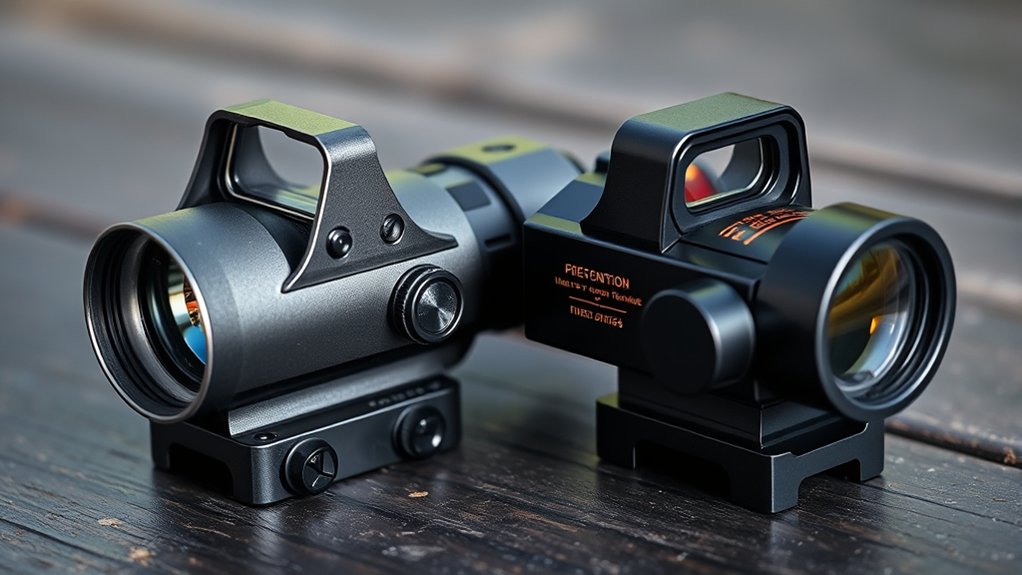
When you’re deciding between red dot and reflex sights, it’s all about balancing durability with speed and accuracy. Red dot sights are known for their tough build and solid protection, so they hold up well in rough conditions.
On the flip side, reflex sights really shine when it comes to quickly picking up your target and offering a wider field of view.
That said, they mightn’t be quite as resistant to harsh environments. So, it really depends on what you value more in your shooting experience.
Durability And Protection
Because your gear often faces harsh conditions, durability and protection become essential factors when choosing between red dot and reflex sights. Enclosed red dots offer superior durability by shielding internal components from environmental elements like dust, rain, and debris.
In contrast, open reflex sights expose lenses and emitters, increasing vulnerability to physical impacts and contamination.
Consider these points:
- Enclosed red dots provide robust protection against environmental elements
- Open reflex sights are lighter but less shielded from dirt and mud
- Red dots generally have a longer lifespan due to their protective housing
- Reflex sights need extra care in adverse weather to maintain clarity
- Your choice depends on whether you prioritize rugged durability or lightweight design
Understanding these differences ensures you select the sight best suited for your operational environment.
Speed And Accuracy
Although both red dot and reflex sights enhance your shooting experience, they each offer distinct advantages and trade-offs in speed and accuracy.
Reflex sights, with their open design and larger viewing window, enable quicker target acquisition, making them ideal for rapid, close-range engagements.
But this open design can cause glare or reflections, which might reduce accuracy in bright conditions.
On the other hand, red dot sights are enclosed to protect against environmental factors. They provide longer battery life and clearer reticles, especially in low light.
This means red dots improve both speed and accuracy over extended use and at longer ranges.
So, when choosing between these sights, think about your shooting scenario.
Reflex sights excel in speed for quick targets, while red dots deliver more consistent accuracy.
That way, your shot counts precisely where it matters most.
Environmental Impact on Reflex and Red Dot Sights
Environmental conditions play a crucial role in the performance and maintenance of reflex and red dot sights. The environmental impact influences which sight you’ll choose, especially when facing harsh elements.
Enclosed red dot sights feature a protective design that shields against dust, mud, rain, and other debris. In contrast, open reflex sights expose the emitter and lens, making them more vulnerable to obstruction. Consider these factors for environmental durability:
- Enclosed red dot sights resist dust, mud, and rain effectively
- Open reflex sights require frequent cleaning to maintain clarity
- Dirt and snow can impair open reflex sight functionality
- Protective design in enclosed models enhances operational reliability
- Lightweight open reflex sights sacrifice some environmental protection
Understanding these distinctions ensures you select a sight suited for your environment and mission demands. It’s all about matching your gear to what you’re up against.
Cost, Maintenance, and Battery Life Compared
When choosing between reflex and red dot sights, you’ll want to weigh cost, maintenance, and battery life alongside environmental factors. Reflex sights generally have shorter battery life, around 5,000 hours, compared to red dot sights, which can last up to 50,000 hours thanks to energy-efficient technology.
Reflex sights often cost more, especially high-end models, while basic red dot sights remain more affordable.
Maintenance differs too. Red dot sights have sealed, weatherproof housings that boost durability and cut down on upkeep.
On the other hand, open reflex sights are easier to clean but more exposed to debris and need frequent adjustments.
You’ll find red dot sights better suited for harsh conditions with less maintenance, while reflex sights require more frequent battery replacements and careful handling to keep performance and durability on point.
How to Choose the Right Sight for Your Firearm
Since every firearm and shooting scenario differs, choosing the right sight means really thinking about your specific needs. Focus on what you’ll be using your firearm for, whether it’s duty, competition, or concealed carry. This will help you figure out the ideal sight for your situation.
Choosing the right sight starts with understanding your specific firearm use—duty, competition, or concealed carry.
Also, consider the environment you’ll be shooting in. Enclosed red dots protect against weather, while open reflex sights let you pick up targets faster. Don’t forget to pay attention to reticle size and color so it’s easy to see at the distances you usually shoot.
You’ll want to check battery life and durability too, making sure your sight can handle the conditions you’ll be in.
Lastly, confirm that your sight works with your firearm’s mounting system so it fits right and handles well.
- Match reticle size to shooting distance
- Prioritize durability for harsh environments
- Choose battery life based on usage frequency
- Confirm mounting system compatibility
- Align sight choice with your intended use
Frequently Asked Questions
Can Reflex Sights Be Used With Night Vision Devices?
Yes, you can use reflex sights with night vision devices, but only if the sight is designed for night vision compatibility. Look for features like night vision retention or low-light brightness settings that prevent reticle blooming. Not all reflex sights support this, so check the manufacturer’s specs carefully.
Sometimes, you might need additional gear like infrared illuminators to make the reticle visible through your night vision device.
It’s always a good idea to test your setup before relying on it in the field. That way, you’ll know exactly how everything works together.
Are Red Dot Sights Compatible With Magnifiers?
Yes, red dot sights are compatible with magnifiers, but it depends on the mounting system and size. Most use standard footprints like Aimpoint or Vortex, so you can easily add a magnifier behind the sight.
You can switch between magnified and unmagnified views using flip-to-side mounts.
That said, compact red dots mightn’t provide enough space for larger magnifiers. So, you’ll want to check your specific setup before pairing them to make sure everything fits and works smoothly.
How Do Reflex Sights Perform in Extreme Weather Conditions?
If you’re caught in extreme weather, reflex sights can struggle because their open design lets dirt, snow, and moisture block your view. You’ll notice fogging or reduced brightness, especially in cold or wet conditions.
To keep your sight reliable, you’ll need to maintain it regularly and choose weather-resistant models. Otherwise, your aiming accuracy might suffer when you need it most.
It’s all about staying prepared and picking the right gear for tough environments.
Can Red Dot Sights Be Mounted on Rifles and Handguns Interchangeably?
Yes, you can mount red dot sights on both rifles and handguns, but you’ll need compatible mounting systems. Smaller microdots suit handguns, while larger sights fit rifles better.
Make certain your sight matches the firearm’s rail or slide specs, and use proper mounts or adapters for a secure fit. This guarantees stability and accuracy when switching between platforms.
What Reticle Shapes Are Available in Red Dot and Reflex Sights?
You’ll find red dot and reflex sights offer reticles like simple dots, circles, crosshairs, or combinations. Dot sizes range from 1 to 6 MOA, balancing precision and speed.
Circular reticles with central dots speed up close-range shooting.
Crosshairs vary, with some illuminated or segmented for specific scenarios. Many models let you switch reticle shapes, so you can adapt quickly to different distances and shooting styles. This gives you versatile aiming options.
Conclusion
Choosing between a reflex sight and a red dot is like picking the right lens for your journey. You need clarity and speed that match your path. Reflex sights offer a wide view for swift, tactical moves, while red dots provide simplicity and reliability.
Know your environment, mission, and budget. Then trust the sight that aligns with your needs. Your aim deserves nothing less than precision and confidence every time you engage.