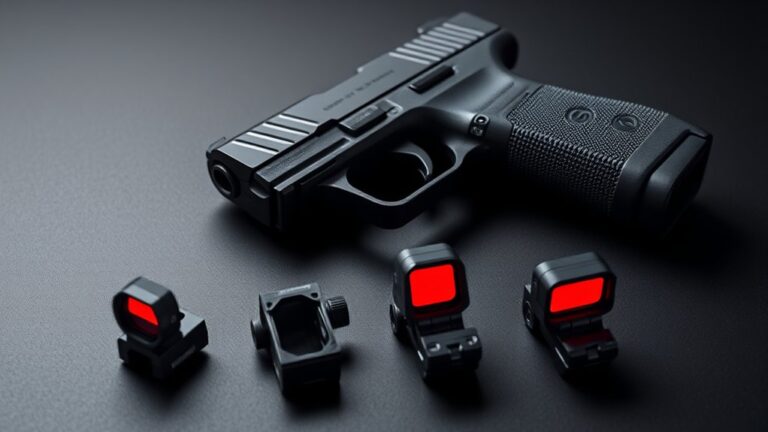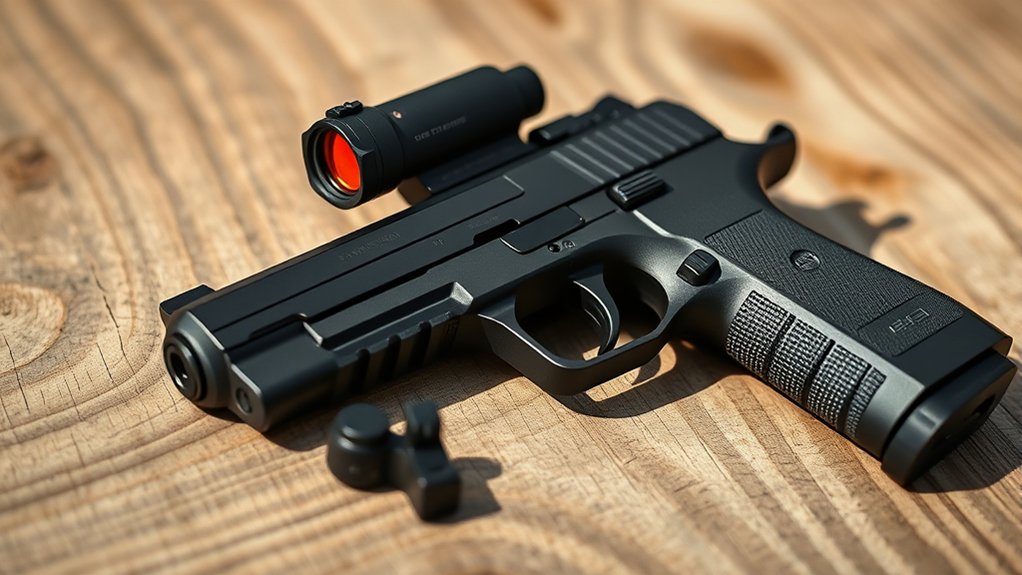
Do You Need Iron Sights With A Red Dot – Pros And Cons Explained
You should use iron sights with a red dot to guarantee reliability when electronics fail or batteries die. Iron sights provide rugged, maintenance-free backups that won’t break from drops or shocks. They also allow slide operation without interference and keep your carry profile low.
While red dots speed aiming, iron sights give you peace of mind and consistent performance. Understanding the balance between durability, accuracy, and cost will help you choose the best setup for your needs.
Key Takeaways
- Iron sights provide a reliable, electronics-free backup if the red dot fails or loses power.
- Co-witnessing iron sights with red dots allows quick transition and zero verification without losing aim precision.
- Iron sights are more durable and impact-resistant than red dots, ensuring functionality after rough handling.
- Red dots offer faster target acquisition but depend on batteries and electronics, risking failure in harsh conditions.
- Combining both sights balances speed, accuracy, and reliability, enhancing overall preparedness and shooting confidence.
Why Iron Sights Are Essential Backups for Red Dot Users
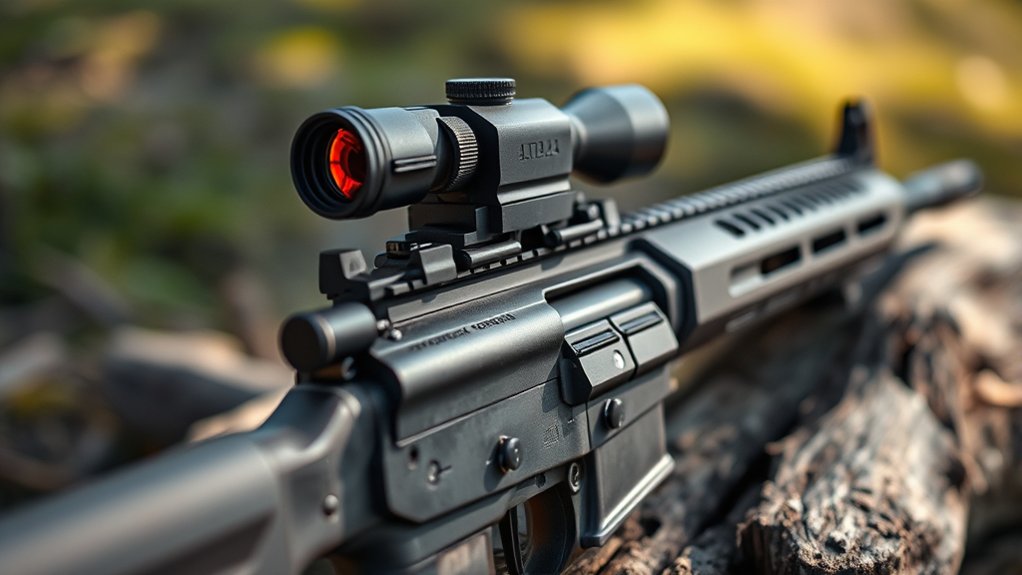
Although red dot optics offer quick target acquisition, you still need iron sights as essential backups. Iron sights provide a reliable, maintenance-free solution when your red dot fails or loses power.
Because fixed iron sights aren’t dependent on electronics, they remain fully functional in critical situations where you can’t afford downtime.
By setting up co-witnessing iron sights with your red dot, you can seamlessly switch to manual aiming without hesitation. This assures you maintain operational capability even in high-stress scenarios.
Plus, iron sights are cost-effective and durable, requiring no upkeep, which makes them a smart, practical investment.
Relying solely on electronics leaves you vulnerable. Integrating iron sights guarantees you never lose your aiming method when it matters most.
Durability Differences Between Iron Sights and Red Dot Sights
You need to understand that iron sights offer unmatched structural robustness. They’re built from solid steel with minimal failure points, making them incredibly tough.
On the other hand, red dot sights are durable too, but they come with some risks. Since they rely on electronic components and glass lenses, there’s a bit more that can potentially go wrong.
Knowing these differences really helps when you’re choosing the right backup for reliable performance out in the field.
Structural Robustness Comparison
When evaluating the structural robustness of iron sights versus red dot sights, you’ll find that fixed steel iron sights outperform most red dot models in sheer durability. Iron sights are built to withstand harsh impacts without damage. On the other hand, red dot sights, despite being enclosed, can still be vulnerable to breakage from drops or collisions.
High-end enclosed optics like the RC01 offer impressive durability. However, they still rely on delicate electronics, which can be a point of failure. Knowing these differences can really help you choose the right sight for your needs.
| Feature | Iron Sights | Red Dot Sights |
|---|---|---|
| Material | Fixed steel (highly durable) | Enclosed optics (varies) |
| Impact Resistance | Excellent | Good, but can break |
| Durability Under Stress | Superior | High-end models tested |
Electronic Failure Risks
Beyond physical durability, electronic failure presents a distinct challenge for red dot sights that iron sights simply don’t face. Iron sights have no electronic components, making them inherently more reliable under harsh conditions.
Red dot sights depend on electronic circuitry and batteries, which can fail due to moisture, shock, or battery depletion. When electronic failure happens, you lose your aiming capability entirely. Iron sights, on the other hand, remain fully functional no matter what. That’s a big advantage if things go wrong in the field.
Some red dot models, like the Hollow Sun EPS Carry, use enclosed designs and rugged construction to reduce electronic failure risks. To keep your red dot working, regular maintenance is key, along with checking batteries often. Choosing red dots with tough housings also helps.
Still, relying only on red dots without backup iron sights makes you more vulnerable to electronic failure. It’s smart to have a reliable backup just in case.
Common Failure Points in Red Dot Sights and How Iron Sights Help
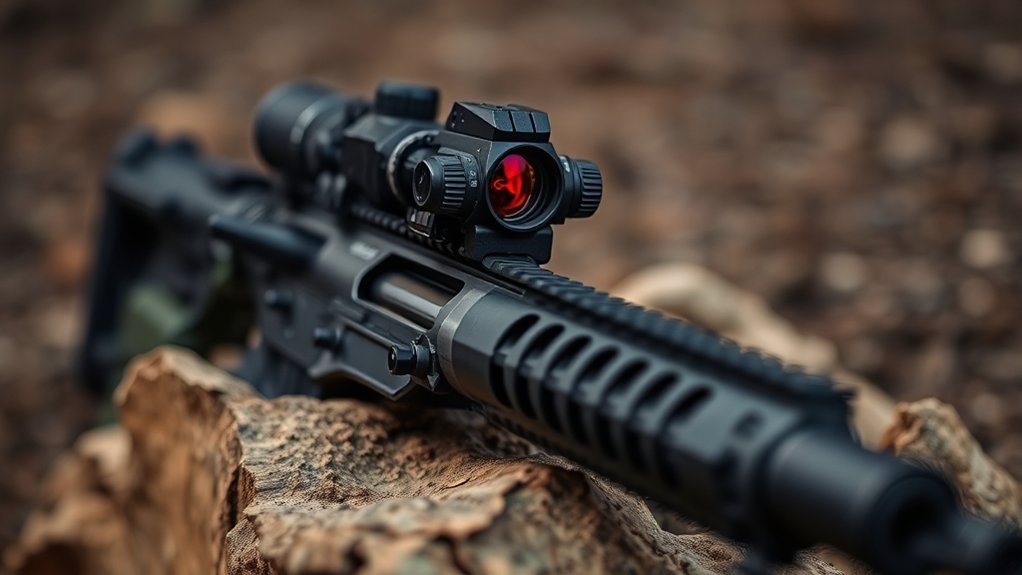
Although red dot sights offer quick target acquisition, their reliance on electronic components makes them vulnerable to specific failure points. Circuit boards and reticles can malfunction, while batteries may fail or deplete unexpectedly if you don’t maintain them regularly.
Screws and mounting plates are also common weak spots. They can loosen or strip, causing zeroing issues or even loss of the optic during use. Plus, impacts or rough handling might crack the enclosed optics despite their durability.
On the other hand, iron sights provide a mechanical, fail-safe backup that works independently of electronics. By keeping iron sights on your firearm, you ensure reliable aiming capability even when your red dot sight encounters electronic or mechanical failures.
This kind of redundancy really boosts your overall readiness and confidence in critical situations.
How Iron Sights Affect Slide Operation and Carry Comfort With Red Dot Setups
If you want to maintain smooth slide operation while using a red dot sight, iron sights won’t get in your way. Properly configured iron sights let you rack the slide without any obstruction, so your firearm works reliably every time.
Fixed iron sights are low-profile and tough, adding hardly any bulk to your carry setup. This means you can carry comfortably without sacrificing concealment or ease of draw.
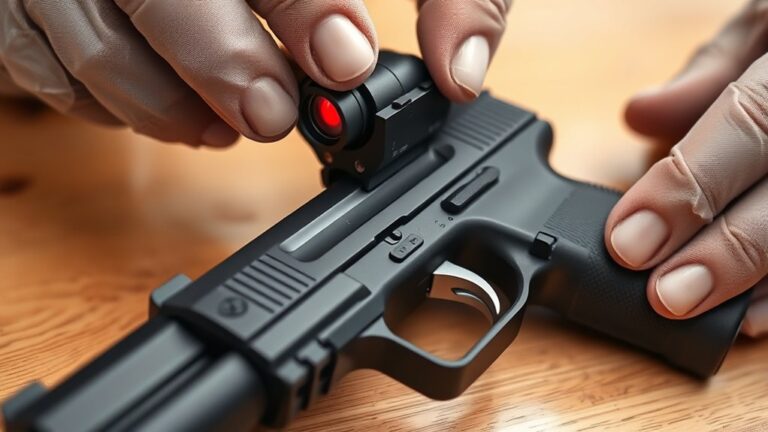
When mounting a red dot, you might need to co-witness or remove iron sights, but a good setup avoids interfering with slide clearance.
Using iron sights as a backup doesn’t affect your carry profile or how smoothly the slide moves. They’re a practical and reliable choice.
Do Iron Sights Affect Red Dot Accuracy or Speed?
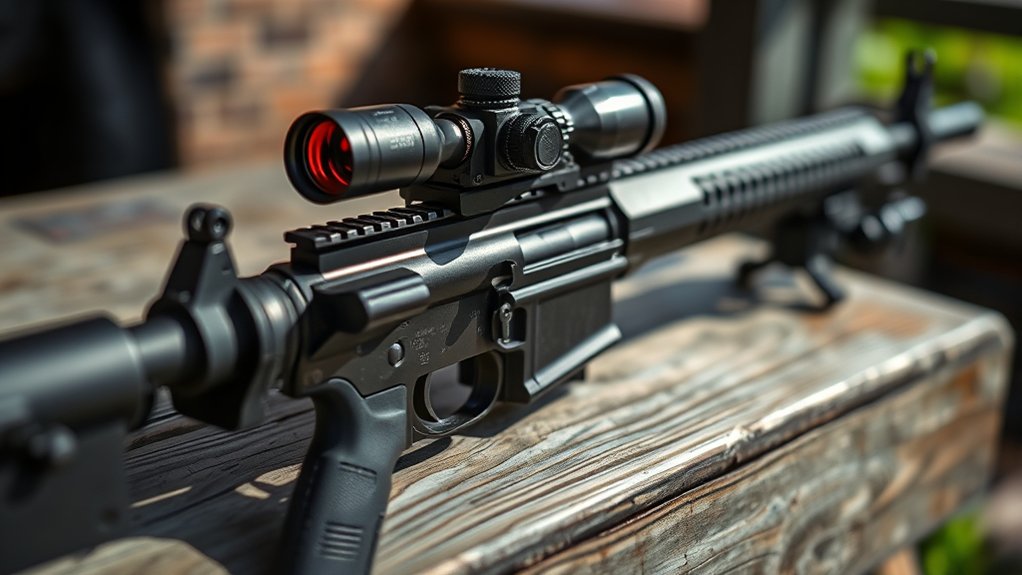
You won’t find iron sights directly changing your red dot’s accuracy or speed since they mainly serve as a backup or co-witness option. That said, how well the sights line up with each other can affect how quickly you pick up targets and keep your aim steady.
Sight Alignment Interaction
How do iron sights impact your red dot’s accuracy and speed? Sight alignment interaction between these systems doesn’t directly affect your red dot’s accuracy if it’s zeroed and mounted properly. However, co-witnessing iron sights with a red dot can influence how quickly and consistently you acquire targets.
Consider these key points:
- Iron sights offer a backup aiming reference without compromising red dot precision.
- Proper co-witnessing enhances sight alignment interaction, improving consistency under controlled conditions.
- Transitioning between sights under stress may slow your target acquisition speed.
- Training is essential to avoid confusion or misalignment when using both sighting systems.
In practice, iron sights complement your red dot but require deliberate practice to optimize sight alignment interaction without sacrificing speed. Just remember, using both effectively takes some getting used to, so keep at it!
Speed Of Target Acquisition
Balancing iron sights with a red dot impacts how quickly you engage targets. Red dots inherently speed up target acquisition by allowing you to focus directly on the threat without aligning front and rear sights.
Iron sights, in contrast, require careful alignment and focus on the front sight, which can slow you down, especially under stress.
While having iron sights alongside red dots offers a reliable backup if the optic fails, they may slightly delay your engagement time compared to using a red dot alone.
For most users, red dots considerably enhance speed, though skilled shooters can switch between iron sights and red dots swiftly.
Ultimately, iron sights don’t reduce the speed advantage of red dots but serve as a secondary option rather than a primary aiming method.
It’s all about having a backup without sacrificing too much speed.
Impact On Aim Precision
Although iron sights don’t directly impact the accuracy of your red dot, their presence influences how quickly and confidently you acquire your target. Iron sights complement aim precision by providing a reliable backup and reinforcing alignment.
Here’s how they affect your shooting:
They don’t alter the red dot’s inherent accuracy but guarantee consistent aim through proper co-witnessing. Iron sights allow quick verification of your red dot zero, maintaining precision if electronics fail.
Using both can slow target acquisition under stress but improve confidence in your aim.
They also aid in rapid target confirmation, potentially enhancing shooting speed and precision in certain scenarios.
Cost Comparison: Iron Sights vs. Red Dot Setups
When budgeting for your firearm setup, you’ll find that quality iron sights typically cost around $100. This makes them a more affordable choice compared to red dot systems.
Red dot setups usually range from $300 to over $700, so they’re definitely a bigger investment.
Red dot setups typically cost between $300 and $700, making them a more significant investment.
The total cost of a red dot includes the optic, mounting plate, and ongoing maintenance or replacement parts, which can add up quickly.
Upgrading or replacing iron sights is straightforward and budget-friendly, letting you manage costs more easily.
If you decide to combine iron sights with a red dot, expect an increased total cost. But you’ll gain valuable redundancy and versatility.
Understanding these cost differences helps you make a decision that fits your financial priorities and shooting needs.
Choosing the Right Sight Setup for Your Shooting Needs
Understanding the cost differences between iron sights and red dot setups helps set realistic expectations. But choosing the right sight configuration ultimately depends on how you plan to use your firearm.
When selecting your setup, consider these factors:
First, durability and reliability matter a lot. Iron sights require less maintenance and serve as a dependable backup.
Then there’s speed and accuracy—red dots improve target acquisition but rely on electronics.
Co-witnessing is another option. Using both with an adapter plate ensures redundancy in case the red dot fails.
Also, think about your environment and training. Match your sight choice to shooting conditions and your comfort level.
Using an adapter plate lets you mount a red dot without losing iron sight functionality. This way, you balance performance and dependability tailored to your specific shooting needs.
How to Balance Reliability and Performance With Iron Sights and Red Dots
To balance reliability and performance with iron sights and red dots, you need to evaluate how each sight complements your shooting demands. Red dots offer faster target acquisition and enhanced accuracy at close to medium ranges but depend on electronic components that can fail.
Iron sights provide unmatched reliability due to their durability and resistance to damage, serving as a dependable backup.
Co-witnessing both sights ensures you maintain functionality if your red dot malfunctions, allowing seamless switching to iron sights. To optimize dependability without sacrificing performance, assess your shooting environment and style carefully.
Incorporate iron sights to guarantee backup reliability while leveraging your red dot’s speed and precision.
This balanced approach ensures consistent performance under varying conditions and reduces the risk of sight failure during critical moments. It’s all about having the best of both worlds so you’re ready no matter what.
Frequently Asked Questions
Can Iron Sights Be Co-Witnessed With Holographic Sights?
Yes, you can co-witness iron sights with holographic sights. When properly mounted, your iron sights line up through the holographic sight’s window, allowing you to use both at the same time.
This setup offers a reliable backup if the holographic sight fails or runs out of power.
Just make sure your iron sights and holographic sight are zeroed together for accurate aiming. Co-witnessing really adds versatility and ensures you’re always ready to shoot.
It’s a smart way to keep your options open in any situation.
What Materials Are Commonly Used for Iron Sights?
Iron sights are commonly made from steel, aluminum, and sometimes polymer. Steel offers durability and resistance to wear, making it a top choice for heavy-duty use.
Aluminum is lighter and still strong, ideal if you want to reduce weight without sacrificing too much toughness.
Polymer sights are lightweight and cost-effective but may not withstand rough handling as well.
You should pick materials based on your firearm’s use and your durability needs. It really comes down to what works best for your situation and how you plan to use your gun.
How Do Iron Sights Perform in Low-Light Conditions?
Oh sure, iron sights are just glowing beacons in the dark if you’re a bat.
In reality, they struggle in low-light conditions because they rely on ambient light to be visible.
You’ll find them hard to align accurately without additional illumination like tritium inserts or fiber optics.
So, unless you carry a flashlight, don’t expect iron sights to perform miracles when the lights go out.
They’re practical but limited in darkness.
Are There Specific Training Drills for Transitioning Between Sights?
Yes, you should practice shift drills to switch smoothly between your red dot and iron sights. Focus on engaging targets at varying distances, starting with your red dot. Then quickly flip to iron sights if needed.
Use drills like the “dot-to-iron” reload or failure drills that emphasize speed and accuracy. Consistent practice builds muscle memory so you won’t hesitate under stress.
This helps ensure you maintain sight picture clarity regardless of optic failure or lighting.
Can Iron Sights Be Adjusted Without Special Tools?
Of course, you don’t need special tools to adjust iron sights. Just your fingers and a bit of patience will do.
Most iron sights have easy-to-turn knobs or screws designed for quick windage and elevation tweaks.
You’ll find that a standard screwdriver or even a coin often does the trick.
Remember, precise adjustments matter, so take your time.
Make small changes and verify your zero before heading out to shoot.
Conclusion
Think of iron sights as the steadfast anchor to your red dot’s swift sail. While red dots offer speed and precision, iron sights stand ready when technology falters. They make sure you’re never adrift.
You don’t have to choose between reliability and performance. They work hand in hand. By balancing both, you equip yourself with a failsafe system.
This turns your firearm into a dependable partner that’s ready for any challenge, no matter the conditions.