What Is A Concealed Carry Permit – Purpose, Benefits And Requirements
A concealed carry permit lets you legally carry a hidden firearm in public while making sure you meet training and background requirements. It offers legal protection, interstate recognition, and faster firearm purchases.
You’ll need to prove handgun competency, meet age and residency criteria, and pass thorough checks. The permit also guides responsible carrying and helps you navigate legal restrictions.
Keep exploring to understand the application steps, renewal process, and key rules for safe and lawful carrying.
Key Takeaways
- A concealed carry permit legally authorizes carrying a hidden firearm in public while ensuring compliance with safety and training requirements.
- It offers benefits like interstate reciprocity, streamlined firearm purchases, and legal protection during self-defense incidents.
- Eligibility typically requires being 21 or older, residency proof, handgun competency, and absence of disqualifying criminal or mental health records.
- The application involves submitting forms, proof of competency, paying fees, and passing background checks, with processing taking around 45 to 90 days.
- Permit renewal requires timely application, address updates must be reported, and denials can be appealed through legal hearings and courts.
What Is a Concealed Carry Permit and Who Needs One?
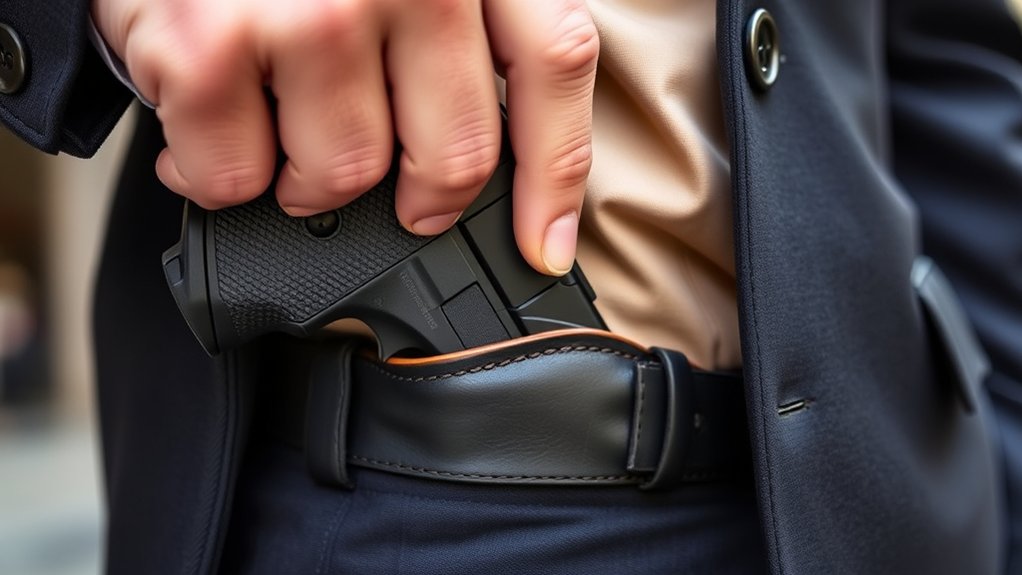
Although some states allow permitless concealed carry, having a concealed carry permit guarantees you can legally carry a hidden firearm in public while meeting specific safety and training requirements. This permit confirms you’ve fulfilled mandatory training requirements designed to ensure responsible firearm handling and knowledge of relevant laws.
Age restrictions also apply. Typically, you must be at least 21 years old to qualify, though some states set the minimum at 18.
If you live in states like Virginia or Florida, obtaining this permit is essential to carry a concealed handgun legally. While permitless carry exists, a permit provides formal legal recognition and helps you navigate restrictions in sensitive locations such as schools or government buildings.
Understanding these criteria helps you comply with the law and carry responsibly.
Why You Should Get a Concealed Carry Permit
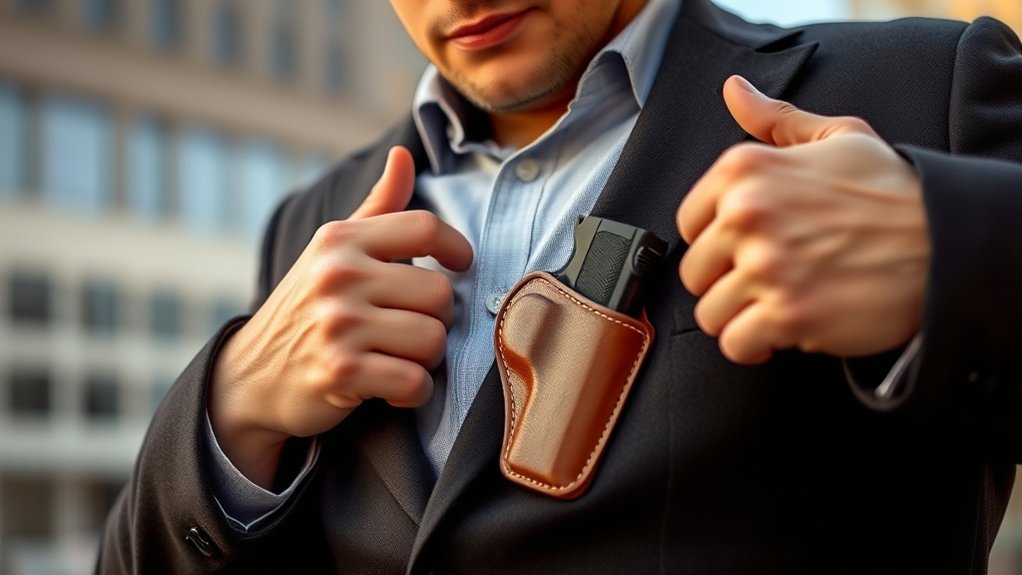
You should get a concealed carry permit because it guarantees you can legally carry your firearm across multiple states with proper recognition. It’s a way to make sure you’re following the law wherever you go.
On top of that, it boosts your personal protection by showing that you’ve completed essential training and passed background checks. It’s not just about carrying—it’s about being responsible and prepared.
And here’s another plus: it makes traveling easier. With a permit, you get reciprocity in many states and can access places where carrying without a license is restricted.
Legal Carry Advantages
How does a concealed carry permit enhance your legal rights and responsibilities? It grants you recognized legal authority to carry a concealed firearm in multiple states with reciprocity agreements, ensuring you stay compliant across jurisdictions. This permit also streamlines firearm purchases by exempting you from certain background checks and waiting periods.
By completing mandatory firearm safety training, you demonstrate responsible ownership, which can positively influence law enforcement interactions.
Furthermore, holding a concealed carry permit provides legal clarity and defense options if you’re involved in a self-defense incident, reducing potential legal complications.
While some sensitive locations remain off-limits, your permit ensures lawful carry wherever permitted. This gives you confidence and peace of mind when exercising your right to concealed carry.
Enhanced Personal Protection
Beyond the legal benefits, a concealed carry permit substantially enhances your personal protection by allowing you to carry a hidden firearm discreetly in public spaces. With this permit, you can choose appropriate ammunition tailored to your defense needs, ensuring peak performance and safety.
It also lets you wear concealed carry clothing designed for comfort and quick access, so your firearm remains both secure and accessible without drawing attention.
By carrying legally, you demonstrate responsible firearm ownership backed by required safety training, which prepares you to respond effectively in emergencies.
This permit expands where you can carry, giving you more options to protect yourself legally and confidently.
Ultimately, it equips you with the means and knowledge to enhance your safety in everyday situations.
Easier Travel Reciprocity
More than 30 states honor concealed carry permits from others, making interstate travel with a firearm a lot easier. This travel reciprocity means your permit gets recognized across state lines, which really cuts down on legal risks.
Here’s why having a concealed carry permit works in your favor:
- It grants legal recognition in multiple states, so traveling becomes simpler.
- It helps you stay compliant with different state laws that require valid permits.
- It lowers the chance of facing legal penalties when you’re in states without reciprocity.
- Plus, it can speed up firearm purchases by waiving some background checks.
All in all, getting your permit can save you time and hassle on the road.
Basic Eligibility Requirements for a Concealed Carry Permit

Although the process may seem straightforward, you must meet several basic eligibility requirements to obtain a concealed carry permit in Virginia. You need to be at least 21 years old and reside or have a domicile within the issuing county or city.
You must also prove handgun competency, which involves completing approved firearm maintenance and safety courses, holding recognized certificates, or demonstrating military service experience.
It’s vital to understand that recent criminal convictions, restraining orders, or mental health adjudications can disqualify you.
Following proper concealed carry etiquette is essential because it reflects responsibility and respect for the law.
Meeting these criteria guarantees you carry your firearm legally and safely.
By doing so, you demonstrate your commitment to both firearm maintenance and responsible concealed carry practices.
It’s all about being prepared and respecting the rules so you can carry with confidence.
How to Apply for a Concealed Carry Permit (Including Proving Handgun Competency)
To apply for a concealed carry permit, you’ll first need to fill out the official application form. Once that’s done, submit it to your local circuit court along with proof that you’re competent with a handgun.
Now, how do you prove that competency? Well, you can show it by completing approved safety courses, having military service experience, or participating in shooting competitions. Just make sure you have the proper documents to back it up.
Also, keep in mind that there are fees you’ll need to pay, and you’ll have to pass a thorough background check before your application gets the green light.
Application Process Overview
How do you apply for a concealed carry permit in Virginia? The process is straightforward but requires careful adherence to permit training and legal restrictions. Here’s what you need to do:
- Submit a written application, usually form SP-248, to your local circuit court.
- Provide proof of handgun competency, such as certificates from approved safety courses or military service records.
- Pay the application fee, which can be up to $50, covering processing, investigation, and permit issuance.
- Pass a background check; the court must approve or deny your permit within 45 days.
You must be at least 21 and reside in the jurisdiction. Proper documentation of eligibility and competency is essential to ensure your application is accepted.
Just make sure you follow these steps carefully, and you should be all set to get your permit.
Handgun Competency Proof
Proving your handgun competency is a key step in the concealed carry permit application. You need to show your skills through certified courses like hunter safety, NRA, USCCA, or law enforcement firearms safety classes.
It’s important to provide certificates, instructor affidaverts, or proof that you’ve participated in shooting competitions.
If you have military service or an honorable discharge, that can stand in place of formal competency proof.
Your evidence should also show that you understand firearm maintenance and concealment techniques. This ensures you’re carrying safely and responsibly.
Once you’ve submitted valid proof, no extra testing is required. Just remember, this step confirms you can handle a handgun safely and effectively.
That’s super important before you get your concealed carry permit.
Required Documentation Details
Although the application process may seem detailed, submitting the required documentation correctly guarantees a smoother approval. To apply for your concealed carry permit, you must complete and submit Form SP-248 accurately.
You also need to provide proof of handgun competency. Certificates from hunter safety, NRA, USCCA, or law enforcement courses show your knowledge of shooting techniques and storage safety.
Alternatively, you can submit military service records or an honorable discharge as evidence of proficiency. Don’t forget to pay the application fee, which is usually under $50 and covers processing and permit issuance.
Competency proof can be certificates, instructor affidavits, or shooting competition participation documents. Making sure you meet these requirements clearly and precisely will help streamline your application and confirm your commitment to responsible firearm handling.
Application Fees, Permit Validity, and What to Expect During Processing
When you apply for a concealed carry permit, you’ll pay a standard fee of around $10, with additional investigation and processing fees that generally keep the total under $50. These application fees cover background checks, eligibility verification, and handgun competency review.
Your permit’s validity typically spans five years, after which renewal is necessary. During processing, expect a waiting period of 50 to 90 days while authorities complete their reviews.
If your application isn’t approved or denied within 45 days, it expires. But don’t worry—you’ll receive a certified application acting as a temporary permit valid for 90 days.
Understanding these application fees, permit validity, and processing timelines helps you prepare efficiently and makes sure you comply with all required steps for lawful concealed carry.
Renewing and Updating Your Concealed Carry Permit
Since your concealed carry permit is valid for five years, you’ll need to renew it before it expires to maintain your legal carry status. Permit renewal usually follows the same application process as your initial permit.
To keep your permit current, you must also notify the Department of State Police of any address update. Here’s what to do:
- Submit your renewal application by mail between 90-180 days before expiration.
- Notify the Department of State Police promptly if you change your address using the designated form.
- Provide your current permit and written address update notice to the circuit court clerk.
- Pay a processing fee (usually capped at $10) to receive a replacement permit with the updated address.
Following these steps guarantees your permit remains valid without reapplication. Just make sure to stay on top of it so there’s no gap in your legal carry status.
Common Reasons for Permit Denial and How to Appeal
If the Department denies your concealed carry permit, it’s usually because of specific legal disqualifiers like prior criminal convictions, recent mental health commitments, or failure to demonstrate handgun competency.
Other reasons might include pending felony charges, recent drug or alcohol violations, restraining orders, violent misdemeanor convictions, or non-permanent resident status.
When your permit is denied, you’ll get a notice that explains why and tells you how to request an ore tenus hearing within 21 days.
If you don’t agree with the decision, you can start the appeal process by petitioning the Court of Appeals within 60 days.
Winning an appeal might even get you reimbursed for some costs.
Knowing these steps is really important to handle a permit denial smoothly and make sure your rights are protected throughout the appeal.
Important Rules and Restrictions for Carrying With Your Permit
After obtaining your concealed carry permit, you need to understand the specific rules and restrictions that govern where and how you can carry your firearm. These rules ensure responsible use and keep you in compliance with the law. So, keep these key points in mind.
Understanding your concealed carry rules is crucial for responsible and lawful firearm use.
You can’t carry on school property, government buildings, or airport terminals. Also, carrying in places of worship during services or on private property that has no-gun signage is prohibited.
Carrying under the influence of alcohol or drugs is a criminal offense, no matter your permit status.
Licensed restaurants that serve alcohol and private clubs might restrict concealed carry as well.
On top of that, proper firearm storage is essential to prevent unauthorized access.
And remember, background checks are mandatory to obtain and maintain your permit—they reflect your responsibility and trustworthiness.
Tips for Responsible Concealed Carry Permit Holders
While carrying a concealed weapon grants you significant responsibility, you need to stay informed about current laws and keep up with proper training to ensure safe and legal use. Prioritize firearm safety by regularly practicing handling and storage protocols.
Only carry when you’re mentally and physically ready to act responsibly. It’s important to engage in community outreach to promote awareness and support responsible ownership.
Stay vigilant by sharpening your situational awareness skills and always respect legal obligations, like surrendering your firearm when required.
| Responsibility | Awareness | Community Impact |
|---|---|---|
| Know current laws | Practice situational awareness | Promote safety education |
| Maintain training | Carry only when ready | Support community outreach |
| Follow legal orders | Handle firearms safely | Encourage responsible ownership |
Frequently Asked Questions
Can I Carry a Concealed Firearm on Federal Property With My Permit?
You generally can’t carry a concealed firearm on federal property with your permit. That’s because license validity often doesn’t apply there.
Always follow firearm storage rules and check specific federal regulations. This will help you avoid legal issues or charges.
How Does Concealed Carry Reciprocity Work Between Different States?
Think of concealed carry reciprocity as a bridge connecting states. You’ll find state recognition varies, so your permit’s validity depends on agreements. Always check each state’s rules before crossing to carry legally and avoid penalties.
It’s important to remember that not all states recognize every permit. Some have stricter rules, while others are more lenient. So, don’t assume your permit works everywhere.
Before you travel, a quick look at the laws can save you from trouble. Staying informed helps you carry safely and responsibly wherever you go.
Are There Special Considerations for Carrying a Concealed Weapon in Vehicles?
Yes, you must follow vehicle safety and transportation laws when carrying concealed in vehicles. Always secure your firearm properly, know state-specific rules, and guarantee your permit covers in-vehicle carry to avoid legal issues and stay safe.
It’s really important to be aware of the details because rules can vary a lot from one state to another. Taking a moment to double-check can save you from trouble later on. Just make sure you’re always handling your firearm responsibly while on the road.
What Should I Do if My Concealed Carry Permit Is Lost or Stolen?
Nearly 20% of concealed carry holders report lost permits. You should follow lost permit procedures immediately. That means reporting it as soon as you realize it’s missing.
After that, apply for a replacement with the required documents and pay any necessary fees. It’s important to keep track of these steps so your permit renewal goes smoothly down the line.
How Does Concealed Carry Insurance Work and Is It Necessary?
Concealed carry insurance covers legal fees if you use your firearm in self-defense. It works alongside your training requirements and permit renewal to give you extra protection.
While it’s not mandatory, having this insurance can really bring peace of mind. It helps you handle the financial side of any legal challenges that might come up.
Conclusion
Getting your concealed carry permit puts the power of responsible self-defense in your hands. But it’s more than just a piece of paper. It’s a commitment.
By understanding the requirements, following the rules, and staying informed, you’ll carry confidence like a shield. Remember, with great power comes great responsibility. So stay sharp, stay legal, and protect yourself wisely.
Your permit is your key. Use it with respect and care.