
Do You Need A Concealed Carry Permit In Texas – Rules And Legal Requirements
You don’t need a concealed carry permit in Texas if you’re 21 or older and legally allowed to own a firearm, thanks to permitless carry laws in most public places.
However, obtaining a License to Carry (LTC) still offers benefits like expanded rights, access to restricted areas, and reciprocity with other states. You must meet eligibility requirements and complete safety training to get an LTC.
Keep exploring to understand all the legal responsibilities and processes involved.
Key Takeaways
- Since September 1, 2021, Texans 21+ can carry handguns openly or concealed without a permit in most public places.
- An LTC is not required for lawful carry but offers benefits like access to restricted locations and reciprocity with other states.
- Applicants must be 18+, pass a DPS-approved handgun proficiency course, and meet eligibility criteria to obtain an LTC.
- Carrying while intoxicated is illegal regardless of permit status, and certain locations prohibit carry by any method.
- LTC holders must carry their license and valid ID when carrying and inform law enforcement upon request.
Who Is Eligible To Apply For A Texas LTC?
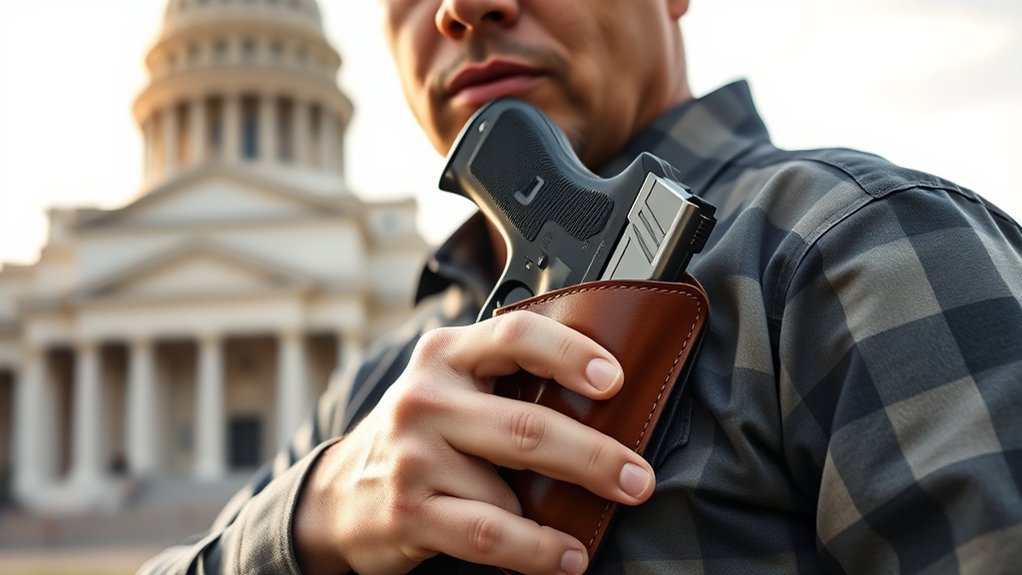
If you want to apply for a Texas License to Carry (LTC), you need to meet several eligibility requirements. You must be at least 18 years old, although recent changes allow 18-20-year-olds under specific protective orders to qualify. You can’t have felony convictions or recent firearm-related misdemeanors.
Also, you mustn’t be under protective orders related to family violence, stalking, or certain crimes. You’ll need to pass a DPS-approved handgun proficiency course and provide valid identification.
When applying, you’ll undergo a thorough background check to verify your eligibility. Plus, you have to pay the required application fee to complete your submission.
Meeting these conditions guarantees you’re legally qualified to carry a concealed handgun in Texas. It’s pretty straightforward once you know what’s required!
Do You Need A Concealed Carry Permit In Texas?

Since September 1, 2021, if you’re 21 or older, you don’t need a permit to carry a handgun openly or concealed in Texas.
That said, getting a Texas License to Carry (LTC) can still be a smart move. It gives you access to some places where carrying without a permit isn’t allowed, plus it provides extra legal protections.
Permitless Carry Law
Although Texas has allowed permitless carry of handguns in most public places since September 1, 2021, you may still choose to obtain a License to Carry (LTC) for additional legal benefits and privileges.
If you’re 21 or older and legally allowed to possess a firearm, you can carry a handgun concealed or openly without a permit.
However, certain locations like K-12 schools and some college campuses still restrict firearm carry. Private property owners can also prohibit firearms by posting notices or policies.
Importantly, carrying while intoxicated is illegal regardless of permit status.
When carrying permitless, you must still follow safe practices, including proper firearm storage and careful use of gun accessories to guarantee safety and compliance with the law.
Licensed Carry Advantages
Why consider obtaining a License to Carry (LTC) in Texas when permitless carry is allowed? While you can carry without a license, having an LTC grants access to restricted areas like near schools and certain private properties that post carry-prohibited notices.
It also provides legal protections and privileges not extended to unlicensed carriers.
To get your LTC, you must meet training requirements that ensure you understand safe handling and gun storage practices.
Additionally, license holders must comply with specific display and notification rules during law enforcement encounters, which can protect you legally.
Ultimately, the LTC offers advantages in access and legal security that permitless carry does not. So, it’s definitely worth considering despite recent law changes.
How Do Texas Permitless Carry Laws Affect Your LTC And Concealed Carry?

Texas’ permitless carry law means if you’re 21 or older, you can carry a handgun openly or concealed without needing a license. Pretty straightforward, right?
But having a License to Carry (LTC) still comes with some perks.
For example, if you have an LTC, you can carry in places that are off-limits to permitless carriers, like certain schools. Plus, your LTC provides some legal protections that you won’t get just by carrying without a permit.
Permitless Carry Overview
How does permitless carry impact your existing License to Carry (LTC) and concealed carry rights in Texas?
Since September 1, 2021, Texas allows individuals 21 and older who can legally possess a handgun to carry it openly or concealed without a permit.
However, your LTC still grants specific privileges, like carrying in restricted areas such as near schools.
The permitless carry law doesn’t replace the LTC but offers an alternative for lawful handgun possession.
Keep in mind, this law applies only to handguns, not rifles or long guns.
Regardless of permit status, firearm storage rules remain critical for safety and legal compliance.
Also, Texas doesn’t require gun registration.
Understanding these distinctions helps you navigate lawful carry without compromising your rights or responsibilities.
LTC Benefits And Restrictions
What advantages does holding a License to Carry (LTC) offer in Texas now that permitless carry is allowed? While anyone 21 or older can carry without a license, your LTC still provides key benefits.
It grants access to places where permitless carry is restricted, like college campuses and near schools.
Additionally, your LTC offers legal protections and allows you to carry in states recognizing Texas permits.
However, concealed carry restrictions still apply. Private property owners can prohibit firearms regardless of your LTC status.
Proper gun storage remains essential to comply with laws and guarantee safety, whether you carry with or without a license.
Locations And Carry Exceptions
Where can you legally carry a handgun in Texas under the permitless carry law, and how do these rules impact your License to Carry (LTC)?
Texas allows individuals 21 and older to carry handguns openly or concealed in most public property without a permit.
However, your LTC still grants access to restricted areas where unlicensed carry is prohibited, such as near schools and colleges.
Private restrictions also play a significant role; property owners can prohibit or limit carry by posting clear signage, applying to both licensed and unlicensed carriers.
Regardless of permit status, carrying in locations like courthouses or secure government facilities remains illegal.
Understanding these distinctions helps you comply with the law while respecting public property rules and private restrictions, ensuring lawful and responsible handgun carry in Texas.
What Does The Texas LTC Application Process Look Like?
Although the Texas LTC application process involves several steps, completing them methodically will help you obtain your license efficiently. First, you must complete a DPS-approved handgun proficiency course and obtain the LTC-104 certificate, demonstrating your firearm safety knowledge.
Next, submit your application online through the Texas Department of Public Safety website and pay the required fees. You’ll also need to schedule and complete fingerprinting with Identogo, which typically costs around $15.
Additionally, you must pass a live fire proficiency exam administered by a certified instructor, shooting from 3, 7, and 15 yards.
The process includes a thorough background check to guarantee eligibility.
Once issued, your license is valid for five years and requires timely renewal with updated documentation and fees to maintain compliance.
Why Is Firearm Safety Training Required For A Texas LTC?
Completing firearm safety training is a fundamental step in obtaining a Texas License to Carry (LTC) because it guarantees you have a solid understanding of handgun handling, storage, and responsible use. This training includes 4-6 hours of classroom or online instruction and a supervised range demonstration.
You’ll learn about firearm safety practices, relevant laws on weapons and deadly force, and non-violent dispute resolution.
The course assures you grasp the importance of responsible handling to prevent accidents and promote public safety. Upon successful completion, you receive the LTC-104 certificate, which is essential for your license application.
What Are Your Legal Responsibilities As A Texas LTC Holder?
When you carry a firearm under a Texas License to Carry (LTC), you must follow specific legal responsibilities to guarantee compliance and public safety. You’re required to carry your LTC and valid ID anytime you have a firearm on you and show them to law enforcement upon request. You must inform officers about your carry status during lawful encounters.
Stay aware of and respect restrictions on carry locations, including private property signs and prohibited public areas.
Proper firearm storage is essential to prevent unauthorized access. Also, never carry while intoxicated or violate carry laws.
Maintaining public awareness about your legal duties helps ensure responsible firearm use. Adhering to these responsibilities protects your rights and promotes safety within your community.
How Long Does A Texas LTC Last And How Do You Renew It?
Understanding how long your Texas License to Carry (LTC) remains valid and the steps to renew it’s important to guarantee you can continue carrying legally without interruption. Your Texas LTC is valid for five years from the issue date.
To keep your license valid without any breaks, you need to submit your renewal application at least 45 days before it expires. The renewal process asks for updated proof of training and a valid form of identification.
Once your renewal is approved, your LTC will be extended for another five years with no gaps.
The Texas Department of Public Safety provides detailed instructions and resources to help you through the renewal process.
If you stay on top of things, you won’t have to worry about any lapse in your legal ability to carry concealed in Texas. It’s always better to be proactive!
How Does Reciprocity Affect Using Your Texas LTC In Other States?
Although your Texas License to Carry (LTC) primarily grants you the right to carry concealed within Texas, it can also allow you to legally carry in other states through reciprocity agreements. These agreements impact your ability to carry during interstate travel by ensuring license recognition beyond Texas borders.
Your Texas LTC allows concealed carry in other states through reciprocity agreements, extending your rights beyond Texas borders.
Before traveling, you should check the Texas Department of Public Safety’s list of states recognizing Texas LTCs and confirm the destination state’s reciprocity status. It’s important to understand that recognized permits must meet specific licensing and background check standards.
Remember, out-of-state visitors with valid permits may carry in Texas under reciprocity.
Also, be sure to verify reciprocity status frequently, as agreements can change. Staying updated helps you avoid any legal surprises while on the road.
Frequently Asked Questions
Can I Carry a Concealed Handgun in Texas State Parks?
You can carry a concealed handgun in Texas state parks only if you have a valid license. Make sure to store your firearm properly and always respect any posted restrictions.
Keep in mind, license reciprocity applies here. So, your permit must be recognized by Texas for you to carry legally. Always double-check before you head out!
Are There Restrictions on Where I Can Openly Carry in Texas?
You can’t just paint the town red with public open carry everywhere. Licensing restrictions and posted signs at schools, private properties, and specific public areas limit where you openly carry in Texas.
What Are the Penalties for Carrying a Firearm Without a License?
If you carry a firearm without a license, you face a Class A misdemeanor, possible jail time, fines, and firearm seizure.
Keep in mind, firearm registration and license renewal don’t legalize unlicensed carry. So, always make sure your permit is valid before you carry.
Can Non-Residents Apply for a Texas LTC?
You know what they say, “Forewarned is forearmed.” You can apply for a Texas LTC as a non-resident by meeting non-resident eligibility and completing the LTC application process.
This includes fingerprinting and training requirements. Just make sure you follow all the steps carefully.
It might seem like a lot, but once you get through it, you’ll be all set!
How Does Texas Law Address Carrying Firearms in Vehicles?
Texas law lets you carry firearms in vehicles without registration, but carrying restrictions apply. You have to store firearms in locked containers if they’re not visible.
Also, carrying while intoxicated is illegal unless the firearm is properly stored in your private vehicle. So, just make sure you follow these rules to stay on the right side of the law.
Conclusion
Maneuvering Texas concealed carry laws can feel like threading the needle, but understanding eligibility, permitless carry, and your legal duties helps you stay on the right side of the law.
Even with permitless carry in place, having a Texas LTC offers added benefits, including reciprocity with other states. Stay informed about training requirements, application steps, and renewal timelines to guarantee your rights and responsibilities are clear every step of the way.