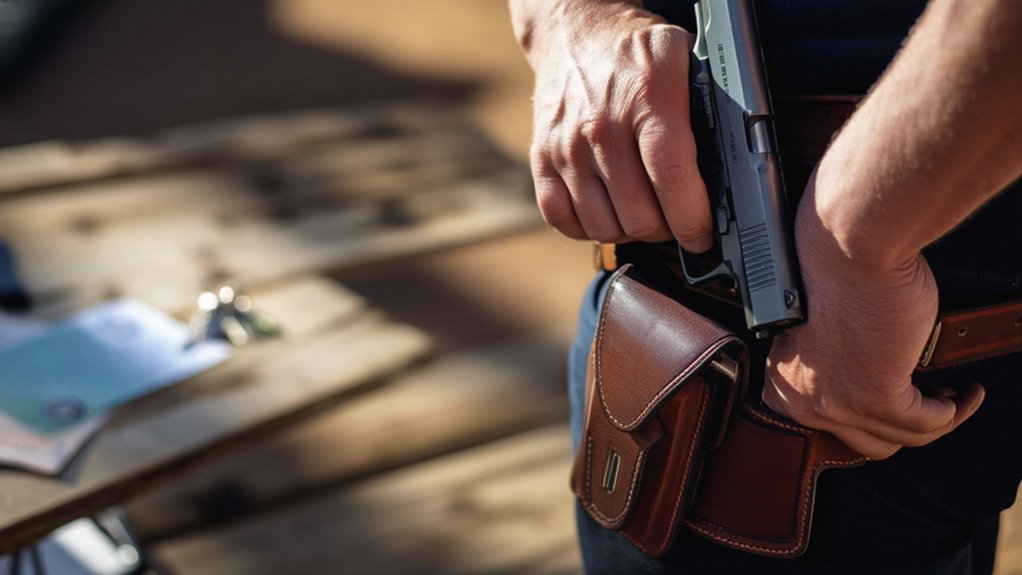
Is Pa A Concealed Carry State – Laws And Permit Rules
Yes, Pennsylvania lets you carry a concealed firearm, but only if you have a valid License to Carry Firearms (LTC). You must be at least 21, pass a background check, and follow strict rules about where and how you carry.
Some locations, like schools and federal buildings, are off-limits. Open carry is generally allowed without a permit for those 18 and older.
Understanding reciprocity and self-defense laws is essential if you want full legal compliance and protection. Learn more about the detailed requirements and restrictions.
What Does Concealed Carry Mean in PA?
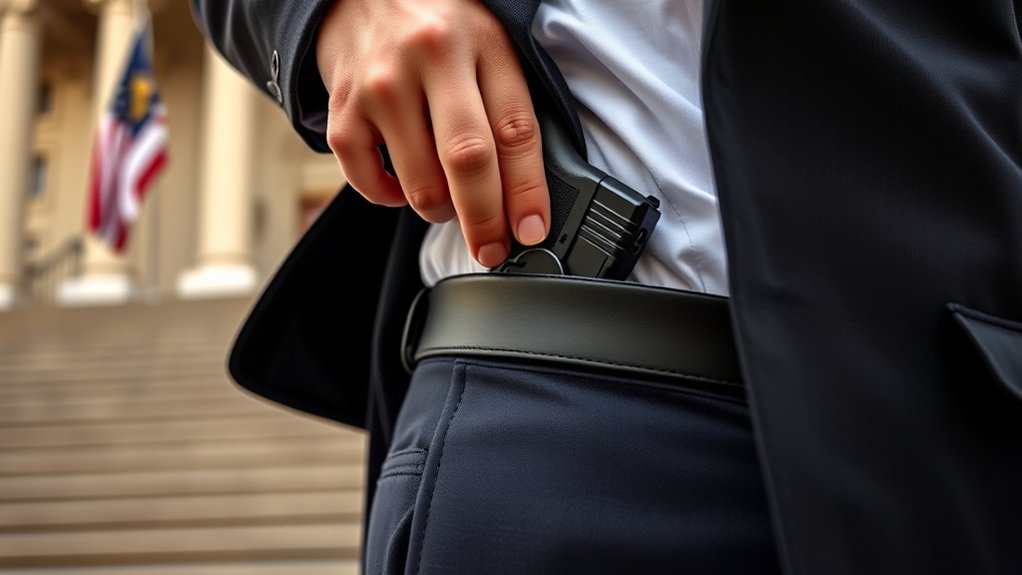
Although Pennsylvania allows you to carry a concealed firearm, you must have a valid License to Carry Firearms (LTC) or a recognized reciprocal permit to do so legally.
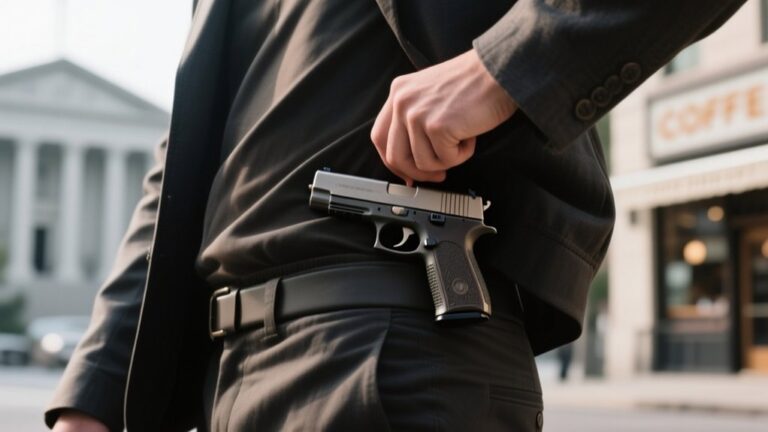
Concealed carry in Pennsylvania means carrying a firearm in a manner not openly visible to others, as defined by state law.
To comply with the law, you need either the Pennsylvania LTC or a valid permit from a state with a reciprocity agreement.
Carrying a concealed firearm without a proper permit is a first-degree misdemeanor and can lead to enforcement by law enforcement officials.
Pennsylvania law also prohibits concealed carry in specific locations like schools, courthouses, and federal buildings, no matter your permit status.
Knowing these rules helps make sure you stay within the legal boundaries when carrying a concealed firearm in Pennsylvania.
Who Can Get a Pennsylvania Concealed Carry Permit?
If you want to obtain a Pennsylvania concealed carry permit, you must be at least 21 years old and meet specific eligibility criteria, including passing a background check. Pennsylvania issues a License to Carry (LTC) to both residents and eligible non-residents who satisfy these requirements.
Applicants mustn’t have disqualifying criminal convictions or mental health issues. You don’t need firearm safety training to qualify, but you must be legally permitted to carry a concealed firearm.
Non-residents can apply if they hold a valid out-of-state license recognized by Pennsylvania through reciprocity.
Once issued, the Pennsylvania License to Carry allows you to legally carry a concealed firearm for five years. After that, you can renew it if you remain eligible.
How to Apply for a Pennsylvania Concealed Carry Permit
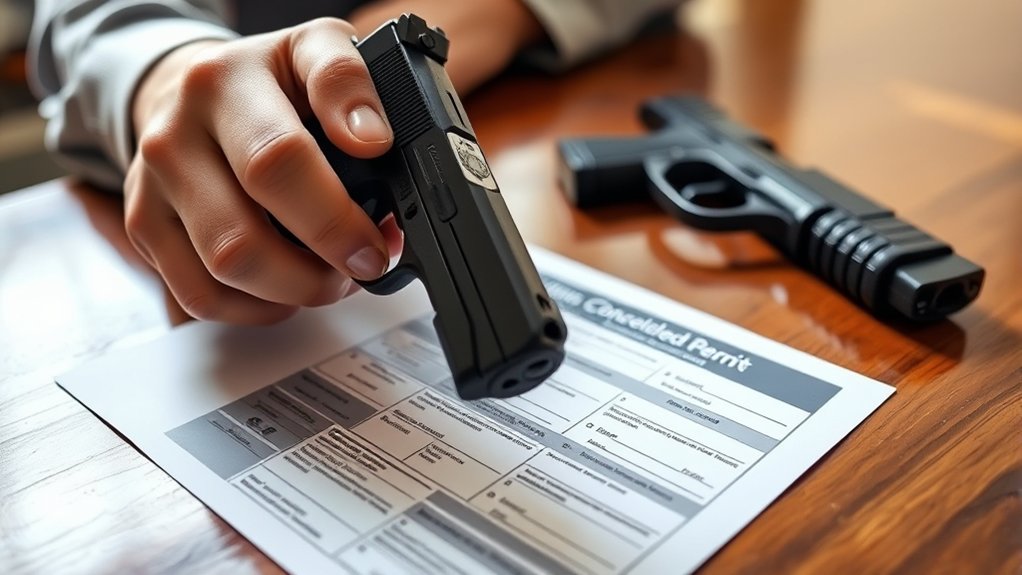
When you apply for a Pennsylvania concealed carry permit, you must be at least 21 years old and submit your application in person at the county sheriff’s office or city police department.
The application process requires a valid photo ID, references, and a $20 fee. There’s no mandatory firearm safety training.
You’ll undergo a criminal background check through the Pennsylvania Instant Check System (PICS), which usually takes up to 45 days.
Out-of-state residents can apply if they hold a valid permit from a state Pennsylvania recognizes via reciprocity.
Once approved, your license is valid for five years and must be carried on your person when carrying a concealed firearm.
Meeting these requirements will help ensure a smooth application process for your concealed carry permit.
Pennsylvania Concealed Carry Rules and Restrictions
You need a License to Carry Firearms (LTC) if you want to carry a concealed firearm on your person or in a vehicle. However, open carry is allowed without a permit for anyone who’s 18 or older.
That said, Pennsylvania does have some restrictions on where you can carry concealed weapons. For example, carrying concealed firearms isn’t allowed in places like schools, courthouses, and federal buildings.
Also, when it comes to recognizing permits from other states, Pennsylvania only honors those from states that have reciprocity agreements with them.
This means that if you have a non-resident permit from a state without such an agreement, it generally won’t be accepted here.
Permit Requirements Overview
How do Pennsylvania’s permit requirements shape concealed carry rights? In this state, you must obtain a License to Carry (LTC) to carry a concealed firearm legally. Pennsylvania operates as a shall-issue state, granting LTCs to residents and non-residents aged 21 or older who pass a background check.
The LTC is valid for five years and doesn’t require mandatory training for lawful issuance. While purchasing a firearm doesn’t require a permit, carrying a concealed firearm or doing so in a vehicle demands a valid license.
Pennsylvania also honors permits from select states through reciprocity agreements, but only for residents aged 21 and above. Understanding these requirements is essential to guarantee you carry a concealed firearm lawfully within Pennsylvania’s regulatory framework.
Carrying Locations Restrictions
Although Pennsylvania permits concealed carry with a valid License to Carry (LTC), there are several location-based restrictions on where you can legally carry your firearm.
Concealed carry restrictions prohibit firearms in courthouses, detention centers, and mental health institutions, which are classified as firearm prohibited areas.
School zone firearm laws prohibit carrying firearms within 1,000 feet of school property unless you hold a valid LTC.
When it comes to private property, owners can restrict firearm access by posting signs or making direct requests, and you must comply with those rules.
State parks allow carrying firearms only if you have a valid LTC.
Also, carrying loaded long guns in vehicles is generally prohibited unless you’re authorized for hunting or related activities.
Knowing these location rules helps you stay compliant with Pennsylvania’s firearm laws.
Reciprocity And Recognition
When carrying a concealed firearm in Pennsylvania, you need to make sure your permit comes from a state that has a reciprocity agreement with Pennsylvania or offers unilateral recognition.
Pennsylvania recognizes concealed carry permits issued by an authorized authority in states where it maintains license reciprocity.
The Attorney General handles these agreements, which are all about mutual recognition of concealed carry licenses.
To have your out-of-state license recognized, you must meet specific age and residency requirements. Mainly, you need to be 21 or older and a resident of the state that issued the permit.
Pennsylvania doesn’t recognize permits from states without reciprocity or those issued to non-residents or people under 21.
So, to carry legally, double-check that your out-of-state permit is recognized under Pennsylvania’s current agreements.
Otherwise, you’ll need to have a valid Pennsylvania license.
Pennsylvania Concealed Carry Reciprocity: Which States Are Recognized?
Because Pennsylvania maintains specific reciprocity agreements, it acknowledges concealed carry permits from certain states only under defined conditions. When you carry a firearm in Pennsylvania, you must verify your license is valid and issued under recognized reciprocity agreements. Here’s what you should know:
Pennsylvania honors licenses issued by states like Arizona, Colorado, and Louisiana, primarily for residents 21 and older. Permits from non-reciprocal states or those issued to non-residents or minors aren’t recognized. Recognition depends on formal written agreements or unilateral recognition, with conditions varying by state.
Reciprocity agreements and recognized states can change, so it’s a good idea to verify current firearm laws before crossing state lines.
Understanding Pennsylvania’s concealed carry reciprocity helps you comply with local regulations and carry responsibly.
Pennsylvania Open Carry Laws Explained
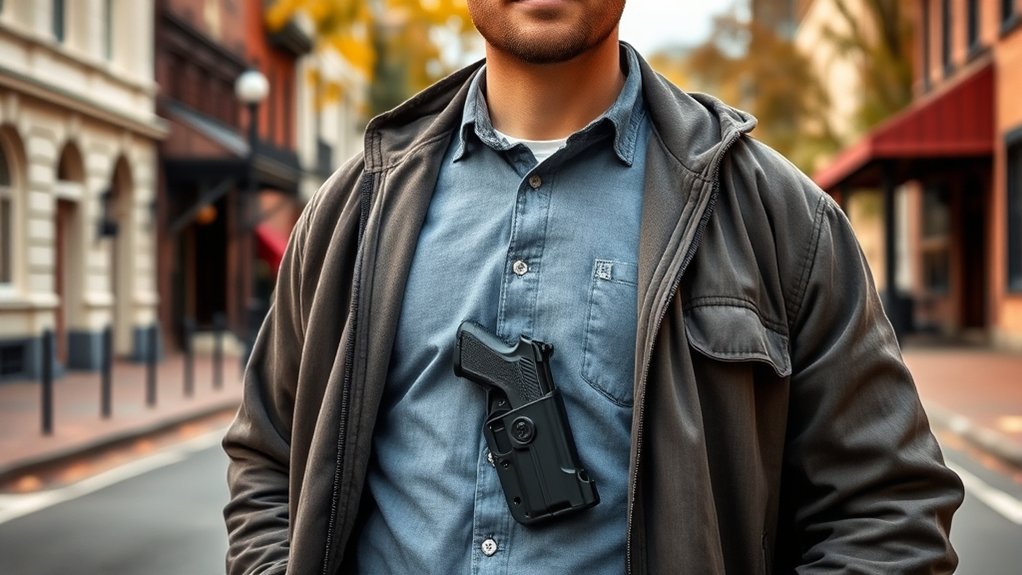
If you’re 18 or older and legally allowed to possess firearms, Pennsylvania permits you to openly carry them in most public places without a license.
Under Pennsylvania open carry laws, you don’t need a License to Carry for open carry in public, except when carrying firearms in vehicles or within Philadelphia. In those cases, firearm permit requirements do apply.
The Pennsylvania Supreme Court has made things a bit confusing by ruling that visible firearms can sometimes be considered concealed. This blurs the lines between what counts as concealed versus open carry.
Even with this complication, lawful firearm possession remains protected.
That said, firearm regulations do restrict open carry in places like schools, courthouses, and certain government buildings.
It’s a good idea to stay informed about these details to make sure you’re following Pennsylvania’s evolving open carry rules. Doing so will help you avoid any legal trouble related to permits or location-based restrictions.
Self-Defense Protections in Pennsylvania
Although Pennsylvania’s firearm laws can be complex, its self-defense protections are clear and robust. Under the state’s Castle Doctrine and stand your ground principles, you can use deadly force without retreating if faced with unlawful force in your home or lawful place. Here’s what you need to know about these protections:
Deadly force is justified to prevent death, serious injury, kidnapping, or sexual assault. Protection laws allow force against unlawful entry into a dwelling or occupied vehicle.
Deadly force is permitted to stop death, serious harm, kidnapping, sexual assault, or unlawful entry into homes or vehicles.
Lawful self-defense extends to defending yourself against immediate threats without a duty to retreat.
Firearm laws prohibit weapons in specific locations but broadly uphold self-defense rights elsewhere. These provisions guarantee you have strong legal grounds to protect yourself under Pennsylvania’s self-defense protections.
Penalties for Violating Pennsylvania Carry Laws
When you carry a firearm in Pennsylvania without a valid License to Carry or violate specific restrictions, you face serious legal consequences. These can range from misdemeanors to felonies depending on the nature of the offense.
Penalties for carrying a firearm in prohibited locations like courthouses, schools, or correctional facilities include criminal charges and potential fines. Carrying a loaded firearm in a vehicle without proper authorization makes things even worse and can lead to arrest.
License violations, such as ignoring restrictions on public or private property, may result in license suspension or additional criminal charges. These penalties get tougher if you carry in sensitive areas or use prohibited types of firearms. This could even mean prison time.
Tips for Carrying Firearms Safely and Legally in Pennsylvania
Carrying firearms safely and legally in Pennsylvania requires strict adherence to specific rules and best practices. To comply with concealed firearm laws, follow these firearm safety tips:
- Always carry your Pennsylvania License to Carry visibly when carrying a concealed firearm. This helps verify you have a valid license to carry.
- Avoid restricted areas such as schools, courthouses, and federal buildings where firearms are prohibited.
- During firearm transportation, keep your firearm unloaded and securely stored, especially when not engaged in hunting or target shooting.
- Stay informed about reciprocity agreements and updates to concealed firearm laws. This way, you can maintain compliance across jurisdictions.
Practice safe firearm handling by keeping your finger off the trigger and pointing the firearm in a safe direction at all times. These simple steps help you carry responsibly and legally in Pennsylvania.
Staying Updated on PA Concealed Carry Laws
You’ll want to keep up with any legal changes that affect concealed carry in Pennsylvania since laws and reciprocity agreements can change pretty often. It’s a good idea to regularly check official sources like the Pennsylvania State Police and the Attorney General’s websites to see the latest regulations.
Legal Changes Overview
How can you guarantee compliance with Pennsylvania’s evolving concealed carry laws? Staying current is essential since legal changes in 2024 and recent court rulings frequently modify firearm permit rules and concealed carry restrictions.
Follow these steps:
- Monitor Pennsylvania State Police announcements for official legal updates.
- Track recent court rulings that may affect where and how you carry.
- Review reciprocity agreements regularly, as they can shift based on new negotiations or rulings.
- Understand that Pennsylvania concealed carry laws are dynamic, requiring ongoing attention to maintain compliance.
Keeping up with these changes might seem like a lot, but staying informed is key to staying legal and safe. Just make it a habit to check for updates now and then—you’ll be glad you did.
Checking Current Regulations
Why is it essential to check current Pennsylvania concealed carry regulations regularly? Pennsylvania concealed carry laws, including LTC requirements and permit eligibility, can change due to new legal updates. For example, recent rulings affecting vehicle carry laws show just how dynamic these rules are.
You also need to keep an eye on reciprocity agreements. Pennsylvania recognizes permits from certain states, but these agreements can shift without warning. Staying informed means you’ll stay compliant when renewing your firearm permit or using the Pennsylvania Instant Check System.
Even though Pennsylvania doesn’t require training for LTC issuance, meeting eligibility criteria is still crucial. Regularly verifying regulations helps you avoid legal trouble and carry responsibly, especially in places like Philadelphia.
Staying updated is a must if you want to navigate Pennsylvania’s evolving firearm laws effectively.
Frequently Asked Questions
Can Non-Residents Apply for a Pennsylvania Concealed Carry Permit?
Yes, you can apply for a Pennsylvania concealed carry permit as a non-resident, but only if you already hold a valid permit from your home state and meet specific eligibility criteria.
You must be at least 21 years old and provide proof of your existing permit.
Keep in mind, if your state doesn’t have a reciprocity agreement with Pennsylvania, you generally won’t be eligible to apply for a Pennsylvania permit.
Are There Age Restrictions for Concealed Carry in Pennsylvania?
Yes, you must be at least 21 years old to get a license for concealed carry in Pennsylvania. The state usually requires this minimum age for both residents and most non-residents who want permits.
But here’s the thing — Pennsylvania doesn’t explicitly set an age limit for open carry.
How Long Does It Take to Process a Pennsylvania Carry Permit?
Processing a Pennsylvania carry permit takes about 45 days, kind of like waiting for a seed to sprout. Once you submit your application, the county sheriff or police chief has 45 days to review it and conduct a background check.
If you pass, they usually mail your license within a few days. Just keep in mind that processing times can vary. So, it’s a good idea to check with your local sheriff’s office to stay updated on any delays.
Can a Permit Be Renewed Online in Pennsylvania?
No, you can’t renew a Pennsylvania carry permit online. You must visit the issuing county office in person, typically within six months before or after your permit expires.
Bring your renewal application, valid ID, and payment for the fee.
While no additional training is required, it’s a good idea to check with your local sheriff or police department for any updates or specific procedures before you go. That way, you’ll know exactly what to expect.
Are There Firearm Storage Requirements When Carrying Concealed in PA?
You don’t face explicit statewide firearm storage requirements when carrying concealed in Pennsylvania. However, you’re responsible for securely storing your firearm to prevent unauthorized access, especially in vehicles.
When not on your person, your firearm must be unloaded and kept in a locked container or out of reach.
Also, you must comply with restrictions in certain locations like schools or courthouses.
Following safe storage practices is strongly recommended to avoid theft or misuse. It’s always better to be cautious and keep your firearm secure.
Conclusion
Understanding Pennsylvania’s concealed carry laws isn’t just about knowing the rules. It’s about respecting the responsibility that comes with them.
As you navigate permits, restrictions, and reciprocity, remember that carrying concealed is a privilege, not a right granted lightly. Like a double-edged sword, it demands both vigilance and respect.
Stay informed, follow regulations closely, and carry safely to protect yourself and uphold the law with integrity.