Was The Concealed Carry Reciprocity Act Passed – Latest Updates And Status
You haven’t seen the Concealed Carry Reciprocity Act of 2025 become law yet. It’s passed the House Judiciary Committee and is waiting for a full House vote. The bill aims to require all states to recognize concealed carry permits from any state.
This challenges local restrictions like training and background checks. It’s backed mostly by Republicans but faces opposition over safety concerns. If you want to understand the political dynamics and potential impacts, more details are ahead.
Key Takeaways
- The Concealed Carry Reciprocity Act of 2025 has not yet passed and remains under legislative consideration.
- It cleared the House Judiciary Committee and is awaiting a full House vote.
- The bill has strong Republican support, including backing from President Trump.
- Opposition comes mainly from Democrats and law enforcement citing safety and enforcement concerns.
- If passed by both chambers and signed by the president, it would standardize concealed carry permits nationwide.
What Is the Concealed Carry Reciprocity Act of 2025?
The Concealed Carry Reciprocity Act of 2025 aims to require all states to recognize concealed carry permits issued by any other state, effectively standardizing permit acceptance nationwide. This legislation challenges state-specific permit standards, including safety training and background checks, by overriding existing restrictions.
As part of a broader effort to expand gun rights, the bill reflects a significant push from Republican lawmakers seeking uniformity across state lines. You should note that the legislative process has advanced steadily, with the bill passing out of the House Judiciary Committee and moving toward a potential floor vote in Congress.
If enacted, it would allow permit holders from states with permitless carry laws to carry concealed firearms nationwide. This would fundamentally alter how concealed carry permits are recognized across the country.
Has the Concealed Carry Reciprocity Act Been Passed Yet?

Have you wondered whether the Concealed Carry Reciprocity Act has officially become law? As of now, it has not. The bill is still progressing through the legislative process and hasn’t passed into law yet.
Here’s where it stands: It has cleared the House Judiciary Committee and is pending a full House vote. It enjoys strong backing from many Republican lawmakers and President Trump. But it faces resistance from Democrats and some law enforcement groups concerned about gun safety.
The bill cleared the House Judiciary Committee, backed by Republicans and Trump, but faces Democratic and law enforcement opposition.
This legislation aims to standardize concealed carry permits across states, impacting federal regulations related to firearms.
Until it passes both chambers of Congress and receives presidential approval, the Act remains a proposal, not a law. You should keep an eye on its progress, especially given the ongoing debates about balancing Second Amendment rights with gun safety.
Who Supports and Opposes the Concealed Carry Reciprocity Act?
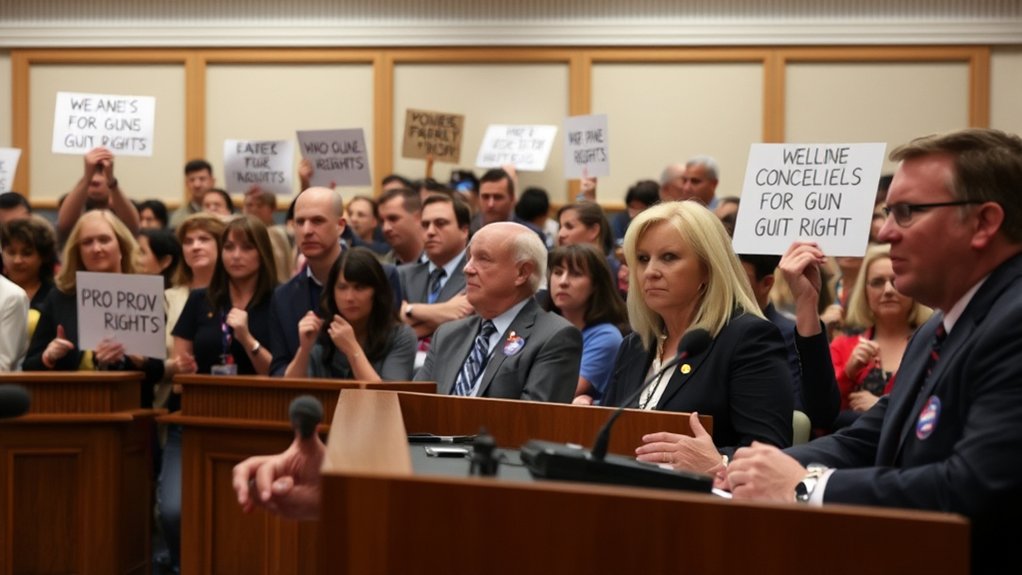
More than 180 Republican lawmakers, including Congressman Derek Schmidt, back the Concealed Carry Reciprocity Act. This shows strong conservative support for the bill. It highlights a significant push in the legislative process to expand gun rights nationwide.
President Trump has pledged to sign the bill, which signals executive approval. On the other hand, major law enforcement groups and most Democratic lawmakers oppose the act. They cite safety risks and concerns about undermining state regulations.
| Supporters | Opponents |
|---|---|
| 189 House Republicans | Democratic Lawmakers |
| Congressman Derek Schmidt | Major Law Enforcement Groups |
| President Trump | State Safety Advocates |
| Conservative Organizations | Gun Control Advocates |
| Pro-gun Rights Activists | Public Safety Advocates |
Understanding these positions helps clarify the act’s contentious role in the gun rights legislative process. It’s a debate that continues to shape policy discussions.
How Could the Act Change State Gun Laws Nationwide?
You’ll notice that the Act requires states to recognize concealed carry permits from other states.
This could actually make local restrictions less strict in some places.
Because of this, your state might’ve a harder time enforcing tougher safety measures, like training requirements or background checks.
Plus, it brings up some tricky questions about how law enforcement will handle compliance when rules vary so much across the country.
Nationwide Permit Recognition
How might the Concealed Carry Reciprocity Act reshape state gun laws across the country? By mandating nationwide recognition of out-of-state concealed carry permits, the Act could considerably alter how firearm technology and gun safety are regulated. Here’s what you need to think about:
States would have to accept permits from permitless carry states, potentially bypassing local requirements for safety training and background checks. This uniform recognition could increase concealed carry in states with stricter gun laws, challenging existing safety protocols.
The Act might limit states’ ability to enforce customized gun safety measures tailored to their population and technology standards.
Ultimately, the Act could create a more standardized but less restrictive framework. This would impact how you and others carry concealed firearms across state lines.
Impact on Local Restrictions
Although states have developed varied local restrictions to address unique safety concerns, the Concealed Carry Reciprocity Act could profoundly alter this landscape by requiring nationwide recognition of out-of-state permits.
You’ll see state sovereignty challenged as strict states like California and New York may have to accept permits that don’t meet their standards. This could weaken local safety regulations such as background checks and training requirements.
The Act promotes legal consistency across states but risks overriding carefully crafted local restrictions, including bans in sensitive areas. If permitless carry remains prohibited in some states, they might face pressure to relax those rules to comply with federal mandates.
It’s a tricky balance between uniformity and respecting local needs.
Enforcement and Compliance Challenges
The Concealed Carry Reciprocity Act’s requirement for states to honor out-of-state permits introduces significant enforcement and compliance challenges. You’ll see how differences in state laws complicate interstate cooperation and permit verification efforts.
Specifically, you might face difficulty verifying out-of-state permits that don’t align with local safety standards. This risks wrongful arrests or unlawful carry charges.
Plus, conflicts can arise when states with stricter gun laws see increased violations because out-of-state permits are recognized nationwide.
There’s also strain on law enforcement and federal resources as they adapt to new compliance rules. This could cause inconsistent enforcement and gaps.
How Does Permitless Carry Affect Concealed Carry Reciprocity?
Because permitless carry allows individuals to carry concealed firearms without a permit, it complicates the framework of concealed carry reciprocity that depends on state-issued licenses.
When states permit carry without licenses, others face challenges in license recognition since no formal permit is issued. This absence undermines established training standards and background checks typically required for permits, creating disparities in reciprocity agreements.
You’ll find that federal reciprocity proposals struggle to account for permitless carry, as they aim to honor licenses that may not exist in some states.
As a result, individuals carrying under permitless laws might legally carry in states with stricter requirements, disrupting the uniformity reciprocity seeks to guarantee.
This dynamic complicates enforcement and challenges the reliability of cross-state license recognition.
What Are the Main Safety and Legal Concerns?
You’ll face increased risks of violence because the act might let untrained or dangerous people carry concealed weapons across state lines.
Law enforcement will have a tougher time with enforcement since verifying permits and respecting local restrictions will get more complicated.
All these legal issues bring up serious concerns about public safety and how well regulations can actually work.
Increased Violence Risks
How might loosening concealed carry laws through reciprocity impact public safety? Expanding gun access can increase gun violence and complicate efforts to maintain safety. You should consider these risks:
States with weaker regulations often see higher firearm homicide rates, suggesting a nationwide relaxation could worsen public safety.
Permitless carry allows untrained or underage individuals to carry guns across state lines, raising accidental discharge risks.
Inconsistent safety standards increase the chance of firearms falling into the wrong hands, especially in domestic violence or high-crime areas.
These factors collectively heighten violence risks by undermining controlled access and responsible use. Understanding these implications is vital when evaluating the broader impact of concealed carry reciprocity legislation on public safety.
Enforcement And Legal Challenges
Although the Concealed Carry Reciprocity Act aims to standardize permit recognition across states, it raises significant enforcement and legal challenges. You face issues with federal jurisdiction potentially overriding state laws. This leads to constitutional challenges from states wanting to preserve stricter regulations.
This can confuse law enforcement about which rules apply during cross-state incidents, making enforcement more complicated.
| Concern | Impact |
|---|---|
| Federal Jurisdiction | Overrides state authority on concealed carry |
| Constitutional Challenges | States contest infringement on their laws |
| Enforcement Confusion | Law enforcement unsure which laws apply |
These challenges highlight safety risks tied to inconsistent permit standards and untrained carriers. You have to consider how the act might undermine existing protections. This increases legal and enforcement complexities nationwide.
What Are the Latest Legislative Developments and Votes?
Since the Concealed Carry Reciprocity Act (H.R. 38) has cleared the House Judiciary Committee with bipartisan support, it’s now poised for a decisive floor vote in the House of Representatives.
The Concealed Carry Reciprocity Act advances with bipartisan support, heading to a pivotal House floor vote.
You should note the key legislative developments shaping this moment: The bill has 189 Republican co-sponsors, signaling strong conservative backing. President Trump has pledged to sign the legislation if it reaches his desk, boosting its momentum.
Despite support, major law enforcement groups oppose the bill due to concerns over gun registration and the potential weakening of background checks.
As you follow the vote, keep in mind that the bill’s passage could profoundly impact concealed carry reciprocity nationwide. The balance between states’ rights and federal oversight remains central to ongoing debates.
What’s Next for the Concealed Carry Reciprocity Act?
With the House Judiciary Committee’s approval securing the bill’s position, the next phase for the Concealed Carry Reciprocity Act centers on a full House vote. You’ll see this vital step determine if the bill advances, faces amendments, or stalls amid debates on constitutional rights, state sovereignty, and public safety.
If it passes, the legislative process moves to the Senate before reaching the President’s desk.
| Stage | Key Focus |
|---|---|
| Full House Vote | Approval or amendment |
| Senate Consideration | Further debate and voting |
| Presidential Action | Signing into law or vetoing |
Understanding these steps helps you grasp how the bill’s future depends on balancing rights protection with legislative scrutiny.
Frequently Asked Questions
How Does Concealed Carry Reciprocity Impact Interstate Travel for Gun Owners?
Concealed carry reciprocity affects your interstate travel by challenging state sovereignty, as it may force states to accept out-of-state permits. This raises public safety concerns since varying state laws and standards might conflict with local regulations.
It’s kind of a tricky situation because what’s allowed in one state might not be in another. So, travelers have to be extra careful and aware of the rules wherever they go. It can definitely make carrying concealed a bit more complicated when crossing state lines.
What Training Requirements Exist for Concealed Carry Permits Under This Act?
You’ll find the Act doesn’t set new training requirements; it respects each state’s standards for permit validity.
Can the Act Affect Carrying Firearms on Federal Property?
You won’t see the act override federal restrictions on carrying firearms on federal property. While it promotes permit recognition across states, federal agencies still enforce their own rules. This limits its impact on firearm carriage in those areas.
How Might Insurance Companies Respond to Changes in Concealed Carry Laws?
You’ll see insurance implications rise, you’ll notice risk assessment tighten, and you’ll experience premiums increase. Insurers will adjust policies, limit coverage, and develop specialized options to manage the greater liability from expanded concealed carry laws.
Basically, insurance companies are going to be a lot more cautious. They want to make sure they’re covering themselves properly while still offering protection to their clients. So, expect some changes in how policies are written and priced.
What Are the Potential Economic Effects of the Concealed Carry Reciprocity Act?
You’ll see varied economic effects as federal regulations could ease gun control, boosting firearm sales and training. This might be good for businesses involved in the gun industry. More people could sign up for training courses, which could mean more revenue.
However, states with strict laws might lose licensing revenue. That could hurt local governments financially. Plus, law enforcement might face higher costs from increased gun-related incidents. So, there are some trade-offs to consider here.
Conclusion
While you might worry that the Concealed Carry Reciprocity Act could override important state safety measures, it’s designed to streamline permit recognition without eliminating existing laws. This means your state’s rules still matter.
Understanding this balance helps clarify how the act aims to respect both individual rights and public safety. Staying informed on its progress guarantees you’re prepared for any changes that could impact your rights and responsibilities nationwide.