What Caliber For Long Range Target Shooting – Best Options Explained
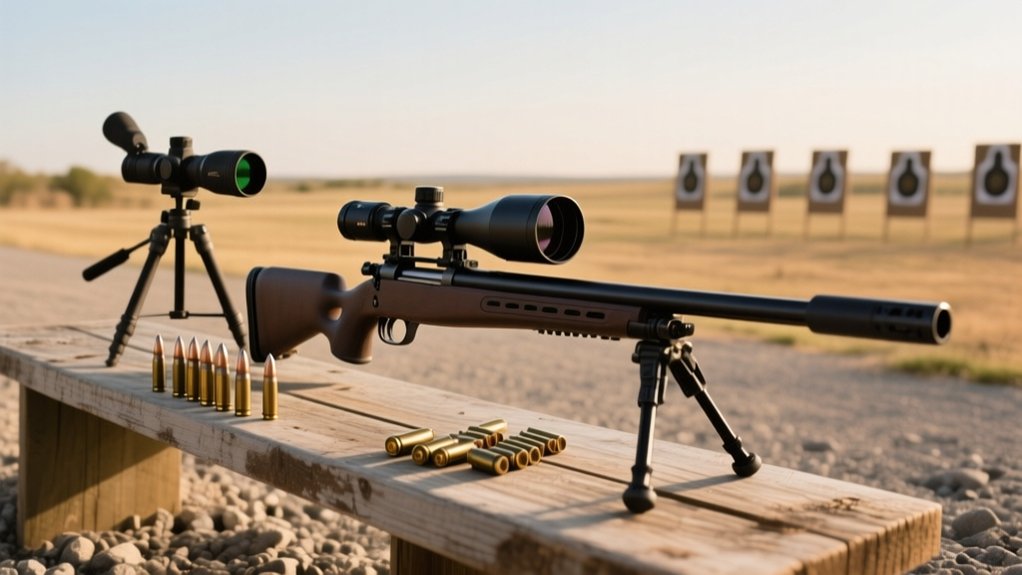
For long-range target shooting, you want a caliber that balances high ballistic performance with manageable recoil and ammo availability. The 6.5 Creedmoor is popular for precision beyond 800 yards because of its high ballistic coefficient and low recoil.
The .308 Winchester works well up to 800 yards and has easier ammunition access. Magnum calibers like the .300 Winchester Magnum offer more power but come with heavier recoil.
Choosing the right rifle and bullet weight also helps optimize your shot. You’ll find more detailed insights ahead.
How to Choose the Right Caliber for Long-Range Shooting
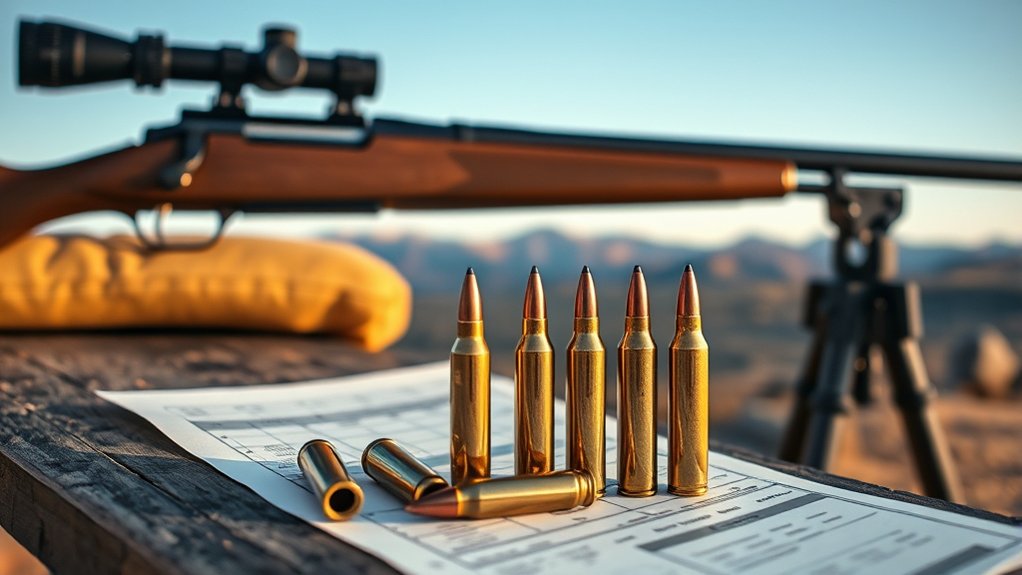
How do you choose the right caliber for long-range shooting? Start by focusing on calibers with a high ballistic coefficient, like the 6.5 Creedmoor, known for its flat trajectory and low recoil. It’s ideal for precision shooting beyond 800 yards.
Your bullet selection depends on your purpose. Target shooters often prefer lighter-recoil rounds for extended practice, while hunters might lean toward magnum cartridges like the .300 PRC or .338 Lapua for superior energy retention at distance.
Choose lighter-recoil rounds for target practice, or magnum cartridges for hunting with greater long-distance energy retention.
Consider muzzle velocity and wind drift. Higher velocities reduce flight time and wind effects, which enhances accuracy.
Also, weigh ammunition availability. Popular calibers like .308 Winchester and 6.5 Creedmoor offer more factory options than niche magnum cartridges.
These factors help you pick a caliber that balances performance and practicality for long-range shooting.
How Your Rifle Platform Changes Caliber Choices
Your rifle’s action type really influences which calibers work best, especially when you’re trying to balance accuracy with reliable cycling.
Then there’s barrel length—it plays a big part too. Longer barrels can boost velocity, but they’re not always practical depending on your platform.
And don’t forget about magazine capacity. It can limit your caliber choices, so it’s important to think about how all these factors fit with your shooting style.
Action Type Influence
Because different rifle platforms handle recoil and cycling differently, they directly influence which calibers work best for your long-range shooting needs. The action type you choose affects your caliber choice, especially regarding bullet weights and performance.
Bolt-action rifles excel in long-range shooting, handling heavier, match-grade bullets like those used in .300 Winchester Magnum or .338 Lapua Magnum for superior accuracy and stability.
Semi-automatic platforms like the AR-10 favor calibers such as .308 Winchester and 6.5 Creedmoor, which cycle reliably with lighter bullet weights, allowing faster follow-up shots.
Single-shot rifles often pair with precision calibers like .300 PRC, letting you focus on taking a carefully placed shot.
Understanding how action type influences recoil management and bullet selection is key to optimizing your setup for long-range accuracy.
Magazine Capacity Limits
Although magazine capacity mightn’t seem like a major factor at first, it plays an essential role in selecting the right caliber for your rifle platform. Your caliber choice directly ties to how many rounds you can load, which affects long-range precision and shooting strategy.
Consider these points:
- Bolt-action rifles usually hold 4-5 rounds, favoring calibers like .300 Winchester Magnum for precision.
- Semi-automatic platforms support larger magazine capacities, often paired with lower-recoil calibers like 6.5 Creedmoor.
- AR-15 magazines typically fit 10-30 rounds of .223/5.56, while AR-10s handle 10-20 rounds of .308 or 6.5 Creedmoor.
- Magazine design affects caliber compatibility, ensuring reliable feeding for specific rounds.
Understanding magazine capacity helps you optimize your rifle’s performance for long-range shooting.
Barrel Length Effects
Choosing the right barrel length can dramatically influence your rifle’s performance and the caliber you select for long-range shooting.
Longer barrels, typically 24-26 inches, boost muzzle velocity, helping reduce bullet drop and improve accuracy at extended distances. This makes them ideal for high-velocity calibers like the .300 PRC or .338 Lapua Magnum.
You’ll also benefit from better recoil management with heavier barrels, which help you maintain control and sight picture, especially when firing powerful magnum rounds.
Furthermore, longer barrels dissipate heat more effectively during prolonged sessions, keeping your rifle consistent.
Don’t forget to match the barrel’s twist rate to your bullet choice for maximum stability.
Plus, longer barrels often accommodate muzzle brakes or suppressors, enhancing both comfort and precision for serious long-range shooting.
How Popular Long-Range Calibers Compare by Distance
When you’re aiming at targets beyond typical shooting distances, understanding how popular calibers perform across various ranges becomes essential. Choosing the best long-range caliber depends on factors like ballistic coefficients, energy retention, and availability of precision rounds.
Here’s a quick comparison to guide your long-range rifle selection:
- .308 Winchester – Effective up to 800 yards, balancing accuracy and cost.
- 6.5 Creedmoor – Excels beyond 800 yards with high ballistic coefficients and low recoil.
- .300 Winchester Magnum – Suitable around 1,000 yards, offering high velocity but increased recoil.
- .300 PRC & .338 Lapua Magnum – Designed for 1,000+ yards; .300 PRC uses heavy, high-BC bullets, while .338 Lapua retains energy up to 1,640 yards, ideal for extreme distances.
This range-based comparison helps you pick the right caliber for your long-range shooting needs.
How Ballistic Coefficient Improves Long-Range Accuracy
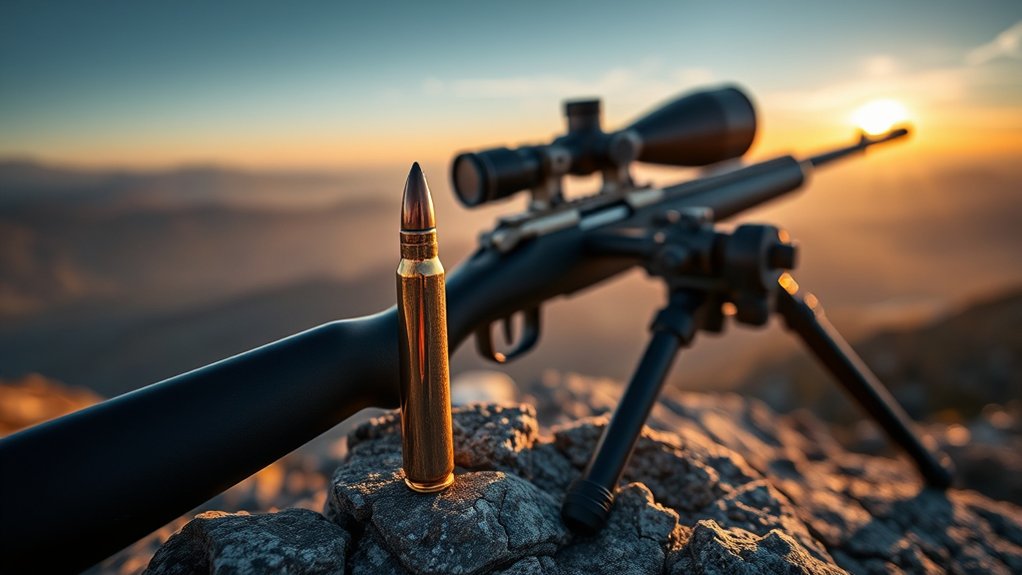
Because the ballistic coefficient (BC) measures how well a bullet cuts through air resistance, understanding it can dramatically improve your long-range accuracy. In long-range shooting, a high BC means less wind drift and a flatter trajectory. This lets you hit targets more consistently.
Bullet shape plays a major role. Boat-tail designs typically offer better aerodynamic efficiency compared to flat-base bullets. For example, the 6.5 Creedmoor’s 140-grain bullet has a BC around 0.600, helping it stay stable beyond 1,000 yards.
When choosing ammunition, prioritize a high BC to minimize wind effects and maintain velocity.
| Bullet Type | BC Range | Effect on Long-Range Shooting |
|---|---|---|
| Flat-base | 0.300-0.450 | More wind drift |
| Boat-tail | 0.450-0.650 | Improved stability, less drag |
| Specialized | 0.650+ | Ideal for extreme distances |
Managing Recoil for Long-Range Accuracy
You know how recoil can mess with your precision by making you flinch and throwing off your follow-up shots.
Picking a caliber that strikes a balance between power and comfort—like the 6.5 Creedmoor—can really help you stay on target longer.
Recoil Impact On Precision
Although recoil is an inevitable part of shooting, managing it effectively plays a vital role in maintaining precision at long range. Proper recoil management helps you stay on target, ensuring consistent accuracy during long-range shooting.
Choosing cartridges with low recoil, like the 6.5 Creedmoor, lets you maintain control and observe impacts more easily.
To improve your recoil impact on precision, consider these tips:
- Use cartridges designed for low recoil to reduce shooter fatigue.
- Opt for a heavier rifle to minimize felt recoil and enhance stability.
- Install muzzle brakes to redirect gases and keep your aim steady.
- Train with lighter-recoiling cartridges to build skills before advancing to powerful calibers.
Mastering these factors will help you maintain accuracy and improve your long-range shooting performance.
Caliber Versus Shooter Comfort
Managing recoil effectively not only preserves your accuracy but also directly influences your comfort during long-range shooting. Choosing a caliber like the 6.5 Creedmoor, known for its lower recoil, helps you maintain control and focus, boosting shooter comfort and accuracy.
On the other hand, calibers with heavier bullets, such as the .338 Lapua Magnum, deliver more recoil, which can cause fatigue and reduce long-range shooting consistency.
Cartridges like the .300 Winchester Magnum offer high muzzle velocity but increase recoil, potentially challenging less experienced shooters.
Selecting a caliber with manageable recoil, like the .308 Winchester, allows you to adopt stable shooting positions, enhancing your overall performance.
With regular practice, you’ll improve recoil management, making long-range shooting more comfortable and accurate.
Techniques To Mitigate Recoil
When you adopt a proper stance and maintain a firm grip on your rifle, you’ll noticeably reduce felt recoil and improve your shot accuracy.
Managing recoil is essential for long-range shooting, and several techniques can help you achieve better control:
- Use recoil pads to absorb shock and increase comfort during shooting sessions.
- Practice controlled breathing to stabilize your body, ensuring consistent shot placement despite recoil.
- Choose heavy rifles when possible, as their weight naturally lessens felt recoil and improves stability.
- Consider adding muzzle brakes or using lighter loads during training to acclimate without excessive recoil.
Why Ammo Availability Influences Caliber Choice
Since ammo availability directly affects how often you can practice and how much you’ll spend, it plays an essential role in choosing a caliber for long-range shooting. Common calibers like .308 Winchester and 6.5 Creedmoor offer better ammo availability, making it easier and more affordable to maintain your shooting proficiency.
Specialty calibers might require handloading, which can limit your practice time and increase costs. Consistent supply chains for common calibers mean less worry about shortages, allowing you to focus on honing your skills.
| Ammo Availability | Impact on You |
|---|---|
| Common calibers | Easy to find & affordable |
| Specialty calibers | May require handloading |
| Consistent supply | Reliable practice |
| Limited supply | Practice interruptions |
How Bullet Weight and Design Affect Long-Range Accuracy
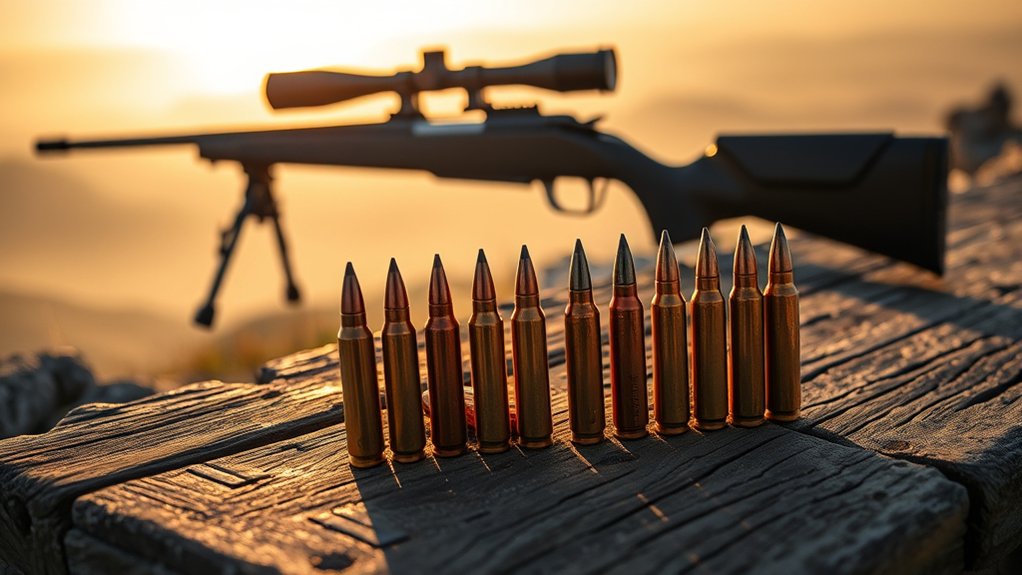
Although bullet weight and design might seem like minor details, they play an essential role in your long-range accuracy. Understanding their impact helps you choose the right bullet for consistent performance.
- Bullet Weight: Heavier bullets retain energy better, reducing wind drift and enhancing long-range accuracy.
- Ballistic Coefficient: A higher BC means less drag, improving stability and trajectory at extended distances.
- Stability: Proper bullet weight paired with the correct barrel twist guarantees stable flight and accuracy.
- Trajectory: Lighter bullets offer flatter trajectories but lose energy faster. Heavier ones maintain momentum over longer ranges.
Reloading Tips for Long-Range Calibers
Choosing the right bullet weight and design sets the foundation, but fine-tuning your reloads can make all the difference in long-range shooting. When honing your reloading tips, focus on consistent bullet seating and proper neck tension to guarantee uniform accuracy.
Adjusting overall cartridge length allows you to optimize chamber fit, which can improve precision with match-grade primers. Using high-quality brass and sticking to stick powders will enhance consistency and temperature stability.
Fine-tuning cartridge length and using quality brass with stick powders boosts precision and consistency.
Load development is vital. Test various bullet weights, seating depths, and powder charges to find the ideal combination for your rifle.
Match-grade primers reduce velocity variance and provide reliable ignition, further boosting your group sizes.
Mastering these steps guarantees your long-range calibers perform at their peak in every shot.
Top Calibers for Beginner and Intermediate Long-Range Shooters
When you’re starting out or advancing your long-range shooting skills, selecting the right caliber can greatly influence your success and confidence. You want something that balances performance with manageable recoil and good bullet options.
Here are four top calibers for beginner and intermediate long-range shooting:
- 6.5 Creedmoor: Known for its high ballistic coefficient and low recoil, it’s ideal beyond 800 yards.
- .308 Winchester: A reliable classic, effective up to 600-800 yards with widely available bullet options.
- .300 Winchester Magnum: Offers powerful velocity and energy for shots near 1,000 yards, but recoil is stronger.
- 7mm Remington Magnum: Combines accuracy and power with versatile bullet choices for varied long-range shooting.
Choosing among these helps you build skill without being overwhelmed by recoil or complexity.
High-Performance Calibers for Extreme Long-Range Shooting
As you push beyond intermediate distances, you’ll want calibers built to perform at extreme ranges with outstanding accuracy and energy retention.
The .375 CheyTac stands out for long-range shooters aiming to reach targets over 2,000 yards, thanks to its high ballistic coefficients and sustained energy.
Similarly, the .338 Lapua Magnum excels past 1,500 yards, offering powerful energy retention and minimal drop, making it a favorite in military and competitive shooting circles.
The .300 PRC, designed for precision, delivers impressive muzzle velocity and consistent ballistic performance, ideal for both extreme-range shooting and big-game hunting.
Choosing any of these high-performance calibers guarantees you maintain accuracy and terminal effectiveness when engaging targets at the farthest distances.
Frequently Asked Questions
How Does Weather Affect Long-Range Shooting Accuracy?
You’ll notice weather affects your long-range shooting accuracy through wind deflection effects that push your bullet off course.
Temperature variations influence your muzzle velocity, changing your bullet’s drop.
Humidity impact considerations matter too, as moist air reduces drag slightly.
Altitude shooting challenges arise because thinner air alters trajectory.
Plus, mirage distortion effects can trick your eye, making it harder to spot the target precisely.
Adjusting for all these factors is key.
What Optics Are Best Suited for Different Calibers?
Did you know that a 1 MOA error can mean a 10-inch miss at 1000 yards?
When matching optics to your caliber selection, choose scopes with variable magnification to adapt to your bullet’s muzzle velocity.
High magnification helps you spot bullet drop and wind drift better, especially with calibers like .308 or 6.5 Creedmoor.
Opt for scopes with precise turret adjustments and ballistic reticles to make those critical corrections quickly.
How Often Should Long-Range Shooters Zero Their Rifles?
You should zero your rifle at least once per season and before major shoots to maintain accuracy.
Frequency recommendations also suggest re-zeroing after every 100-200 rounds, especially if you change ammunition types or bullet weights. Ammunition consistency affects point of impact.
Environmental factors like temperature, humidity, and altitude can shift your zero, so adjust accordingly.
Distance impacts trajectory too, so use proper zeroing techniques to keep your shots precise at long range.
What Maintenance Is Essential for Long-Range Precision Rifles?
You need to focus on cleaning techniques to remove barrel fouling and guarantee consistent accuracy.
Use proper lubrication methods on the action and trigger assembly to keep everything smooth and reliable.
Regularly check scope alignment for clear, precise shots.
Store your ammunition in a cool, dry place to maintain quality.
Don’t forget trigger adjustment to maintain a crisp, consistent pull.
Together, these maintenance steps keep your long-range rifle performing at its best.
How Does Barrel Length Influence Long-Range Performance?
Barrel length influences long-range performance by affecting muzzle velocity significance; longer barrels boost velocity, flattening trajectories.
You’ll notice barrel harmonics impact accuracy, so heavier profiles help reduce vibrations.
Twist rate effects stabilize bullets better, essential for your caliber selection criteria.
Consistent ammunition pairs with the right barrel length to maximize precision.
Conclusion
Choosing the right caliber for long-range shooting isn’t just about power. It’s about precision, recoil, and your rifle’s platform. While beginner calibers offer manageable recoil and ease, high-performance rounds push you to the edge of distance and accuracy.
Balancing bullet weight, ballistic coefficient, and your skill level transforms your shooting experience. So, whether you’re aiming for your first 500 yards or pushing past a thousand, the perfect caliber is the one that fits you and challenges you.