How To Make An Outdoor Shooting Range – Design And Planning Guide
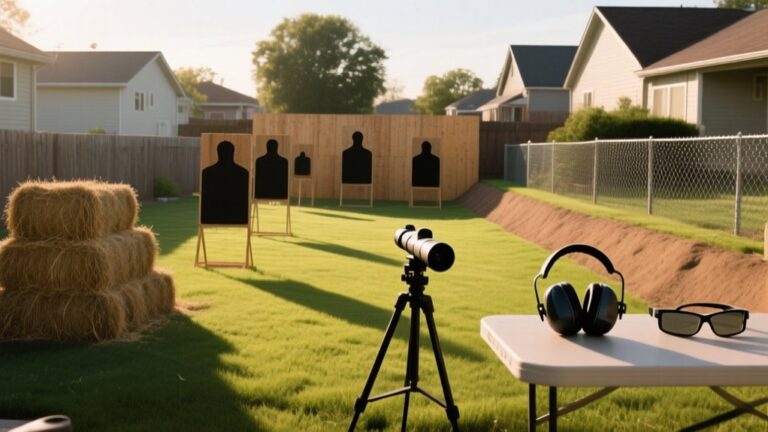
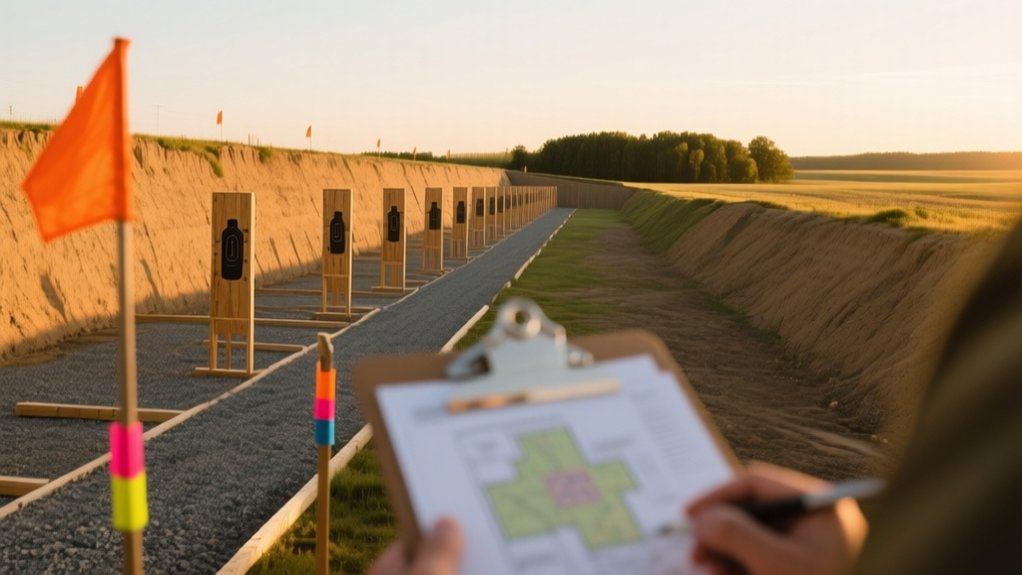
To make an outdoor shooting range, start by choosing a spacious, accessible location with natural backstops and check local zoning and permits. Design firing lines at safe distances with clear signage and well-spaced shooter positions.
Build sturdy berm backstops and install bullet containment systems while managing noise and environmental impact. Equip the range with durable target systems and maintain all gear regularly.
Focus on safety, user comfort, and proper oversight to guarantee compliance. Keep exploring to uncover detailed steps and tips.
Choose the Best Location for Your Outdoor Shooting Range
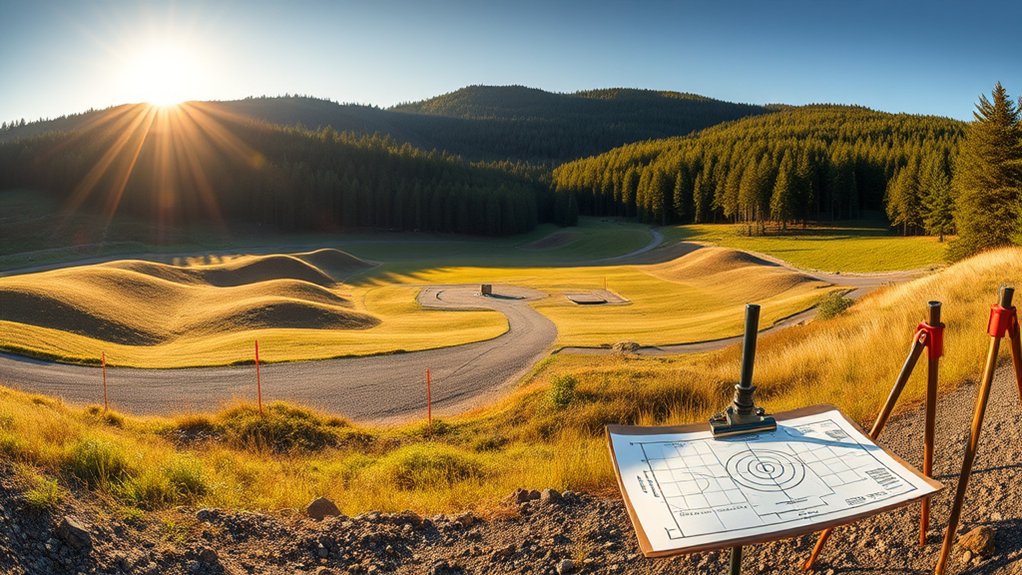
When choosing the best location for your outdoor shooting range, start by finding a site that offers enough space for safe shooting distances. Ideally, this should be between 100 and 1,800 meters to accommodate various firearms.
You’ll want to pick a location that complies with local zoning regulations to prevent legal hassles.
Choosing a site that meets local zoning laws helps avoid legal complications and ensures smooth operation.
Safety is paramount, so look for natural backstops like hills or berms to contain bullets effectively. Environmental factors matter too. Consider wind patterns and nearby residences to reduce noise and risks to the community.
Also, make certain your chosen spot is accessible for users and emergency services while maintaining the privacy and security necessary for a safe environment.
Balancing these elements guarantees your range operates smoothly and responsibly.
Navigate Local Regulations and Permits for Outdoor Shooting Ranges
Picking the right location sets the foundation, but you’ll also need to navigate the local regulations and secure the necessary permits before building your outdoor shooting range.
Start by checking local zoning laws to confirm your property allows shooting activities.
Then, obtain all necessary permits, including building and special use permits, by contacting local government offices.
Don’t forget to review noise ordinances to guarantee your range complies with sound limits and plan mitigation accordingly.
Finally, ensure full compliance with state and federal regulations from agencies like the ATF and EPA.
To keep on track:
- Verify local zoning laws for shooting range use
- Secure necessary permits from all relevant authorities
- Review noise ordinances and plan sound control
- Confirm compliance with state and federal regulations
Plan Safe Firing Lines and Shooter Positions on Your Outdoor Shooting Range
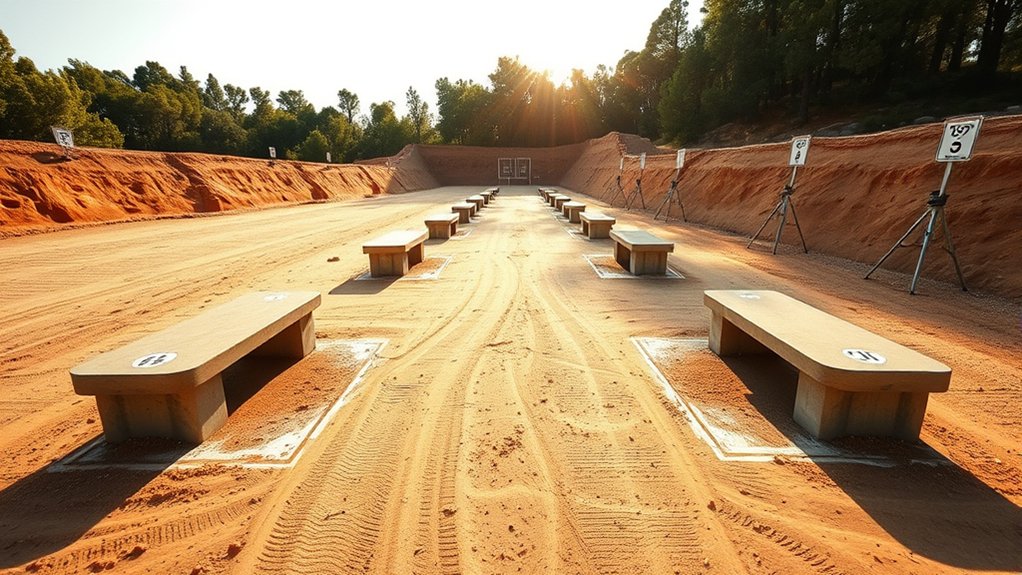
To create a safe and efficient outdoor shooting range, start by clearly marking the firing line. Position it at least 500 yards from residential areas to reduce noise and safety hazards.
Design shooter positions with stable benches or stalls, spacing them 5 to 10 feet apart to maintain safety protocols. Your range design should include clear signage and control stations at the firing line to monitor activities and enforce rules.
| Aspect | Recommendation |
|---|---|
| Firing Line | Clearly marked, 500+ yards away |
| Shooter Positions | Benches/stalls, 5-10 feet apart |
| Safety Protocols | Control stations, authorized access |
| Range Design | Signage for rules and instructions |
| Noise Reduction | Distance from residential areas |
Following these steps guarantees a safe, organized shooting environment.
Design Effective Backstops and Bullet Containment for Outdoor Shooting Ranges
Although designing an outdoor shooting range requires careful planning, effective backstops and bullet containment are critical for safety and environmental protection. You should build backstops from earth berms at least 8 feet high to absorb bullets and prevent ricochets.
Effective backstops and bullet containment are essential for safety and environmental protection in outdoor shooting ranges.
Position bullet containment systems like reinforced steel traps or sandbags at firing line ends to catch stray rounds. Design backstops with a slope of 30 degrees or more to direct bullets safely into containment areas.
Regular maintenance is essential to fix erosion and degradation that can compromise backstop effectiveness. Always consult local regulations to guarantee your range construction meets all safety requirements.
- Construct earth berm backstops at least 8 feet tall
- Use angled backstops with a 30-degree slope
- Install bullet containment traps at firing line ends
- Perform regular backstop inspections and repairs
Choose Target Systems and Place Them Smartly on Your Outdoor Shooting Range
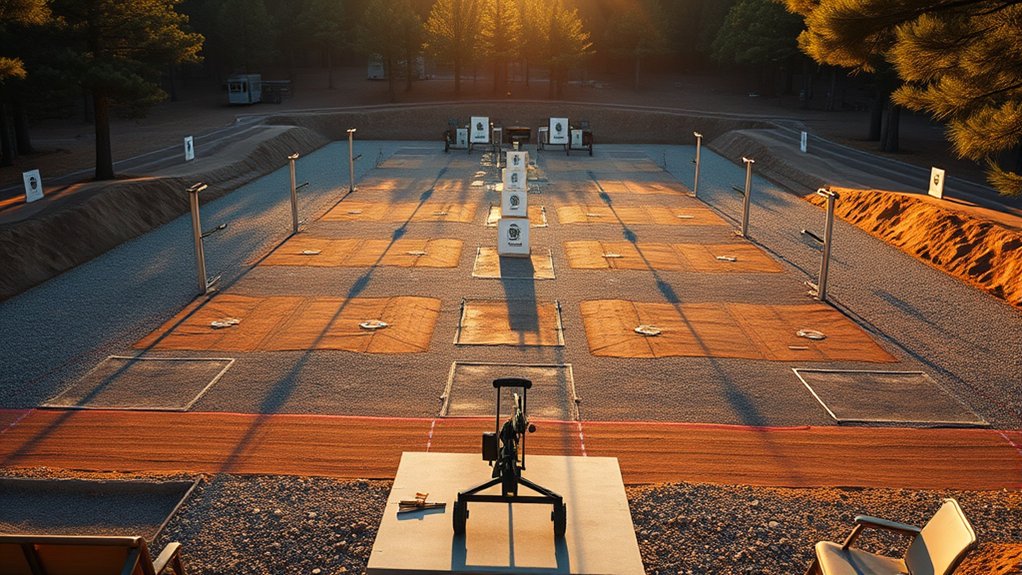
Choosing the right target systems and placing them strategically can greatly enhance your outdoor shooting range’s functionality and safety. Select versatile target systems like static paper targets, steel silhouettes, and dynamic moving targets to suit various shooting disciplines.
For effective target placement, position targets at different distances and elevations to challenge shooters and boost skills while meeting safety regulations and backstop requirements. Confirm targets are set at safe angles, avoiding direct lines of sight to residential areas or public spaces to minimize risk.
Use durable, weather-resistant frames and stands to withstand outdoor conditions and reduce maintenance.
Regularly review and adjust target placement based on shooter feedback and performance data, keeping your shooting ranges safe, efficient, and optimized for training success.
Set Up Safety Oversight and Control Stations for Your Outdoor Shooting Range
When you set up safety oversight and control stations, you improve real-time monitoring and quick responses during shooting activities.
Position control stations strategically to oversee all shooting lanes, enabling effective safety monitoring. Assign a qualified range officer to manage operations and enforce safety protocols.
Equip stations with communication devices and visual signals like flags or lights to indicate range status clearly.
Key steps include:
- Mark control stations visibly and guarantee they cover all shooting lanes
- Designate an experienced range officer for supervision
- Use communication tools for instant coordination
- Implement visual signals to communicate range status
Regularly train your range personnel on emergency procedures to maintain a safe environment.
This setup guarantees swift intervention and keeps everyone secure during your outdoor shooting range activities.
Address Environmental Concerns and Reduce Noise at Your Outdoor Shooting Range
Since outdoor shooting ranges can generate significant noise and environmental impact, you should take proactive steps to address these concerns.
Start by installing earth berms and natural vegetation as effective sound barriers to reduce noise pollution for nearby communities. Incorporate acoustic barriers or baffles to absorb sound further.
Developing a lead management plan is essential; regularly monitor and properly dispose of lead-contaminated materials to protect the ecosystem.
Design your range layout carefully to avoid sensitive wildlife habitats and include natural drainage systems that prevent runoff contamination, complying with EPA guidelines.
Prepare for Maintenance, Equipment, and Management of Your Outdoor Shooting Range
You’ll want to establish regular maintenance routines to keep your backstops, target systems, and ventilation working at their best.
It really helps to choose durable, weather-resistant equipment because that saves you both time and money in the long run.
On top of that, having a solid management plan in place ensures safety and keeps everything running smoothly at your range.
Maintenance Best Practices
To keep your outdoor shooting range safe and functional, you must prioritize regular maintenance and careful management. Following maintenance best practices guarantees your bullet traps and backstops remain effective. This reduces risks from airborne lead and worn range equipment.
Regular inspections help you catch issues early. Cleaning schedules minimize lead exposure for everyone’s safety.
Focus on these key actions:
- Inspect and repair bullet traps and backstops to prevent erosion and maintain impact absorption.
- Clean shooting areas routinely to reduce airborne lead contamination.
- Check ventilation systems frequently and replace filters to guarantee good air quality.
- Keep a detailed maintenance log and train staff on protocols and emergency responses.
Essential Range Equipment
Essential range equipment forms the backbone of a safe and efficient outdoor shooting range. You need durable bullet traps like earth berms or steel traps to contain projectiles safely.
Implement reliable target systems, static or dynamic, to tailor training effectively. Regularly maintain shooting stalls and benches for user safety and comfort.
Safety equipment such as clear signage, first aid kits, and hearing protection is vital for compliance. If your design includes enclosed areas, install ventilation to manage air quality and minimize lead exposure.
| Equipment Type | Purpose | Maintenance Tip |
|---|---|---|
| Bullet Traps | Contain projectiles | Inspect for wear quarterly |
| Target Systems | Training & skill development | Clean moving parts monthly |
| Shooting Stalls | User comfort & safety | Repair damages promptly |
| Safety Equipment | Compliance & user protection | Replace expired items yearly |
| Ventilation | Air quality & lead control | Service filters regularly |
Frequently Asked Questions
What Types of Firearms Are Best Suited for Outdoor Shooting Ranges?
You’ll find that pistols, rifles, and shotguns are all great for outdoor shooting ranges.
When making your firearm selection, consider your range layout and available shooting distances to guarantee safety and effectiveness.
Pistols work well for shorter distances, while rifles excel at longer ranges.
Don’t forget to prioritize safety equipment like barriers and backstops.
Matching your firearms with the range design keeps your sessions safe and enjoyable.
How Can I Train Staff for Range Safety and Emergency Response?
You can train your staff for range safety and emergency response by developing clear safety protocols and conducting regular emergency drills.
Make certain everyone understands proper firearm handling and range rules.
Incorporate first aid training so your team can respond quickly to injuries.
Use hands-on scenarios to simulate real emergencies, which helps reinforce their skills.
Consistent staff training guarantees everyone stays alert, prepared, and confident in maintaining a safe shooting environment.
What Insurance Coverage Is Recommended for Outdoor Shooting Ranges?
You never want to face the unexpected without protection. For your outdoor shooting range, you need extensive liability coverage to shield against injury claims.
Don’t forget property insurance to cover damage or theft. Accident prevention ties into risk management, so having these insurances lets you focus on safety while minimizing financial exposure.
Insist on policies covering environmental risks and equipment, ensuring you’re fully protected no matter what happens.
How Do Weather Conditions Affect Shooting Range Operations?
Weather impacts your shooting range operations considerably. Visibility issues from fog, rain, or snow can make it unsafe to shoot.
Temperature effects influence both shooter comfort and firearm performance. So, extreme cold or heat can disrupt sessions.
Wind considerations are essential because strong gusts can alter bullet trajectories, affecting accuracy and safety.
You’ll need to monitor weather closely and adjust schedules or implement protective measures to keep operations running smoothly.
What Are the Best Practices for Promoting Range Membership and Community Events?
You’ll want to boost membership by offering attractive membership incentives like discounts or exclusive access.
Use community outreach to connect with local groups and build trust.
Focus on event marketing by promoting tournaments or safety classes that engage members and newcomers.
Don’t forget social media. It’s perfect for sharing updates, showcasing events, and interacting with your audience.
Together, these strategies will grow your range’s community and keep members coming back.
Conclusion
By carefully choosing your location and nailing every safety detail, your outdoor shooting range will be so perfectly planned, it’ll feel like a fortress built by the world’s greatest marksmen. Imagine firing away with absolute confidence, knowing every bullet lands exactly where it should, and every safety measure is rock solid.
With smart design, permits handled, and noise tamed, your range won’t just be good—it’ll be legendary, a true haven for sharpshooters everywhere.