Can I Make A Shooting Range In My Backyard – Planning Guide And Requirements
You can make a backyard shooting range if you follow local laws, get necessary permits, and communicate with neighbors. Choose a safe spot with a solid backstop and keep shooting zones clear of homes and roads.
Manage noise with barriers and select eco-friendly ammo to protect the environment. Set clear safety boundaries, post signs, and use proper targets and gear. Keep the range well maintained and insured.
Want to know how to plan every step for safety and compliance?
Check Local Laws Before Building Your Backyard Shooting Range
Before you start building your backyard shooting range, you need to check local and state laws to understand restrictions on firearm discharge and zoning.
Legal requirements can vary, so contact local authorities to confirm if shooting is allowed on your property and inquire about necessary permits or licenses.
Make certain your range design meets safety rules, like having a backstop at least 20 feet high and positioned away from residential areas to prevent stray bullets.
Noise complaints are common, so review noise ordinances in your area before proceeding.
Talking to your neighbors about your plans can help ease concerns about safety and noise.
Taking these steps guarantees you stay compliant and maintain good community relations throughout the process.
Get Permits and Insurance for Your Shooting Range
Although it might seem straightforward to set up your backyard shooting range, you’ll need to secure the proper permits and insurance to stay compliant and protected.
Start by checking with local authorities about permits and zoning regulations specific to your area, as many counties, especially urban ones, require permits for shooting ranges.
Don’t assume rural locations are exempt. Always verify with your local government office.
Next, consider obtaining liability insurance to protect yourself from potential injuries or damages, particularly if others will use your range.
Some states also require clear signage to inform neighbors about the active shooting area.
Understanding and following these legal requirements helps you avoid conflicts with noise ordinances and other regulations, ensuring your backyard range operates safely and within the law.
Choose a Safe Location With Proper Backstops
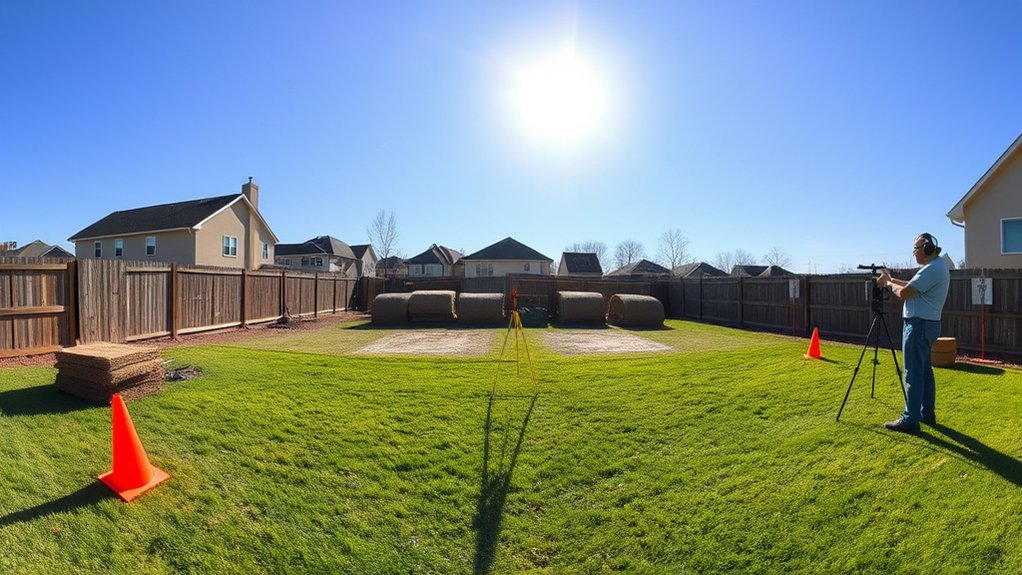
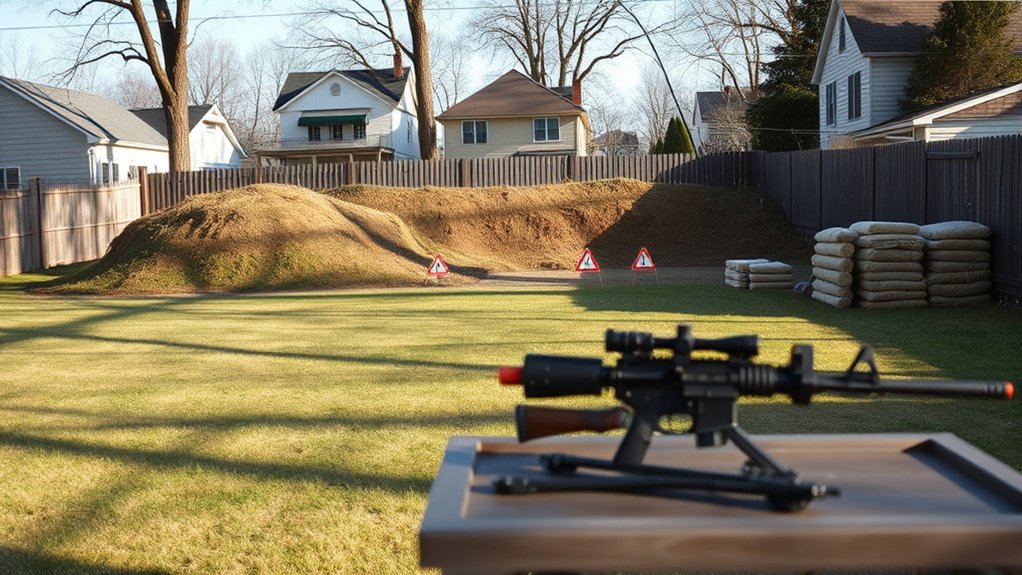
When setting up your backyard shooting range, choose a location with a solid natural backstop, like a hillside or berm at least 20 feet high. This will safely contain bullets and prevent ricochets. A good backstop helps create a safe environment by minimizing risks to others.
Make sure there’s enough distance between the shooting points and the backstop—ideally 500 yards for long-range firearms. Also, confirm that no roads or homes lie in the bullet trajectory zone. Regular maintenance of your backstop is important to keep it effective.
Check local laws to make sure shooting is allowed.
| Factor | Recommendation |
|---|---|
| Backstop Height | Minimum 20 feet |
| Backstop Type | Natural hillside or berm |
| Shooting Distance | At least 500 yards for long-range |
| Surrounding Area | No roads, trails, or homes |
| Maintenance | Regular inspection and repair |
Manage Noise and Environmental Impact
Since shooting ranges can generate noise levels exceeding 140 decibels, you’ll need to check local noise ordinances and use barriers or soundproofing methods to minimize disturbance to your neighbors.
Shooting ranges can exceed 140 decibels, so check noise laws and use sound barriers to protect neighbors.
Consider natural backstops like hills to reduce noise and prevent ricochets.
To address lead contamination, switch to copper or frangible bullets, which lessen environmental risks.
Regularly test soil and nearby water sources for lead contamination, especially if your range is close to waterways.
Open communication with neighbors about your shooting schedule helps manage expectations and reduce complaints.
Plan Your Backyard Shooting Range Layout
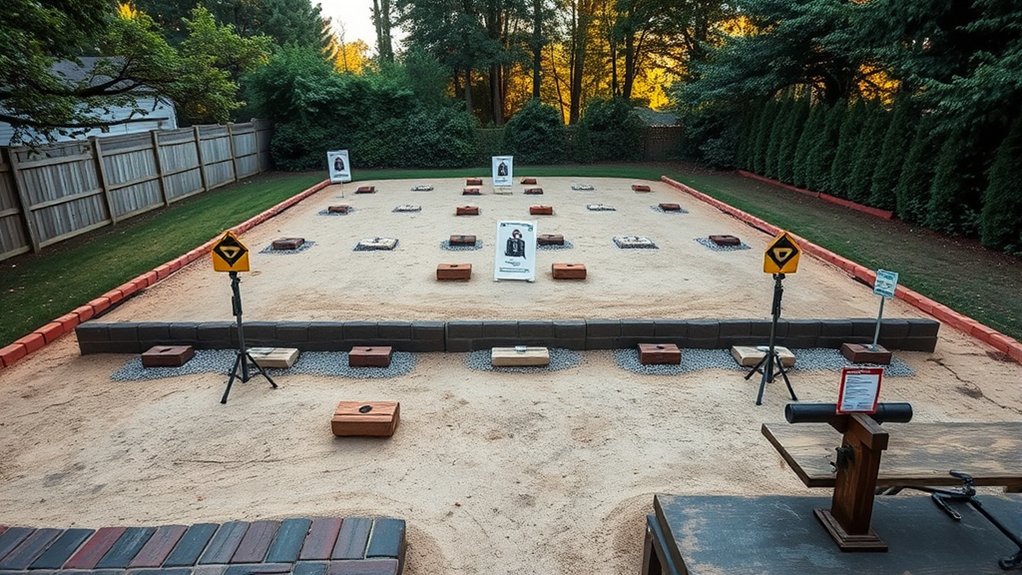
Minimizing noise and environmental impact lays the groundwork for a safe shooting environment, but planning your backyard shooting range layout is just as important.
Start by ensuring your backyard has a safe backdrop, like a berm or hillside at least 20 feet high, to prevent ricochets.
Determine shooting distances carefully. Home shooting ranges ideally span a minimum of 40 acres, with longer ranges requiring up to 500 acres.
Review local zoning and firearm discharge regulations to confirm permission and specific rules.
Define a clear firing line and establish range boundaries to enforce essential range rules, including mandatory eye and ear protection for everyone.
Use satellite imagery to assess safe shooting directions and distances from your backstop to neighboring properties, reducing risks and maintaining safety on your shooting ranges.
Set Up Safety and Emergency Plans
Although planning your backyard shooting range layout sets the foundation, you must also prioritize safety and emergency preparedness to protect everyone involved.
Establish clear safety protocols by posting visible signage indicating live fire activity and marking a defined firing line with strict boundaries.
Require all shooters to wear eye and ear protection within this zone.
Maintain a trauma kit on-site and create a Medical Response Plan tailored to your range’s specific risks, ensuring quick action if injuries occur.
Regularly inspect the range for hazards like inadequate backstops or unauthorized entry beyond shooting areas.
Implement a communication protocol to notify neighbors of shooting times, minimizing conflicts and enhancing trust.
These steps keep your range safe and ready for emergencies, protecting shooters and your community.
Choose Targets and Stands for Your Range
After setting up safety measures and emergency plans, it’s important to choose the right targets and stands to make your shooting sessions effective and enjoyable.
Opt for lightweight, durable Throom targets to reduce ricochet risks and keep safety a priority.
Pair them with HatPoint target stands, which offer adjustable heights and are easy to transport, fitting various shooting drills perfectly.
For versatile, cost-effective setups, consider DIY tactical port walls using cardboard combined with HatPoint stands.
Buying cardboard target backers in bulk helps you replace targets quickly and affordably.
Make sure your paper targets match your training goals and are clearly visible, ensuring they suit the firearms you’ll be using.
Choosing the right targets and stands sets the foundation for productive and safe backyard shooting practice.
Build or Buy Range Equipment
You’ll want to focus on essential range equipment that’s both durable and easy to move, like Throom Targets and HatPoint Stands.
These pieces make your range setup practical and convenient.
And don’t hesitate to try some DIY solutions, like building a Tactical Port Wall.
It’s a great way to keep costs down while still enhancing your setup.
Also, remember to maintain your gear regularly.
That way, you guarantee safety and keep everything performing at its best on your range.
Essential Range Equipment
Three key pieces of equipment can make your backyard shooting range safe, functional, and effective.
First, choose essential range equipment like lightweight, durable Throom Targets that eliminate ricochet risks. They’re perfect for your private gun use.
Next, incorporate adjustable, stackable HatPoint Target Stands. They’re easy to transport and set up for various drills.
Finally, use bulk cardboard target backers to cut costs while providing versatile target surfaces. You can even build a DIY Tactical Port Wall with HatPoint stands and cardboard to simulate different shooting scenarios.
Don’t forget quality paper targets tailored to your training needs. They’ll help sharpen your accuracy and skills.
DIY Target Solutions
When setting up your backyard shooting range, choosing the right target solutions can make a big difference in both safety and training effectiveness.
You can opt for DIY target solutions like Throom Targets, which are lightweight and durable, reducing ricochet risks for safer shooting.
HatPoint Target Stands add versatility with their adjustability and portability, perfect for both indoor or outdoor use.
For budget-friendly options, bulk cardboard target backers let you swap targets frequently without extra cost.
You might also build a DIY Tactical Port Wall using HatPoint stands and cardboard, enhancing your drills with cover and target variety.
Finally, using paper targets tailored to specific training missions helps improve accuracy and skill.
These options give you flexibility to customize your range efficiently.
Equipment Maintenance Tips
Although building your own shooting range equipment can save money and let you customize gear to your needs, regular maintenance is key to keeping everything safe and functional. You should inspect equipment like steel targets and backstops before every use to spot wear or damage.
When buying, choose durable gear with safety features to minimize risks. Establish a maintenance schedule to clean bullet traps and replace worn parts, ensuring smooth operation.
| Task | Frequency |
|---|---|
| Inspect steel targets | Before each use |
| Clean bullet traps | Monthly |
| Replace worn components | As needed |
Using local materials or community support can help you build and maintain your range cost-effectively while keeping safety a priority.
Mark Shooting Lines and Safety Boundaries Clearly
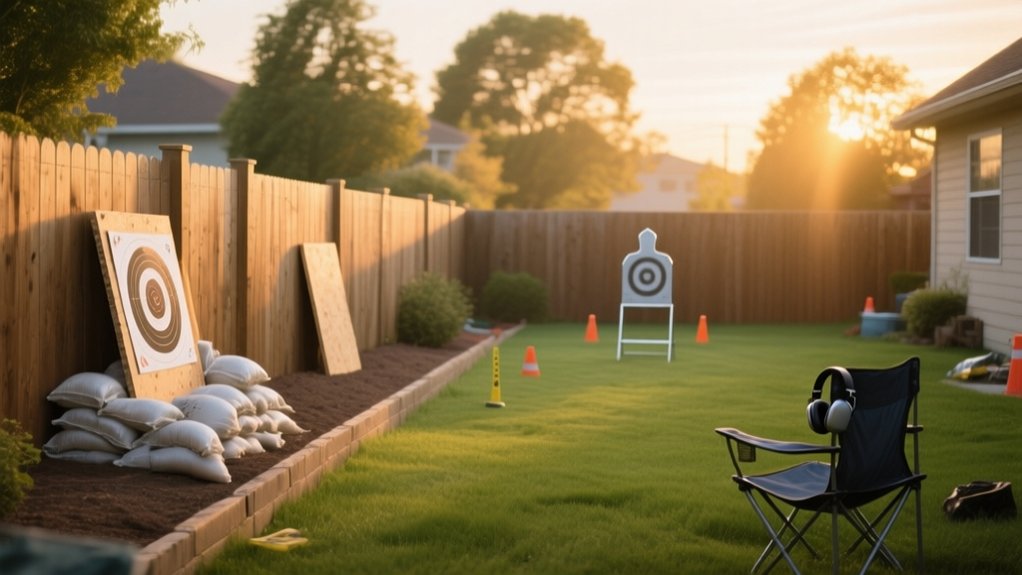
To keep everyone safe and organized, you should clearly mark the shooting line with durable rope or cones so shooters know exactly where to stand. This helps maintain order and prevents accidental stepping into unsafe areas.
Next, establish distinct safety boundaries around your range to define where shooting activities occur and where protective gear like eye and ear protection is mandatory. Use clear signage to indicate active shooting zones and reinforce safety rules.
Make sure these safety boundaries are positioned at a safe distance from neighbors and public spaces, following local firearm discharge laws.
Regularly inspect and refresh your markings to keep them visible and effective, adapting as your environment changes.
Maintain Your Backyard Shooting Range Safely
Maintaining your backyard shooting range safely requires regular attention to key safety features and environmental concerns. You should verify your range has a solid backstop, like a berm or natural barrier at least 20 feet high, to stop stray bullets and ricochets.
Regularly inspect and repair targets, backdrops, and safety equipment to meet all rules and regulations. Clear signage displaying active shooting times and safety protocols will keep neighbors informed and cautious.
Don’t forget to implement a lead collection and disposal system to minimize environmental harm and comply with local laws.
Establish a maintenance schedule for cleaning and replacing target materials, helping you maintain your backyard shooting range safely while protecting both users and the environment.
Frequently Asked Questions
What Types of Firearms Are Best Suited for a Backyard Range?
For firearm selection in your backyard range, choose handguns like .22LR or 9mm pistols and rimfire rifles, which offer lower noise and recoil.
Shotguns work if you use low-recoil loads, but always prioritize range safety by installing a sturdy backstop to catch bullets.
Make sure your choices comply with local laws, and never compromise on safety measures to keep your shooting area secure and responsible.
How Can I Train Beginners Safely at My Shooting Range?
You don’t want beginners just pointing guns anywhere, right? Start by enforcing strict safety protocols, no exceptions.
Teach beginner techniques with unloaded firearms first so they get comfortable without risks.
Use clear signage and define safety zones; it’s not a guessing game.
Always provide proper eye and ear protection, and have experienced instructors supervise.
That way, you avoid chaos and keep everyone safe while they learn.
What Are the Best Materials for Constructing Bullet Traps?
The best bullet trap materials you should consider are rubber, steel, sand, and water.
Rubber traps absorb bullets well and reduce ricochet, boosting safety. Steel is durable but needs proper angles to prevent dangerous deflections.
Sand is cost-effective and easy to maintain, but you’ll have to replenish it regularly. Water traps minimize lead exposure but require more upkeep.
Prioritize safety considerations by choosing materials that fit your range’s design and maintenance capabilities.
How Do Weather Conditions Affect Shooting Range Use?
Imagine a sudden gust of wind shifting your bullet’s path or rain turning your range into a slippery hazard. Weather conditions directly impact your shooting range use by affecting safety and maintenance.
You need to prioritize weather safety, avoiding shooting during storms or heavy rain. Wind, humidity, and temperature influence bullet trajectory and firearm function, so plan sessions on calm, clear days.
Keeping your range well-maintained guarantees safety and accuracy despite changing weather.
Can I Host Shooting Competitions in My Backyard Range?
Yes, you can host shooting competitions in your backyard range, but you need to follow safety regulations strictly.
Check local laws to guarantee your range complies, and don’t forget to get liability insurance to protect yourself from potential claims.
Establish clear safety protocols for participants and install proper backstops to prevent accidents.
Consulting with local shooting clubs can also help you manage events safely and meet all legal requirements.
Conclusion
Before you start building your backyard shooting range, make certain you check local laws and get the right permits. No need to summon a medieval knight for protection when modern rules exist.
Choose a safe spot with proper backstops, manage noise thoughtfully, and clearly mark safety boundaries. With careful planning and maintenance, your range can be both fun and secure.
Taking these steps guarantees you’ll enjoy your shooting practice responsibly and safely for years to come.