What Do You Need To Go To A Shooting Range – Requirements And Checklist
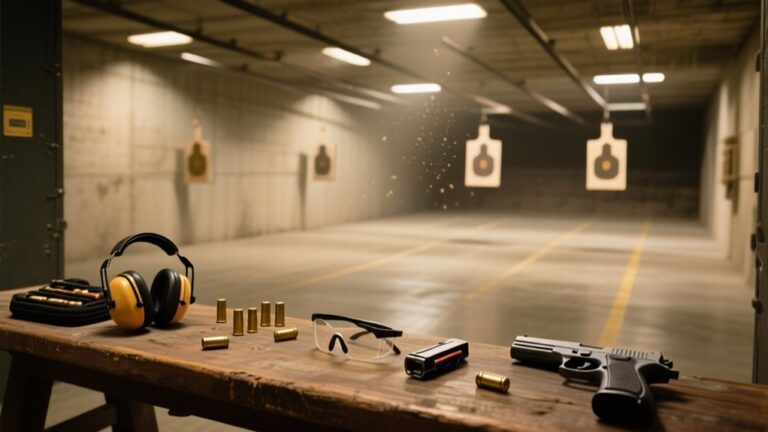
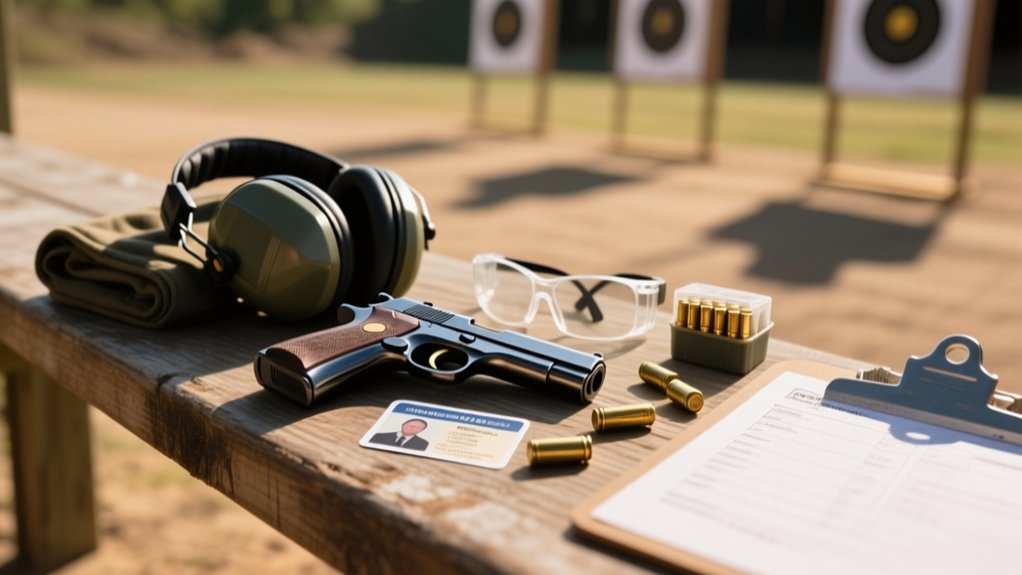
To go to a shooting range, you’ll need a government-issued ID, meet age requirements (usually 21+ for handguns), and complete any safety waivers. Bring proper eye and ear protection, suitable firearms with the correct ammunition, and personal paper targets.
Dress in closed-toe shoes and long pants. You might also want to consider gloves and a hat for extra protection. Pack a well-organized range bag with extra magazines and cleaning supplies.
Ready to get fully prepped? There’s more to know for a safe and smooth experience.
Identification and Age Requirements for Shooting Ranges?
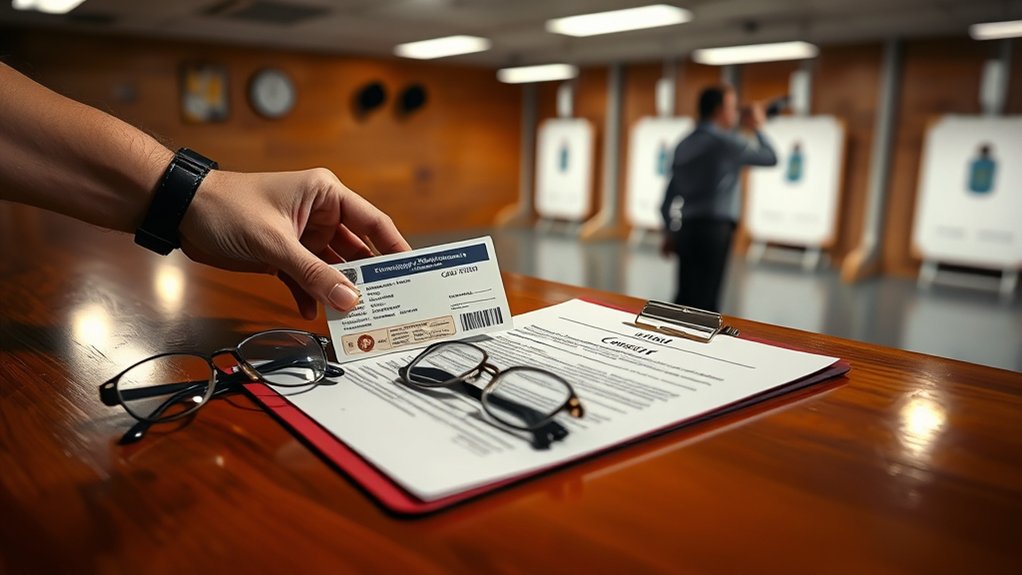
How do shooting ranges verify your identity and age before letting you shoot? Most require a government-issued photo ID to confirm your identification and meet age requirements.
Typically, you must be 21 or older to rent handguns. If you’re under 21, you can only handle firearms under the supervision of a legal guardian or with parental consent.
Handgun rentals usually require you to be 21+, with under-21s needing adult supervision or consent.
Ranges may have different policies, but minors usually need an adult present.
As a first-time shooter, you’ll also need to complete a safety waiver, which often includes watching a safety video. This guarantees you understand the rules before participating.
How to Follow Safety Rules and Etiquette at the Shooting Range
When you’re at the shooting range, it’s really important to follow some key safety rules. For instance, always treat every firearm as if it’s loaded, and keep your finger off the trigger until you’re actually ready to shoot.
Also, proper range etiquette goes a long way. Make sure you wear your eye and ear protection, and don’t forget to clean up after yourself. It helps keep the place safe and respectful for everyone.
And one more thing—always listen carefully to the range commands and respond quickly. That way, you help keep everything running smoothly and safely during your session.
Essential Safety Rules
Because safety is paramount at any shooting range, following essential rules and proper etiquette protects everyone present. You must always treat every firearm as if it’s loaded, keeping the muzzle pointed in a safe direction.
Maintaining trigger discipline by keeping your finger off the trigger until ready to shoot is vital. Listen and respond promptly to the range officer’s commands to guarantee smooth operation and safety.
Don’t forget to wear eye protection and other PPE at all times.
Key safety practices include:
- Treat every firearm as loaded and point it safely
- Keep trigger discipline and finger off the trigger until shooting
- Follow all commands from the range officer without delay
- Wear eye protection and maintain awareness of your surroundings
These rules keep shooting ranges safe and enjoyable for everyone.
Proper Range Etiquette
Proper range etiquette guarantees everyone enjoys a safe and respectful shooting experience.
To uphold range safety, always wear the required eye and ear protection as part of your protective equipment.
Practice safe gun handling by keeping the muzzle pointed downrange and your finger off the trigger until you’re ready to shoot.
Familiarize yourself with range rules and follow them closely to maintain order.
Respect others by cleaning up your shooting area and disposing of spent casings and trash properly.
These actions show consideration for fellow shooters and the environment.
By committing to these guidelines, you guarantee a secure, enjoyable atmosphere for all at the range.
Responding To Commands
Following range etiquette sets the foundation for a safe shooting environment, but responding promptly and correctly to commands takes safety a step further.
Always listen carefully to the range officer’s instructions like “Range is hot” and “Cease fire.” These commands control when you can shoot or must stop immediately.
Maintain muzzle discipline by keeping your firearm pointed downrange and your finger off the trigger until you’re ready to shoot.
During a cold range, only move downrange when the officer says it’s safe.
Remember to follow these key points for safe shooting:
- Obey all commands from the range officer without delay
- Keep muzzle pointed downrange at all times
- Keep finger off the trigger until shooting
- Respect safety protocols and wait for cold range clearance
This approach guarantees a safe and respectful shooting environment.
Choosing a Firearm and Ammunition for Your Shooting Range Visit
How do you choose the right firearm and ammunition for your shooting range visit? Start by selecting a firearm that suits your skill level, like a .22 LR for beginners because of its low recoil. Always check your firearm’s manual or barrel markings to confirm the correct caliber and ammunition type.
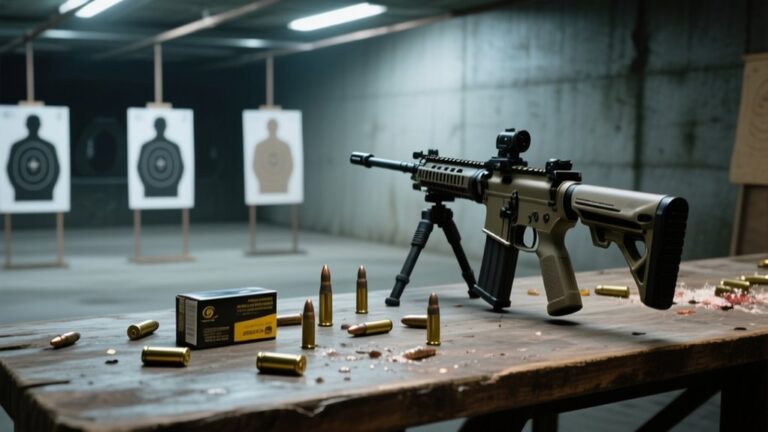
Remember, indoor ranges often require full metal jacket (FMJ) rounds and prohibit others due to safety rules. Bring extra ammunition and several magazines in your range bag to keep practice sessions efficient. Properly handling firearms and following range policies guarantee a safe, productive visit.
| Firearm Type | Ammunition | Notes |
|---|---|---|
| .22 LR | FMJ | Great for beginners |
| 9mm | FMJ | Popular for practice |
| .45 ACP | FMJ | Heavier recoil, more power |
Essential Eye and Ear Protection for Shooting Ranges
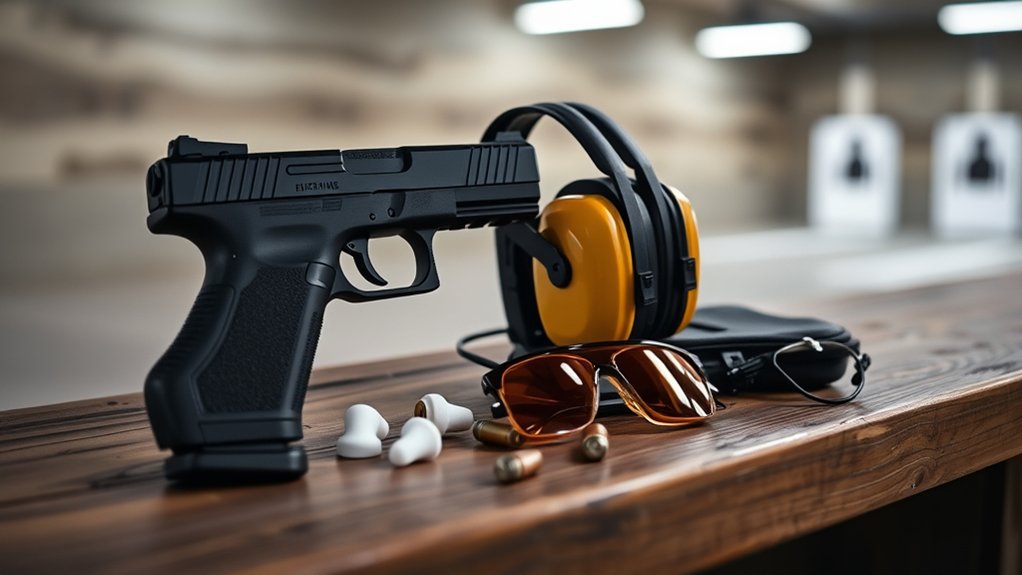
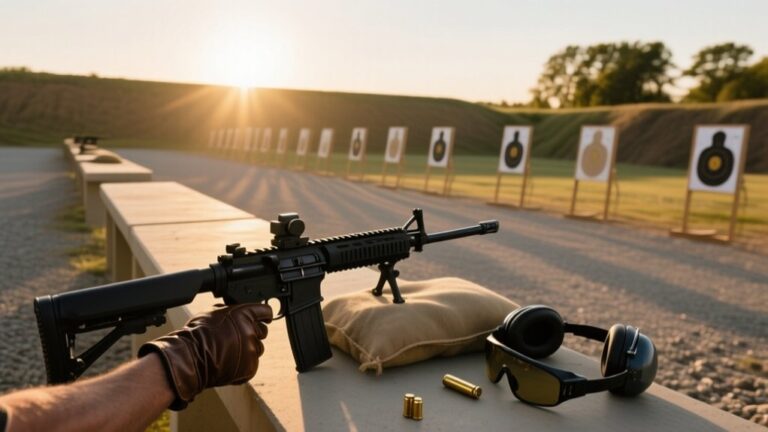
Since shooting ranges expose you to loud noises and potential flying debris, wearing the right eye and ear protection is essential. Always use safety glasses that meet ANSI Z87+ standards to shield your eyes from fragments and debris.
For ear protection, choose from foam plugs, earmuffs, or electronic earmuffs, especially during indoor shooting where noise levels spike.
Keep these points in mind for effective protection:
- Use safety glasses at all times to prevent eye injuries.
- Opt for electronic earmuffs to hear communication clearly while blocking harmful noise.
- Practice double protection by wearing foam plugs under earmuffs for extra sound dampening.
- Clean your ear protection regularly to reduce lead exposure and maintain hygiene.
Prioritizing both eye protection and hearing protection guarantees a safer shooting experience.
Targets and Accessories to Bring to the Shooting Range
Before you head to the range, make sure to check if they provide targets or if you need to bring your own to match your practice goals. It’s always a good idea to have the right kind of targets that suit what you want to work on.
Also, don’t forget the little essentials like target clips, tape, and a marker. These help keep everything secure and organized while you’re shooting. Trust me, having these on hand makes the whole experience smoother.
And of course, packing a well-organized range bag is a game changer. It lets you carry all your targets and accessories easily, so you’re not fumbling around when you get there.
Having everything ready means you can focus on your practice without any hassle.
Target Types and Availability
Although many shooting ranges provide standard paper targets, you should always check whether you need to bring your own for specific practices or shooting types.
Target types vary widely, from paper silhouettes and bullseyes to 3D targets, each designed to improve different skills.
Some ranges even allow custom targets, so you can tailor your session to focus on particular scenarios.
To keep your lane rental safe and comfortable, bring these essentials with you:
- Extra paper targets for varied practice
- Custom targets if you want specialized drills
- Shooting glasses to protect your eyes
- Clips or tape to secure targets firmly
Being prepared with the right target types and extras guarantees an efficient, engaging shooting experience every time.
Essential Target Accessories
When preparing your targets for a shooting session, bringing the right accessories can make a big difference in how smoothly your practice goes.
Always bring range-approved targets or confirm if the facility provides them, since many ranges have strict policies on target types.
To secure your targets firmly to the backing board, pack clips or tape. This prevents movement during shooting. A stapler is also handy, as many ranges require paper targets to be stapled in place.
Don’t forget a marker to jot down notes or scores directly on your targets. This helps you track progress.
Finally, check the range’s policy on personal targets before you go, as some restrict outside targets or enforce size limits.
Being prepared with these essentials guarantees a smooth and effective range experience.
Organizing Your Range Bag
If you want your shooting session to run smoothly, organizing your range bag thoughtfully is essential. Make sure to pack all necessary targets, as most ranges require you to bring your own.
Include a marker to note adjustments on your targets and spare magazines to maintain continuous shooting. Don’t forget cleaning supplies and ammo boxes to keep everything in order.
Here’s what your range bag should contain:
- Various paper or cardboard targets with clips or tape for secure attachment
- Marker for tracking accuracy and progress
- Spare magazines for uninterrupted firearm handling
- Cleaning supplies and a small toolkit for quick maintenance
Packing Your Shooting Range Bag With Essentials
Packing your shooting range bag with the right essentials guarantees a safe and efficient experience.
Start by including eye protection like ANSI Z87+ glasses and reliable ear protection such as foam plugs or electronic muffs. Most ranges require these for safety.
Securely pack your firearm in a compliant case, following all local laws and range policies. Bring enough range-approved ammunition, double-checking the caliber to match your firearm.
Consider extra rounds for more practice.
Don’t forget targets and tools like a stapler, tape, and markers to set up and adjust your shooting area.
Organize cleaning supplies, spare magazines, and a first aid kit to handle any unexpected issues.
With these essentials, you’ll be prepared for a smooth and responsible shooting range visit.
Clothing and Gear Tips for a Safe, Comfortable Shooting Range Visit
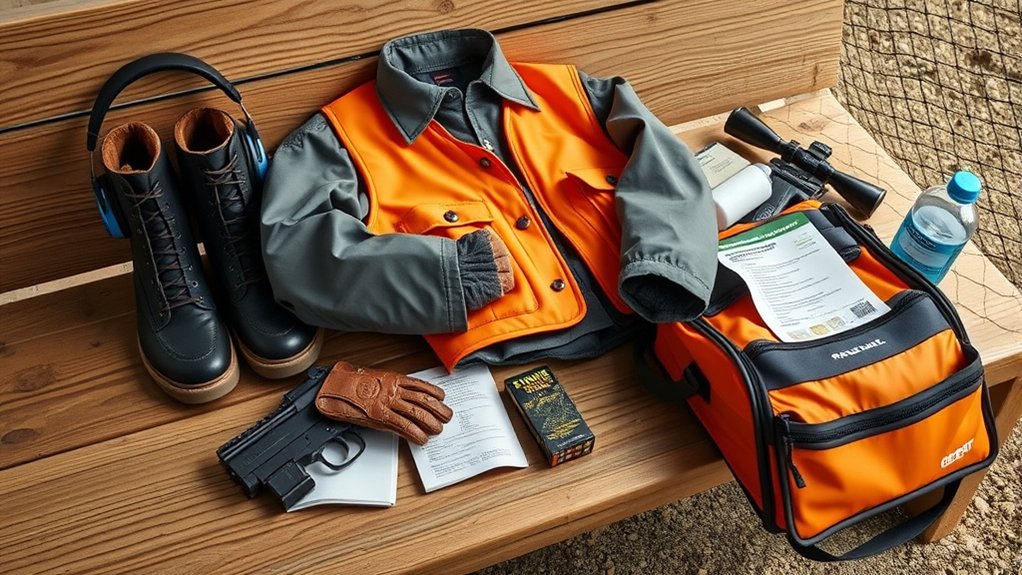
Along with your range bag essentials, choosing the right clothing and gear plays a big role in keeping you safe and comfortable.
Putting safety first means wearing closed-toe shoes and long pants to shield your feet and legs from hot brass.
Opt for high-collared shirts and consider a baseball cap to protect your eyes and prevent hot brass from entering your clothing.
Don’t forget shooting gloves to improve grip and protect your hands from recoil and heat, especially with larger calibers.
Before heading out, always check the range’s dress code to stay compliant.
Remember these key clothing and gear tips:
- Wear closed-toe shoes and long pants
- Choose high-collared shirts
- Use a baseball cap to protect your eyes
- Bring shooting gloves for hand protection and comfort
Frequently Asked Questions
Can I Rent Firearms and Ammunition at the Shooting Range?
Yes, you can rent firearms and ammunition at many shooting ranges, but it depends on the range rules and your age.
They often offer various firearm types, but you’ll need to bring proper safety equipment and follow shooting etiquette.
Check range hours and instructor availability beforehand to maximize your experience.
Are There Any Health Conditions That Prevent Shooting Range Participation?
Yes, certain health concerns can prevent you from safely participating at a shooting range.
Physical limitations like coordination problems or vision issues, as well as mental health challenges, may affect your ability to handle firearms properly.
Medication effects can also impair your focus or reaction time.
Always use hearing protection to guard your ears, and follow all safety protocols closely.
If you have any doubts, consult a medical professional before going.
What Are the Typical Costs or Fees for Using a Shooting Range?
Like stepping into a classic western showdown, you’ll face range membership fees that can save you money over time.
Expect rental equipment charges around $10–$25, with ammunition costs varying by caliber.
Target pricing options usually range from $1 to $5 each, while safety gear expenses might add up if you don’t bring your own.
Don’t forget additional service fees and group discount rates that can ease the overall cost.
Is Prior Firearms Training Required Before Visiting a Shooting Range?
You don’t have to have prior firearms training before visiting a shooting range, but it’s highly recommended.
Understanding firearms safety, shooting etiquette, and range rules is essential for your safety and others’.
Many ranges offer a range orientation or safety briefing, often led by instructors with proper qualifications.
Make sure you meet the legal age and bring your equipment checklist.
Taking a lesson helps you gain confidence and shoot responsibly.
Can Minors Attend the Shooting Range With Adult Supervision?
Picture a young archer aiming true under a watchful eye. That’s how minors attend shooting ranges with adult supervision.
You’ll need to navigate age restrictions and guarantee parental consent is in place.
Safety protocols are strict, so training requirements and liability waivers must be completed.
Don’t forget equipment rentals tailored for younger shooters.
With these steps, you’re set to foster responsible firearm use while keeping everyone safe and sound.
Conclusion
Now that you know what to bring and how to stay safe, your shooting range visit will be smooth and enjoyable. Imagine Sarah, a first-timer who packed all essentials: ID, eye and ear protection, and her chosen ammo. She followed safety rules and left confident and enthusiastic for her next visit.
By preparing well and respecting the range’s guidelines, you’ll have a fun, safe experience every time you go. Get ready, stay safe, and enjoy shooting!