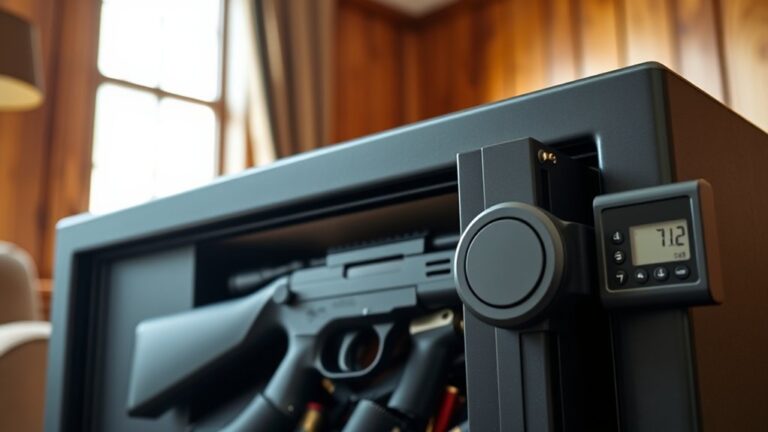
How To Open A Gun Safe Without A Key – Access Options Explained
To open a gun safe without a key, first identify your safe’s lock type: keypad, dial, biometric, or keyed. Then check for backup keys or override codes.
For electronic or biometric safes, try replacing the batteries or using reset procedures. Combination dials need some patient manipulation. Keyed safes might require tension wrenches or picks.
Always verify ownership before trying anything. And avoid forcing the lock to prevent damage. Understanding these methods will help you regain access efficiently and legally.
Key Takeaways
- Identify the safe’s lock type by checking for keypad, dial, biometric scanner, or keyhole on the front panel.
- Use backup override keys or codes found in hidden compartments or manuals to gain access without a key.
- Replace batteries or clean biometric sensors to restore functionality in electronic or fingerprint safes.
- Manipulate combination dials slowly and patiently, feeling for clicks or resistance changes to unlock dial safes.
- Contact a professional locksmith if DIY methods fail to avoid damaging the safe or lock mechanism.
How to Identify Your Gun Safe Type and Lock
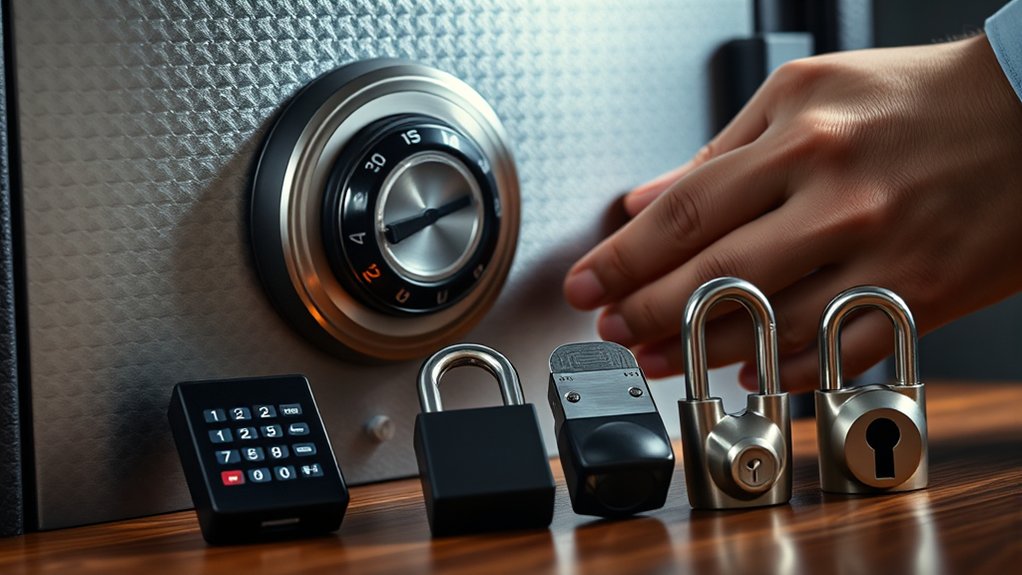
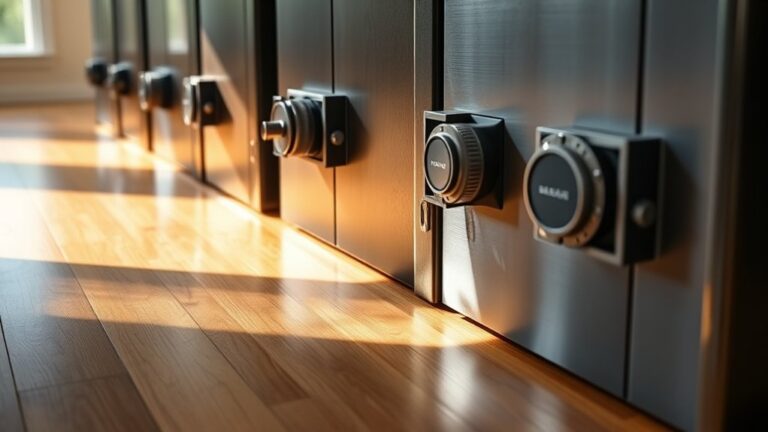
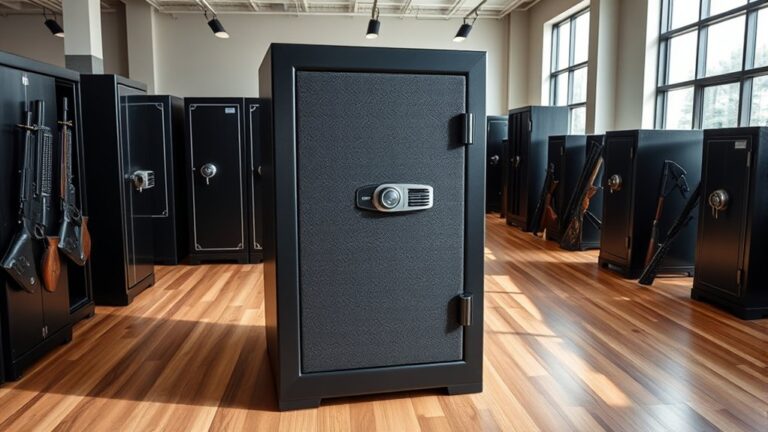
Before you attempt to open your gun safe without a key, you need to identify its type and locking mechanism. Start by examining the front panel for a keypad, dial lock, biometric scanner, or keyhole. These features reveal the safe type and lock system, whether it’s an electronic safe with a keypad or a traditional combination safe with a dial lock.
Look closely for a backup key slot or hidden panel, which might indicate key-based access. Also, locate the brand and model number near the lock area. This information helps confirm the specifics of the lock mechanism.
Check if your safe includes a biometric scanner that uses fingerprint recognition. Accurately recognizing these elements ensures you understand your gun safe’s lock system before you try to open it.
Check for Backup Keys and Override Codes
Once you’ve identified the type of lock on your gun safe, the next step is to check for backup keys and override codes that may allow access without the primary key. Many safes include a hidden key compartment, often behind a removable panel or within the lock mechanism.
It’s a good idea to consult the user manual or manufacturer’s instructions for your safe model to locate backup keys and find out if override codes exist. These codes are usually reserved for authorized users and provide an extra way to access your safe if you don’t have the primary key handy.
Backup keys are typically supplied when you purchase the safe and should be stored securely but separately from the safe itself. Always make sure to verify your ownership and legal rights before using these methods to avoid any complications.
Following the user manual helps ensure you access your safe responsibly and effectively.
Non-Destructive Methods for Electronic and Biometric Gun Safes
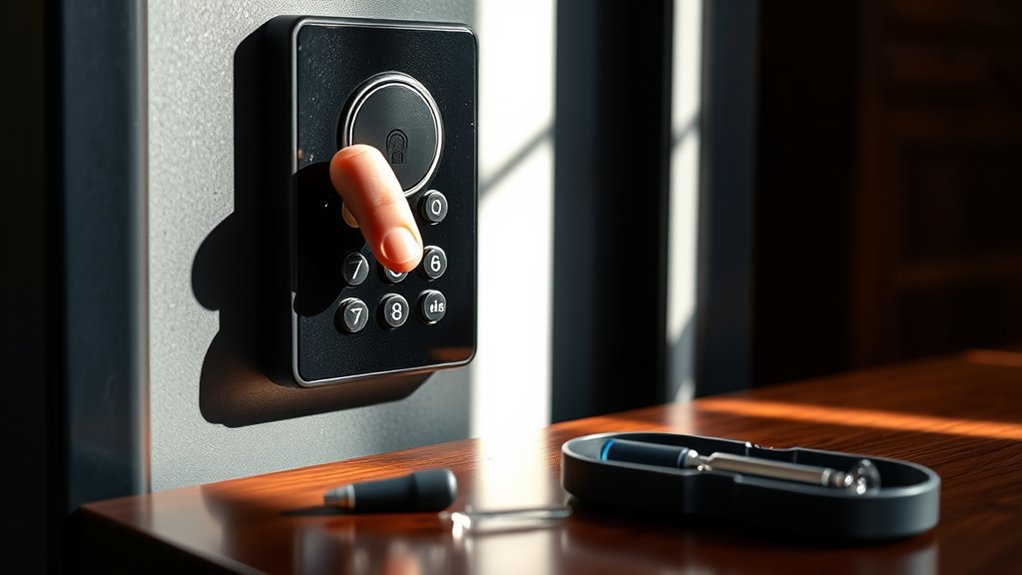
If your electronic or biometric gun safe isn’t opening, check the batteries first. Fresh, properly installed ones often restore power and keypad functionality. Power issues caused by dead batteries are the most common problem with electronic safes.
Always check and replace batteries first to restore power and keypad function in electronic gun safes.
Next, clean the fingerprint sensor with a soft, dry cloth to improve biometric recognition. Make sure your fingers are clean and dry too.
If recognition still fails, follow reset procedures to reboot the biometric system using backup codes or a master reset.
If available, carefully use the backup override key to gain immediate access without damaging the safe.
Regular firmware updates and sensor calibration are essential non-destructive methods to maintain ideal function and prevent lockouts in your electronic safes and biometric systems.
Opening Combination Dial Gun Safes Without a Key
Electronic and biometric safes sometimes need troubleshooting to regain access. But combination dial gun safes work differently. They require a specific sequence of dial turns.
To open one without a key, you rely on manually turning the dial and manipulating the safe to find the combination. If you don’t know it, a locksmith can help you bypass the safe without causing damage. Using gentle warmth can also help ease mechanical lock tumblers.
Safe lockout situations need patience and precision. Here’s a simple step-by-step guide to help:
| Step | Action | Purpose |
|---|---|---|
| 1 | Slow dial turning | Detect clicks/changes in resistance |
| 2 | Apply gentle warmth | Loosen congealed lubricant |
| 3 | Contact manufacturer or locksmith | Recover or bypass combination |
Mastering these tips makes it easier to access your combination dial gun safe without a key.
DIY Tools and Techniques for Keyed Gun Safes
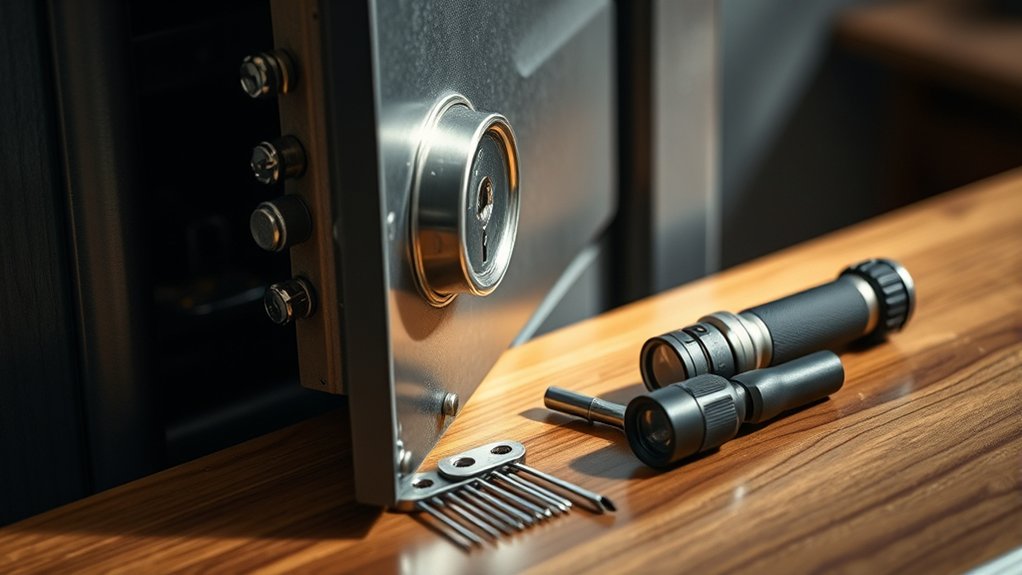
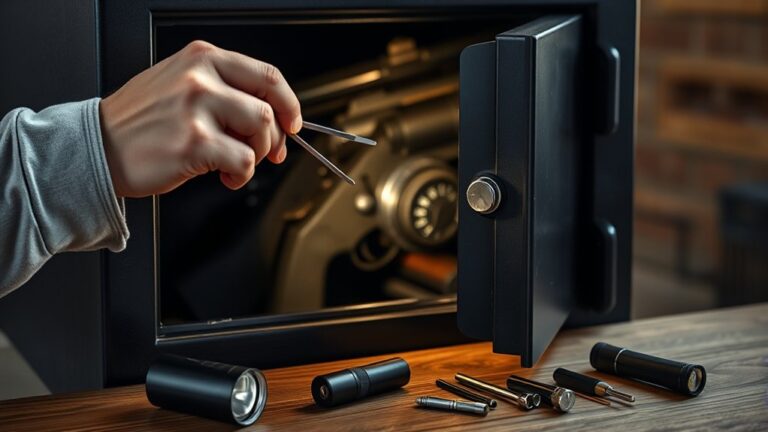
Although keyed gun safes are designed for security, you can often gain access using basic DIY tools like tension wrenches, small picks, and screwdrivers.
To successfully open a safe, focus on these essential steps:
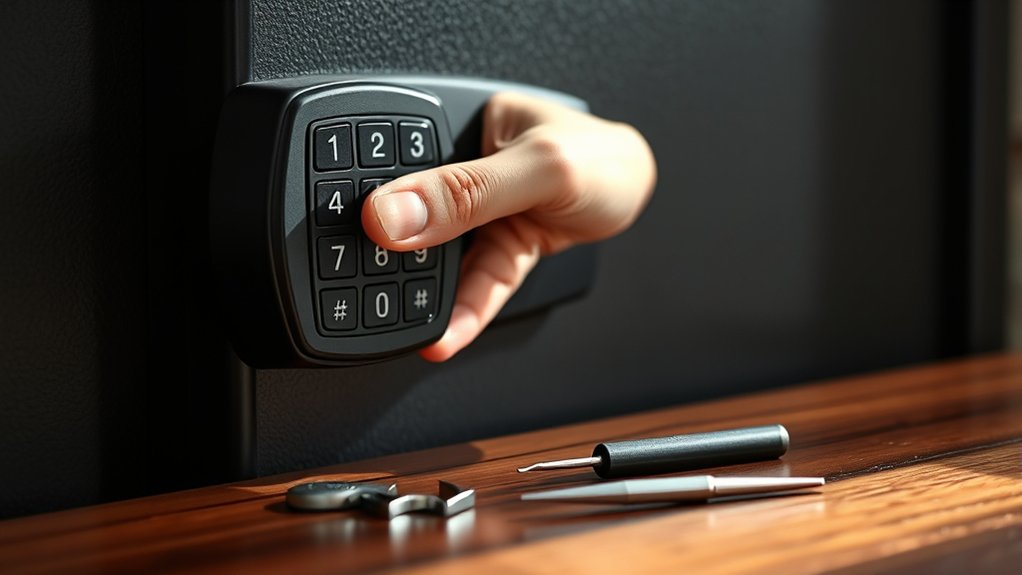
- Use a tension wrench to apply gentle rotational pressure on the lock mechanism while carefully manipulating the lock pins with a small pick. This lock picking method requires patience and precision to avoid damaging internal components.
- Perform manual manipulation by feeling for feedback through the tension wrench, which helps identify the correct pin positions for unlocking.
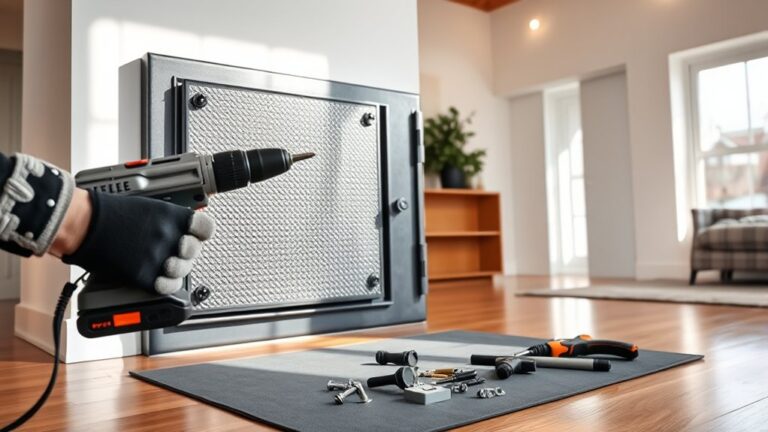
- If needed, proceed with screw removal around the lock area to access internal components directly, enabling easier lock manipulation.
Always handle DIY tools with care to prevent permanent damage and increase your chances of safe access.
When and Why to Call a Professional Gun Safe Locksmith
When your attempts to open a gun safe using backup keys, battery replacements, or lock manipulation fail, you should call a professional gun safe locksmith. A reputable locksmith uses specialized tools and expertise to guarantee damage-free entry, preserving your safe’s security features and warranty.
This is especially important with high-security models, where improper methods can cause costly repairs.
Before you proceed, make sure you have proof of ownership and proper authorization. Locksmiths need this to provide legitimate access options.
Hiring a professional locksmith not only saves time but also prevents further damage, keeping your safe’s integrity intact.
Trusting an experienced locksmith offers a reliable and efficient solution when DIY attempts don’t work. It’s the best way to protect both your investment and your security.
Why You Should Never Force Your Gun Safe Open
Calling a professional locksmith is the safest way to regain access to your gun safe, especially after your own efforts have failed. You should never force your gun safe open because:
- Applying brute force risks damage to lock components and internal parts. This can lead to costly repairs or even a permanent lockout.
- Forcing the safe compromises its structural integrity. That means the safe becomes less secure in the future and more vulnerable to unauthorized entry.
- An unsuccessful attempt can void your warranty and insurance coverage. If that happens, you’ll be responsible for all damages.
Using force not only endangers the safe’s mechanism but also the valuable contents inside.
Tips to Prevent Getting Locked Out of Your Gun Safe
To prevent getting locked out of your gun safe, you need to stay proactive with regular maintenance and careful record-keeping. Perform routine checks, including safe inspection and cleaning of fingerprint sensors or keypads, to guarantee locks operate smoothly.
Replace batteries promptly in electronic safes to avoid unexpected power failures causing lockout.
Keep your combination codes and backup key documented securely in a separate location, so you can access them during emergency opening situations. Avoid overly complex or easily guessable combinations to balance security with recall ease. It’s all about finding that sweet spot between safety and convenience.
Schedule proper maintenance and address any mechanical concerns early. If you encounter issues, contact customer support rather than forcing entry, which can damage your safe.
Following these steps will effectively prevent lockouts and keep your gun safe accessible and secure.
Frequently Asked Questions
Can a Gun Safe Be Opened Without a Key if the Battery Is Dead?
Yes, you can often open a gun safe without a key even if the battery is dead. Many safes include a backup keyhole or an override method designed for this exact situation.
If your safe lacks these features, you’ll need to replace or recharge the batteries to regain keypad access.
If that’s impossible, contacting a professional locksmith is your safest option to avoid damaging the safe while gaining entry.
Are There Legal Restrictions on Opening a Gun Safe Without a Key?
About 30% of gun owners have faced lockout issues, which really shows how important it’s to understand the legal boundaries around this.
Yes, there are legal restrictions on opening a gun safe without a key. You’ve got to be the owner or have explicit permission to do so. Otherwise, it’s illegal and could lead to criminal charges.
Laws can vary depending on where you live, so it’s always a good idea to check your local regulations first. And don’t forget to keep proof of ownership or authorization handy before you try to access the safe.
How Do I Reset My Gun Safe’s Electronic Lock After Opening It?
To reset your gun safe’s electronic lock after opening it, first locate the reset button inside the battery compartment or on the control panel.
Press and hold it until you hear a beep or see a light confirming the reset.
Next, enter your new code following the safe’s instructions.
Then, confirm it by pressing “Enter” or “OK.”
Finally, test the lock to make sure the reset worked properly.
It’s a good idea to try the new code a couple of times just to be safe.
What Are the Most Common Brands With Master Key Options?
The most common brands with master key options are Liberty, Browning, and Stack-On. Liberty safes usually have a hidden backup keyhole for emergencies.
Browning often includes keyed overrides in their electronic lock models.
Stack-On provides dedicated master keys that let you open safes without a combination. These brands prioritize reliable backup access, so you can trust their master key systems when you need quick entry during lockouts.
It’s good to know there’s always a way in when you need it most.
Can Insurance Cover Damages if I Damage My Safe Trying to Open It?
Think of insurance like a fortress. If you storm it recklessly, it won’t protect you.
If you damage your safe trying to open it yourself, most insurance policies won’t cover those damages.
However, if a professional locksmith accidentally causes damage, some policies might pay for repairs. That usually depends on how well you document the incident.
To maximize your chances of coverage, always hire qualified experts.
Also, be sure to review your policy carefully before attempting access. It’s better to be safe and informed than sorry later.
Conclusion
Opening your gun safe without a key might seem intimidating, but with the right approach, it’s completely doable. Just remember, patience is your best friend here. Forcing the safe can cause damage and lead to a lot of frustration.
You’ve got options, whether it’s using backup codes, trying non-destructive methods, or calling a professional locksmith. Don’t let a locked safe turn into a missed opportunity.
Take control now and keep your valuables both accessible and secure at all times. It’s easier than you think!