How To Keep Moisture Out Of Gun Safe – Protection Tips Guide
To keep moisture out of your gun safe, aim to maintain humidity between 30-50% and keep the temperature around 60-70°F. This helps prevent rust, corrosion, and mold from forming on your firearms.
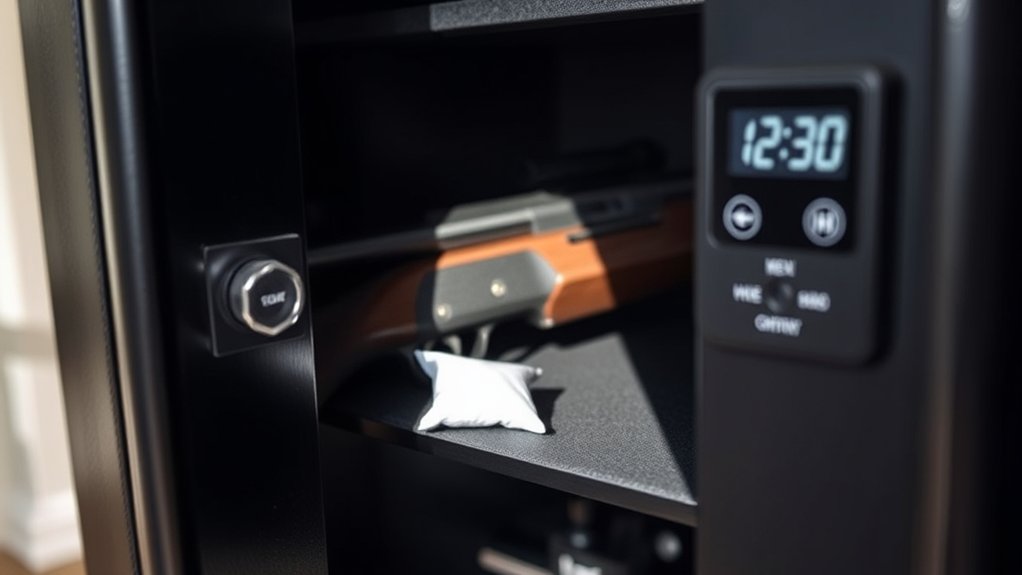
Using a reliable hygrometer is key. It allows you to monitor the conditions inside your safe easily. If the humidity gets too high, add desiccants or electric dehumidifiers to control the moisture levels effectively.
Make sure your firearms are completely dry and have acclimated to room temperature before storing them. This helps reduce the risk of condensation forming on or inside the guns.
Occasional ventilation can also help. Allow some air circulation to prevent stale, damp air from lingering inside the safe.
By consistently managing these factors, you’ll protect your firearms from damage and keep them in top condition. Explore the best methods to optimize your safe’s environment and ensure your guns stay dry and safe.
Why Moisture in Gun Safes Is a Problem
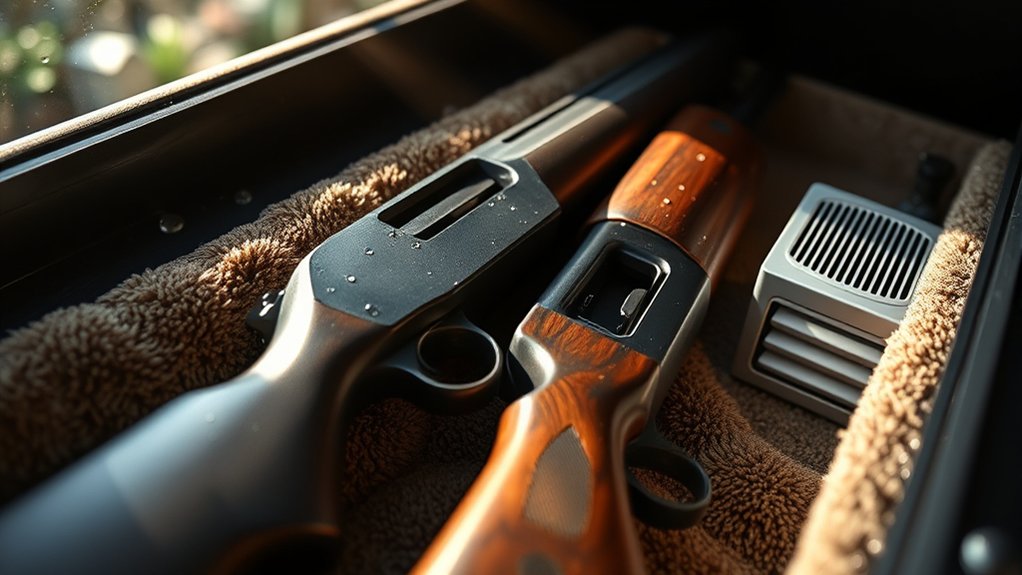
One key reason you need to control moisture in your gun safe is to prevent rust and corrosion on your firearms. Excess moisture creates the perfect environment for rust to thrive, especially when humidity rises above 70%.
In such conditions, metal parts can start corroding in just a week. This can really damage both how your guns look and how they function.
Temperature changes cause condensation, which forms water droplets inside the safe. Even tiny openings can let in moisture, raising the humidity further and speeding up rust formation.
Besides damaging your firearms, excess moisture can also promote mold growth on stocks, documents, and other valuables stored inside.
What’s the Best Humidity Level to Keep Your Gun Safe Dry?
You want to keep your gun safe’s humidity somewhere between 30% and 50%, you know? That’s the sweet spot to keep rust at bay and make sure wooden or bone stocks don’t crack or warp.
If the humidity climbs above 70%, especially when it’s warm—like over 86°F—it can cause corrosion pretty quickly, sometimes in just a few days. So, it’s a good idea to use a hygrometer to keep an eye on those moisture levels.
Ideal Humidity Range
Although it may seem minor, controlling humidity inside your gun safe plays an essential role in preserving your firearms and preventing damage. The ideal humidity range to maintain is between 30% and 50%. Staying near 50% helps balance moisture control, protecting both metal parts from rust and wooden stocks from cracking or warping.
If humidity drops below 30%, your wooden components risk drying out and deteriorating.
On the other hand, levels above 50% greatly increase the chance of corrosion and mold growth. To keep humidity in check, use a reliable hygrometer to monitor conditions regularly.
This precise measurement allows you to adjust moisture control methods promptly.
Keeping your gun safe environment within the right humidity range ensures long-term firearm protection without risking damage or decay.
Temperature Impact Control
Because temperature fluctuations directly affect moisture levels inside your gun safe, keeping the indoor temperature steady between 60-70°F is crucial. When the temperature swings, it can cause condensation, which increases moisture and risks rust on your firearms.
Rapid temperature changes are especially problematic. They cause condensation that can damage your guns over time. To avoid this, don’t store cold guns directly in a warm safe. Let them gradually adjust to the temperature to prevent moisture from forming.
Using devices like dehumidifiers or placing your safe in a climate-controlled room helps keep conditions stable. This minimizes moisture buildup and keeps your firearms dry.
If you’re storing guns long-term, aim for a humidity level around 30%. This lower moisture level reduces the risk of corrosion.
Effects Of Excess Moisture
When moisture levels inside your gun safe go above 50%, you’re risking faster rust and mold growth that can seriously damage your firearms.
Keeping humidity between 30-50% is ideal. This helps prevent corrosion and keeps your guns in good shape.
If moisture gets too high—especially above 70%—rust can develop in just one week. Temperatures over 86°F combined with high humidity can speed up this damage even more.
To control moisture, use desiccants and dehumidifiers. These tools help keep humidity low and avoid condensation.
Remember these key points:
- Keep humidity between 30-50% to prevent rust and mold.
- Use desiccants or dehumidifiers to absorb excess moisture.
- Maintaining temperatures around 60-70°F helps reduce condensation.
What Causes Moisture Buildup Inside a Gun Safe?
You might notice moisture building up inside your gun safe mainly because of humidity from the environment sneaking in through tiny gaps. Plus, when the temperature drops, the warm, moist air inside the safe cools down, and that causes condensation—water droplets forming on your firearms and inside the safe.
Getting a handle on these factors can really help you take the right steps to control the moisture. That way, your guns stay protected and free from rust and corrosion.
Environmental Humidity Factors
Although gun safes are designed to protect your firearms, environmental humidity can still find its way inside through small openings and ventilation gaps. This can increase moisture levels inside the safe. Understanding how humidity and climate impact your safe is essential to preventing condensation buildup.
Moisture tends to accumulate when the surrounding air’s humidity penetrates the safe’s interior. This is especially common in humid climates or coastal areas.
When moisture gets trapped inside, it can cause corrosion and damage over time.
Some key environmental humidity factors include high ambient humidity in certain regions that seeps into the safe. Climate-driven seasonal changes also influence the moisture levels inside the safe.
Additionally, condensation can form when moisture-laden air cools within the safe.
Temperature Fluctuation Effects
Because temperature fluctuations cause warm, moist air inside your gun safe to cool rapidly, condensation often forms on firearms and interior surfaces.
These quick changes between hot and cold make it more likely for moisture to build up by hitting the dew point inside the safe.
When the ambient temperature drops, trapped moisture condenses on cooler items, which can lead to corrosion.
Inconsistent temperature control also causes materials to expand and contract, further encouraging moisture buildup.
External factors like high humidity and seasonal temperature swings only make these problems worse.
To keep your firearms safe, it’s important to maintain stable temperatures inside the safe and reduce exposure to environmental changes.
Dealing with temperature fluctuations is key to controlling condensation and preventing moisture damage to your collection.
How to Properly Store Firearms to Prevent Condensation Damage
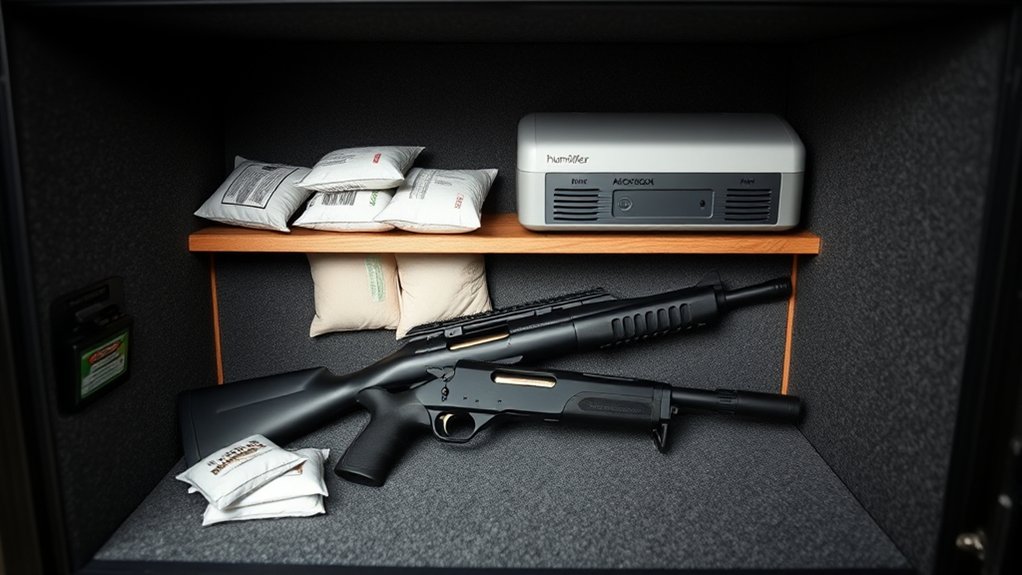
When storing firearms, it’s really important to prevent condensation damage. One way to do this is to let your guns acclimate to room temperature before putting them in your safe. Sudden temperature changes can cause moisture to form, which speeds up rust and corrosion.
To keep moisture levels in check, make sure to wipe down your firearms thoroughly after cleaning. This removes any leftover moisture that could cause problems later on.
Instead of airtight containers, opt for breathable, moisture-resistant gun rugs or cases. These allow for some moisture exchange and help prevent trapping humidity inside.
You can also add desiccant packs or small dehumidifiers inside your safe. They work to absorb excess humidity and keep the environment inside ideal for your firearms.
How to Use Electric Dehumidifiers to Control Gun Safe Humidity
Using electric dehumidifiers in your gun safe is a great way to keep humidity levels just right and prevent rust.
These devices actively pull moisture out of the air with built-in heating elements. They do this effectively without overheating your firearms.
Low-wattage models like the Golden Rod gently warm the air. This helps avoid condensation and keeps the humidity within safe limits.
When installing electric dehumidifiers, look for units with adjustable humidity settings. It’s also helpful if they come with drainage hoses for continuous operation and overflow sensors to prevent water buildup.
Proper placement inside the safe and regular monitoring are key. This ensures the dehumidifiers work consistently and efficiently.
Electric dehumidifiers are suitable for both small and large safes. They provide maintenance-free humidity control over long periods.
How to Use Non-Electric Moisture Absorbers and Alternative Methods
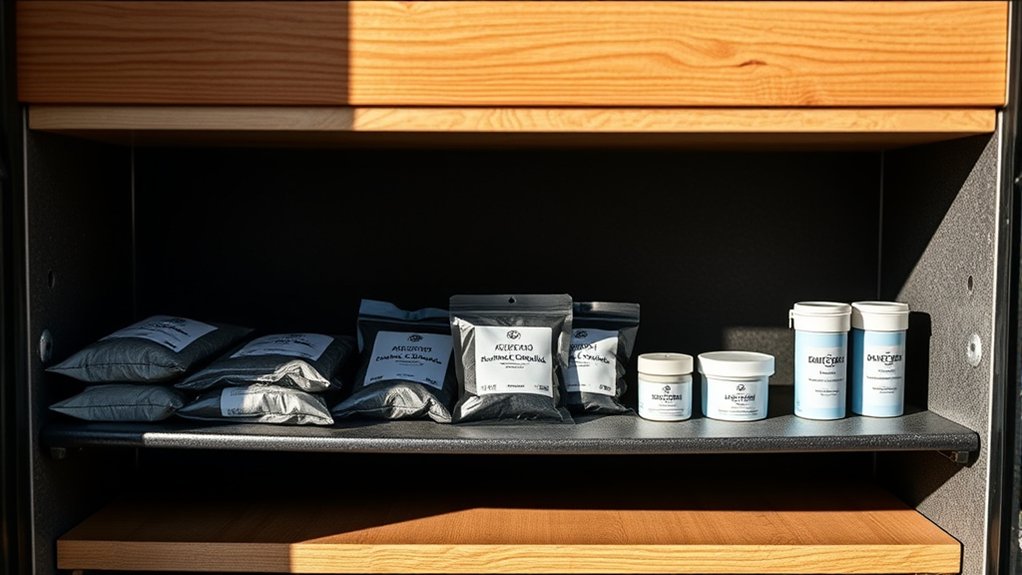
Although electric dehumidifiers offer reliable humidity control, non-electric moisture absorbers can be great alternatives for keeping your gun safe dry without using power.
You might consider silica gel packets, which are really good at absorbing moisture. The best part is, they can be recharged by heating in an oven, so they’re reusable and cost-effective.
Natural ventilation is another easy method. Just open your safe periodically to let fresh air in and circulate, helping to reduce any trapped humidity.
There are also simple household items that can help:
- Bowls of baking soda or charcoal absorb excess moisture. Just remember to replace them regularly.
- Dry rice can temporarily soak up moisture, but you’ll need to change it often.
- Silica gel remains the most reliable and effective non-electric moisture control option.
How to Monitor and Maintain Ideal Gun Safe Humidity Levels
Since maintaining the right humidity levels is key to keeping your firearms in good shape, it’s important to regularly check the environment inside your gun safe with a reliable hygrometer.
Aim to keep the humidity between 30-50%. Check it at least once a month, especially when the seasons change. Keeping an eye on these levels helps prevent rust and corrosion.
Try to maintain a stable temperature around 60-70°F. This helps avoid condensation and sudden temperature swings that can damage your guns.
Use your hygrometer readings to adjust your dehumidifiers. Replace desiccant packs or recharge silica gel as needed to keep the environment dry.
Tracking humidity over time is a good habit. It helps you spot trends and ensures your firearms stay protected for the long run.
Frequently Asked Questions
Can Moisture Damage Gun Safe Electronics?
Yes, moisture can seriously damage your gun safe electronics.
It speeds up corrosion on circuit boards and wiring, which can lead to failures.
Moisture can also shorten battery life by causing premature failure in humidity sensors and power components.
To keep your safe in good shape, it’s important to control humidity levels around it.
Using reliable moisture sensors to monitor conditions can help you catch problems early.
Taking these proactive steps can prevent costly damage and keep your safe’s electronic systems working smoothly over time.
How Often Should I Remove Firearms for Inspection?
You don’t want to wait until your firearms stage a rust rebellion, so pull them out every 3 to 6 months for inspection.
If you’re storing ammo in humid conditions, check it monthly. During firearm cleaning, don’t forget to inspect safe lock maintenance and ammunition storage for moisture damage.
Regular checks keep your gear pristine, prevent corrosion, and guarantee your safe isn’t a moisture trap. Stay proactive to protect your investment and safety.
Are Certain Gun Safe Materials Better Against Moisture?
Yes, certain safe materials offer better moisture resistance and rust prevention. You should choose safes made from powder-coated or galvanized steel, stainless steel, or treated metals, as they resist corrosion effectively.
Composite or laminated materials also provide superior moisture barriers compared to single-layer designs. These materials help keep moisture out and protect your valuables from rust and humidity damage.
Safes with airtight seals and interior vapor barriers are another great choice. They enhance moisture resistance and help maintain a dry environment inside.
Can Placing a Fan Inside the Safe Help Reduce Humidity?
Think of it like a windmill spinning in a quiet village: placing a fan inside your gun safe helps circulation but won’t fully banish humidity.
Ventilation strategies that include fans improve airflow and work well alongside desiccants. But don’t rely on fans alone to keep your safe dry.
It’s best to combine them with dehumidifiers for the most effective results.
Also, keep in mind safe placement tips like avoiding damp areas.
Making sure your safe is sealed well is crucial to prevent outside moisture and dust from sneaking in.
Is It Safe to Use Household Dehumidifiers Inside a Gun Safe?
You shouldn’t use household dehumidifiers inside your gun safe.
Gun safe dehumidifiers are specially designed to prevent moisture and control humidity safely. They work without generating damaging heat that could harm your firearms.
Household units aren’t made for this purpose. They can cause uneven drying, which might damage wood stocks or other sensitive parts.
Plus, they often fail to keep a consistent humidity level inside the safe.
Instead, it’s better to use low-heat, purpose-built solutions.
These are designed to protect your firearms effectively and keep the environment inside your gun safe safe and stable.
Conclusion
Keeping moisture out of your gun safe is like guarding a fortress against an invisible enemy. You’ve got to maintain the perfect balance—just right humidity levels, vigilant monitoring, and clever use of dehumidifiers or moisture absorbers.
Store your firearms properly, and you’ll shield them from rust’s relentless attack. It’s all about staying ahead of the game and not letting moisture sneak in.
With these practical steps, you’re not just protecting your guns; you’re preserving your peace of mind. You want your arsenal to stay sharp and ready for action at all times.