How To Move A Gun Safe In A Pickup Truck – Transport Guide
To move a gun safe in a pickup truck, first confirm your truck can handle your safe’s weight and size. Empty the safe completely, removing firearms and electronics. Wrap it tightly with heavy-duty pads or blankets for protection.
Use a strong dolly and secure the safe upright with ratchet straps to rated anchor points. Drive carefully, avoiding sharp stops or turns.
Once unloaded, position and anchor the safe securely in its new spot. Keep following for full steps on safe transport.
Key Takeaways
- Verify the truck’s payload capacity and bed dimensions to ensure the gun safe fits and the truck can handle its weight safely.
- Empty the gun safe completely, removing firearms, ammunition, and batteries to reduce weight and prevent hazards during transport.
- Wrap the safe with thick moving blankets and secure with heavy-duty tape or shrink wrap to protect it from damage.
- Use a heavy-duty appliance dolly and rated ramps or liftgate for safe loading and unloading of the gun safe.
- Secure the safe upright in the truck bed with heavy-duty ratchet straps attached to rated anchors, and drive carefully to avoid shifting.
Verify Your Truck’s Capacity and Gun Safe Size
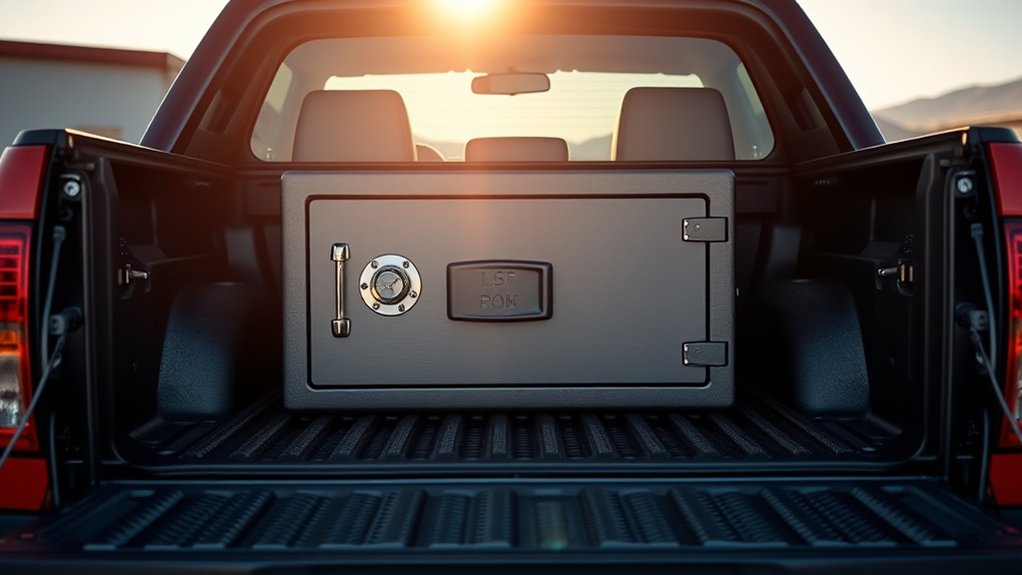
Before loading your gun safe, make sure your pickup truck can handle the weight and size. First, check your truck’s payload capacity by looking at the manufacturer’s specs or label. It should support at least 1,000 pounds to safely carry a gun safe weighing over 600 pounds.
Next, measure your truck’s bed dimensions to ensure it can fit the safe’s length, width, and height. Using a heavy-duty ramp or liftgate rated for the safe’s weight will help you load it carefully.
Once the safe is in place, secure it with tie-down straps attached to your truck’s tie-down anchors. These anchors also need to be rated for the safe’s weight. Confirming these details helps prevent damage and ensures safe transport during your move.
Prepare the Gun Safe and Remove Contents Safely
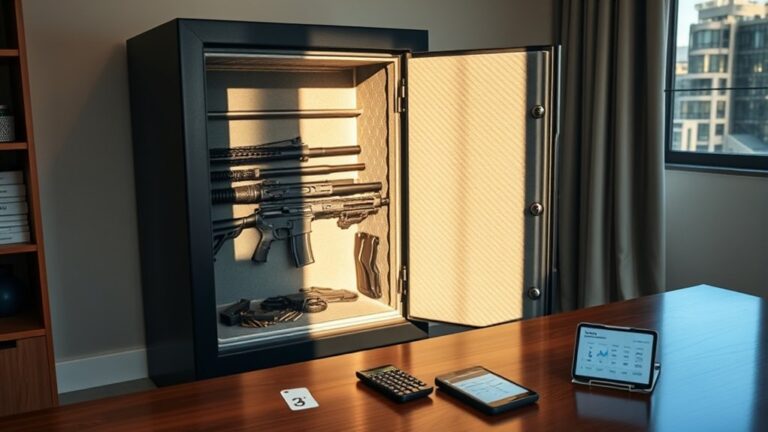
Before moving your gun safe, make sure to empty it completely. Take out all firearms, ammunition, and valuables—this not only ensures safety but also makes the safe lighter and easier to handle.
You’ll also want to carefully disassemble the doors and handles. Doing this helps prevent any damage during transport.
Empty And Secure Contents
When you empty your gun safe, you reduce its weight and lower the risk of damage or accidents during transport. Start by carefully removing all firearms, ammunition, and valuables. Secure these contents in lockboxes or cases to prevent shifting or damage while moving.
Don’t forget to take out batteries, electronic components, or wiring to avoid malfunctions or hazards. Make sure the gun safe is completely empty and that all contents are organized for easy reloading once you reach your destination.
Double-check that nothing is left inside, and all items are properly secured.
This cautious approach ensures safer handling and protects your belongings during transport, reducing the chance of loss or injury. So, empty and secure your safe’s contents before moving. It really makes the whole process smoother and safer.
Disassemble Doors And Handles
Although disassembling the doors and handles might seem intimidating, it greatly reduces your gun safe’s weight and minimizes the risk of damage during transport. Before you begin, make certain to unload all firearms, ammunition, and valuables for safety.
Use appropriate tools to carefully disassemble the doors, following the manufacturer’s instructions to avoid harming locking mechanisms.
Remove the handles with care, and temporarily secure or remove any fragile relockers or electronic components.
Keep all hardware and small parts organized in labeled containers to guarantee smooth reassembly later.
Wrap the Gun Safe With Protective Materials
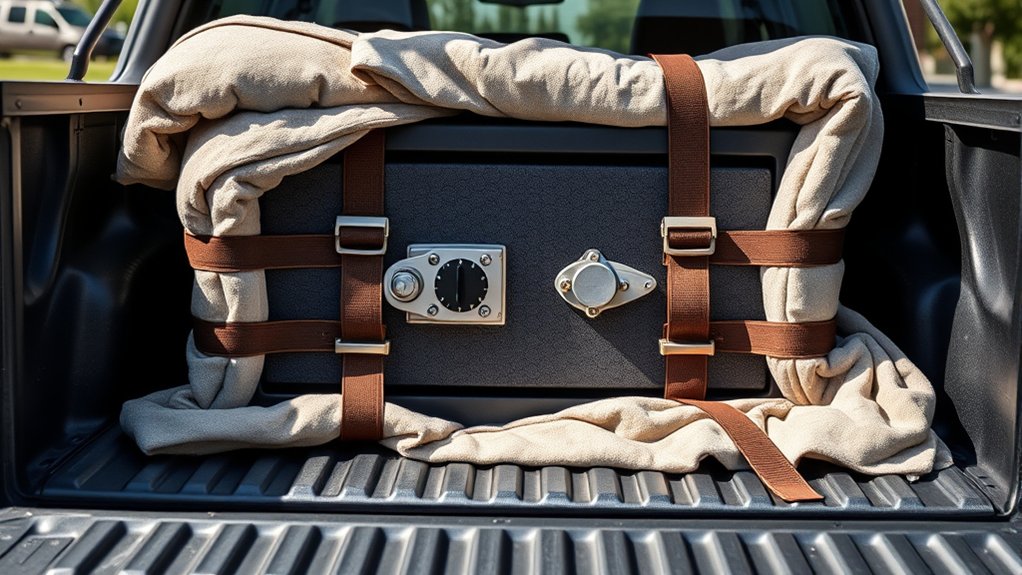
You’ll want to start by choosing thick furniture pads or moving blankets to protect your gun safe from scratches and dents. Be sure to wrap the safe tightly and secure the padding with heavy-duty tape or shrink wrap so it doesn’t shift during transport.
Also, don’t forget to add extra padding around any fragile parts, like handles, to prevent damage. This way, your safe stays protected every step of the way.
Choose Appropriate Padding
Since gun safes are heavy and prone to scratches or dents, you should wrap them carefully with protective materials before loading them into your pickup truck. Choosing the right padding is essential. Use furniture pads or moving blankets for cushioning, covering the entire safe to shield it from impacts, dirt, and moisture.
Apply multiple layers around edges and corners for added protection. To keep the padding secure, wrap it tightly with packing tape or stretch wrap. For enhanced cushioning, consider specialized materials like Mover’s Wrap or foam padding.
| Padding Type | Protection Level | Best Use Case |
|---|---|---|
| Furniture Pads | Medium | General cushioning |
| Moving Blankets | High | Heavy-duty protection |
| Foam Padding | Extra High | Shock absorption |
Secure Wrapping Techniques
After selecting the right padding, focus on wrapping your gun safe securely to keep the protective materials in place during transport. Start by covering the entire safe with furniture pads or thick moving blankets to absorb shocks and prevent scratches. Pay special attention to sharp or protruding hardware. Wrap these with additional padding or foam to avoid tearing the protective coverings.
Once wrapped, use heavy-duty tape or straps to firmly secure the layers, making sure nothing shifts during the move. For extra protection against dust and minor impacts, apply Mover’s Wrap or shrink wrap around the padded safe.
In areas prone to friction or tight spaces, double-layer your protective coverings for maximum safety. This secure wrapping technique will keep your gun safe well-protected throughout the transport process.
Just take your time and make sure everything stays in place, and you’ll be good to go!
Use the Right Equipment to Load Your Gun Safe
How can you guarantee your gun safe moves securely without damage or injury? Using the right equipment is essential to safely load and transport your safe. Follow these steps:
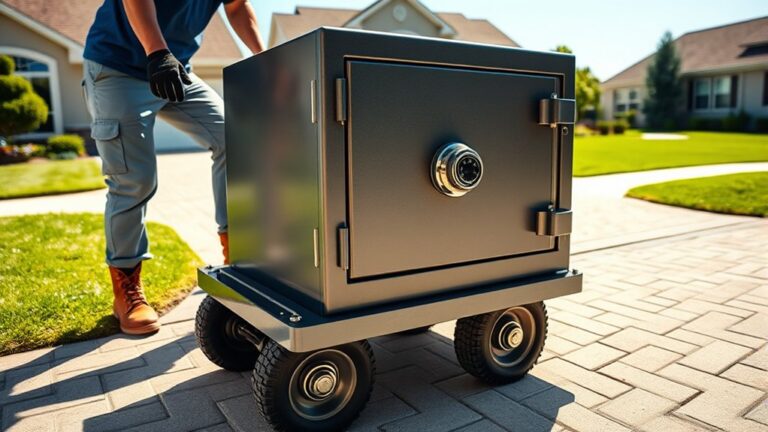
First, use a heavy-duty appliance dolly rated for your safe’s weight. Make sure to secure the safe with high-quality ratchet straps so it doesn’t slip around.
Start with a heavy-duty appliance dolly and secure your safe tightly with ratchet straps for safe transport.
Next, place furniture sliders or thick blankets under the safe. This helps minimize friction and protects your floors, especially when moving it onto your pickup truck.
Finally, use a plywood ramp or support blocks to create a stable path. If you have access to a hydraulic liftgate or a sturdy ramp, those can make loading much smoother and easier.
Secure the Gun Safe Properly in the Truck Bed
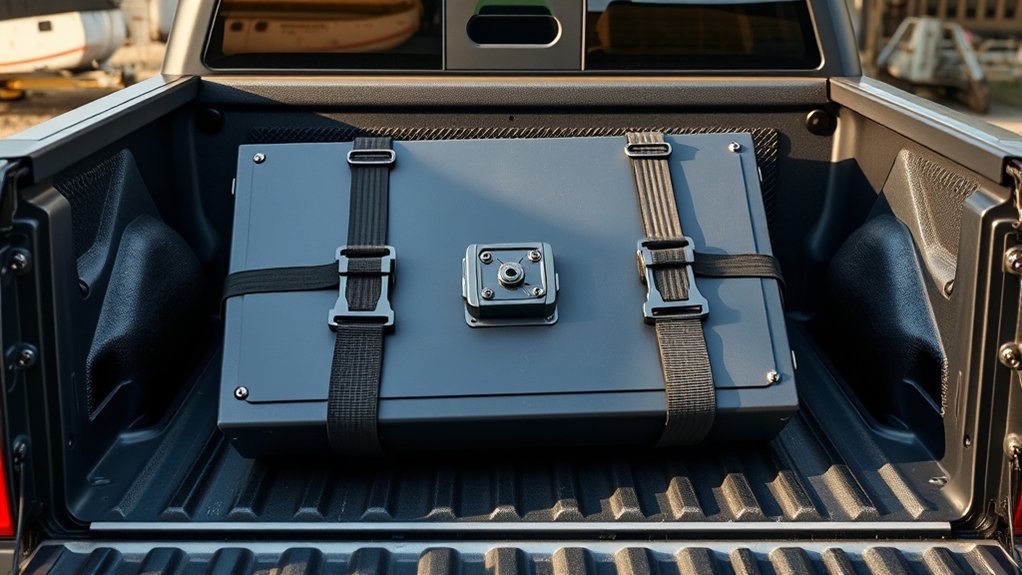
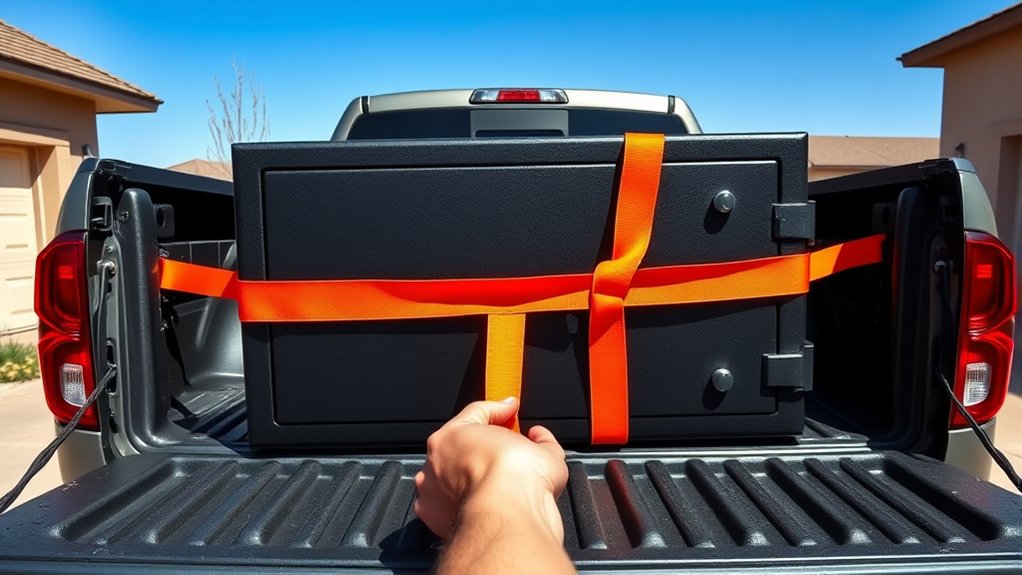
To keep your gun safe secure during transit, you’ll need to fasten it tightly using heavy-duty ratchet straps or webbing. Attach these straps to sturdy anchor points on the truck bed. Make sure they’re tight and evenly distributed to maintain stability.
Position the safe upright against the truck wall. Add padding like moving blankets or foam between the safe and truck walls to absorb shocks. Double-check all straps and padding to be sure the safe doesn’t shift.
| Step | Key Detail |
|---|---|
| Secure with straps | Use heavy-duty ratchet straps |
| Anchor points | Attach to sturdy truck anchors |
| Padding | Add foam or blankets for shock |
This method guarantees your gun safe stays secure throughout your trip.
Drive Carefully to Protect Your Gun Safe
Why should you drive carefully when transporting your gun safe? Because careful driving protects your investment and guarantees safety. You need to drive carefully to prevent shifting or tipping that could damage the safe or the truck. Always secure the safe before you start driving.
Here are some key tips to keep in mind:
- Maintain a steady speed and avoid sudden stops or sharp turns to prevent the safe from tipping.
- Use proper straps to secure the safe tightly to the truck bed, so it doesn’t move around during transit.
- Keep the safe upright and plan your route to avoid bumpy roads or steep inclines that could affect stability.
Unload the Gun Safe Safely at Your New Location
Once you’ve arrived at your new location, carefully position the gun safe in its designated spot, keeping it upright and stable before removing any straps or padding.
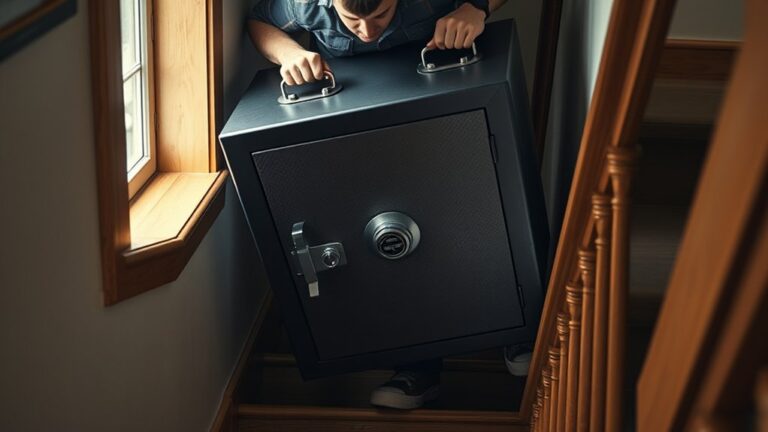
Use furniture sliders or a dolly to gently unload the safe, minimizing the risk of damage to both the safe and your flooring. Make certain the safe remains stable throughout this process.
Gently unload the safe with furniture sliders or a dolly, ensuring stability and protecting your floors.
After positioning, double-check the area is clear of moving equipment. Then inspect the safe thoroughly for any interior or exterior damage.
Secure the safe’s doors by re-locking them and verify all security features function correctly.
Only once you’ve confirmed the safe is damage-free and secure should you finalize unloading.
Taking these cautious steps helps protect your investment and ensures your gun safe stays safe and stable in its new home.
Set Up and Anchor the Gun Safe in Its New Spot
Before unstrapping your gun safe, make sure it’s positioned upright and level in its new spot. Proper positioning is really important for stability and a secure installation. Use a level to check the alignment before you move on.
Next, anchor the safe firmly so it doesn’t shift or tip over.
Here’s how to keep it stable and secure:
- Use heavy-duty anchor bolts or straps that match your floor or wall material to secure the safe.
- Pick concrete anchors or other hardware that’s right for your flooring to ensure a strong hold.
- After installation, double-check that all locks and electronic security features are working properly.
Frequently Asked Questions
Can I Move a Gun Safe Without Professional Help?
Yes, you can move a gun safe without professional help if it weighs under 600 pounds and you have the right equipment and assistance.
Make sure you measure it, use sturdy straps, furniture sliders, and a ramp for your pickup truck.
Always plan carefully and never attempt it alone if the safe is heavy, as it can cause injury or damage.
Know your limits and prioritize safety throughout the move.
It’s better to ask for help than to risk getting hurt.
What Insurance Covers Damage During Gun Safe Transport?
You might think your homeowner’s insurance covers everything, but it often has limits when it comes to damage during gun safe transport. Usually, your homeowner’s or renter’s insurance will cover it, but you should check for any exclusions. Sometimes, you might need extra riders for valuables.
Professional movers often offer specialized insurance, which could be a safer bet. Always review your policy carefully.
Don’t forget to document the safe’s condition before and after the move.
And when it comes to claims, file them promptly to make sure you get the proper coverage. It’s better to be cautious and prepared!
How Do Weather Conditions Affect Moving a Gun Safe?
Weather conditions can make moving a gun safe more dangerous and tricky. Rain or snow makes surfaces slippery, reducing your grip and control, which increases the risk of accidents.
Moisture can also damage or corrode the safe if it’s exposed without protection.
Cold and icy conditions make handling equipment hazardous, so you should be extra cautious or even consider postponing the move. It’s really better to be safe than sorry in these situations.
Always use tarps or plastic sheeting to shield your safe from moisture during transport.
Are There Legal Restrictions for Transporting Gun Safes?
You generally won’t face federal restrictions when transporting a gun safe, but you should check your state and local laws carefully. Some areas require permits or have specific rules about moving firearms or safes containing them.
If your safe has guns inside, you must follow all firearm transport laws, including secure storage. Make sure to research and comply with any regulations before you move your gun safe to avoid legal trouble.
It’s always better to be safe than sorry!
What Tools Are Best for Disassembling Large Gun Safes?
When John needed to move his large gun safe, he relied on a set of hex wrenches and a cordless drill to remove bolts quickly yet carefully. You’ll want these tools.
Hex wrenches work great for door bolts, and screwdrivers are perfect for hinges and locks.
Power tools can speed things up, but use them cautiously to avoid damage. Always check your safe’s manual before starting. You don’t want to void warranties or harm components during disassembly.
Taking a little extra time to prep will save you headaches later. Just go slow and steady, and you’ll have that safe apart in no time.
Conclusion
Moving a gun safe safely is essential. Did you know over 60% of gun safe owners report damage during transport? By verifying your truck’s capacity, securing the safe properly, and driving cautiously, you’ll minimize risks.
Always wrap and unload carefully to protect your investment and guarantee safety. With the right preparation and attention to detail, you can move your gun safe confidently and avoid costly mistakes.
Take your time, and stay safe every step of the way.