Can You Put A Gun Safe In A Garage – Pros And Cons Explained
You can put a gun safe in your garage, but you’ll need to think about humidity, temperature swings, and moisture from the concrete floor. These factors can cause rust and damage over time.
To keep your safe in good shape, elevate it off the ground and insulate it properly. Using dehumidifiers can also help control moisture levels. This makes a big difference in preventing corrosion.
Security is really important too. Make sure to anchor the safe firmly so it can’t be easily stolen. You might also want to consider installing alarm systems for extra protection.
Concealing the safe discreetly is another smart move. It reduces the risk of theft and keeps your firearms out of sight. Balancing easy access with good security measures is key.
By paying attention to these factors, you can create a safe and convenient setup in your garage. This way, your firearms stay protected, ready, and in good condition.
Pros and Cons of Storing a Gun Safe in the Garage
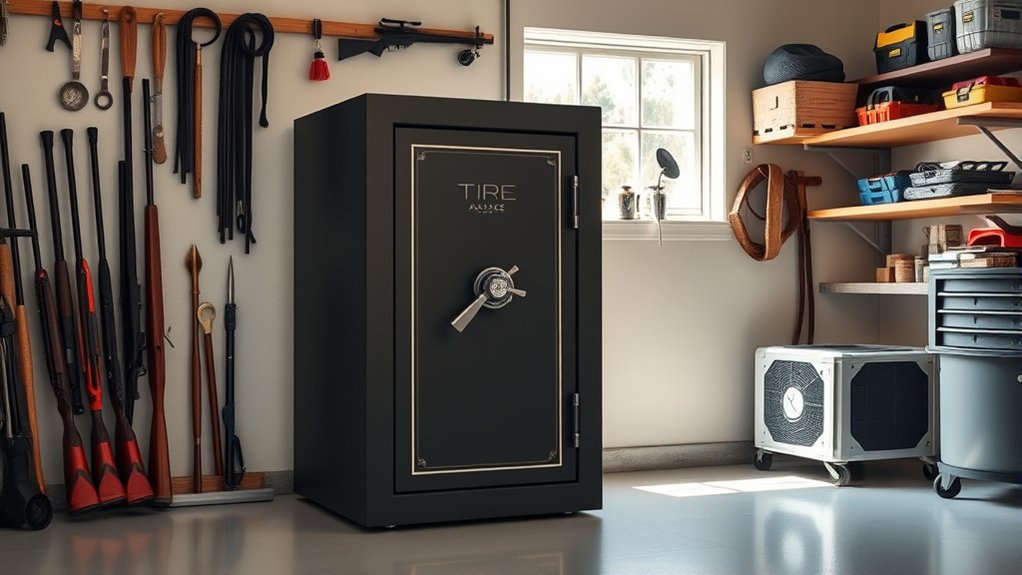
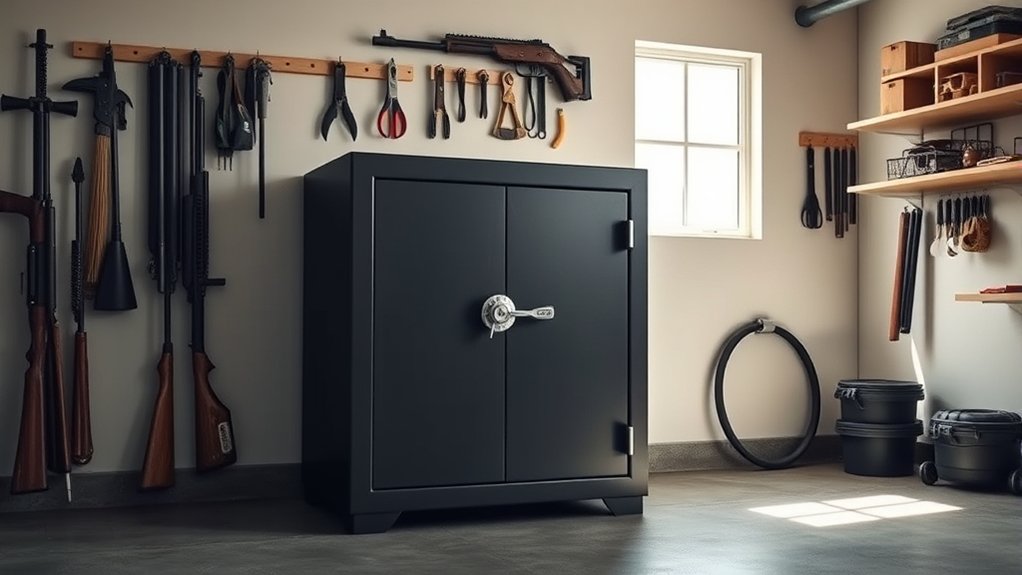
While storing a gun safe in your garage gives you plenty of space and easy access for outdoor activities, it also exposes your firearms to environmental hazards like humidity and temperature swings. These conditions can cause rust and damage over time.
You need to weigh the benefits against the risks of environmental damage and security concerns. Garages are often more vulnerable to break-ins, which can compromise your safe’s security.
But there are ways to keep your guns protected. Discreet storage options, like hiding your safe behind furniture or inside cabinets, can reduce the risk of theft.
Proper installation and extra protective measures are essential. They can help prevent rust and corrosion, keeping your firearms in good shape.
When you’re thinking about putting a gun safe in the garage, consider these factors carefully. This way, you can make sure your guns stay secure and in great condition.
Managing Temperature and Humidity for Garage Gun Safes
You want to keep the humidity in your garage under control so your firearms don’t get rusty or corroded. One way to do this is by managing the temperature swings inside your gun safe.
Things like adding insulation, vents, or fans can help keep the conditions stable and prevent drastic changes that could harm your guns.
Also, it’s a good idea to elevate the safe off the garage floor. This simple step helps reduce exposure to moisture that tends to gather near the ground, giving your firearms an extra layer of protection.
Controlling Garage Humidity
Because garages often experience wide temperature and humidity fluctuations, controlling these factors is essential to protect your firearms from rust and corrosion.
Maintaining humidity below 50% with dehumidifiers can significantly reduce the risk of condensation inside your gun safe.
It’s also a good idea to elevate the safe off concrete floors using rubber mats or risers. This helps prevent moisture transfer from damp surfaces.
Inside the safe, placing desiccants like silica gel packets will absorb residual moisture. This keeps the environment dry and helps protect your firearms.
Be sure to regularly check conditions with a hygrometer and thermometer. Monitoring these helps you keep humidity and temperature at ideal levels.
Temperature Fluctuation Solutions
Though garages often face extreme temperature swings, effective solutions can help stabilize conditions and protect your gun safe.
One great step is insulating the garage with rigid foam. This simple fix significantly reduces temperature fluctuations, which helps prevent rust by limiting moisture buildup.
You should also consider adding ventilation systems like vents or exhaust fans. They improve airflow, promoting consistent climate control and balanced humidity levels.
Inside the safe, using dehumidifiers or silica gel packs is a smart move for moisture prevention. These products help curb corrosion risks and keep your guns in good shape.
Monitoring the environment with hygrometers is also important. They help you detect and address excess humidity before any damage happens.
Safe Elevation Techniques
When managing temperature and humidity for a gun safe in your garage, elevating the safe off the concrete floor is really important. It helps prevent moisture transfer and reduces the risk of rust forming on your firearms.
Using riser pads or rubber mats creates a barrier that limits direct contact with the cold, damp concrete — which is often a source of moisture.
To keep things dry, consider placing riser pads beneath your safe to lift it up. Insulating around the safe can also help stabilize temperature fluctuations.
Inside or near the safe, use silica gel packs or a dehumidifier to control humidity levels.
Make sure your garage has proper ventilation or install vents to promote good air circulation.
And don’t forget to regularly check the seals and gaskets for any signs of moisture buildup or wear.
Taking these steps helps create a dry environment, protecting your firearms from corrosion and keeping them in top condition.
Preparing Your Garage for Gun Safe Installation
Before installing your gun safe, take some time to prepare your garage environment. This step is really important to keep your firearms safe and protect your investment.
First, focus on ventilation. Good airflow helps reduce humidity, which can cause rust. You can use dehumidifiers or silica gel packs to keep moisture levels low.
Proper ventilation reduces humidity and rust; use dehumidifiers or silica gel packs to keep moisture low.
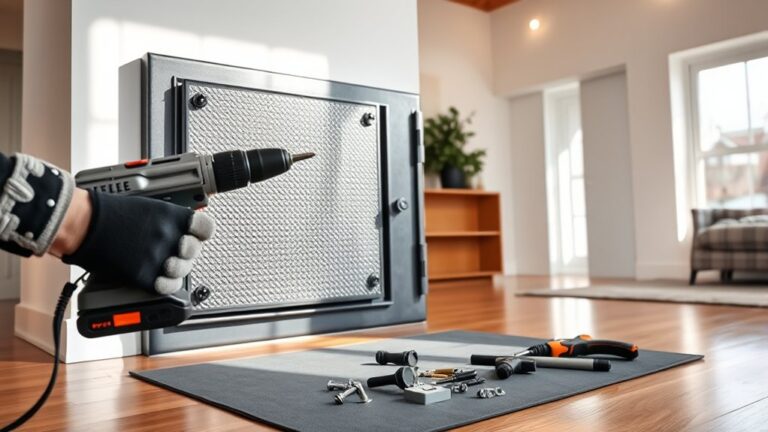
Next, make sure your safe is securely anchored. Use heavy-duty bolts that meet security standards to attach it to a solid floor or wall. This prevents theft and keeps the safe stable over time.
Organizing your garage is also key. Clear out clutter so you have enough space for safe installation and easy maintenance. A tidy space makes everything safer and more accessible.
Finally, think about lighting and security cameras. Better lighting and surveillance can improve overall security around your safe, giving you peace of mind.
Security Measures for Protecting Your Garage Gun Safe
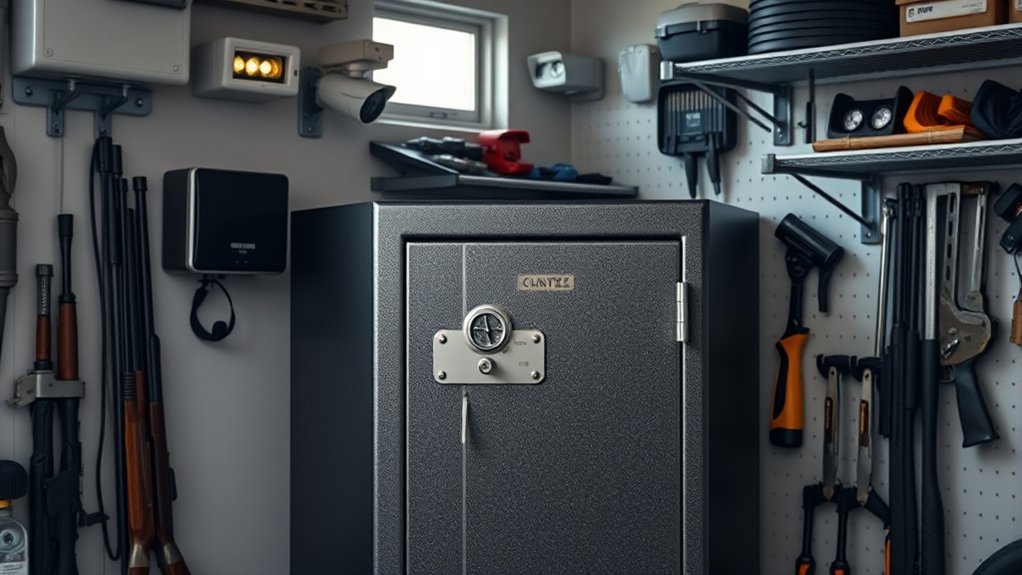
Securing your gun safe in the garage takes more than just a sturdy build. You need a comprehensive approach that includes smart locking systems, proper anchoring, and surveillance tools.
Focus on making your safe as secure as possible by using strong anchoring techniques and advanced security features. Installing alarm systems and cameras nearby can really help scare off intruders and give you peace of mind.
Regular maintenance is key. Check your locks and seals often to keep everything working smoothly. This also helps protect your valuables from environmental damage.
You might consider disguising your safe a bit. It’s a smart way to reduce its visibility without making it hard to access when you need it.
Some key security tips include anchoring the safe tightly to the floor or wall using heavy-duty bolts. Use biometric locks or multi-point locking systems to add extra layers of security.
Installing alarm systems and surveillance cameras around the area can make a big difference. They act as a deterrent and help you keep an eye on things.
Don’t forget to perform routine checks on your locks and seals. Keeping everything in top shape ensures your safe stays secure and functional.
Finally, think about subtle ways to hide your safe. A little disguise can go a long way in reducing the risk of someone spotting or targeting it.
Effective Concealment Techniques for Garage Gun Safes
Although a strong lock and anchoring system are important, hiding your gun safe well in the garage is just as crucial. It helps reduce the chances of someone noticing it or trying to steal it.
Think about placing your safe behind movable furniture or under workbenches. These spots blend the safe into the garage environment, making it harder to spot. Using furniture or hidden compartments that match your garage decor also helps keep it discreet.
Position your safe behind furniture or under workbenches to blend it seamlessly into your garage space.
You can even camouflage the safe with paint or fabric covers to make it less noticeable. Another good idea is to hide it inside utility closets or behind storage shelves. This limits its exposure and adds an extra layer of security.
If you want to get creative, consider integrating your safe into dual-purpose storage units. Fake toolboxes or bins can hide the safe while still being easy to access when needed.
All these methods work together to make your gun safe harder to find. Using the layout of your garage cleverly can really boost its protection.
Alternative Locations for Gun Safe Storage Outside the Garage
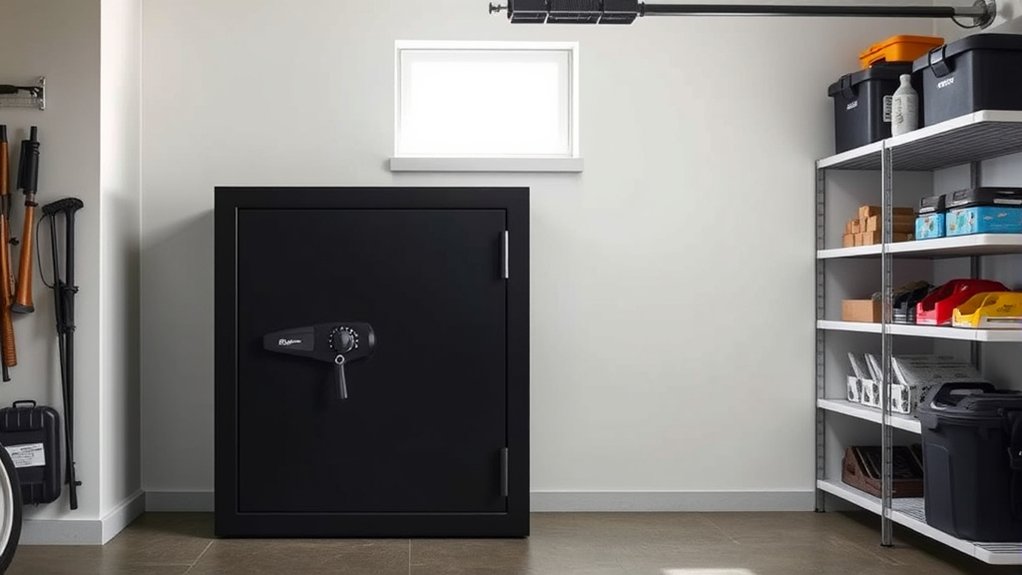
Hiding your gun safe in the garage is one option, but exploring other spots around your home can really boost security and convenience. Finding discreet locations outside the garage gives you more choices, but it’s important to think about safety and environmental risks like moisture.
Basements are a good option because they tend to stay cooler. Just remember to add dehumidifiers to prevent moisture damage to your safe and your belongings.
Storage rooms and closets are also great because they’re out of sight. However, they need solid security measures to keep your guns safe from unauthorized access.
Under-the-bed safes are handy for quick access. Still, they should be well hidden so no one can spot them easily.
Concealed compartments or safes that blend into your home decor can be really effective. They add an extra layer of stealth, making it harder for anyone to find your stash.
If you’re concerned about flooding, placing your safe on elevated platforms can protect it from water damage. This is especially useful in areas prone to moisture or flooding.
Maintaining Your Garage Gun Safe for Longevity and Safety
When you maintain your garage gun safe properly, you help it last longer and stay secure. Regularly inspecting the seals, hinges, and locking mechanisms is key to keeping everything functioning correctly.
Proper maintenance of your garage gun safe ensures durability and reliable security.
This way, you’re making sure all the security features are in good shape. It’s also smart to control moisture inside the safe by using dehumidifiers or silica gel packs. These help prevent rust and corrosion on your firearms and other valuables.
Elevating the safe on rubber mats is a simple step to protect it from damp concrete floors. It keeps moisture away and adds an extra layer of environmental protection.
Don’t forget about climate management outside the safe, too. Cleaning your firearms regularly and storing ammunition in airtight, low-humidity containers helps prevent damage.
Finally, scheduling periodic maintenance checks ensures your safe remains reliable and secure over time. Staying on top of these small tasks makes a big difference in the longevity and safety of your storage.
Frequently Asked Questions
What Size Gun Safe Is Best for a Typical Garage?
You’ll want a medium to large safe, around 20-50 cubic feet, for typical garage use.
Prioritize fire resistance and theft prevention when choosing. Think about environmental factors like humidity too.
Installation tips include anchoring securely and choosing lock types that balance security with ease of access.
Budget options are available, but don’t compromise safety precautions.
Adjustable shelving can help you maximize your storage space.
Always measure your garage space carefully to make sure the safe fits properly. This way, you won’t limit access or make installation difficult.
Can Garage Door Vibrations Affect Gun Safe Locking Mechanisms?
Garage door vibrations can affect your gun safe’s lock mechanism sensitivity. This might cause misreads or even mechanical wear over time.
Frequent vibrations from the garage door can also compromise the lock’s durability and the overall stability of your safe.
To keep your safe in good shape, focus on vibration dampening. Secure installation tips, like anchoring the safe firmly and adding padding, are really helpful.
These simple steps help minimize impact, protect the lock function, and extend the lifespan of your safe.
Ignoring these vibrations can lead to frequent lock failures and costly repairs down the line.
Are There Insurance Implications for Storing Guns in a Garage?
Yes, storing guns in a garage can impact your insurance policies because of liability concerns and risk assessments.
Many insurance providers have stricter coverage requirements if you keep firearms in your garage. They might expect you to have fire protection and theft prevention measures in place.
For example, tamper-resistant safes are often recommended or required. If you don’t meet these standards, your policy could have exclusions or your claims might be reduced.
It’s a good idea to review your policy carefully. Make sure your garage storage complies with all coverage requirements.
And don’t hesitate to contact your insurer to confirm what’s needed. This way, you can minimize liability risks and ensure your coverage stays intact.
How Do Pests Impact Gun Safes Kept in Garages?
Pests can really cause trouble for gun safes kept in garages. Rodents often damage the safe by gnawing on it, which can weaken its structure and make it easier for intruders to break in.
Insects like termites are also a big problem. They attack the wooden parts of the safe, making it less sturdy and more vulnerable to damage.
Rodents are attracted to food residues, which can lead to nesting inside the safe. This not only causes structural issues but also risks chemical contamination of your firearms and ammo.
Insects and rodents can also create entry points, letting in more pests and worsening the problem. Regular inspections and pest control are essential to keep these issues in check.
What Are the Legal Restrictions for Gun Safes in Garages?
Wondering about legal restrictions for gun safes in garages? You need to be aware of storage regulations and local municipal codes.
Many areas require safes to be securely installed, like bolting them to the floor or wall. This helps ensure safety compliance and can reduce your liability.
Some jurisdictions might have property restrictions or even require legal permits, especially if your garage is detached.
To avoid any penalties or issues, always check your local laws before installing your safe. Staying informed helps you store your firearms responsibly and legally.
Conclusion
You might worry that your garage isn’t secure or climate-controlled enough for a gun safe, but with proper insulation, humidity management, and reinforced locks, it can be just as safe as any indoor location.
By taking these steps, you guarantee your firearms stay protected and in good condition. It’s all about making sure the environment stays stable and secure.
Placing a gun safe in your garage offers convenience and saves space. It’s a practical choice when done right, without sacrificing security.