How To Go To A Shooting Range – Beginner Guide And Tips
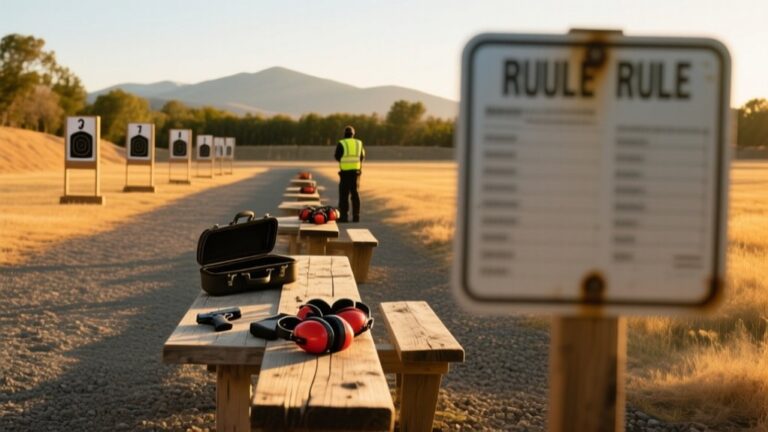
When you head to a shooting range for the first time, choose one nearby that offers beginner-friendly rentals and courses. Always follow safety rules like treating every gun as loaded, wearing eye and ear protection, and listening to range commands.
Dress comfortably with closed-toe shoes and bring your essential gear, including ammunition. Check your firearm and ammo beforehand to avoid issues. Knowing what to expect and proper etiquette will make your visit smooth and safe, and there’s plenty more to help you get started confidently.
How To Choose The Right Shooting Range For Beginners
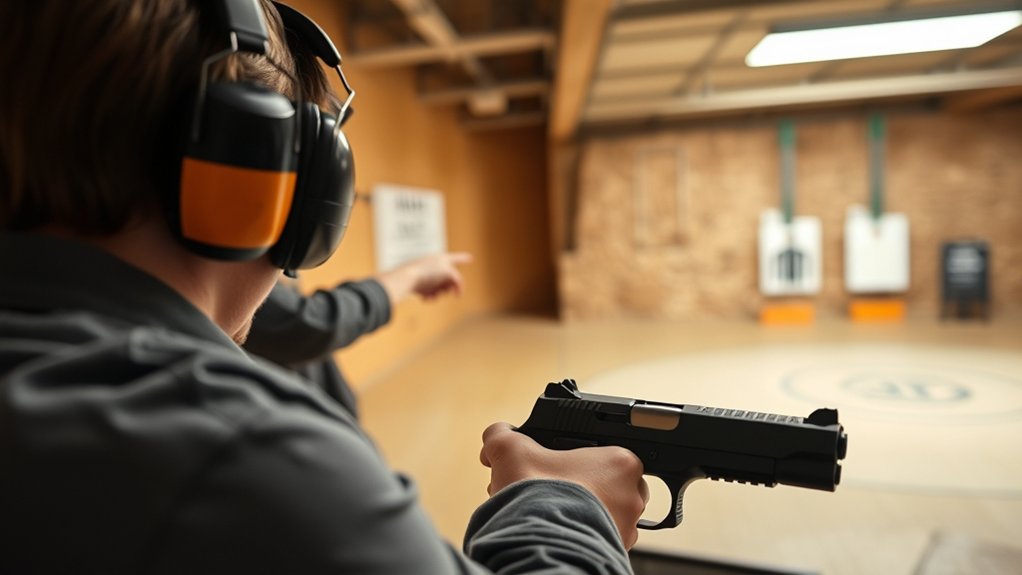
When choosing the right shooting range for beginners, you’ll want to prioritize location and convenience to make regular practice easier. Start by deciding if you prefer an indoor or outdoor shooting range; indoor ranges offer a controlled environment, while outdoor ranges provide a more open experience.
Look for beginner-friendly options, such as rental firearms, introductory courses, and staff ready to help you with understanding the range on your first visit.
Choose ranges offering rentals, beginner courses, and helpful staff to ease your first visit experience.
Check the facilities and amenities, ensuring well-maintained lanes, restrooms, and pro shops are available.
Also, consider community engagement opportunities, like events or clubs, to connect with other shooters.
Finally, familiarize yourself with the range’s safety rules beforehand to feel confident and comfortable as you begin your shooting journey.
Essential Shooting Range Safety Rules For First-Time Shooters
Because safety is paramount at any shooting range, you must follow essential rules from the moment you handle a firearm.
As new shooters, understanding and respecting these range rules guarantees a safe and enjoyable experience.
Always wear eye and ear protection to shield yourself from damage. Keep your finger off the trigger until you’re ready to shoot, and make certain the muzzle is pointed in a safe direction at all times.
Pay close attention to range commands; they guide safe shooting and control.
- Treat every firearm as loaded; keep the muzzle pointed safely.
- Keep your finger off the trigger until firing.
- Wear proper eye and ear protection.
- Follow all range commands promptly.
Stick to these safety rules for a responsible shooting experience.
Essential Gear And Clothing For Your Shooting Range Visit
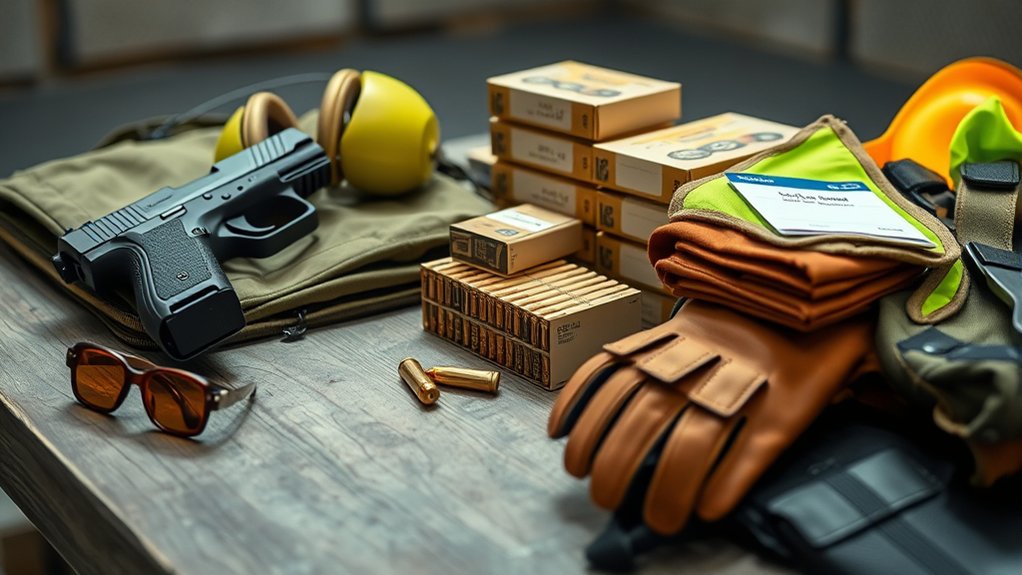
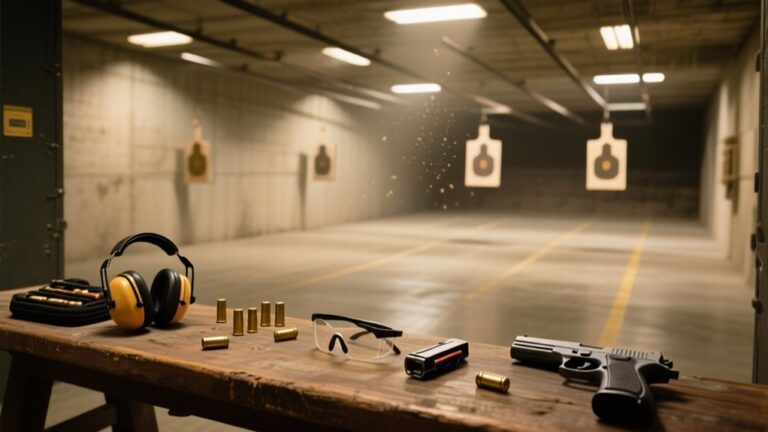
Although safety rules are essential, having the right gear and clothing is equally important for a comfortable and secure shooting range visit. Always wear comfortable clothing that breathes well and covers your skin to protect against hot brass.
Avoid loose or tight clothes for safety and ease of movement. Closed-toe shoes with good traction are mandatory; sandals won’t cut it.
Don’t forget your mandatory safety gear: ear and eye protection are vital, and while ranges often rent them, owning your own guarantees the best fit. A baseball cap helps shield your face from the sun and hot casings outdoors.
Bring a well-packed range bag to carry ammunition, shooting gloves, targets, and a first aid kit. With the right gear, you’ll stay safe and focus on improving your shooting skills.
Preparing Your Firearm And Ammo For The Shooting Range
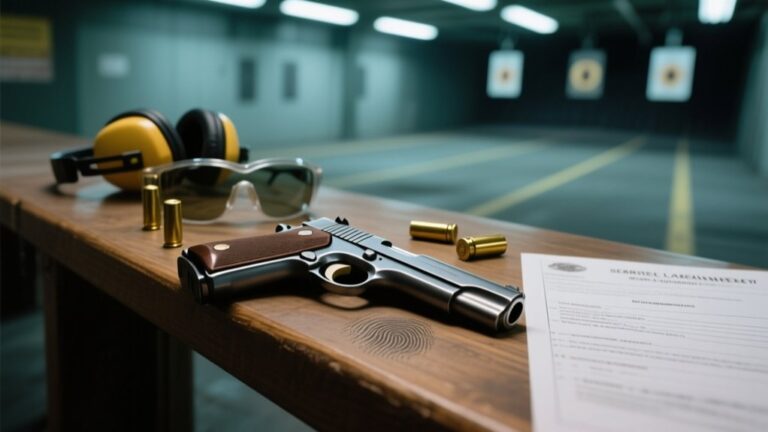
Before you hit the range, make sure your firearm is clean and well-lubricated so it operates smoothly.
Also, double-check that the ammo you bring matches your gun’s specifications and follows the range’s rules.
Taking these simple steps helps keep your session safe and effective.
Selecting Proper Ammunition
When you prepare for a trip to the shooting range, selecting the proper ammunition is essential to guarantee safety and peak performance. First, always choose ammunition compatible with your firearm’s caliber to avoid malfunctions or damage.
Next, review the range rules to confirm which ammo types are allowed, as some restrict steel-core or tracer rounds.
Third, buy from reputable manufacturers to assure quality and consistent performance.
Finally, inspect each round for damage like dents or corrosion before loading, and keep your ammunition stored securely in a range bag to protect it and stay organized.
Following these steps will help you enjoy a safe, efficient, and successful shooting experience every time you visit the range.
Firearm Maintenance Checks
Making certain your firearm and ammunition are in top condition is essential for a safe and successful range visit. Before you head out, clean your firearm thoroughly to remove any debris or obstructions.
Inspect the barrel and chamber carefully, checking for damage that could affect safety or accuracy. Proper maintenance also means verifying that your firearm is lubricated according to the manufacturer’s guidelines to guarantee smooth operation.
Don’t forget to check your ammunition for any signs of corrosion, dents, or damage that might cause misfires. Always confirm you’re using the correct caliber for your firearm to prevent malfunctions.
What To Expect On Your First Shooting Range Visit
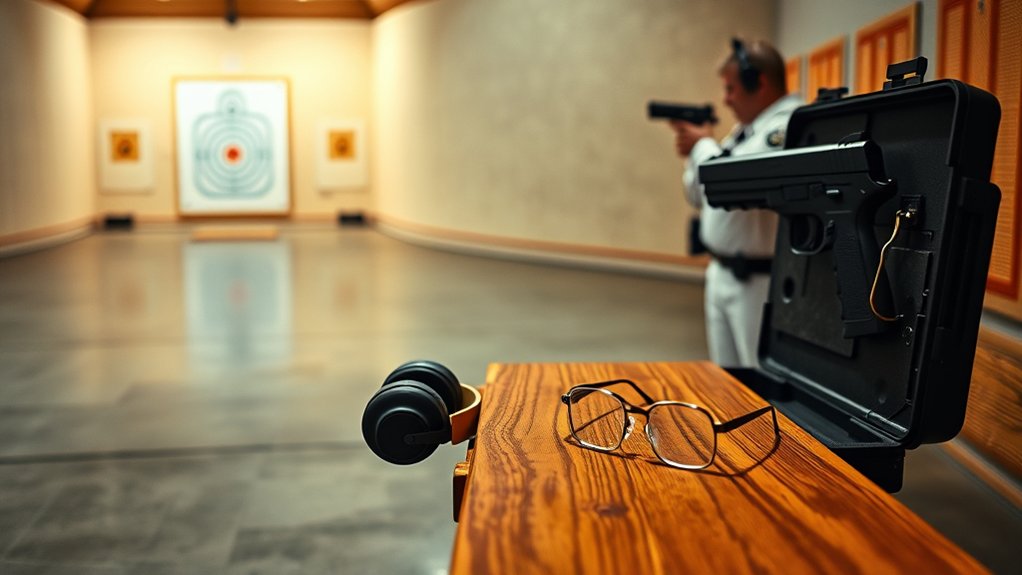
When you get there, you’ll first check in and sign a waiver. They’ll assign you a shooting lane and give you any safety gear you need.
Before you begin, there’s a quick safety briefing that covers all the important rules and commands.
After that, you’ll head to your lane and follow the range officers’ instructions to handle your firearm safely.
Arrival And Check-In
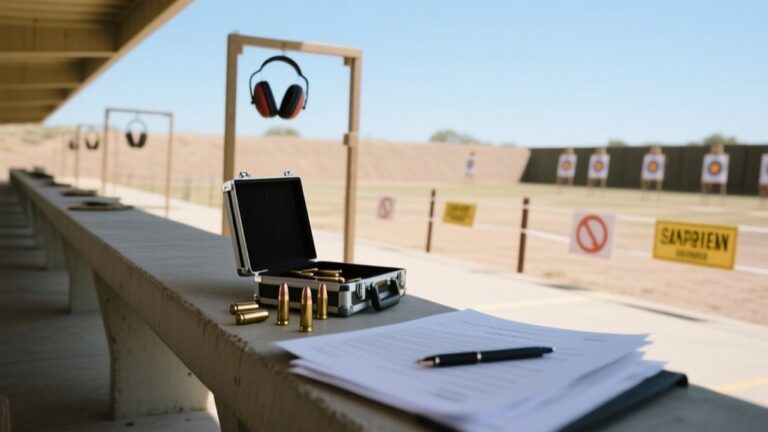
Your first visit to a shooting range starts with checking in at the range office, where you’ll sign a waiver, show a valid ID, and pay any necessary fees.
Upon arrival, let the staff know if you’re a beginner. They’ll offer extra support. You’ll then be assigned a shooting lane to set up your target and gear.
Here’s what to expect during check-in:
- Sign a waiver stating you understand the range rules.
- Provide a valid ID and complete payment.
- Receive or rent safety gear, including ear protection.
- Get directed to your shooting lane for setup.
After check-in, you’ll join a safety briefing to get you ready for a secure and enjoyable experience.
Safety Briefing And Rules
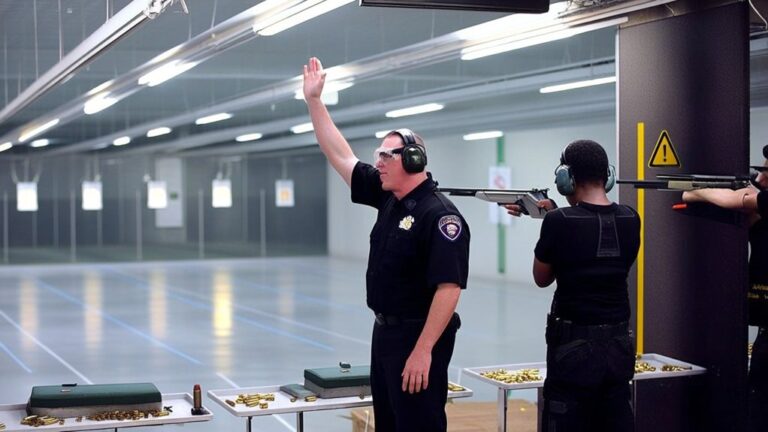
Before you start shooting, the range staff will guide you through a mandatory safety briefing that covers essential rules and protocols. The range officer (RSO) will explain range rules, emphasizing safe firearm handling. Treat every gun as loaded and keep the muzzle downrange.
You’ll learn common commands like “Commence firing” and “Ceasefire,” which means stop shooting immediately. Signing a waiver confirms your understanding of these mandatory safety measures. Don’t hesitate to ask questions to guarantee a smooth shooting experience.
| Common Commands | Meaning |
|---|---|
| Commence Firing | Start shooting |
| Ceasefire | Stop shooting immediately |
| Range Clear | Safe to approach targets |
Lane Setup And Shooting
Checking in at the range office starts your visit, where you’ll sign a waiver, get assigned a lane, and receive your target and shooting accessories.
Each lane setup includes a target carrier for adjusting distance, letting you practice at various ranges.
Before shooting, always keep your firearm pointed downrange and unloaded until the “Commence Firing” command.
Remember these key points for safe shooting and range etiquette:
- Confirm your lane and target carrier settings.
- Follow all range commands promptly, including the ceasefire command.
- Keep your firearm pointed downrange at all times.
- Clean your area by picking up spent casings and trash.
Respecting these rules guarantees a safe, enjoyable first shooting range experience.
How To Understand And Follow Shooting Range Commands
Many shooting range commands are straightforward but vital for safety and smooth operation. You must follow the range safety policies closely, paying attention to the Safety Officer (RSO). They issue range commands that keep everyone safe and organized.
Knowing the difference between Hot Range and Cold Range is essential. Hot Range means live firing is allowed, while Cold Range lets you safely go downrange. When you hear Firing Line, stay behind it until told otherwise.
If you’re unsure about any command, ask the RSO immediately. Always follow the range rules to guarantee a safe and efficient experience.
| Command | Meaning |
|---|---|
| Commence Firing | Start shooting |
| Ceasefire | Stop shooting immediately |
| Hot Range | Live firing allowed |
| Cold Range | Safe to go downrange |
| Firing Line | Stay behind designated shooting area |
Basic Shooting Techniques Every Beginner Should Practice
To shoot accurately, you first need to start with a proper grip and a balanced stance that keeps you stable.
Once you’ve got that down, the next step is to focus on aligning your sights carefully. This helps make sure your shots actually hit the target.
Practicing these basics regularly will really build a strong foundation for your shooting skills.
Proper Grip Techniques
Mastering three key elements of your grip can dramatically improve your control and accuracy at the shooting range. A proper grip starts with placing your dominant hand high on the back of the firearm’s grip for maximum control.
Your non-dominant hand should wrap firmly around the dominant hand, pressing fingers against the grip to stabilize your hold. Keep a relaxed grip; too much tension causes fatigue and hurts shooting accuracy.
Align your thumbs forward along the firearm’s side to create a stable platform. To enhance your muscle memory, practice these techniques regularly during dry-fire sessions.
Follow these steps to perfect your grip:
- Position dominant hand high on the grip
- Wrap non-dominant hand firmly around dominant hand
- Maintain a relaxed grip, balancing firmness and comfort
- Align thumbs forward for consistent control
Stance and Balance
A solid grip sets the foundation, but your stance and balance play a big role in how steady and accurate your shots will be. At the shooting range, adopt a stance like Isosceles or Weaver to distribute your weight evenly and maintain a balanced center of gravity.
Keep your feet shoulder-width apart, bend your knees slightly, and position your body at a 45-degree angle with your non-dominant foot forward. This setup enhances stability, control, and safety by absorbing recoil and allowing quick adjustments.
Align your hips with your feet and keep shoulders relaxed but firm. During practice sessions, work on shifting your weight between feet to improve balance and trigger control.
Mastering stance and balance will boost your shooting confidence and accuracy.
Sight Alignment Practice
When you focus on sight alignment, you put yourself on the path to consistent accuracy. On your first trip to the range, mastering sight alignment will dramatically improve your shooting. Here’s what to practice:
- Focus on the Front Sight: Keep the front sight sharp between the rear sight and your target.
- Maintain a Proper Grip: Use a firm, consistent grip to control recoil and stabilize your shots.
- Adjust Your Stance: Stand shoulder-width apart, leaning slightly forward to support steady sight alignment.
- Practice Breathing Control and Anchor Point: Exhale halfway, hold your breath, and align sights from the same anchor point to build muscle memory.
Range Etiquette Tips Every New Shooter Should Know
How should you behave to guarantee everyone stays safe and comfortable at the range? Practicing proper range etiquette is essential. Always keep your firearm pointed downrange and follow commands from the range officer. Safety first.
Proper range etiquette ensures safety and comfort—always point your firearm downrange and heed the range officer’s commands.
Stick to established range rules, handle your firearm only when instructed, and never cross the firing line without permission.
Maintain a respectful environment by keeping noise low and avoiding distractions while others shoot.
Clean up your shooting area by collecting spent brass and disposing of trash properly.
Familiarize yourself with common commands like “Ceasefire” and “Hot range” to respond quickly and appropriately.
Using Targets To Improve Your Shooting Skills
Although practicing at the range is essential, using a variety of targets can greatly boost your shooting skills by challenging your accuracy and focus in different ways.
Different targets like paper, steel, or reactive ones keep practice sessions engaging and help you hone diverse shooting skills.
To improve efficiently, focus on these:
- Start with targets at shorter distances and gradually increase to test accuracy and confidence.
- Learn scoring zones to aim precisely and develop better control.
- Analyze shot group sizes on targets to measure consistency and technique.
- Keep a shooting journal documenting scores and observations for effective progress tracking.
Where To Find Beginner Shooting Classes And Training Resources
Wondering where to start your shooting journey? Begin by exploring beginner classes at local shooting ranges. These often offer structured lessons like Basic Handgun Safety to build foundational shooting knowledge.
Many ranges host community events that welcome new shooters, making it easier to connect and learn. Don’t hesitate to let range staff support you. They’re there to provide personalized guidance and guarantee you follow firearm safety protocols.
Besides in-person options, numerous online training courses cover essential handling techniques and safety tips. These are perfect for supplementing your learning.
To find the best fit, research local ranges online for their specific class schedules and available training resources.
Combining hands-on experience with online materials helps you develop confidence and skills efficiently as a beginner.
Frequently Asked Questions
Can I Bring My Own Firearm to Any Shooting Range?
You can bring your own firearm to many ranges, but you’ll need to check their rules on firearm types first.
Follow range etiquette by wearing proper safety gear and respecting shooting positions.
Be prepared to pay range fees and choose from various target options.
Also, verify range hours and booking procedures ahead of time.
Let staff know you’re using your own firearm. They’ll help guarantee a safe, smooth experience.
What Should I Do if My Firearm Jams at the Range?
If your firearm jams, stay calm and keep it pointed downrange.
Follow safety precautions essential for jam removal techniques by waiting for range officer assistance before clearing it.
Identify common jam causes like failure to feed or double feed, and use proper troubleshooting steps accordingly.
Follow range etiquette guidelines by not pointing the gun at anyone.
Regular firearm maintenance tips and preventive measures help minimize jams, keeping your shooting experience safe and smooth.
Are There Age Restrictions for Shooting Range Visitors?
You’ll find that shooting ranges often have “welcome guidelines” about age, usually requiring younger visitors to be accompanied by adults.
These safety measures guarantee everyone learns range etiquette properly.
Some ranges offer shooting lessons tailored for youth, including gear recommendations and age-appropriate ammunition types.
Depending on range types, target options, and pricing structures, age restrictions vary.
How Do I Clean My Firearm After Range Use?
After your post range inspection, start by unloading your firearm completely.
Gather cleaning supplies like a cleaning rod, brushes, patches, and solvent.
Use these tools to remove debris and fouling from the barrel and components.
Follow cleaning frequency recommendations to keep your firearm reliable.
Don’t forget to lubricate moving parts to prevent rust and ensure smooth operation.
Avoid common cleaning mistakes, like skipping magazine cleaning.
Finally, practice safe storage by keeping your firearm in a clean, dry place.
Can I Rent Firearms and Ammo at the Range?
You know what they say: “Don’t put all your eggs in one basket.” Many ranges offer rental options, so you can try different firearms without buying.
Check range policies for equipment requirements and safety procedures. They often include mandatory briefings. Costs vary, with ammo sometimes needing purchase on-site.
Instructor availability and group packages can enhance your first-time experiences. Always confirm details beforehand to guarantee a smooth visit and avoid surprises.
Conclusion
Stepping into a shooting range is like holding a compass in your hands. It points you toward focus, discipline, and responsibility. With the right gear, safety mindset, and practice, you’re not just aiming at targets; you’re aiming to grow.
Remember, every shot fired is a step toward mastery. So, trust the process, respect the rules, and let each visit guide you closer to becoming the confident shooter you’re meant to be.