How To Transport Gun To Shooting Range In Nj – Rules And Guidelines
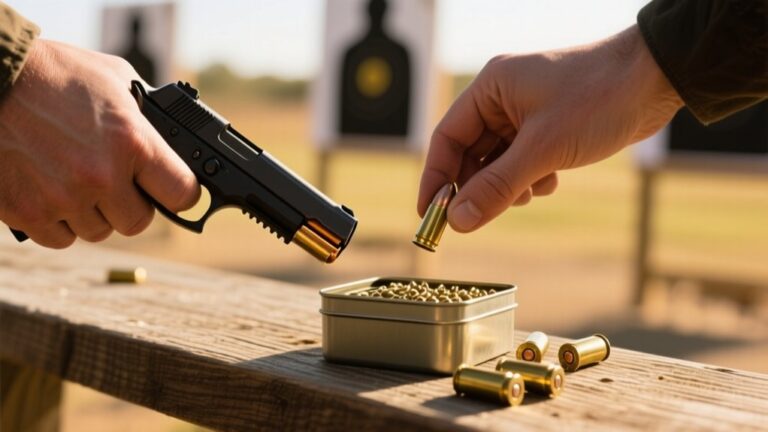
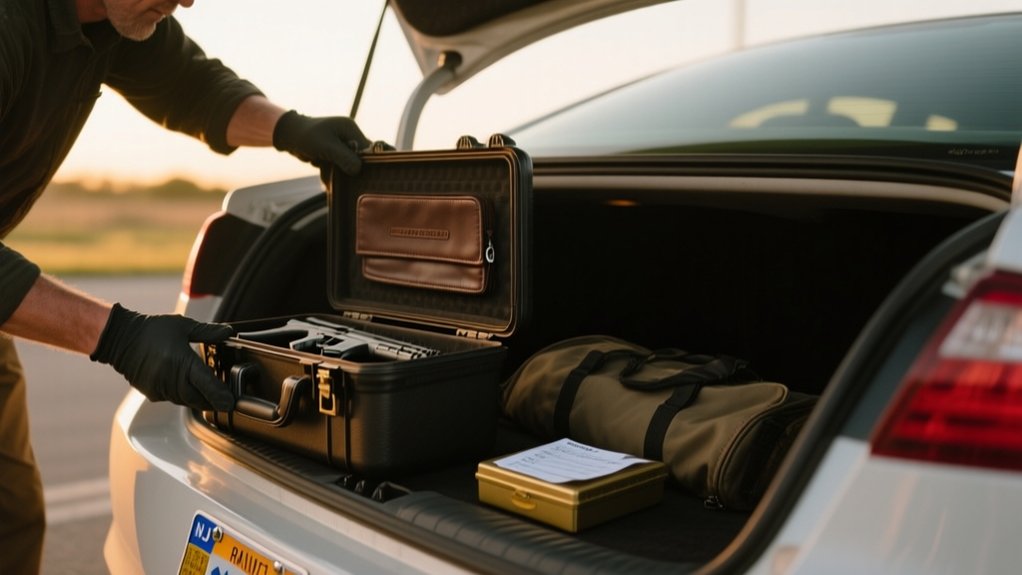
When transporting your gun to a shooting range in New Jersey, you must keep it unloaded and securely locked in a closed case. Store it in the trunk or outside the passenger area. Ammunition should be kept separately in a locked container.
Only make reasonable stops for fuel or food without detours, and always have the proper permits. Following these rules helps you avoid serious legal trouble. Understanding these basics will prepare you for all transport scenarios.
How To Understand New Jersey’s Firearm Transport Laws
Although transporting a firearm in New Jersey is allowed when traveling to a shooting range, you must follow strict rules to stay compliant.
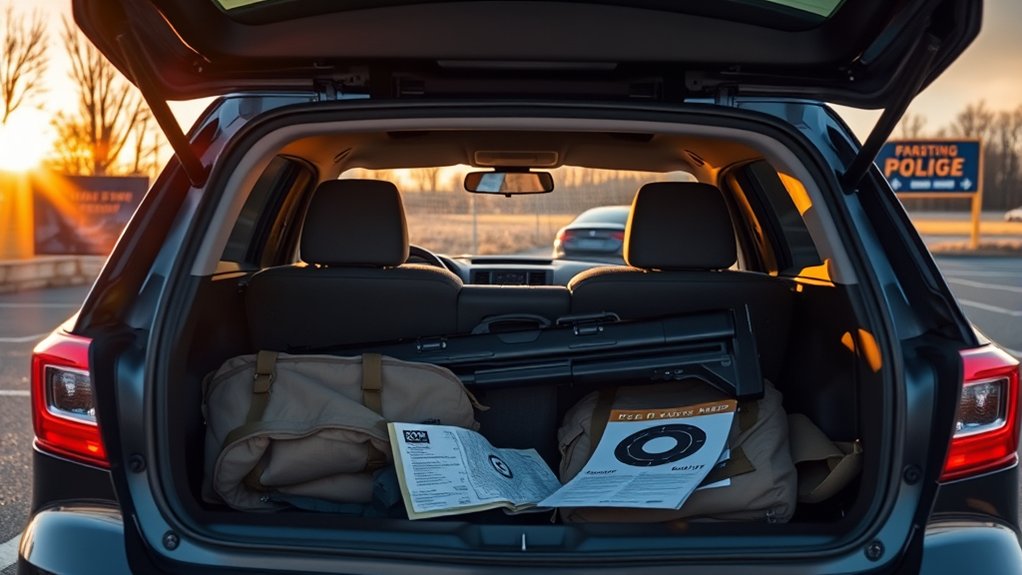
First, you must transport a firearm unloaded and secured in a closed, fastened case or gun box. The law requires the firearm to be locked in the trunk or another area outside the passenger compartment, ensuring it’s inaccessible while driving.
Firearms must be unloaded and locked in a closed case, stored outside the passenger compartment while driving.
You can only transport firearms if you have the proper permits or are moving between authorized places like your home and the shooting range.
You can make reasonable stops for fuel or food but avoid detours outside your approved route. Ignoring these rules risks serious legal trouble, including potential prison time for illegal possession.
Always keep your firearm locked in the trunk to stay safe and legal.
How To Prepare Your Firearm For Transport To A Shooting Range
Before you head to the range, make sure your firearm is completely unloaded and stored in a locked case.
It’s a good idea to double-check this before you leave. Also, keep your ammunition separate—in its own locked container—and away from the passenger area.
Following these steps not only helps you stay compliant with New Jersey’s strict transport rules but also keeps everyone safe along the way.
Unload Firearm Securely
A crucial step in preparing your firearm for transport to a shooting range in New Jersey is verifying it’s completely unloaded. This means double-checking that no ammunition is in the chamber or magazine.
Once unloaded, place your firearm in a securely fastened case or a locked container to meet legal requirements.
If your vehicle lacks a trunk, you must store the unloaded firearm in a locked container that’s out of reach from the driver’s seat.
Remember, ammunition should be kept separately in its own locked container, not in the glove compartment or center console.
Taking these precautions helps you stay compliant with state laws and guarantees safe transport.
Always verify your firearm is unloaded before placing it in any locked container for transport.
Use Locked Case
Since New Jersey law requires firearms to be non-operational during transport, you must place your unloaded gun in a locked case or securely fastened gun box. This guarantees safety and legal compliance when heading to the shooting range.
Here’s what you need to keep in mind:
Always confirm the firearm is unloaded before placing it in the locked case. Use a sturdy locked case designed specifically for firearms.
If your vehicle lacks a trunk, keep the locked case out of the driver’s reach. Secure the locked case firmly to prevent movement during transport.
Never store ammunition in the same locked case as your unloaded firearm.
Following these steps aids you in transporting your gun safely and within New Jersey’s legal guidelines.
Separate Ammunition Storage
Although you’ve secured your unloaded firearm in a locked case, you’ll need to store your ammunition separately to stay compliant with New Jersey law.
Separate ammunition storage is crucial, meaning your ammo should be kept in a locked container apart from your firearm.
Avoid placing ammunition in the glove compartment or center console. Remember, your firearm must be unloaded during transport, but magazines can stay loaded if stored separately and securely.
If your vehicle lacks a trunk, keep both your firearm and ammo in locked containers away from the driver’s reach.
Following these steps guarantees you meet state regulations and avoid legal issues while transporting your firearm to the shooting range safely and responsibly.
How To Securely Store Firearms During Vehicle Transport
When transporting firearms in New Jersey, you must keep them unloaded and secured in a closed, fastened case or gun box to prevent access from the passenger compartment.
To transport your firearm safely and legally, treat it as a securely tied package. Follow these tips:
Use a locked, sturdy gun case or box. Place the case in the trunk or a locked container inaccessible to passengers. Avoid storing firearms in glove compartments or center consoles.
Keep ammunition separate in a locked container.
Double-check local and state laws to guarantee full compliance.
Differences In Transport Rules For Handguns And Long Guns
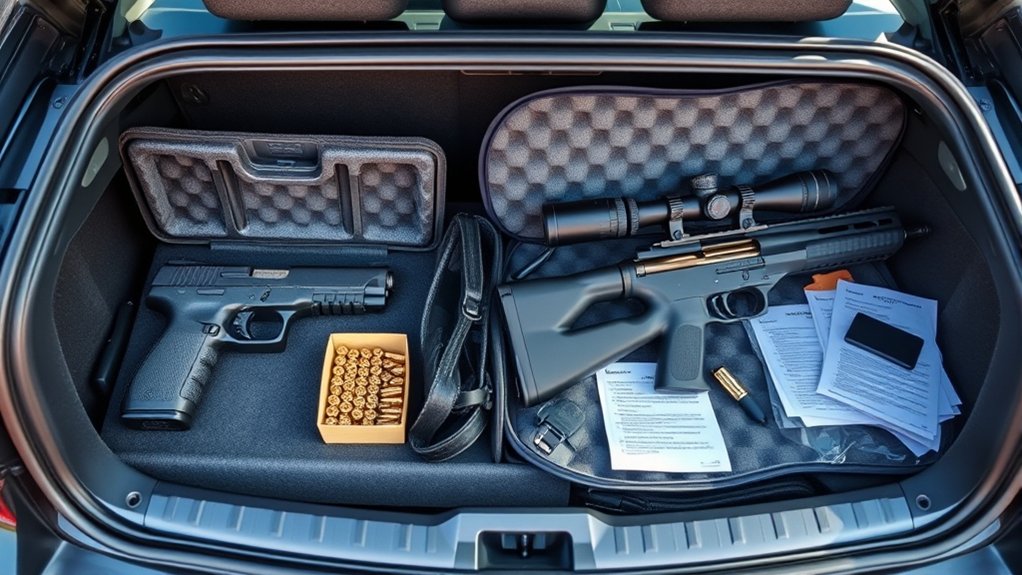
You should know that handguns and long guns have different transport rules in New Jersey. For handguns, they must be unloaded and secured in a closed case.
On the other hand, long guns can be stored the same way or locked in the trunk of your vehicle.
Also, keep in mind that permits and legal consequences can differ depending on the type of firearm you’re carrying.
Handgun Transport Requirements
Transporting handguns in New Jersey demands extra caution compared to long guns. You must guarantee your handgun is transported unloaded and securely stored in a closed case or locked container.
Unlike long guns, handguns can’t be transported loaded, even with a concealed carry permit.
Keep these key points in mind:
- Always transport your handgun unloaded.
- Store it in a locked container or closed case.
- If your vehicle lacks a separate compartment, place the handgun in the trunk.
- Magazines may remain loaded, but the handgun itself must not.
- Never leave the handgun outside your immediate possession in a parked vehicle.
After arriving at the range, promptly retrieve or store your handgun and depart immediately to comply with New Jersey’s strict transport regulations.
Long Gun Storage Rules
Handle long guns with care by keeping them unloaded and secured in a closed, fastened case or gunbox while in your vehicle. Unlike handguns, you can’t leave loaded long guns in the vehicle during transport for shooting activities.
Store your long guns either in the trunk or, if your vehicle lacks one, in a locked container away from the passenger area. This guarantees they’re not accessible while you drive.
Remember, ammunition must be stored separately in a locked container, distinct from your firearms.
Following these rules helps you comply with New Jersey’s strict regulations and keeps your transport legal and safe.
Always keep long guns unloaded throughout your journey to the shooting range to avoid violations.
Permit and Legal Differences
Although both handguns and long guns require careful handling during transport, New Jersey law treats them differently when it comes to permits and storage rules. You need a valid permit to carry handguns, but long guns don’t require one.
Still, both must follow state law for safe transport.
Here are key differences: Handguns must be unloaded, in a securely fastened case, and in your immediate control. Long guns must also be unloaded and secured but can be left in a parked vehicle.
Both firearms must be transported directly to and from the shooting range. Ammunition must be stored separately from the firearm.
Handguns face stricter storage and transport regulations under New Jersey’s state law.
Knowing these distinctions helps you comply with the permit to carry and transport rules.
Legal Vs. Illegal Stops When Transporting Firearms
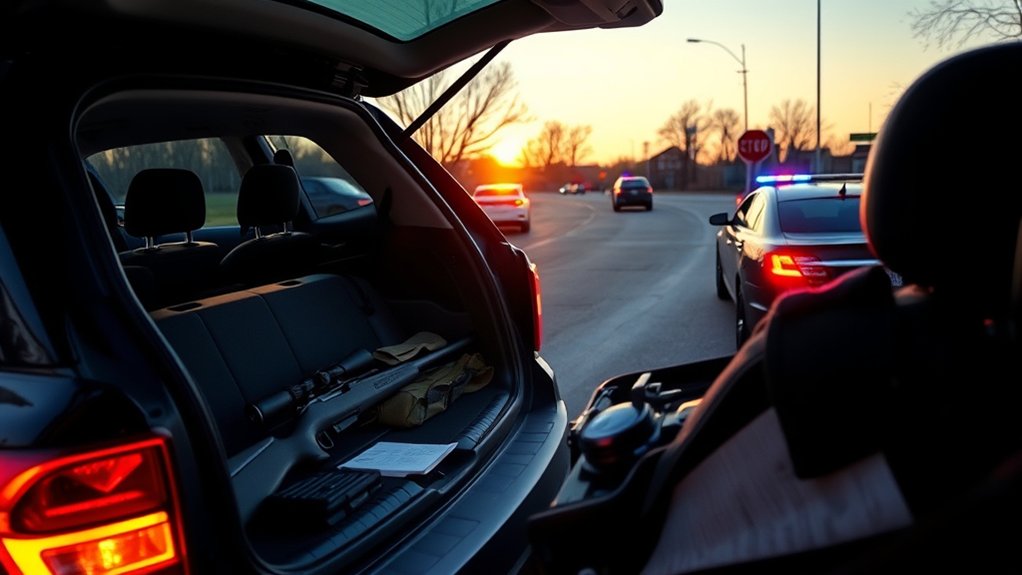
When you’re moving a firearm to a shooting range in New Jersey, knowing which stops are legal can prevent serious trouble.
Legal stops include brief breaks for fuel, food, medical needs, or emergencies. During these stops, your firearm must remain unloaded and securely stored.
Avoid leaving the immediate route or engaging in activities unrelated to your trip’s purpose, as these can be considered illegal stops.
Taking detours or making unnecessary stops risks violating transport laws and could lead to unlawful possession charges.
Always stick to the most direct path and keep your firearm unloaded and secured at all times.
Staying aware of local regulations guarantees you transport your firearm safely and legally without risking penalties.
How To Handle Firearms Near Sensitive Areas During Transport
Sticking to legal stops and keeping your firearm unloaded and secured helps.
But you also need to be mindful of sensitive areas during transport in New Jersey. When your firearm is near these zones, follow these key points:
Make sure the firearm is unloaded and secured in a closed case or gunbox.
Avoid entering sensitive areas; you may only access your vehicle’s surroundings to retrieve or store the handgun.
Keep handguns out of plain view, stored in a locked box inside the vehicle.
Transporting a concealed handgun through sensitive areas is allowed only if unloaded and properly secured.
Leave the sensitive area immediately after retrieving or storing your firearm.
How Federal Law (FOPA) Protects Interstate Firearm Transport Through New Jersey
If you’re traveling through New Jersey with a firearm, the Firearms Owner Protection Act (FOPA) offers essential federal protections to keep you safe from conflicting state laws.
FOPA allows you to transport a firearm and ammunition across state lines, provided the firearm is unloaded and secured in a locked container, not in the glove compartment or center console.
Your travel must be direct and prompt between lawful points, minimizing unnecessary stops.
While FOPA shields you from some state restrictions, you still have to comply with the laws of both your departure and destination states.
Carrying a copy of FOPA during your trip can help if local authorities question your transport.
Following these rules guarantees your firearm transport through New Jersey remains lawful and protected under federal law.
What Happens If You Break Firearm Transport Laws
Breaking New Jersey’s firearm transport laws can lead to severe legal consequences, including second-degree charges for illegal handgun possession that carry 5 to 10 years in prison.
Violating New Jersey’s firearm transport laws may result in second-degree charges and 5 to 10 years imprisonment.
If you break these laws, you risk facing second-degree charges for illegal handgun possession. You could also receive third-degree charges for illegal shotgun or rifle possession, with 3 to 5 years in prison.
Being charged with unlawful possession can result in hefty fines. Plus, you might lose the legal exemption, which only applies if you strictly follow transport rules.
Violating firearm transport laws isn’t taken lightly. You could find yourself maneuvering through complex legal challenges without guaranteed protection of your rights.
Staying compliant is essential to avoid these penalties and protect yourself from serious legal trouble.
When To Get Legal Help For Firearm Transport Issues
When should you seek legal help for firearm transport issues in New Jersey? You should get legal assistance immediately if you’re charged with illegal transport, as penalties can include 3-10 years imprisonment.
Maneuvering firearm transport laws can be complex, especially if you deviate from authorized routes or fail to meet storage requirements like transporting firearms unloaded and secured.
If you encounter law enforcement or face legal challenges while transporting your firearm, having a lawyer knowledgeable in New Jersey firearm laws is essential to protect your rights and guide you in invoking the Firearms Owner Protection Act (FOPA).
Consulting a firearm attorney is also wise before transporting firearms to sensitive areas or during hunting activities to guarantee full compliance and avoid serious consequences.
Frequently Asked Questions
Can I Transport Ammunition With My Firearm to the Shooting Range?
Yes, you can transport ammunition with your firearm to the range, but you must follow strict ammunition storage rules.
Keep your ammo locked in the trunk or a secure container separate from the firearm to guarantee transport safety.
Your firearm should be unloaded and stored properly, while magazines may stay loaded.
Always double-check local laws and range rules to avoid any issues during transport and guarantee you’re handling everything responsibly.
Are There Specific Hours When Transporting Firearms Is Allowed in New Jersey?
You don’t have to worry about specific hours when transporting firearms in New Jersey, as there are no time restrictions.
However, you must always follow firearm safety and transport regulations, which require your gun to be unloaded and secured in a closed, fastened case.
While the timing isn’t limited, it’s smart to check the shooting range’s hours and verify your transport complies with all safety rules to avoid any legal trouble.
Do I Need a Permit to Transport Firearms to a Private Shooting Range?
You don’t need a permit to transport firearms to a private shooting range in New Jersey, as long as you follow firearm storage and transport regulations.
Coincidentally, these rules make your trip safer and smoother.
Your gun must be unloaded and secured in a closed, fastened case.
You have to travel directly to the range without unnecessary stops.
Following these guidelines keeps you compliant and responsible every time.
Can Passengers Carry Firearms in the Vehicle During Transport?
No, passengers can’t carry firearms in the vehicle unless they’re legally permitted to do so.
You must guarantee proper firearm storage by keeping guns unloaded and secured in a closed, fastened case or tied package.
This keeps the firearm inaccessible from the passenger compartment, guaranteeing vehicle safety.
If a passenger isn’t licensed, they shouldn’t have access to the firearm during transport.
Following these rules helps you avoid legal trouble.
How Should I Document My Firearm Transport for Law Enforcement?
You should document your firearm transport carefully to guarantee firearm safety and comply with transport regulations.
Keep a detailed log of your route, including timestamps and stops. Note reasons like gas or food.
Carry copies of your transport permit and licenses.
Take photos showing your firearm stored in a locked case or trunk.
If law enforcement stops you, present all documentation to verify you’re following the rules properly.
Conclusion
Maneuvering New Jersey’s firearm transport laws may feel like threading a needle, but sticking to these rules keeps you safe and legal. Always prepare and secure your firearm properly, know the differences between handguns and long guns, and avoid illegal stops.
Remember, federal law offers some protection, but don’t gamble with your rights. If you’re unsure, seek legal help. Stay informed, stay cautious, and your shooting range trips will be smooth and worry-free.