Can You Build A Shooting Range In Your Home – Requirements And Considerations
You can build a shooting range at home if you follow local laws and zoning regulations, including required distances from dwellings and possible registration. Choose a safe location with proper backstops and noise control to avoid disturbing neighbors.
Manage environmental impacts like lead and debris responsibly. Regular maintenance and expert advice help keep your range safe and compliant.
Keep these basics in mind, and you’ll be better prepared to handle the details for a safe, effective home shooting range.
Legal Requirements for Home Shooting Ranges
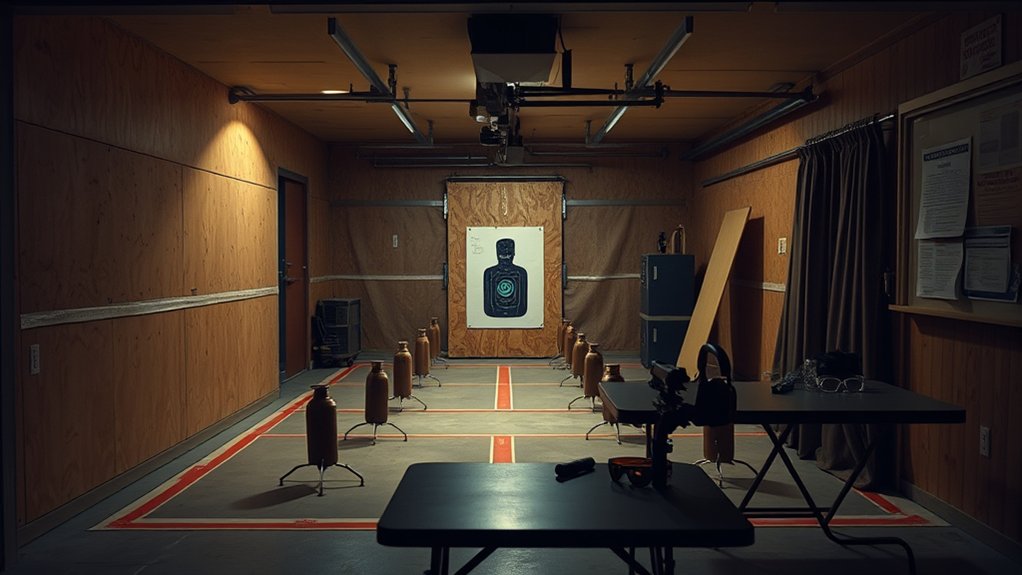
Before you build a home shooting range, you need to check local zoning laws and regulations to verify you’re compliant. Residential shooting ranges are generally legal in many U.S. areas, but local zoning rules vary widely, so you must confirm your property meets all legal requirements.
For example, Massachusetts allows personal ranges under M.G.L. c.269 s.12E with proper consent, yet municipal ordinances might add restrictions. Many jurisdictions require ranges to be at least 500 feet from dwellings, though exceptions exist for formal setups.
You may also need to register your in-home range with local councils and consult police to ascertain full compliance.
Understanding and adhering to these legal requirements and local zoning guidelines protects you and keeps your residential shooting range safe and lawful.
Choosing a Safe Location and Range Design
When choosing a location for your home shooting range, you’ll want to prioritize safety by selecting a site with adequate backdrops, ideally between 20 and 60 feet high, to prevent ricochets. The right range design enhances both safety and shooting experience.
Prioritize safety by choosing backdrops 20 to 60 feet high to prevent ricochets and improve your shooting experience.
Keep these in mind:
- Choose a location with at least 40 acres for typical ranges or 500 acres for long-range shooting.
- Use natural features like hills or canyons to boost safety and reduce wind.
- Consult shooting range experts to plan ideal shooting lanes and target distances.
- Orient your range to maximize natural light and minimize glare for better visibility.
Following these steps guarantees your shooting ranges offer a safe, effective, and comfortable setup.
Safety Features and Noise Control for Home Shooting Ranges
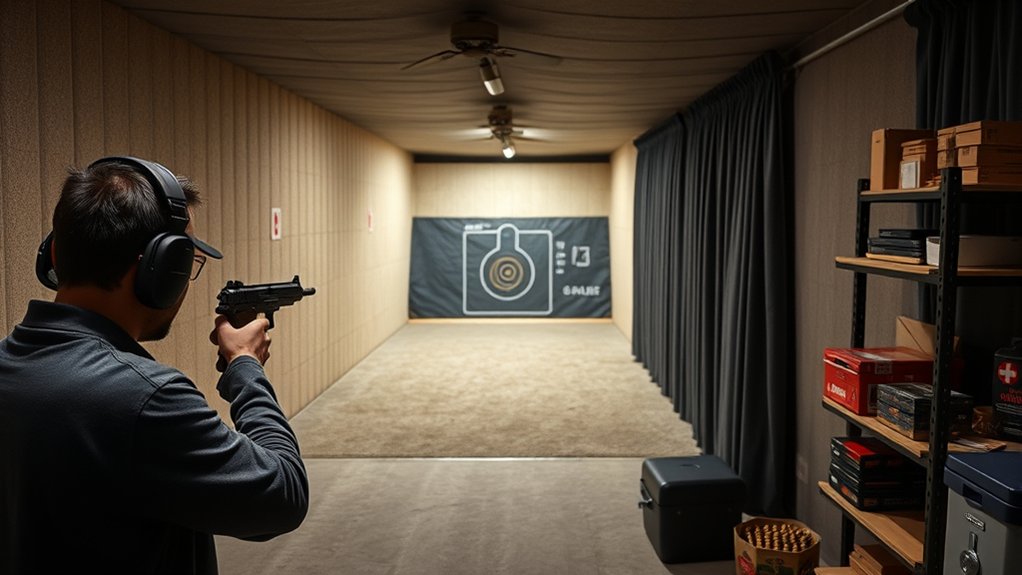
Although setting up your home shooting range requires careful planning, prioritizing safety features and noise control will protect you and your neighbors. When building a range, install proper backstops and safety berms at least 20-60 feet high to prevent ricochets.
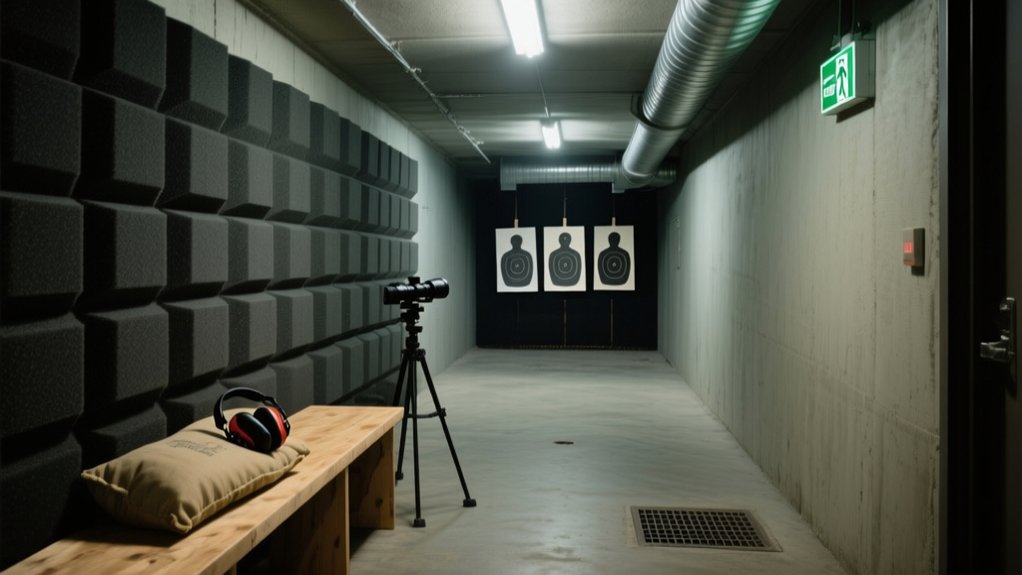
Use sound-absorbing materials like foam panels to keep noise below 85 decibels, especially for indoor shooting. Bullet traps and safety baffles help contain rounds safely. Regularly maintaining these safety features guarantees ongoing protection.
Clear safety protocols and signage promote responsible firearm use.
| Safety Feature | Purpose | Benefit |
|---|---|---|
| Backstops/Berms | Ricochet prevention | Protects shooters |
| Foam Panels | Noise control | Reduces sound pollution |
| Bullet Traps | Contain bullets | Enhances range safety |
| Signage | User awareness | Encourages safe behavior |
Managing Environmental Impact and Neighbor Relations
Maintaining safety within your home shooting range goes hand in hand with managing its environmental impact and neighbor relations.
To guarantee effective range protection and maintain good neighbor relations, follow these key steps:
Ensure safe range operation and positive neighbor relations by following essential protective steps.
- Use proper lead management and hire local companies specializing in lead recovery to prevent soil contamination.
- Implement safety measures that keep shot and target debris from migrating onto neighboring properties or water sources.
- Communicate openly with neighbors about your shooting schedule to minimize disturbances and build trust.
- Comply with local noise ordinances to avoid complaints and show respect to the community.
Maintenance and Equipment for Home Shooting Ranges
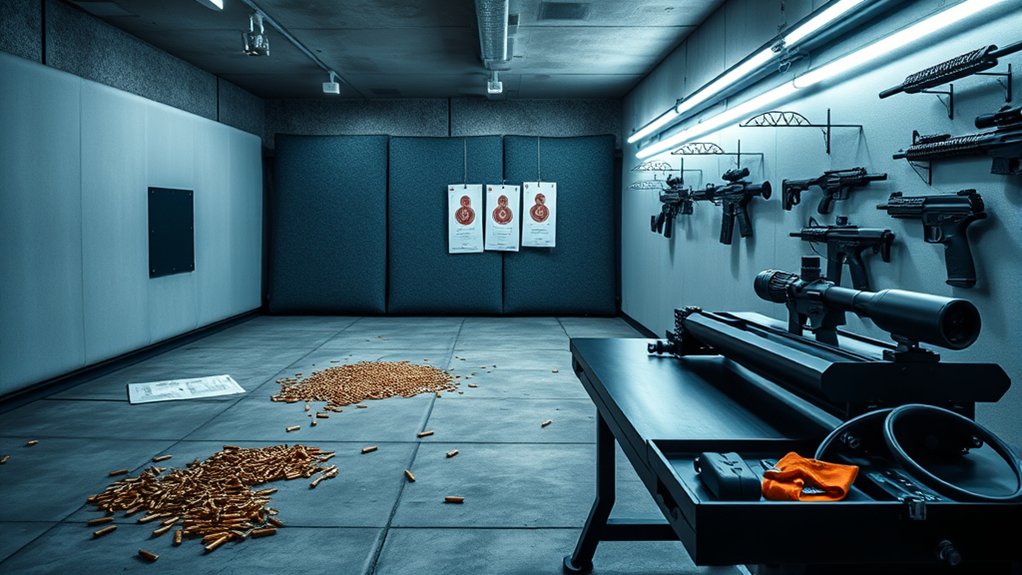
Since your home shooting range requires consistent upkeep to stay safe and functional, setting up a clear maintenance routine is essential. Regular maintenance involves checking and replacing targets, guaranteeing backstops remain intact, and repairing any damage to shooting lanes or benches.
For indoor ranges, you’ll want to schedule routine inspections of safety features like bullet traps and baffles to prevent stray bullets. Using durable materials such as rubber landscaping for backdrops helps reduce noise and enhances safety.
Staying compliant with rules and regulations means keeping your range in good condition. Equip yourself with the right tools—target repair kits, landscaping equipment, and cleaning supplies—to manage upkeep efficiently.
Maintenance costs vary but investing in proper equipment guarantees your range stays safe and functional over time.
Getting Help From Experts to Build Your Range Right
When you’re building a home shooting range, getting help from experts can save you time, money, and potential safety issues down the line.
It’s important to note that collaborating with a reputable shooting range provider guarantees your project meets all safety regulations and design standards.
Before you start, consult local authorities about zoning laws and permits.
Here are four key steps to get your range right:
- Work with shooting range consultants to tailor the design to your property.
- Hire an architect experienced in Building a Gun Range for soundproofing and bullet containment.
- Get risk assessments to identify hazards and enforce safety protocols.
- Seek advice from experienced builders for cost-effective materials and techniques.
Following these steps helps you build a safe, compliant, and durable range.
Frequently Asked Questions
What Types of Firearms Are Suitable for Indoor Home Ranges?
You should stick to pistol calibers and small-caliber rifle options like .22LR for indoor home ranges. These keep noise and recoil manageable.
When it comes to ammo selection, choose frangible or reduced-recoil rounds to minimize risks like over-penetration.
Always prioritize safety measures, including proper backstops and ventilation.
Avoid high-powered rifles, as they’re usually too loud and dangerous indoors.
Checking local laws before setting up is a smart move too.
How Much Does It Typically Cost to Build a Home Shooting Range?
Building a home shooting range can cost you anywhere from $10,000 to over $200,000, like assembling a complex puzzle.
Your indoor range design needs quality soundproofing materials and ventilation systems to keep things safe and comfortable.
Don’t forget safety regulations, as they can impact your budget and design choices.
Factoring all these in, expect an average cost around $60,000, with ongoing maintenance adding to your expenses over time.
Can I Install Electronic Target Systems in My Home Range?
Yes, you can install electronic target systems in your home range. Focus on target system integration by ensuring your space supports power and connectivity needs.
Use space optimization strategies to fit the system without crowding your range. Incorporate soundproofing techniques to reduce noise from shots and electronic feedback.
Don’t forget maintenance considerations. Regular updates and inspections keep your system accurate and durable, making your training more efficient and enjoyable.
What Personal Protective Gear Is Recommended for Home Shooting?
Think of your personal protective gear as your fortress against flying dangers. You should always wear shooting glasses that meet safety regulations to shield your eyes and earmuffs or earplugs for noise reduction, keeping your hearing intact.
Use gloves and durable clothing to protect your skin from hot casings.
If your ventilation systems aren’t of high quality, wear a face mask to avoid inhaling lead dust. These essentials let you safely enjoy various target options at home.
Are There Insurance Requirements for Having a Home Shooting Range?
You don’t usually need special insurance for a home shooting range, but you should check with your agent because liability concerns vary.
Make sure you understand zoning regulations and noise restrictions in your area, as they can affect your setup.
Following strict safety protocols helps reduce risks and might influence insurance needs.
If you plan to charge others, liability insurance and waivers become essential to protect yourself from potential claims.
Conclusion
Building a home shooting range isn’t just about setting up targets. It’s about meeting legal rules, ensuring safety, and respecting your neighbors. You might think it’s simple, but there’s more to take into account than you realize.
Ready to dive deeper into the essential steps that protect you and those around you? Stay tuned, because understanding these vital details will help you create a range that’s both fun and responsible. Your perfect home range could be closer than you think.