How Many Rounds Should You Shoot At The Range – Practice Guide And Tips
You should shoot between 50 to 250 rounds per session, depending on your firearm and training goals. For handguns, 50 to 100 rounds usually work well, while rifles may need 100 to 200 rounds.
Aim to visit the range 2 to 3 times a month, increasing during competition seasons. Focus on quality by using structured drills and tracking your progress to improve efficiently.
Keep practicing smart, and you’ll find ways to maximize both your skills and ammo budget.
How Often to Visit the Range and Manage Ammo Use
How often should you hit the range to keep your skills sharp? Most shooters visit the range 2 to 3 times a month, increasing to 3-4 times during competition seasons. Your range time directly impacts how well you maintain your skills, so consistency matters.
Consistent range visits, typically 2 to 3 times monthly, are key to maintaining sharp shooting skills.
During each visit, you’ll typically shoot between 100 and 400 rounds per session depending on your focus, whether it’s reload practice or target drills. Handgun shooters often average 50 to 250 rounds per trip.
Indoor ranges usually require about 50 rounds, while outdoor sessions often demand 100 or more rounds per visit.
Bringing around 100 rounds per session is a smart way to balance effective practice with ammo management. Regular visits with planned rounds per session will help you improve steadily without overspending on ammo.
How Many Rounds Should You Shoot Per Session?
When you’re planning your range session, think about how many rounds you’ll actually need. It depends on the type of range you’re at and what caliber your firearm is.
You want to make sure you shoot enough rounds to practice well, but without just going for quantity over quality.
Honestly, focusing on specific skills can help you get more done with fewer shots.
Round Counts By Range
Shooting between 50 and 300 rounds per session is common, depending on whether you’re at an indoor or outdoor range and your specific practice goals.
Indoor range sessions usually require about 50 rounds, while outdoor ranges often call for 100 rounds or more to cover various drills.
Your round counts will also vary based on firearm type. Handgun shooters typically fire 50 to 250 rounds, whereas rifle shooters might use 100 to 200 rounds.
Planning your round counts around the drills you want to work on, like reloads or target shifts, helps you get the most from your time at the range.
Many shooters find that bringing around 100 rounds aligns well with their training goals and overall comfort.
Caliber-Specific Ammo Needs
Because each caliber demands different handling and practice intensity, your ammo needs will vary depending on the firearm you choose.
For example, if you’re shooting a .44 Magnum, plan on around 24 rounds per session to meet your practice needs effectively.
A .357 Magnum requires more, about 50 rounds, to verify your skills sufficiently.
If you’re working with a 9mm, expect to fire between 100 and 200 rounds for thorough training.
Understanding these caliber-specific ammo needs helps you prepare without bringing too much ammo or falling short.
Keep in mind that indoor sessions generally use a box of 50 rounds, while outdoor sessions might demand 100 or more depending on your exercises.
Tailoring your round count to your caliber guarantees productive and efficient practice.
Balancing Quality And Quantity
Finding the right balance between quality and quantity is key to making your range sessions effective. You don’t need hundreds of rounds every time; sometimes, focused quality beats sheer quantity.
For example, 25 rounds can be enough for skill checks, while 50 to 100 rounds fit most sessions. Structured practice with drills like the Mozambique drill enhances quality without wasting ammo.
Tracking your rounds guarantees every shot counts toward improvement, not just volume.
| Rounds Fired | Focus Level | Result Achieved |
|---|---|---|
| 25 | High | Skill Verification |
| 50 | Moderate | Basic Practice |
| 100 | Balanced | Thorough Training |
| 300 | Low | Volume without Focus |
How Range Type Affects Ammo Needs
Although your ammo needs will vary, the type of range you choose plays a big role in how many rounds you’ll go through. Indoor ranges usually have shooters firing about 50 rounds per session, making a single box of ammo sufficient for most visits.
In contrast, outdoor ranges tend to demand 100 rounds or more per session because they offer larger setups and allow for diverse shooting drills. Your rounds per session will likely increase as outdoor ranges encourage longer, more varied practice.
Outdoor ranges often require 100+ rounds per session due to larger setups and varied shooting drills.
Plus, indoor ranges often restrict calibers, limiting the ammo you bring, while outdoor ranges typically accept larger calibers, influencing your overall consumption.
Understanding these differences helps you plan exactly how much ammo to bring for each range, ensuring you get the most out of your practice time.
How Different Firearms Affect Ammo Needs
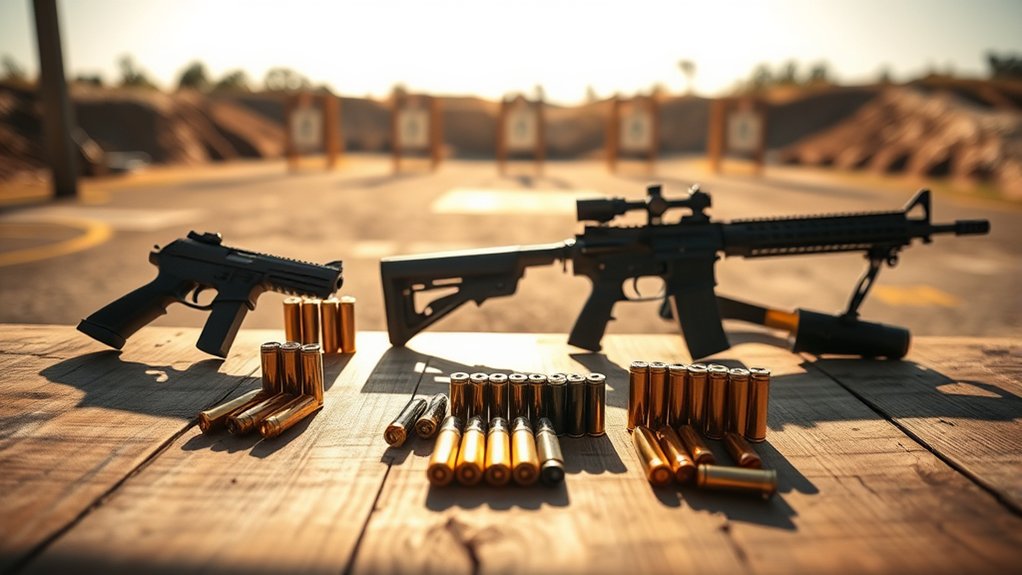
The type of firearm you use plays a big role in how much ammo you’ll need for a session. Ammo requirements vary widely depending on your firearm’s caliber and purpose.
For example, shooting a 9mm handgun usually means you’ll need 100-200 rounds, while a .44 Magnum requires far fewer rounds, around 24, to practice effectively. Rifle shooters often have flexible round counts, firing anywhere from 1 to 200 rounds depending on drills or competition.
| Firearm Type | Typical Ammo Requirements per Session |
|---|---|
| Handgun (9mm) | 100–200 rounds |
| Handgun (.44 Magnum) | ~24 rounds |
| Rifle | 1–200 rounds |
Adjust your ammo needs based on the firearm to optimize your range time and training efficiency.
Choose Ammo Count Based on Your Training Goals
You should start by defining clear training objectives so you know how much ammo you need.
Then, match your ammo count to those goals—whether it’s drills, accuracy, or endurance.
Define Clear Training Objectives
Setting clear training objectives guides how many rounds you should bring to the range, making each session focused and effective.
When you define your training objectives, you can better determine the ideal rounds per time to maximize skill development without wasting ammo.
For example, if your goal is to practice reloads or target shifts, you’ll need fewer rounds than if you’re working on multiple shooting drills.
Consider these typical rounds per time based on objectives:
- 50 to 75 rounds for reload and shift drills
- 50 to 100 rounds for skill refinement drills like the Mozambique or controlled pairs
- 100 to 200 rounds for broad handgun or rifle practice targeting various skills
Tailoring your ammo count to your training objectives boosts efficiency and progress.
Match Ammo To Goals
Matching your ammo count to your training goals guarantees each round contributes to skill improvement.
If you don’t spend much time on the range, bring only 50 to 100 rounds for focused indoor practice.
Outdoor sessions usually require 100 to 200 rounds, allowing for varied drills and better shot placement.
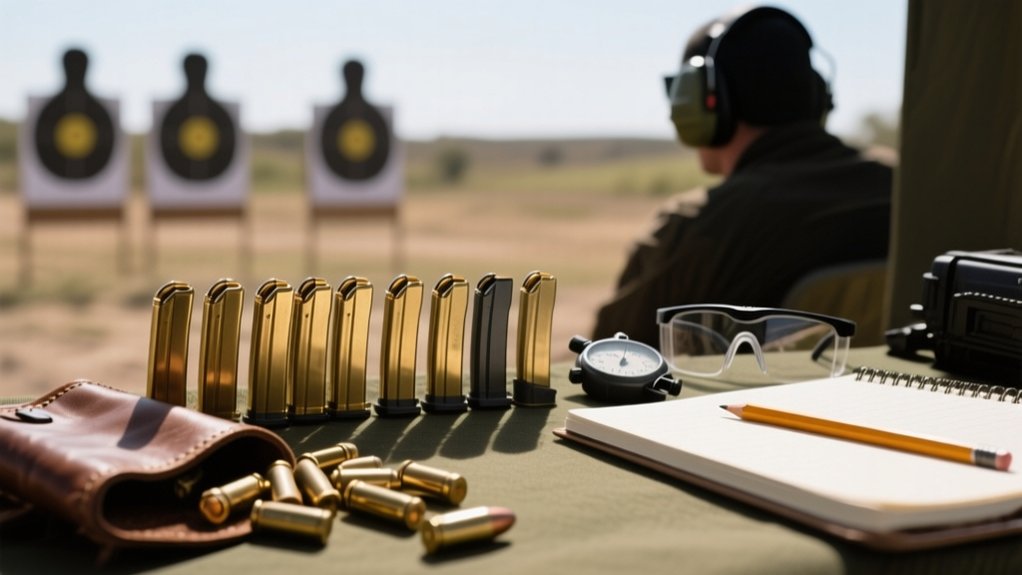
When honing specific skills like reloads or accuracy, five 10-round magazines are enough to keep your training efficient.
Defensive drills, such as the Mozambique Drill, need about three rounds per repetition to assess your performance effectively.
Regularly reassess your objectives to choose the right ammo count. Too many rounds without clear goals can waste time and hinder progress.
Stick to structured sessions that prioritize purposeful shooting and improve your skills steadily.
Prioritize Quality Over Quantity
Focusing on specific training goals shapes how many rounds you bring to the range and how effectively you use them.
Prioritize quality over quantity by tailoring your ammo count to the skills you want to develop. Instead of blasting through hundreds of rounds, focus on precision and trigger control to see real improvement.
For example:
- Use about 50 rounds for focused drills like the Mozambique Drill to hone accuracy.
- Stick to five 10-round magazines to emphasize controlled, deliberate shooting.
- Regularly assess shot grouping and seek feedback to gauge your progress.
This approach guarantees each round counts, sharpening your skills without wasting ammo.
Using Drills to Maximize Your Ammo
When you incorporate specific drills into your range sessions, you’ll get the most out of every round you fire. If you go every time you can, ideally twice a month, using focused drills like the Slow-Fire Accuracy Drill helps sharpen your precision by firing one round at a time.
The Controlled Pairs Drill boosts your ability to shoot two fast, accurate shots while managing recoil, making you more efficient at seven to ten yards.
Master quick, precise double shots and recoil control for effective shooting at seven to ten yards.
The Mozambique Drill improves your target shifts and accuracy under pressure by combining center mass and headshots.
The One to Five Drill challenges your speed without sacrificing accuracy, and the Reload Drill trains you to reload quickly under stress.
These drills guarantee every bullet counts toward meaningful skill development.
Balancing Ammo Quantity With Training Quality
Although it’s tempting to shoot as many rounds as possible, you’ll improve faster by balancing your ammo quantity with the quality of your training. Instead of focusing on high round counts, aim for 50 to 200 rounds per session, depending on your goals. This helps guarantee each shot counts toward skill development.
Prioritize structured drills like Slow-Fire Accuracy or Controlled Pairs, which emphasize precision rather than volume.
To maintain quality while managing rounds:
- Choose drills that align with your training objectives
- Organize and preload magazines for efficient shooting
- Regularly evaluate your grouping and consistency
Tracking Progress While Conserving Ammo
To track your progress effectively while conserving ammo, you’ll want to keep a detailed training journal that logs rounds fired, drills practiced, and improvements made.
This tracking progress method helps you focus on quality over quantity by setting specific goals for each session. Instead of mindlessly shooting, you’ll practice targeted drills like the Mozambique drill or controlled pairs, honing key skills with fewer rounds.
Regularly assess your shot grouping and consistency to measure improvement, understanding that more rounds don’t always mean better skills. Aim to bring just enough ammo, typically 50-100 rounds, to meet your training objectives.
This approach guarantees effective practice while conserving ammo, so you maximize both your skill development and your resources.
Managing Ammo Budget and Bulk Buying
Buying ammunition in bulk, such as 1,000 rounds every few months, can save you a significant amount of money.
It also guarantees you always have enough for your practice sessions. To manage your ammo budget effectively, think about how often you shoot and how many rounds you typically use per session.
Most shooters fire between 100 and 400 rounds each visit, so bulk buying fits perfectly with regular practice.
Here’s how to optimize your ammo budget through bulk buying:
- Track your average rounds per session to forecast needs accurately
- Purchase in larger quantities to lower cost per round
- Stockpile ammunition to support varied training drills without last-minute buys
Frequently Asked Questions
What Safety Gear Should I Use While Shooting at the Range?
You should always wear ear protection and eye protection to safeguard your hearing and vision at the range.
Choose appropriate clothing like long sleeves, pants, and closed-toe shoes for added safety.
Following range etiquette helps keep everyone safe, and being familiar with your firearm prevents accidents.
Also, select your ammunition carefully, matching it to your firearm.
These steps guarantee a safer, more enjoyable shooting experience.
How Do Weather Conditions Impact Shooting Practice?
You’ll feel the sting of cold biting your fingers, making grip and trigger control tougher, while scorching heat will sap your energy fast.
Wind effects can send your bullets veering off course, forcing you to constantly adjust your aim.
Temperature fluctuations mess with your firearm’s performance and your focus, so you’ll need to stay hydrated, take breaks, and pick your shooting times wisely to keep your practice effective and safe.
What Are the Best Warm-Up Exercises Before Shooting?
Before shooting, start with breath control exercises to calm your nerves and sharpen mental focus.
Then, do dynamic stretches to loosen your muscles and improve mobility.
Follow up with dry firing to practice trigger control and sight alignment without distractions.
Incorporate slow-fire drills to emphasize precision, and finish with controlled pairs to build muscle memory while managing recoil.
These steps prepare your body and mind for a focused, effective range session.
How Can I Improve My Grip and Stance?
Think of your grip and stance like the roots of a tree. Strong, flexible foundations keep you steady.
To improve your grip techniques, keep your hands high on the firearm. Apply firm but relaxed pressure with your dominant and support hands.
For stance adjustments, stand shoulder-width apart, lean slightly forward, and balance your weight evenly.
Practice these consistently during dry fire sessions, and you’ll build muscle memory that enhances control and reduces muzzle rise.
What Maintenance Does My Firearm Need After Range Practice?
After range practice, you should thoroughly clean your firearm using proper cleaning techniques like running a bore snake or cleaning rod with brushes through the barrel and chamber to remove residue.
Don’t forget lubrication tips: apply a light coat of oil to moving parts such as the slide and trigger mechanism to guarantee smooth operation.
Regularly inspect springs and store your firearm in a dry place to prevent rust and maintain reliability.
Conclusion
When you step up to the range, think of your ammo like a river, steady and purposeful, not a flood. Shooting too many rounds too fast can overwhelm your progress, while too few won’t let you grow.
Find that perfect flow, balancing quantity with quality. By aiming your practice like a sharp arrow, you’ll hit your training goals without wasting a single bullet.
Remember, it’s not about how many you fire, but how well you use each one.