What Is A Good Gun Safe – Features And Buying Guide
You want a gun safe with enough space for your collection plus future additions, sturdy steel construction (at least 7-gauge on doors), and strong, reliable locks, whether mechanical, electronic, or biometric.
Look for certified fire resistance, ideally UL 72 Class 350, with solid insulation and inner steel liners. Secure anchoring is vital, along with meeting legal standards for your area.
Balancing weight, cost, and quality guarantees long-term protection. Keep exploring to uncover all essential buying tips and installation advice.
Key Takeaways
- Choose a safe with double your current firearm capacity and adjustable interior features for organized, damage-free storage.
- Prioritize safes with at least 7-gauge steel doors, reinforced locks, and verified UL security and fire ratings for reliable protection.
- Select locking mechanisms based on access speed, reliability, and security, such as mechanical dials, electronic keypads, or biometric systems.
- Balance steel thickness, safe weight, and fire resistance with your budget to ensure long-term security and fire protection.
- Ensure legal compliance, certification, and securely anchor the safe to prevent theft and qualify for insurance benefits.
Choosing the Right Size and Capacity for Your Gun Safe
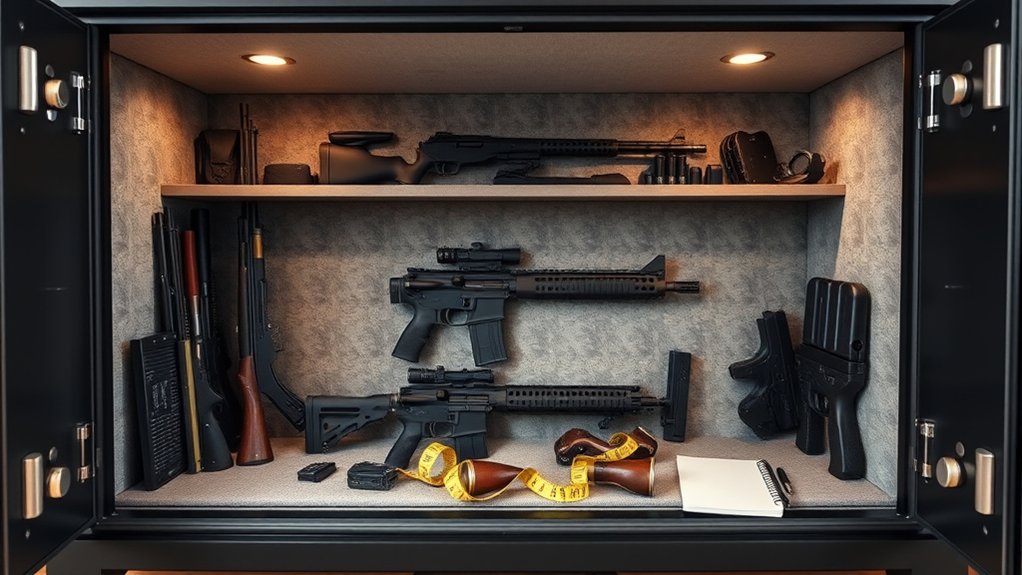
How do you determine the right size and capacity for your gun safe? Start by counting your current firearms and anticipate future additions. Choose a safe with at least double your collection’s capacity to allow growth and extra accessories.
Consider the dimensions of both long guns and handguns, ensuring the interior space accommodates them without damage. Pay close attention to interior features like adjustable shelving and compartments, which enhance storage efficiency within your chosen size.
Larger safes offer more room and tend to be heavier, so they’re generally more secure. But keep in mind, they require sufficient space and proper installation.
Also, don’t forget to factor in fire ratings and fireproof qualities to protect your collection effectively.
Balancing these aspects will help you find a gun safe that meets your storage needs while maximizing safety and durability. It’s all about planning ahead and choosing wisely.
What Security Features Protect Your Gun Safe From Burglary?
When it comes to protecting your gun safe from burglary, you’ll want to pay close attention to a few key features.
First off, steel thickness is super important—look for safes that have doors made from at least 7-gauge steel. That extra thickness really helps keep the bad guys out.
Next up are the locking mechanisms. You want something strong and reliable, like reinforced locks with multiple bolts. These bolts make it much harder for someone to pry the door open.
Plus, pry-resistant edges add another layer of security by preventing tools from getting a good grip.
It’s also a good idea to understand security ratings, especially UL RSC ratings. These ratings show that the safe has been tested against common tools and brute force attacks, so you know it’s built to withstand real burglary attempts.
Keeping these factors in mind will definitely help you choose a gun safe that stands up to whatever comes its way.
Steel Thickness Importance
Although many factors contribute to a gun safe’s security, steel thickness plays a critical role in thwarting forced entry attempts. You want a safe with a door thickness of at least 7 gauge steel (~0.1793 inches), as lower gauges mean thicker steel and stronger burglary protection.
Thicker steel layers in both the door and walls markedly boost forced entry resistance against tools and power saws. Avoid safes with thin steel or composite doors, which often have weaker steel layers that can be breached quickly.
Moreover, quality steel construction with seamless welds eliminates weak points burglars could exploit.
Prioritizing heavy steel gauge and robust door thickness ensures your safe withstands attacks, providing reliable security for your firearms.
Locking Mechanism Types
Steel thickness forms a formidable physical barrier, but the locking mechanism ultimately controls access to your gun safe. Choosing among biometric locks, electronic keypads, mechanical dial locks, or advanced locking systems determines how well your safe resists burglary. Each locking mechanism offers distinct security features and lock durability you should weigh carefully.
| Lock Type | Security & Convenience |
|---|---|
| Mechanical Dial Lock | Reliable, battery-free, slower access |
| Electronic Keypad | Quick access, programmable codes, battery-dependent |
| Biometric Locks | Instant fingerprint access, costly, sensitive to dirt |
Advanced locking systems combine these types for layered protection. Make sure you select a safe with high-quality locks. Poor lock durability invites manipulation or bypass by thieves.
Security Ratings Explained
How do you know if a gun safe can truly withstand a burglary attempt? Look for security ratings like UL RSC-I or RSC-II. These certify safes tested against common tools for specified attack durations, typically five minutes or more.
UL certification guarantees standardized testing, making sure the safe meets strict criteria. Safes with pry-resistant doors, reinforced locking mechanisms, and drill-resistant hard plates really help deter forced entry. It’s worth paying close attention to steel thickness too.
Doors made from at least 7-gauge steel and walls of 10-gauge offer superior resistance. Additional features like shear pins and clutch mechanisms boost security even more. While fire resistance protects contents from heat damage, it’s the combination of high-quality construction and verified security ratings that truly safeguards your firearms from burglary attempts.
How to Pick the Best Locking Mechanism for Your Gun Safe
Choosing the best locking mechanism for your gun safe means weighing the pros and cons of mechanical, electronic, and biometric options. It’s really about finding the right balance between quick access and strong security.
You’ll also want to think about things like the power source—does it need batteries or not?
Reliability is another big factor because you don’t want to get locked out when you need your firearm the most.
Plus, some locks come with extra features that might be useful depending on your situation. Understanding these differences will help you pick a lock that fits your specific needs and keeps your firearms safe and secure.
Types Of Locking Mechanisms
When securing your firearms, selecting the right locking mechanism is essential to balancing accessibility with safety. Mechanical dial locks offer dependable, battery-free security but can slow your access time.
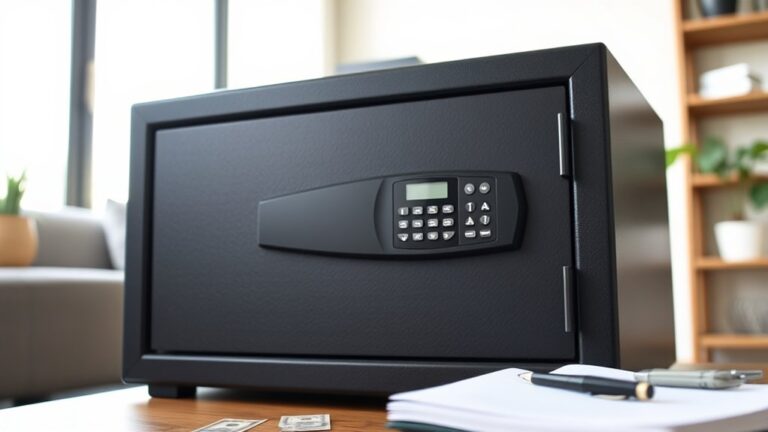
Electronic keypad locks let you enter quickly using programmable codes, though they rely on batteries and risk failure if power runs out.
Biometric locks provide instant access via fingerprint recognition, combining convenience with high security, albeit at a higher cost.
Traditional key locks serve well as secondary locking mechanisms but pose risks if keys are lost or stolen.
Smart locks, equipped with Bluetooth or Wi-Fi, allow remote access control and integrate with home security systems for enhanced monitoring.
Understanding these locking mechanisms and their access methods helps you choose the best fit for your gun safe.
Electronic Vs Mechanical Locks
Although both electronic and mechanical locks provide reliable security for gun safes, deciding which one best suits your needs depends on factors like access speed, durability, and maintenance.
Electronic locks offer quick access via keypad, programmable codes, and added convenience like backlit keys. Mechanical locks, however, guarantee superior durability and reliability without power outage risks or electronic tampering.
| Feature | Electronic Locks | Mechanical Locks |
|---|---|---|
| Access Speed | Fast, keypad or biometric | Slower, dial rotation |
| Durability | Moderate, requires power | High, no batteries needed |
| Security Features | Programmable codes, audit trails | Simple, tamper-resistant |
Choose electronic locks for speed and features. Opt for mechanical locks if you prioritize long-term durability and uninterrupted security.
Security Features And Reliability
Understanding the security features and reliability of your gun safe’s locking mechanism will help you pick the best option for your needs. Mechanical combination locks offer proven burglary ratings and consistent performance without batteries. They’re ideal for fire and water protection scenarios.
Electronic locks provide quick access, audit trails, and alarm integration. However, they need regular battery changes to keep working smoothly.
Biometric fingerprint scanners deliver instant, keyless entry with backup keys to guarantee access during power failure.
Many high-security safes combine these mechanisms to maximize reliability. Don’t overlook interior lighting for visibility and alarm integration for added security.
Choose a locking system that balances convenience, durability, and protection against forced entry while considering your environment and how often you’ll access the safe.
Why Steel Thickness and Safe Weight Matter for Gun Safe Security
Because steel thickness directly impacts a gun safe’s resistance to cutting and prying, you should prioritize safes made with thicker steel like 7-gauge over thinner options such as 14-gauge. Steel gauges measure thickness inversely, so lower numbers mean stronger steel.
A safe’s weight often reflects its steel thickness and construction quality. Heavier safes with reinforced steel layers are harder to move or breach, which boosts your security.
Beware of marketing that inflates thickness by including drywall or air gaps instead of true steel thickness. Proper welds and high-quality steel increase resistance to forced entry, making steel thickness and safe weight critical factors.
Choosing a safe with genuine steel thickness and substantial weight ensures reliable protection against attacks. It really pays off to be careful here.
Which Gun Safe Fire Protection Ratings and Insulation Matter Most?
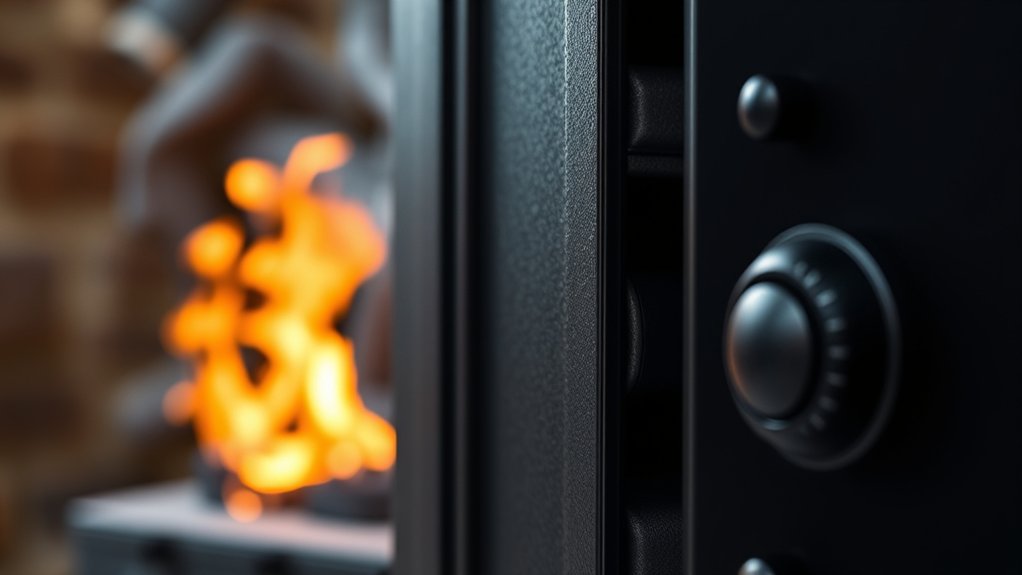
When selecting a gun safe, you’ll want to prioritize fire protection ratings and quality insulation to safeguard your firearms from heat damage. The key fire protection ratings to look for include UL 72 Class 350 certification. This guarantees the safe keeps internal temperatures below 350°F for at least 30 minutes.
Effective fire insulation materials minimize heat transfer and boost fire resistance.
Focus on these critical features:
- Fire insulation thickness of at least 1.5 inches, with poured concrete or ceramic fiber wool preferred.
- Steel inner fire liners that block heat and smoke penetration.
- Fireproof safes tested by reputable labs like UL for both fire and impact resistance.
- Verified fire protection ratings meeting or exceeding UL 72 Class 350 standards.
These elements assure your gun safe offers reliable protection against intense heat and flames. So, when shopping, keep these points in mind to pick the right safe for your needs.
Balancing Gun Safe Cost With Security and Fire Protection
After verifying your gun safe meets fire protection standards, the next step is finding the right balance between cost, security, and fire resistance.
You’ll notice that higher-priced fire-rated safes typically offer superior build quality, advanced security features, and enhanced fire protection. Safes with UL ratings like RSC-I or TL-30 provide graded burglary protection, with thicker steel and reinforced construction driving up costs.
Fire-rated safes that withstand one hour at 1700°F usually fall between $500 and $3,000, reflecting the quality of insulation materials. Budget options under $500 often compromise on both fire protection and security, posing risks for valuable firearms.
By investing in a well-rated safe, you assure reliable burglary protection and fire resistance without overspending on unnecessary features.
It’s a smart, long-term investment that gives you peace of mind knowing your firearms are protected. Just make sure to weigh your needs carefully before deciding how much to spend.
Legal and Insurance Requirements for Gun Safes You Should Know
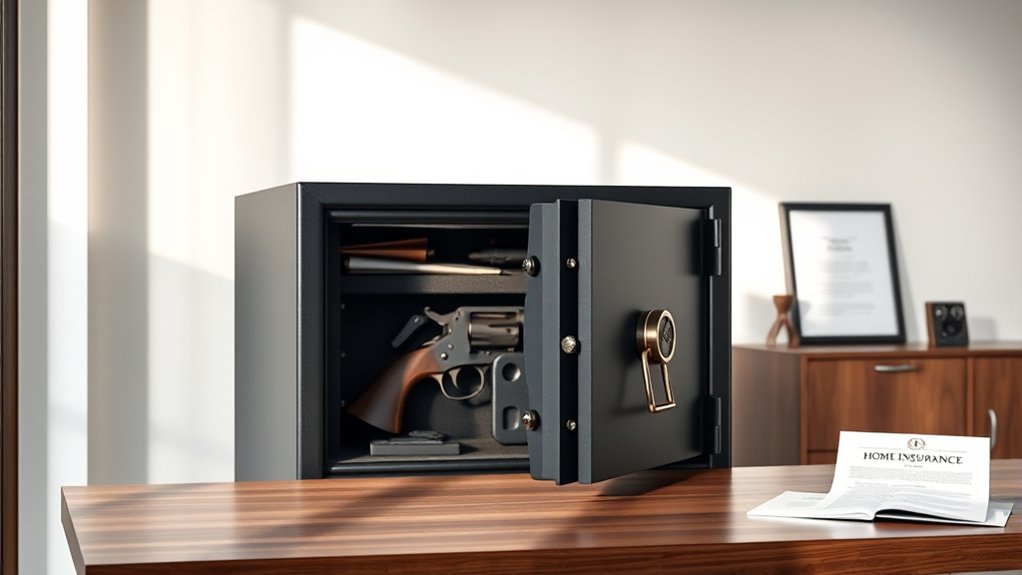
Although gun safe regulations vary by state, many jurisdictions require you to choose safes that meet specific legal standards, such as California’s Department of Justice firearm storage regulations. Meeting these standards guarantees legal compliance and enhances fire safety and burglary protection.
When selecting a gun safe, focus on these key points:
- Confirm the safe has UL RSC ratings or higher for recognized security certification.
- Verify fire ratings to guarantee adequate fire safety for your firearms.
- Ensure that the safe meets your state’s legal requirements to avoid penalties.
- Check insurance requirements, as many insurers require documented certification to qualify for coverage or discounts.
Proper certification and documentation are vital for meeting legal and insurance requirements. They help protect your investment and reduce liability.
Tips for Installing and Anchoring Your Gun Safe Securely
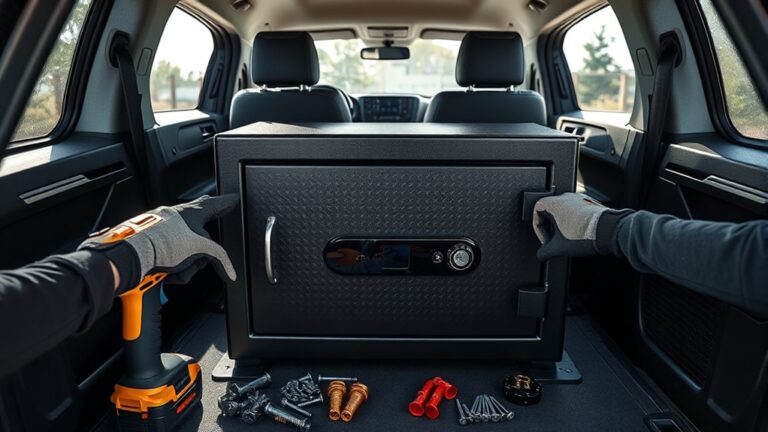
Securing your gun safe properly is essential to maximizing its protective benefits against theft and accidents. Start by anchoring your safe firmly to a solid floor or wall using heavy-duty bolts suited for the material, such as expanding or epoxy anchors for concrete.
Make sure to attach the safe to multiple studs or reinforced framing points to prevent tipping or removal. Choose high-strength lag or anchor bolts that match your safe’s weight and construction. This will ensure a secure installation.
Try to keep things discreet by concealing the anchoring hardware with furniture or decor, so it’s less obvious to intruders. Also, regularly inspect and tighten all anchors, especially after moving the safe or experiencing environmental changes.
Doing these simple steps will keep your safe reliably secured over time. This detailed approach guarantees maximum protection and stability for your gun safe.
Frequently Asked Questions
How Do I Maintain and Clean My Gun Safe Properly?
You should regularly dust and wipe your gun safe’s interior and exterior with a soft, lint-free cloth to prevent buildup. Use a mild, non-abrasive cleaner to protect the finish, avoiding harsh chemicals.
Also, make sure to replace dehumidifier packs or silica gel to keep moisture under control.
It’s a good idea to inspect the locking mechanisms and hinges for any signs of wear, and lubricate them as needed.
Keep the interior dry and well-ventilated, especially if you’re in a humid area. This helps prevent rust and keeps your firearms in great condition.
Can a Gun Safe Protect Against Water Damage From Floods?
Yes, a gun safe can protect against water damage from floods if it’s designed with waterproof or high IP-rated seals. You should look for safes specifically tested for water resistance or submersion.
Keep in mind, damaged or poorly maintained seals won’t stop water intrusion.
For reliable protection, choose safes labeled waterproof and maintain their seals regularly. This helps guarantee they keep moisture and floodwaters out effectively.
What Interior Lighting Options Are Best for Gun Safes?
You’ll want LED interior lighting for your gun safe because it’s energy-efficient and bright. Motion-activated LEDs add convenience by turning on automatically when you open the safe, saving battery life.
Adjustable brightness settings let you customize illumination, while built-in lighting strips provide even, shadow-free light.
Battery-powered LEDs last for years with minimal upkeep, making them the most reliable and practical option to clearly see your firearms anytime.
Plus, they’re easy to install and won’t drain your safe’s power source quickly. This way, you can always find what you need without fumbling in the dark.
Are Biometric Locks Reliable in Extreme Weather Conditions?
Biometric locks can be somewhat temperamental in extreme weather conditions. When you’re facing very cold or hot environments, fingerprint scanners might struggle due to less responsive skin or electronic strain.
High humidity can also play tricks, causing sensor hiccups.
To keep your lock dependable, you’ll want to perform regular maintenance and test it in various climates. This proactive approach helps guarantee your biometric lock stays trustworthy when you need it most.
How Do I Organize Accessories Inside My Gun Safe Efficiently?
To organize accessories efficiently, customize your safe with adjustable shelves and modular panels for different firearm sizes.
Use door organizers and pockets to store magazines, keys, and small tools, freeing up the main space.
Group similar items together. Put magazines in one section and cleaning supplies in another.
Add foam or felt lining to protect your gear and keep things neat.
Label small bins for parts like pins and batteries to maintain clear order and quick access.
This way, everything stays organized and easy to find.
Conclusion
When choosing a gun safe, remember that nearly 60% of home burglaries involve forced entry. This makes having strong security features really important. Focus on steel thickness, reliable locking mechanisms, and fire protection ratings to keep your firearms safe.
Also, make sure the safe’s size fits your collection and meets any legal requirements. Proper installation and anchoring matter just as much as the safe itself.
It’s all about balancing cost with quality so you get the protection your valuables need without overspending. Stay informed and stay secure.