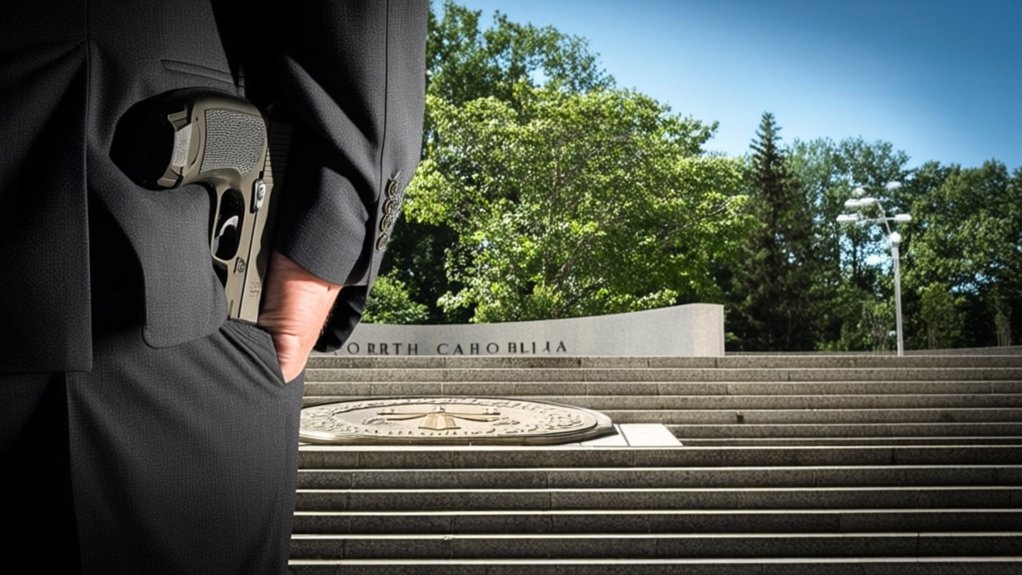
Is North Carolina A Concealed Carry State – Laws And Permit Rules
Yes, North Carolina lets you carry a concealed handgun if you have a valid permit from the sheriff’s office. You must be at least 21, complete an 8-hour state-approved training course, and pass written and shooting tests.
Your permit lasts 5 years and requires timely renewal. The state recognizes out-of-state permits with proper ID, but certain places still prohibit firearms. Understanding these rules and restrictions guarantees you carry legally and responsibly.
Explore further details to fully grasp NC’s concealed carry laws.
Key Takeaways
- North Carolina requires a valid sheriff-issued permit and minimum age of 21 to legally carry a concealed handgun.
- Applicants must complete an 8-hour state-approved firearms training course and submit proof with their application.
- Concealed carry permits last 5 years, with renewal required 30 days before expiration and fees applied.
- North Carolina recognizes out-of-state concealed carry permits if accompanied by valid ID.
- Concealed handguns are prohibited in schools, law enforcement facilities, government buildings, and private properties with no-gun signs.
Can You Carry a Concealed Handgun in North Carolina?
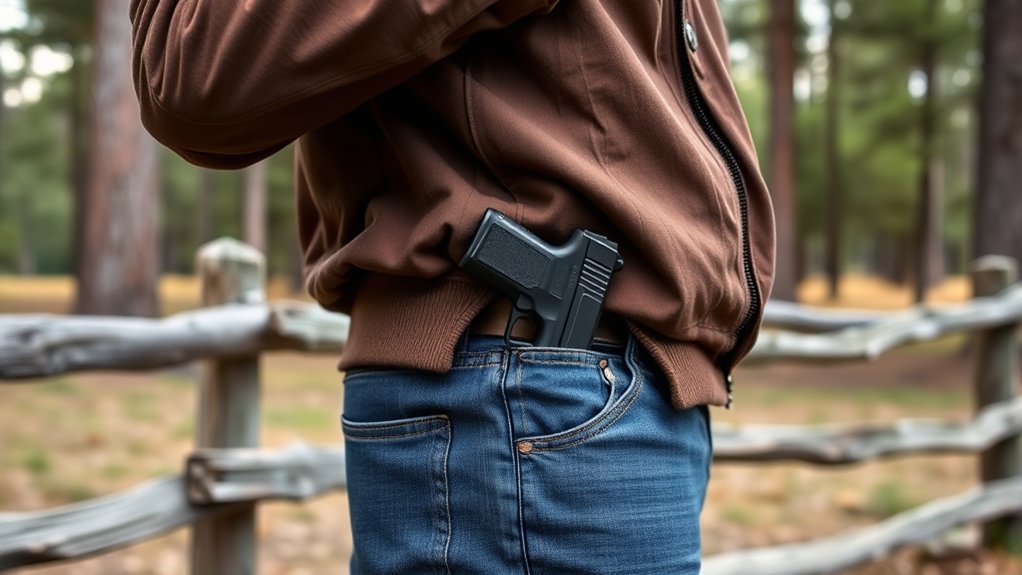
Although you can carry a concealed handgun in North Carolina, you must have a valid permit issued by the sheriff’s office. The state enforces specific permit requirements, including a minimum age of 21 to carry concealed weapons legally.
When carrying, you’re required to have both your permit and valid identification on you at all times.
Keep in mind, concealed handguns are prohibited in certain places like schools, law enforcement facilities, and private properties displaying no-weapon signs.
North Carolina also honors current concealed carry permits from other states, as long as you carry the permit alongside proper ID.
While the state may consider permitless carry in the future, for now, meeting these permit requirements is essential to carry concealed weapons legally.
How to Apply for a North Carolina Concealed Carry Permit
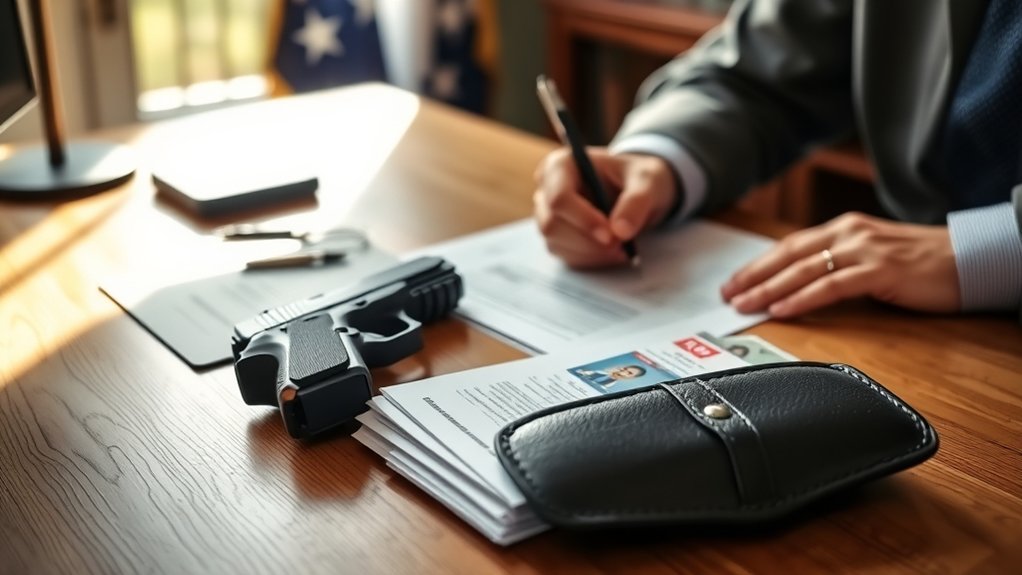
To apply for a North Carolina concealed carry permit, you’ll need to complete several key steps that guarantee you meet state requirements. First, confirm your permit eligibility, including age and legal status.
Applying for a North Carolina concealed carry permit starts with confirming your eligibility based on age and legal status.
Then, follow these steps:
Complete an 8-hour state-approved firearms training course, covering firearm storage and safety. Submit the application with proof of residency, valid ID, and training certification to your local sheriff’s office.
Provide fingerprints and disclose mental health records.
Pay the initial fee of approximately $90. If you’re renewing, make sure to apply at least 30 days before your current permit expires.
The sheriff’s office reviews your application and will notify you whether it’s approved or denied.
Training and Testing Requirements for NC Concealed Carry Permits
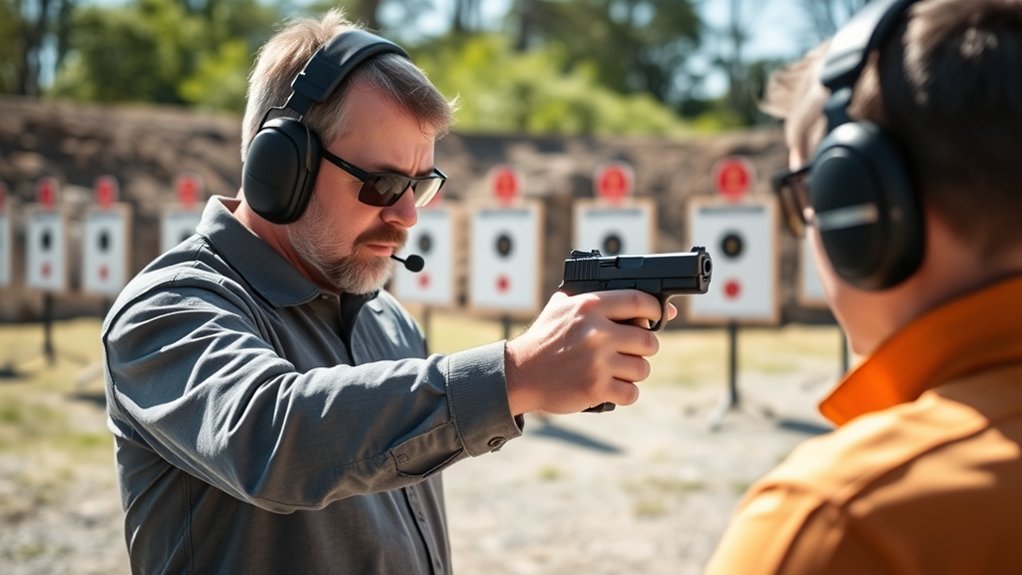
Completing the application for a North Carolina concealed carry permit involves meeting specific training and testing requirements. You must complete a state-approved firearms training course lasting at least eight hours, which includes both written and shooting tests. This course covers essential topics such as firearm safety, state laws, and proper shooting techniques.
Importantly, the training must be conducted by instructors with official certification to guarantee quality and compliance. After finishing the course, you’ll need to submit proof of completion, like a certificate, with your permit application.
Keep in mind, this training is required not only for your initial permit but also when renewing an expired permit.
Meeting these standards helps ensure responsible firearm handling and adherence to North Carolina’s legal requirements. It’s all about making sure you’re prepared and following the rules.
Where You Can and Can’t Carry a Concealed Gun in North Carolina
When you carry a concealed handgun in North Carolina, it’s important to know where you’re allowed and not allowed to bring your weapon. Your concealed carry permit lets you carry in many places, but some restrictions apply to guarantee safety and compliance with gun storage and firearm registration laws.
You can’t carry in these locations:
- Schools, school grounds, and school-sponsored events
- Law enforcement or correctional facilities
- Government buildings and private properties with firearm prohibition signs
- State fairgrounds, state parks, and Wildlife Management Areas unless the firearm is securely stored in a locked vehicle or container
- Bars or restaurants serving alcohol if they post no-gun signs
Understanding these rules helps you carry responsibly and legally. It’s always a good idea to double-check the local regulations before you head out. That way, you’ll avoid any trouble and stay safe.
How North Carolina Handles Out-of-State Concealed Carry Permits
Knowing where you can carry a concealed handgun in North Carolina is just one part of following the law. Since December 1, 2011, North Carolina offers permit reciprocity by automatically recognizing concealed carry permits from all other states.
To guarantee legal compliance, you must carry both your valid out-of-state permit and a valid ID whenever you carry concealed in North Carolina.
However, be aware that some locations, like schools and federal facilities, prohibit carrying concealed weapons regardless of your permit status. Also, North Carolina’s restrictions may differ from your home state’s rules, so it’s important to review local laws carefully before carrying.
Staying informed about these requirements helps you avoid legal issues while exercising your rights responsibly.
Renewal Rules and Fees for North Carolina Concealed Carry Permits
Although your North Carolina concealed carry permit lasts for five years, you’ll need to renew it before it expires to keep it valid. The state sends renewal notices at least 45 days prior, and you should submit your application about 30 days before expiration.
Here’s what you need to know about the permit renewal procedures and renewal fee details:
- The renewal fee is approximately $75.
- Your permit remains valid if you file the renewal application on time.
- You may get up to a 60-day extension after expiration with a waived firearms course.
- Military deployment qualifies for a 90-day renewal extension without extra training.
- Timely renewal avoids lapses in your carry privileges.
Following these rules keeps your permit current and compliant. So, make sure to stay on top of your renewal to keep carrying without any hassle.
What You Need to Know About Use of Force and Self-Defense Laws
You can use deadly force in North Carolina if you’re facing an imminent threat of death or serious injury. This is especially true if you’re in your home or vehicle, and you don’t have to retreat first.
When it comes to non-deadly force, it’s allowed for self-defense, but keep in mind that pointing a gun at someone is actually illegal.
Also, pepper spray and stun guns are legal to carry and use. However, you need to be aware of the age restrictions and possession rules to make sure you’re using them responsibly.
Deadly Force Justification
When can you legally use deadly force in North Carolina? The state’s legal thresholds allow it only when you have a reasonable fear of imminent death or serious bodily harm.
North Carolina upholds the Castle Doctrine and stand your ground laws, meaning you don’t have to retreat if faced with a deadly threat.
Keep these points in mind:
- Deadly force is justified to prevent imminent death or great bodily harm.
- The law presumes reasonable fear if someone unlawfully enters your home or vehicle.
- You must use force proportionally; pointing a gun at someone is a crime.
- Use of force must be necessary and reasonable under the circumstances.
- Non-deadly force is justified only against unlawful, imminent acts.
Understanding these rules helps you navigate self-defense legally and responsibly. It’s important to know when your actions are justified so you can protect yourself without crossing the line.
Self-Defense Accessories Rules
Several self-defense accessories are legal in North Carolina, but they come with specific restrictions you need to understand. You can legally possess pepper spray, stun guns, and Tasers if you’re 18 or older. However, you’re limited to carrying them on private property.
While expandable batons are legal to own and carry, brass knuckles are illegal since they’re classified as deadly weapons. The state allows the use of deadly force only to prevent imminent death or serious injury. There’s no duty to retreat if you’re lawfully present.
Keep in mind, pointing a gun at someone is a crime, even though brandishing isn’t explicitly defined. Misusing non-lethal self-defense accessories like tear gas or bear spray can lead to legal consequences. So, it’s important to know the legality restrictions before you use them.
Frequently Asked Questions
Can I Carry a Concealed Handgun in My Vehicle Without a Permit?
You can’t carry a concealed handgun in your vehicle without a permit in North Carolina. Vehicle restrictions require you to have a valid concealed carry permit. Otherwise, it’s illegal and could lead to criminal charges.
Are Minors Allowed to Carry Concealed Weapons With a Permit?
You know what they say, “Rules are made to be followed.” Minors face strict restrictions and aren’t eligible for permits in North Carolina. So, you can’t legally carry a concealed weapon if you’re under 21 with a permit.
It’s pretty straightforward when it comes to age limits and concealed carry. The law is clear on who can and cannot carry, which helps keep things safe for everyone.
How Does North Carolina Handle Lost or Stolen Concealed Carry Permits?
If you lose your North Carolina concealed carry permit, report it right away to the sheriff’s office. It’s important to act quickly so you don’t run into any legal issues.
You’ll need to follow the lost permit procedures, which usually means submitting a written request. Don’t forget to include any required information to help them process your request smoothly.
After that, you’ll have to complete the steps for permit renewal. This includes proving your identity and possibly paying some fees. Taking care of these details will get you back on track with minimal hassle.
Can Employers Legally Prohibit Concealed Carry on Their Private Property?
Imagine a locked gate beside an open field. Employers can legally enforce private property restrictions by posting signs that ban concealed carry.
You have to follow these employer policies or face legal consequences, even if you hold a permit. It’s important to understand that your permit doesn’t override private property rules. So, always check the rules before carrying concealed on private property.
Are There Special Rules for Carrying Concealed Handguns at Public Events?
Yes, you must follow public event security rules and concealed carry restrictions. Organizers or local authorities can ban firearms at events.
If you’re carrying concealed during a public gathering, you need to notify law enforcement. It’s always best to check the specific rules before you go. This way, you’ll avoid any surprises or issues.
Conclusion
Carrying a concealed handgun in North Carolina is like steering a well-marked map. You need to know the rules to stay on course. By understanding permit requirements, training, where you can carry, and renewal processes, you’ll be prepared and compliant.
Knowing how the state handles out-of-state permits and self-defense laws ensures you’re ready to protect yourself responsibly. Stay informed, follow the laws, and carry with confidence.