What States Are Permitless Concealed Carry – Constitutional Carry Guide
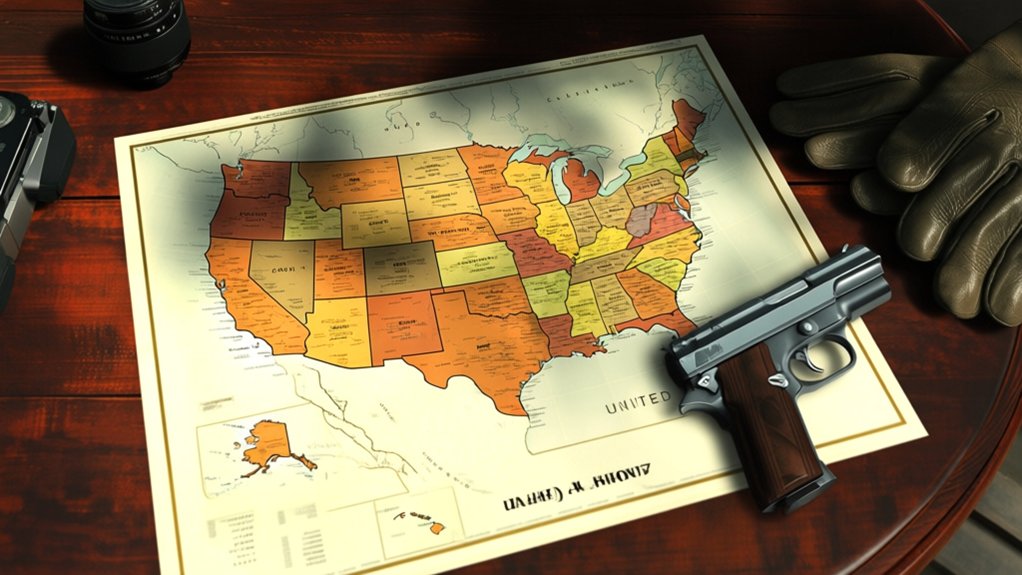
You can carry a concealed handgun without a permit in 29 states, including Alabama, Alaska, Arizona, and Texas. Each state has its own specific rules and eligibility criteria.
These laws usually require you to be a legal firearm owner and meet age minimums, which are typically 18 or 21. You also need to avoid carrying in restricted locations.
Background checks and training often aren’t mandatory, but states do vary when it comes to reciprocity and other legal details. If you dig a little deeper, you’ll see how these rules affect your rights and responsibilities.
Permitless Concealed Carry: Definition and How It Works
How does permitless concealed carry work, and who qualifies? Permitless carry lets you carry a concealed handgun without needing a state-issued permit, as long as you meet specific criteria under state and federal laws. For example, you usually have to be a law-abiding adult with no felony convictions.
This form of legal carry comes from the Second Amendment. It emphasizes your firearm rights without government-imposed barriers like background checks, training, or fees that traditional concealed carry laws often require.
While federal firearm regulations still govern sales through licensed dealers, permitless carry states often allow private sales without background checks. This approach, also called constitutional carry, reflects a move toward minimizing restrictions on concealed handgun possession.
It lets you carry without a permit while still following state-specific rules that outline your responsibilities and limitations under firearm regulations. So, you get more freedom but also need to stay informed about the laws where you live.
Constitutional vs. Permitless Concealed Carry: Key Differences
Permitless concealed carry broadly allows you to carry a concealed firearm without a state-issued permit, but the term covers a range of laws with varying requirements. Constitutional carry is a subset emphasizing your firearm rights under the Second Amendment. It lets you carry without a permit and often without background checks or training beyond federal law.
In contrast, permitless carry laws may impose state-specific conditions, such as limited locations or qualifications. Some constitutional carry states still offer concealed carry permits for reciprocity or additional legal benefits. Understanding these distinctions helps you navigate your legal carry options and comply with state laws concerning firearm possession.
| Aspect | Constitutional Carry |
|---|---|
| Legal Basis | Second Amendment rights |
| Permit Requirement | No permit needed |
| Background Checks | Typically none beyond federal |
| Training | Generally no requirement |
| Additional Permits | Optional for reciprocity, special access |
States That Have Adopted Permitless Concealed Carry Laws
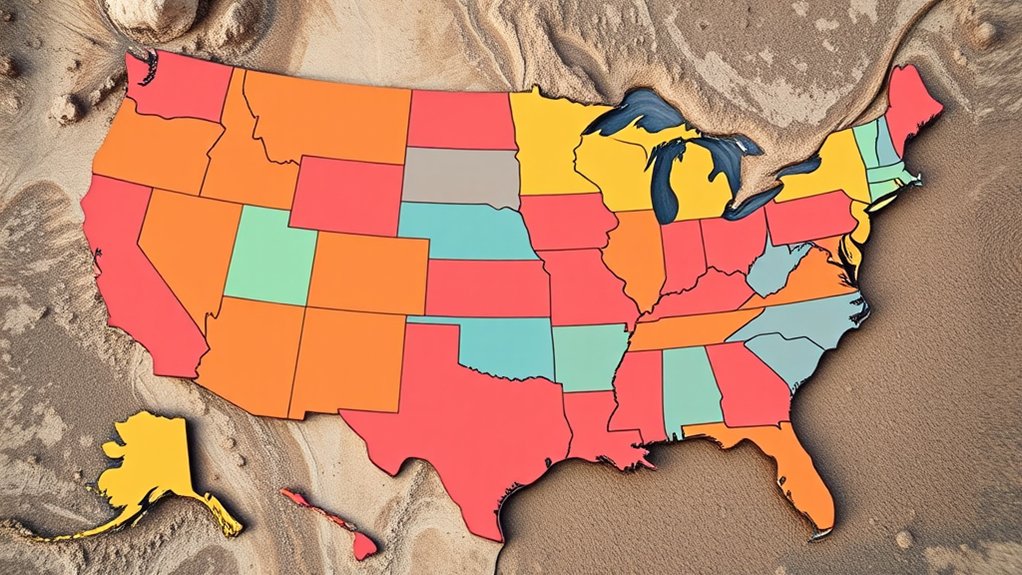
While each state approaches firearm laws differently, 29 have embraced concealed carry without requiring a permit as of 2026. States like Alabama, Alaska, Arizona, and Texas have passed state legislation supporting permitless carry, expanding firearm rights under constitutional carry principles.
Most of these states don’t mandate background checks or safety training. This reflects a shift in concealed carry laws that reduces permit requirements.
Many states no longer require background checks or safety training with permitless concealed carry.
Vermont stands out as the oldest permitless carry state, never requiring permits since 1777.
This growing trend in firearm legislation, particularly from 2013 through 2024, highlights a movement toward simplifying access to permitless concealed carry.
If you live in or travel to these states, understanding their specific laws is vital to guarantee compliance and responsible firearm use.
Key Eligibility Requirements for Permitless Concealed Carry
Although permitless concealed carry laws remove the need for a permit, you still must meet specific eligibility criteria to carry legally. Constitutional carry states enforce eligibility requirements that guarantee safe firearm possession.
Generally, you must be a legal firearm owner and not a prohibited person. You also need to comply with age restrictions, which are usually at least 21 years old. Background checks may still apply in some states, especially for private sales.
State-specific laws can impose additional conditions like residency or restrictions on carrying in sensitive locations.
| Eligibility Factor | Description |
|---|---|
| Legal Firearm Ownership | No felony or domestic violence prohibitions |
| Age Restrictions | Typically 21+ years old |
| State-Specific Conditions | Background checks, residency, restricted areas |
Understanding these points helps ensure you comply with concealed carry laws and carry responsibly without a permit.
Age Restrictions and Legal Changes in Permitless Carry States
Because firearm laws vary widely, understanding age restrictions in permitless carry states is essential for legal compliance. Many states with permitless carry allow adults 18 and older to carry firearms without permit requirements, aligning with constitutional carry principles. However, legal changes continue to shape these regulations.
For example, Tennessee’s 2023 ruling struck down restrictions on 18-20-year-olds carrying firearms without permits, altering age restrictions there.
North Dakota expanded permitless concealed carry to non-residents starting August 2023 under HB 1339.
While federal law generally prohibits firearm possession under 18, several states have lowered the firearm possession age to 18 for permitless carry.
You need to stay informed of these legal restrictions and permitless carry laws because age-related provisions differ and impact your ability to carry concealed legally. It’s always a good idea to double-check the latest rules wherever you are.
Locations Where Permitless Concealed Carry Is Restricted
Understanding where you can’t carry a concealed firearm without a permit is just as important as knowing age restrictions. Many states impose permitless carry bans in sensitive locations to address safety concerns and firearm safety.
These concealed carry restrictions often apply to public buildings, private property, and high-risk areas. The goal is to balance rights with public safety.
| Location Type | Examples | Common Restrictions |
|---|---|---|
| Sensitive locations | Schools, hospitals | Permit required; often gun-free zones |
| Public buildings | Courthouses, airports | Carry often prohibited without permit |
| Private property | Bars, private businesses | Owner permission may be required |
| High-risk areas | Polling places, military | Strictly regulated or banned |
| Restricted zones | Gun-free zones | No firearms allowed regardless of permit |
Knowing these restricted zones helps you comply with laws and respect safety protocols. It’s always a good idea to double-check local rules before carrying concealed.
Reasons States Retain Carry Permits Despite Permitless Laws
Even with permitless concealed carry laws in place, many states still require permits to maintain regulatory control and enhance public safety. These permit requirements often include background checks and safety training. This helps ensure only responsible individuals carry firearms.
Many states still require permits to ensure responsible firearm ownership through background checks and safety training.
States like California and New York keep permits for reciprocity, allowing lawful carry across state lines. You’ll also find that retaining permits supports law enforcement oversight. This enables authorities to enforce gun laws more effectively and track firearm possession.
Moreover, permit systems allow states to impose gun restrictions in sensitive areas such as schools and government buildings. By maintaining these layers of firearm regulation, states balance your right to carry with necessary public safety measures.
This helps ensure responsible gun ownership within evolving legal frameworks.
How Reciprocity Works for Permitless Concealed Carry Permits
You’ll find that reciprocity rules vary quite a bit across permitless carry states. This means whether your out-of-state permit is recognized can differ depending on where you are.
Some states only accept permits from places with similar standards, while others have either broader or more restrictive lists.
Reciprocity Variations by State
Although permitless concealed carry laws simplify carrying within certain states, how your carry privileges are recognized across state lines can vary quite a bit. Reciprocity under permitless carry and constitutional carry laws depends on state recognition and specific reciprocity agreements.
Some states offer broad permit reciprocity, while others limit or even deny recognition despite issuing carry permits.
So, understanding these recognition variations is really important if you want to carry lawfully while traveling.
Here are some key points to keep in mind:
States like Texas and Florida maintain extensive reciprocity agreements, recognizing carry permits from many states, including some with permitless carry.
Many permitless carry states still issue permits that get selective recognition based on reciprocity agreements.
Certain states require you to carry documentation proving your permit reciprocity status when crossing borders.
It’s a good idea to stay informed about current carry legislation so you can navigate permit reciprocity effectively.
Permit Recognition Challenges
When traveling with a permitless concealed carry, you face significant challenges because reciprocity agreements vary a lot between states.
Most permitless carry states don’t issue permits. So, reciprocity usually applies only if you hold a concealed carry permit from a state that has recognition agreements.
This creates permit recognition challenges. Many states require permits for cross-border carry and don’t acknowledge permitless carry laws from other states.
License recognition depends heavily on state policies. For example, California and New York only accept permits from states with comparable or stricter licensing.
Until federal laws like the Concealed Carry Reciprocity Act pass, you have to navigate a patchwork of different reciprocity agreements carefully.
It’s really important to understand these complexities so you don’t run into legal trouble when carrying across state lines without a permit.
Federal Laws Impacting Permitless Concealed Carry Rights
Because federal laws set baseline restrictions on firearm possession, they play a big role in how permitless concealed carry works across different states. While permitless carry does expand concealed carry rights, federal laws like 18 U.S.C. §§ 922(g) prohibit certain people from possessing firearms, no matter what state policies say.
The Brady Act requires background checks for licensed firearm sales, but private transfers often slip through without regulation.
The Supreme Court’s Bruen decision says firearm regulations have to line up with constitutional protections, so states can’t impose overly strict rules.
Also, laws like 18 U.S.C. §§ 926B and 926C deal with firearm transfers and licensing requirements, which affects how states handle permitless carry.
Some key federal law impacts include restrictions under 18 U.S.C. §§ 922(g) on prohibited possessors, mandatory background checks through the Brady Act, and rules about licensing and transfers that influence interstate carry rights.
How Permitless Carry Affects Public Safety and Crime Rates
You’ll find that states adopting permitless carry laws often see about a 13-15% rise in violent crime rates, including homicides. It’s pretty clear that removing licensing and training requirements is linked to more firearm thefts and accidental injuries, which naturally raises public safety concerns.
On top of that, these changes usually lead to lower crime clearance rates, making it harder for law enforcement to do their jobs effectively.
Crime Rate Trends
Research consistently shows that states adopting permitless concealed carry laws see a 13-15% rise in violent crime rates, including homicides and assaults. You should understand that permitless carry correlates with increased gun violence and gun thefts, which complicates law enforcement efforts.
Clearance rates for gun-related crimes drop by up to 18%, making it harder to solve these offenses.
Despite claims of enhanced self-defense, firearm use in protection remains under 1%, with no clear injury reduction. Moreover, firearm injuries and police-involved shootings tend to rise after these laws are put in place.
Key impacts of permitless carry include:
- Significant increases in violent crime and gun thefts
- Decreased crime clearance rates, which challenge law enforcement
- Minimal evidence supporting self-defense benefits amid rising firearm injuries
Public Safety Concerns
Although permitless carry laws are often promoted as enhancing personal security, data shows they contribute to notable public safety challenges. You’ll find violent crime rates increase by 13-15% in states adopting these laws, with handgun homicides rising 11% compared to states enforcing stricter licensing.
Permitless carry laws also correlate with a 50% surge in gun thefts, raising significant safety concerns about firearms falling into criminal hands. Firearm-related injuries, including unintentional shootings, become more frequent, further impacting public safety.
Furthermore, crime clearance rates drop by up to 18% in large cities after implementing permitless carry laws. This suggests increased difficulty in solving firearm-related crimes.
These facts illustrate how permitless carry laws can negatively affect both crime rates and overall public safety.
Staying Safe and Informed as a Permitless Concealed Carry Owner
Because permitless concealed carry laws vary widely by state, staying informed about your specific legal obligations is essential for safe and lawful firearm ownership. You must understand your state’s concealed carry laws and location restrictions to maintain legal compliance.
Permitless concealed carry laws differ by state; knowing your specific rules ensures responsible, lawful firearm ownership.
Responsible firearm handling and proper firearm storage reduce risks of accidents and unauthorized access.
Moreover, keeping up with legal updates prevents inadvertent violations related to carry permits or new restrictions.
To stay safe and informed, focus on regularly reviewing state laws and recent legal rulings affecting permitless carry. Participating in firearm education through courses and community groups is also a great idea.
Plus, practicing consistent firearm safety and secure storage techniques really makes a difference.
Frequently Asked Questions
How Do Employers Regulate Firearms in Workplaces With Permitless Carry?
You can expect employers in permitless carry states to regulate firearms by setting clear policies, often banning guns on their property to guarantee safety and limit liability.
Even if the state allows carrying without a permit, employers typically require firearms to be unloaded and securely stored.
Federal rules like OSHA may support these restrictions.
Many businesses enforce these policies strictly to comply with legal standards and protect all employees.
It’s all about creating a safe workplace for everyone, no matter the state laws.
Are Firearms Insurance Policies Affected by Permitless Carry Laws?
Yes, firearms insurance policies can be affected by permitless carry laws. Insurers often see permitless carry as increasing risk. Because of that, they might raise premiums or add coverage restrictions for gun owners.
These laws don’t automatically change existing policies, but insurance companies may adjust terms based on the state’s overall gun regulations. It’s a good idea to review your policy carefully. That way, you can understand how permitless carry impacts your coverage and costs.
What Training Options Exist for New Permitless Carry Holders?
You can find various training options as a new permitless carry holder, though most states don’t require formal courses. Some states offer optional firearm safety and proficiency classes to help you handle your weapon responsibly.
Private organizations and gun ranges often provide voluntary training programs tailored to improve your skills. Even when not legally mandated, pursuing training enhances your safety and confidence.
It also aligns with federal and state recommendations for responsible firearm use.
How Do Permitless Carry Laws Impact Hunting and Outdoor Activities?
Permitless carry laws impact your hunting and outdoor activities by letting you carry firearms without a permit. This simplifies access and reduces legal hurdles. You can move more freely with your weapon during hikes or camping trips.
That said, you still need to stay aware of specific state restrictions, like limits on concealed carry in certain hunting zones.
While these laws increase convenience, you should always prioritize safety and proper firearm handling. It’s all about being responsible while enjoying the outdoors.
Can Landlords Prohibit Firearms in Rental Properties Under Permitless Carry Laws?
You might think landlords can ban firearms outright, but in permitless carry states, that’s often not the case. While landlords can set some rules, like restricting guns in common areas, they usually can’t prohibit you from carrying within your individual rental unit.
Courts frequently back tenants’ rights here, emphasizing that lease restrictions must align with state constitutional protections. So, your right to carry typically holds strong under these laws.
Conclusion
Mastering permitless concealed carry laws means you need to keep your ducks in a row. Knowing each state’s rules and how federal laws apply is essential. While constitutional carry offers more freedom, understanding eligibility, age limits, and reciprocity is key.
This way, you stay within the law and avoid any trouble. Stay informed and prioritize safety to make responsible choices. That’s how you protect your rights without compromising public safety.
Remember, knowledge and caution go hand in hand for any permitless carry owner. It’s all about being smart and prepared.