Can You Shoot Hollow Points At A Range – Rules And Restrictions
You generally can’t shoot hollow points at many ranges because they expand on impact, risking damage to backstops and causing dangerous ricochets or fragments. Most ranges enforce strict rules favoring Full Metal Jacket (FMJ) or other safer ammo types to protect both shooters and facilities.
Ignoring these rules can lead to denied access or unsafe conditions. Before your next visit, make sure to check your range’s ammunition policy to stay safe and compliant. There’s more to evaluate when picking the right practice rounds.
Why Ranges Prohibit Hollow Points
Although hollow point ammunition offers advantages for self-defense, many shooting ranges prohibit its use because it poses safety risks.
You’ll find that hollow points expand on impact, which can damage range infrastructure and create unpredictable ricochets.
For this reason, full metal jacket (FMJ) rounds are usually preferred. They behave more predictably and minimize safety concerns.
Range rules often restrict hollow point ammunition to maintain uniformity among shooters, helping range officers manage safety more efficiently.
If you want to use hollow points, some shooting ranges require prior approval and adherence to strict protocols.
How Hollow Points Impact Range Safety
When you shoot hollow points at the range, you need to be aware of the increased risks they bring. For example, these bullets tend to fragment more easily, which can cause damage to backstops. That means there are extra safety and cleanup concerns to keep in mind.
Also, it’s really important to make sure your ammo matches the range’s guidelines. Using the wrong type could lead to compatibility issues, so double-check before you start shooting.
Hollow Point Risks
Because hollow point bullets are designed to expand upon impact, they can create more fragmentation and unpredictable ricochets, which raises safety concerns at shooting ranges.
You need to know that many ranges have strict safety rules forbidding hollow point ammunition because it can create a safety hazard.
Ammunition must be approved by range staff before use, and hollow points are often allowed only at the discretion of the range supervisor.
If you ignore these rules, you risk causing unsafe conditions that might force a cease fire or even get you removed.
To shoot safely, always handle your firearm carefully, use approved ammo, and follow all instructions.
Impact On Backstops
If you use hollow point ammunition at a range, you need to understand how it affects the backstop. Hollow points expand on impact, which can cause more significant damage to the backstop compared to full metal jacket rounds. This expansion increases the risk of ricochets and fragmentation, posing safety concerns.
Many ranges have strict range rules prohibiting hollow points to guarantee predictable backstop behavior and protect all shooters. Compliance with these rules keeps everyone safe and preserves the backstop’s integrity.
| Factor | Impact on Range Safety |
|---|---|
| Hollow Points | Expansion damages backstop |
| Ricochets | Higher risk with hollow points |
| Range Rules | Often ban hollow points |
| Shooter Safety | Requires strict ammunition use |
| Backstop Integrity | Maintained by limiting ammo type |
Ammo Compatibility Concerns
Although hollow point ammunition offers advantages for self-defense, many shooting ranges restrict its use due to safety concerns. You need to understand how ammo compatibility affects range safety and operational consistency.
Hollow points tend to fragment on impact, increasing the risk of stray fragments and ricochets. In contrast, full metal jacket (FMJ) rounds are preferred because they reduce these hazards and simplify cleanup.
When you visit shooting ranges, always follow range-specific regulations and ammunition restrictions to guarantee safety. Key points to take into account include:
- Hollow point ammunition can increase fragmentation and ricochets.
- FMJ rounds are safer and more range-compatible.
- Ranges enforce ammunition restrictions to maintain operational consistency.
- Ignoring safety concerns may result in denied range access or accidents.
Always check with range management before using hollow points.
Ammo Types Allowed: Hollow Points and Others
What types of ammunition can you bring to a shooting range? Most ranges favor full metal jacket (FMJ) rounds due to safety concerns, restricting hollow points because they’re designed for self-defense and can pose higher risks.
Range policies often prohibit hollow points to maintain operational efficiency and guarantee consistent ammunition types are used. Some ranges might allow hollow points, but you’ll need prior approval from management and must shoot only at authorized targets.
Always check the specific range’s rules before you go. Following these guidelines helps prevent accidents and keeps the range running smoothly.
Rules for Bringing Hollow Points and Firearms
Before you bring hollow points or any firearms to the range, it’s important to know their specific policies on ammunition. A lot of ranges have restrictions on hollow points and usually require factory-produced rounds only.
So, make sure to check the rules beforehand.
If you’re ever unsure, don’t hesitate to ask the Range Safety Officer. They can help clarify what’s allowed and keep you compliant with the range’s safety standards.
Staying informed makes the experience safer and more enjoyable for everyone.
Hollow Point Policies
Since many shooting ranges prioritize safety, they often restrict or prohibit hollow point ammunition. This ammo is designed for self-defense and considered more hazardous in a controlled setting. When handling firearms at a range, you need to understand the specific range policies on ammunition types.
Most ranges prefer full metal jacket rounds for their predictable performance and lower safety concerns. Before you bring hollow point ammo, always verify policies with range management.
Keep in mind:
- Some ranges require you to buy ammunition on-site, limiting your options.
- Hollow point rounds may be banned altogether due to penetration and ricochet risks.
- Safety concerns often drive these rules to protect all shooters.
- Confirm regulations beforehand to avoid surprises and guarantee a smooth visit.
Following these guidelines helps maintain a safe environment for everyone.
Firearm Ammunition Guidelines
Although many ranges restrict hollow point ammunition, you can often bring your own rounds if you follow the facility’s specific guidelines.
Before heading out, inspect all firearms and ammunition to verify they meet the range’s safety regulations.
Many ranges only allow full metal jacket rounds, but some will permit hollow point ammo with prior approval from the Range Master.
Always check the posted rules or consult staff about what’s allowed to avoid violations.
Remember, federal, state, and local laws also influence what firearm ammunition you can bring.
The Range Master plays a key role in enforcing these rules, so cooperating with their instructions guarantees a safe environment for everyone.
Following these firearm ammunition guidelines helps you stay compliant and enjoy your range time without issues.
How to Check Your Range’s Hollow Point Policy
How do you know if your shooting range allows hollow point ammunition? The best approach is to review the range’s rules carefully before you go.
Policies around hollow points vary, so you need to check the specific guidelines for ammunition types at your certified Range. Here’s how to do it:
Contact the range directly or visit their website to clarify if hollow points are permitted.
Reach out to the range or check their website to confirm if hollow point ammunition is allowed.
Review the range’s approved ammunition list, which often restricts firearm or ammunition types to full metal jacket rounds.
Ask about exceptions, especially if you’re law enforcement or involved in specialized training.
Also, understand any safety concerns the range has related to hollow points to avoid surprises.
Taking these steps guarantees you comply with the range’s rules and avoid issues during your visit.
Alternatives to Hollow Points for Range Practice
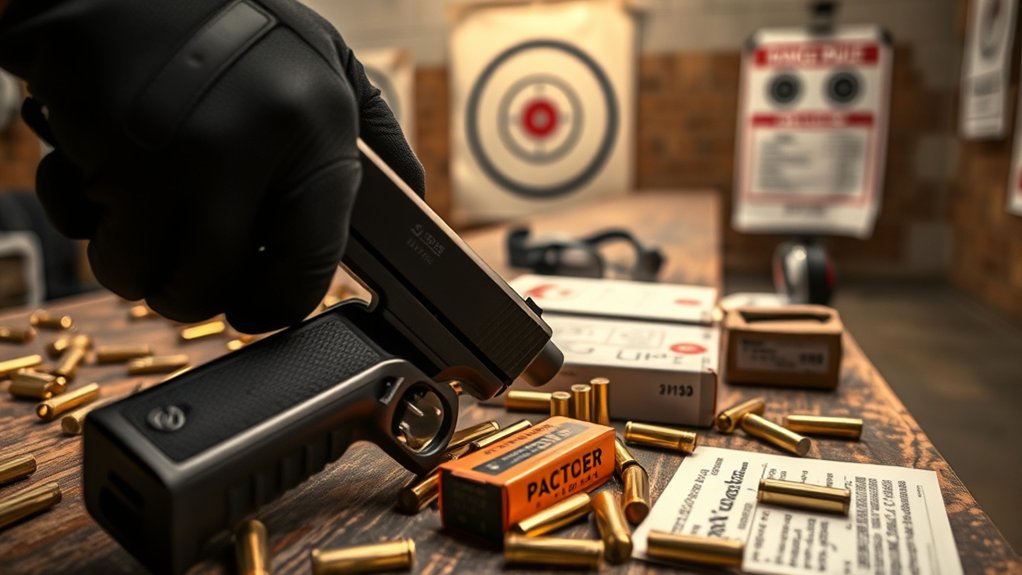
When you’re practicing at the range, choosing the right ammunition matters as much as your shooting technique. Hollow points aren’t always allowed, so it’s smart to explore alternatives that meet safety standards and range rules.
Full Metal Jacket (FMJ) rounds are popular for practice sessions because they offer consistent performance with minimal risk of damage. Lead round nose bullets also provide smooth trajectories and tend to be gentler on range equipment.
If you want to prioritize safety, frangible ammunition disintegrates on impact, reducing ricochet hazards. Steel-cased ammunition is another cost-effective option many ranges permit.
Before your session, always verify what’s allowed to avoid issues. Using these alternatives guarantees you practice safely and efficiently without compromising your shooting skills.
Frequently Asked Questions
Can Hollow Points Damage Indoor Range Backstops?
Yes, hollow points can damage indoor range backstops because their design causes expansion on impact, increasing damage.
You need to follow indoor shooting guidelines and range safety protocols to avoid backstop wear.
Understanding backstop materials and conducting ammunition impact analysis helps you assess hollow point effectiveness safely.
Always consider range liability issues and practice proper shooting etiquette to protect the facility and guarantee a safe environment for everyone.
Are Hollow Points More Expensive Than FMJ Rounds?
Imagine you’re comparing ammo on a store shelf. Hollow points usually cost more than FMJ rounds. That’s because hollow point benefits like better expansion and stopping power come with higher manufacturing costs.
In a cost comparison, FMJs are cheaper, more available, and have less recoil impact, making them popular for practice.
But if you’re focusing on self-defense uses or hunting applications, hollow points’ performance differences justify the extra expense despite availability issues.
Do Hollow Points Require Special Cleaning After Use?
You don’t need special cleaning techniques just because you use hollow points, but it’s smart to be thorough.
Hollow point performance can cause more residue buildup and barrel fouling than some other ammunition types.
So, cleaning your firearm after shooting helps maintain accuracy. Following good maintenance practices keeps your gun in top shape and respects range etiquette.
Comparing accuracy between hollow points and FMJ rounds, consistent cleaning guarantees reliable performance every time you shoot.
Can Shooting Hollow Points Void Your Range Membership?
Yes, shooting hollow points can void your range membership if the range’s policies prohibit them.
You need to check their specific membership policies and range regulations since hollow point legality varies.
Some ranges restrict ammunition types due to safety concerns or range etiquette. Always follow their rules to maintain good standing.
If you prefer hollow points for firearm training, confirm they’re allowed first to avoid issues with your shooting preferences and membership.
Are Hollow Points Legal to Purchase Everywhere?
Imagine traversing a maze where each turn represents state regulations. Hollow point legality isn’t the same everywhere. You’ll find purchasing restrictions vary widely; some states welcome hollow points for self-defense ammunition, while others limit them due to law enforcement usage or military applications.
Hunting considerations also shape rules. To stay safe and legal, you’ve got to know your local laws before buying or using hollow points, keeping range safety and legality in clear focus.
Conclusion
When you step onto the range, think of hollow points as sharp arrows, not always welcome in every quiver. They symbolize power but also caution, reminding you that safety is the silent guardian of every shot.
Respect the rules like a trusted compass guiding you through the maze of policies. And if hollow points aren’t allowed, don’t fret. Practice with alternatives that keep your aim true and your experience safe, like a steady heartbeat in the rhythm of the range.