How Far Away From Houses Should A Shooting Range Be – Safety Distance Guidelines
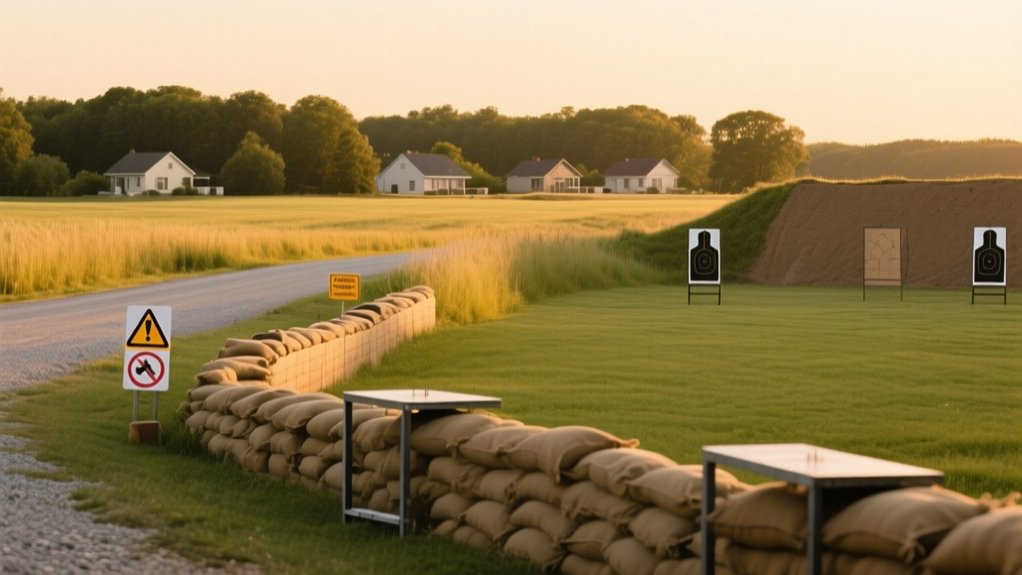
You should place a shooting range at least 500 feet away from houses to guarantee safety. But keep in mind, state laws and local zoning rules can require more or less distance.
Terrain, elevation, and natural barriers like hills also affect how far you need to go. Noise limits and secure backstops matter too — they help protect neighbors and the environment.
If you want to better understand how these factors shape range placement and design, there’s more to explore.
What Laws Set the Minimum Distance for Shooting Ranges?
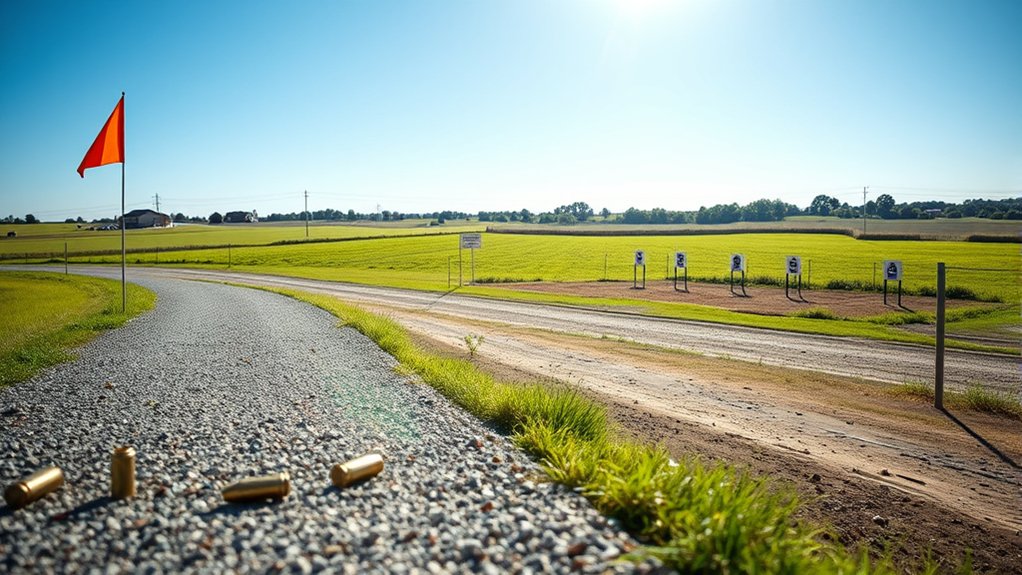
Although regulations vary by state, most set minimum distances for shooting ranges between 100 and 1,320 feet from residential properties.
When you’re looking into minimum distance regulations, know that many states require at least 500 feet from homes for firearm discharge at shooting ranges.
Many states mandate shooting ranges be at least 500 feet away from homes for safety reasons.
Local ordinances can be stricter, sometimes pushing that distance even farther. The type of firearm used matters too. Shotguns and handguns often have different rules affecting how close ranges can be to residences.
To legally establish or operate a shooting range, you need to comply with both state and local minimum distance regulations.
Staying informed about these laws helps protect neighbors and guarantees your range operates within legal boundaries.
How Zoning and Land Use Affect Shooting Range Locations Near Homes
You’ll find that zoning restrictions play a big role in deciding where shooting ranges can be set up, especially when they’re near homes.
These rules make sure that land use is compatible by putting clear limits on how close ranges can be to residential neighborhoods.
Knowing these proximity limits can really help when you’re planning—for both safety reasons and to keep the community happy.
Zoning Restrictions Overview
When you’re looking to establish a shooting range near homes, zoning regulations play a critical role in determining where and how close it can be. These rules set minimum distances for safety and dictate if your project is even feasible near residential areas.
You’ll need to navigate both local and state zoning regulations, as local laws often impose stricter requirements. Different zoning districts classify land uses, which can limit where ranges operate.
Failing to comply risks fines or shutdowns.
Plus, community input in zoning decisions can heavily influence approval.
Land Use Compatibility
Because zoning laws often favor nonresidential areas, you’ll find that shooting ranges near homes must meet strict land use compatibility standards. These standards guarantee the safety of occupied dwellings by minimizing risks related to firearm discharge.
When evaluating a proposed range, authorities consider nearby developments like schools and residential neighborhoods to prevent conflicts. Local regulations may require additional distance buffers beyond state mandates to reduce noise and enhance safety.
Community input plays a key role, as residents often voice concerns about discharge hazards and disturbances.
If you want a shooting range to operate legally near homes, you must comply with zoning ordinances designed to protect public safety and maintain harmony with surrounding land uses.
Ignoring these rules can lead to fines or closure.
Residential Proximity Limits
Land use compatibility sets the stage for how close shooting ranges can be to homes, but zoning regulations take these considerations further by specifying exact distance limits.
To keep shooting ranges far away from houses, local laws often require minimum setbacks that vary from 100 to over 1,320 feet. Many states mandate at least 500 feet to address safety and noise concerns.
When you plan a range, expect local authorities to enforce stricter rules reflecting community needs, especially near sensitive areas like schools and parks. Staying compliant with both state and local rules is essential to operate legally and responsibly.
- Residential zoning dictates minimum distances for shooting ranges.
- State laws commonly require at least 500 feet from homes.
- Local governments may impose tighter restrictions.
- Proximity to schools and parks increases setback requirements.
- Legal operation depends on meeting all zoning and land use standards.
Why Safety Fans and Backstops Matter for Shooting Range Distances
You need to understand how safety fans create three-dimensional zones that keep bullets contained within safe areas.
Think of these safety fans as invisible boundaries that guide where bullets can and can’t go.
Designing effective backstops is also super important. They stop rounds safely and help prevent ricochets, which can be dangerous.
By focusing on these elements, you’re managing risks better and protecting nearby properties from stray projectiles.
It’s all about keeping everyone safe while enjoying the range.
Defining Safety Fan
A safety fan defines the three-dimensional zone around a shooting range where all bullets must stay contained to guarantee safety. It guarantees that every projectile remains within the designated boundaries, protecting nearby homes and properties.
When you design a safety fan, you must consider terrain and elevation, as these affect bullet trajectories. Properly built backstops complement the safety fan by stopping bullets without ricochet.
Here’s why the safety fan matters:
- Contains all projectiles within a specific area
- Accounts for terrain and elevation changes
- Works with backstops to prevent bullet escape
- Enhances safety for surrounding residents
- Guarantees compliance with local shooting range regulations
Understanding the safety fan helps you maintain a secure and responsible shooting environment.
Backstop Design Importance
Effective backstop design plays an essential role in keeping every bullet safely within the safety fan, preventing stray shots from endangering nearby homes and properties. Understanding backstop design importance means you must carefully calculate the three-dimensional safety fan based on your firearms and bullet trajectories.
A well-designed backstop uses materials that absorb bullet energy, minimizing ricochet and ensuring all rounds impact safely.
Don’t overlook terrain features. Elevation changes can affect shots, so your backstop must compensate to avoid overshooting.
Furthermore, managing lead near residential areas is vital, reinforcing why a solid backstop design matters.
Risk Containment Strategies
Because shooting ranges operate with potentially dangerous projectiles, implementing risk containment strategies like safety fans and backstops is essential for maintaining safe distances from nearby homes and properties.
These safety rules help you control bullet trajectories and prevent accidents by enclosing the shooting area and stopping rounds effectively.
When you plan a range, consider using safety fans to contain bullets in a three-dimensional space. Construct backstops from reliable ballistic materials to stop rounds and reduce ricochet.
Evaluate terrain and elevation to avoid dangerous overshoot paths. Employ durable containment materials to protect adjacent residential zones.
Also, manage lead buildup long-term to minimize environmental hazards near homes.
How Terrain and Elevation Influence Shooting Range Setbacks
When you plan a shooting range, considering the terrain and elevation is essential since they directly affect how far bullets travel and how noise carries.
Terrain features like hills or valleys can serve as natural barriers, often allowing for shorter safety distances by limiting bullet travel and dampening noise.
Hills and valleys act as natural barriers, reducing bullet range and noise for safer shooting distances.
However, elevated ranges may need larger setbacks because bullets fired downhill can travel farther than on flat ground.
Dense vegetation also helps absorb sound, reducing noise impact on nearby homes.
Keep in mind that nearby structures or obstacles can change bullet trajectories, requiring a wider safety fan and greater distances from houses.
Local regulations typically account for these factors, so you’ll need a site-specific assessment to guarantee your shooting range meets all safety setback requirements.
How Noise Levels Affect Shooting Range Distance From Houses
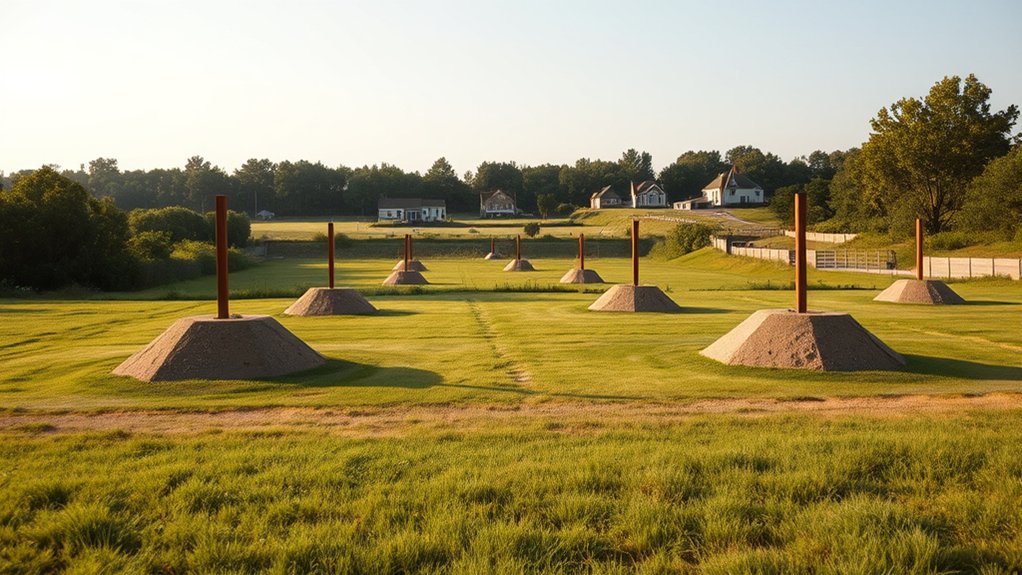
Although shooting ranges provide valuable recreational and training opportunities, you must carefully manage noise levels to prevent disturbances to nearby homes. Gunfire creates high-level impulse noise that travels far, so noise regulations often cap sound at 65 dBA near residences. This means you need adequate distance and smart design to minimize impact.
Covered firing points can amplify noise through reflections, while natural barriers like hills or trees help reduce sound reaching houses. Ignoring noise management risks community complaints and stricter regulations.
Consider these factors to control noise:
- Maintain sufficient setback distances per noise regulations
- Use natural terrain features to block sound
- Avoid reflective surfaces near firing points
- Monitor noise levels regularly
- Adjust range layout to limit noise exposure to homes
Key Checks Before Choosing a Shooting Range Site
Before selecting a site for your shooting range, you’ll need to verify that it meets all legal and zoning requirements. These can differ widely depending on your location. Check if the site lies within city limits because local ordinances might impose stricter distance or noise limits.
Map nearby homes and sensitive areas to evaluate noise and projectile risks. Confirm compliance with firearm discharge regulations and factor in terrain when planning safety fans and backstops. Modeling noise exposure guarantees you stay within permitted sound levels.
| Checkpoint | Purpose | Consideration |
|---|---|---|
| Legal/Zoning | Confirm compliance | Varies by city limits |
| Nearby Dwellings | Assess safety risks | Include sensitive zones |
| Noise Modeling | Meet sound regulations | Minimize disturbance |
| Safety Fan Design | Contain projectiles | Account for terrain & elevation |
| Local Ordinances | Additional distance requirements | Often stricter within city limits |
Range Design and Equipment That Ensure Safe Distances
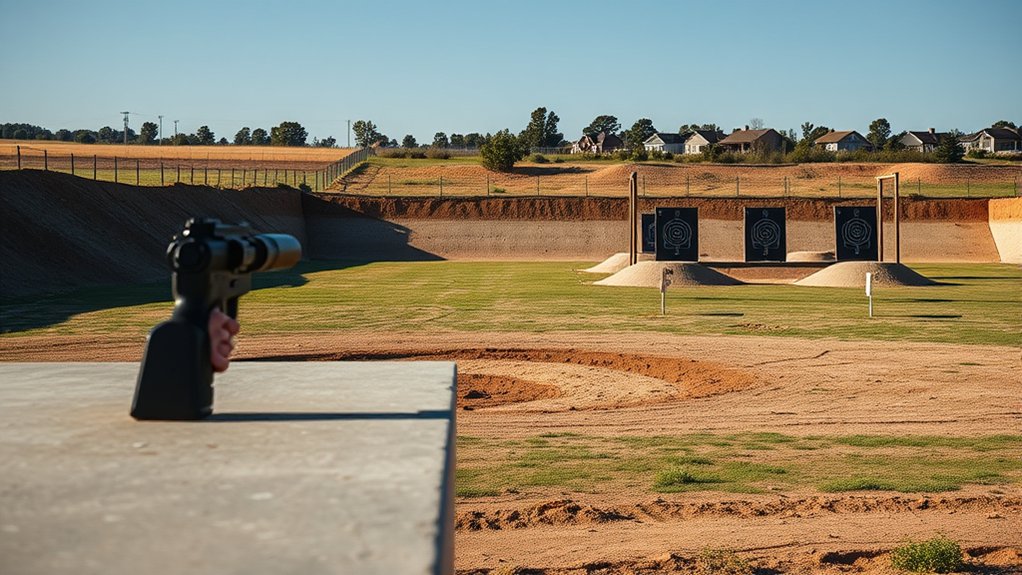
To guarantee safe distances at your shooting range, you must design a carefully planned safety fan, a three-dimensional zone that contains all projectiles and reduces risk. This safety fan guides your layout choices, including backstops, terrain use, and barriers. It ensures bullets don’t stray beyond safe boundaries.
You’ll want to evaluate these essential elements:
- Constructing effective backstops with ballistic materials to stop rounds and minimize ricochets.
- Reviewing terrain and elevation to identify overshoot paths.
- Incorporating natural barriers like earth mounds or vegetation to contain projectiles and reduce noise.
- Implementing regular lead management practices to protect nearby residents and comply with environmental standards.
- Mapping the safety fan precisely to define the zone where all projectiles must remain.
Minimum Distances by Firearm Type and Ammunition
When planning your shooting range, you need to contemplate minimum distance requirements that vary by firearm type and ammunition. Typically, minimum distances range from 100 feet to 1,320 feet, depending on state laws and the firearm used.
Most regulations require at least 500 feet from residential areas for rifles and pistols, but shotguns often allow closer distances due to their shorter projectile range.
High-caliber rounds usually demand greater safety distances compared to standard ammunition.
To stay compliant, you must check local zoning laws and safety rules, as these set specific minimum distances by firearm type and ammunition.
How Community Input and Enforcement Shape Shooting Range Distance Rules
Understanding the minimum distances required for different firearms and ammunition is just one part of planning a safe shooting range.
You also need to take into account how community input and enforcement shape distance rules. Local residents often voice concerns about noise near firing lines, prompting stricter distance regulations.
Public hearings let you engage with neighbors, balancing their safety with range operation. Law enforcement plays a vital role in guaranteeing these rules are met, maintaining compliance with state and county laws.
To navigate this complex process, keep in mind:
- Neighbor feedback influences noise and safety standards
- Public hearings collect community perspectives
- Noise complaints can increase distance requirements
- Enforcement relies on local law enforcement agencies
- Collaboration fosters safer firing lines and neighborhoods
This approach guarantees shooting ranges coexist responsibly with nearby homes.
Frequently Asked Questions
Can Vegetation Barriers Reduce Required Shooting Range Distances From Homes?
Yes, vegetation barriers can reduce required shooting range distances from homes by improving vegetation effectiveness in noise reduction.
If you use dense, tall evergreens and thick shrubs, they absorb sound and provide visual privacy, which helps lower the perceived impact on neighbors.
However, you shouldn’t rely solely on vegetation effectiveness to set distances. You still need to meet legal minimums, but substantial natural barriers can sometimes give you more flexibility with local regulations.
How Do Shooting Range Distances Affect Insurance Costs for Property Owners?
Oh, who wouldn’t want their insurance premiums to skyrocket just because a shooting range decided to cozy up next door?
When you have a range too close, insurance implications hit hard. Expect higher costs due to noise complaints and liability risks.
But keep that range at a safe distance, and you can slash those premiums.
Are There Special Distance Guidelines for Indoor Versus Outdoor Shooting Ranges?
Yes, you’ll find special distance guidelines for indoor ranges under Indoor Regulations.
These focus less on distance from houses and more on soundproofing and ventilation to control noise and air quality.
Outdoor ranges, however, must meet minimum setback distances from homes, often several hundred feet.
Indoor Regulations prioritize ballistic containment to prevent stray bullets, while outdoor sites consider terrain and distance to nearby residences to maintain safety and reduce disturbances.
What Impact Do Shooting Ranges Have on Local Wildlife at Varying Distances?
You mightn’t realize it, but shooting ranges can create quite a ruckus that gently nudges local wildlife away.
This wildlife disruption commonly occurs within 1,000 yards, with animals like deer and birds altering their routines or avoiding nearby areas, especially within 500 yards.
Bullet residues may also quietly affect soil and water quality, subtly impacting habitats.
Natural barriers like trees can soften these effects, giving wildlife a bit of peace closer to the range.
How Often Should Shooting Range Safety Distances Be Re-Evaluated or Updated?
You should re-evaluate shooting range safety distances at least once a year through thorough Safety Audits.
These audits help you stay aligned with changing regulations, community developments, and environmental factors.
If new housing or businesses pop up nearby, don’t wait. Conduct an immediate Safety Audit.
Regularly updating your safety measures protects both users and neighbors while minimizing liability risks.
Staying proactive keeps your range safe and compliant.
Conclusion
When setting up a shooting range near homes, think of safety distances as the invisible shields protecting your community. Just like a well-tuned symphony needs space to breathe, your range needs careful planning. Laws, terrain, noise, and design all play their part.
By respecting these guidelines, you’ll create a space where safety and enjoyment coexist. This turns potential risks into a harmonious balance between sport and neighborhood peace.