How To Install A Gun Safe In Your Car – Installation Guide
To install a gun safe in your car, first choose a concealed, secure spot like under or between seats. Make sure it won’t obstruct controls or safety features.
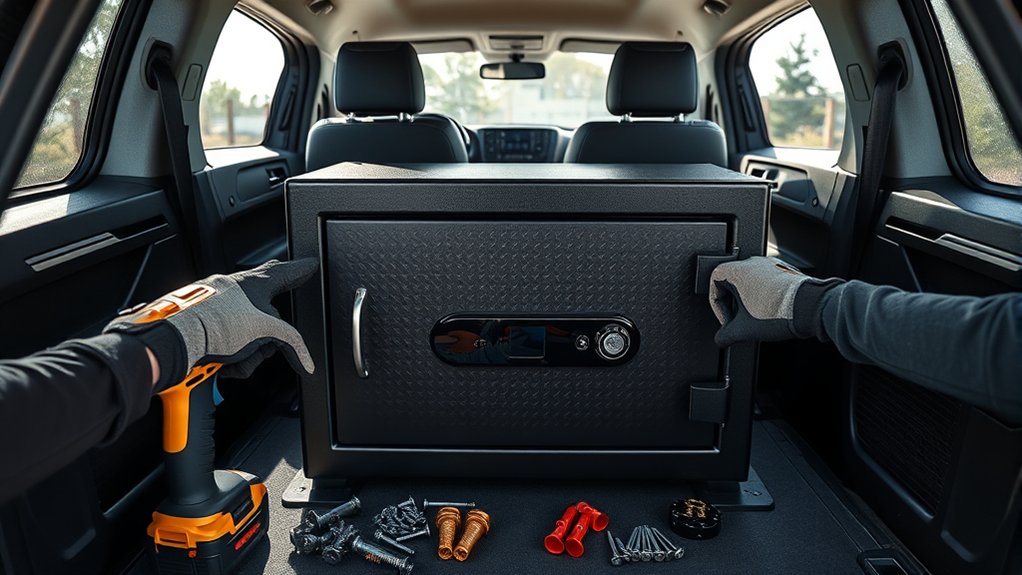
Gather the necessary tools and decide if you want to use a drilling or no-drill method for mounting. Secure the safe firmly with bolts or heavy-duty cables to prevent movement.
Test the lock function and seat closure to make sure everything operates smoothly. Follow these steps carefully for a reliable setup.
You can also explore more detailed tips to optimize both safety and accessibility.
Key Takeaways
- Choose a discreet, secure location like under or between seats, avoiding airbags, fuel lines, and electrical components.
- Gather tools, clear the area, measure the safe and space, and familiarize yourself with the vehicle’s interior layout.
- Secure the safe by drilling bolts into frame or seat rails or use no-drill methods like straps and factory anchors.
- Test lock functionality, ensure the safe is stable with no rattling, and verify the seat closes smoothly over the safe.
- Avoid improper attachment, and seek professional help if unsure about tools, vehicle modifications, or legal compliance.
Choose the Best Location for Your Car Gun Safe
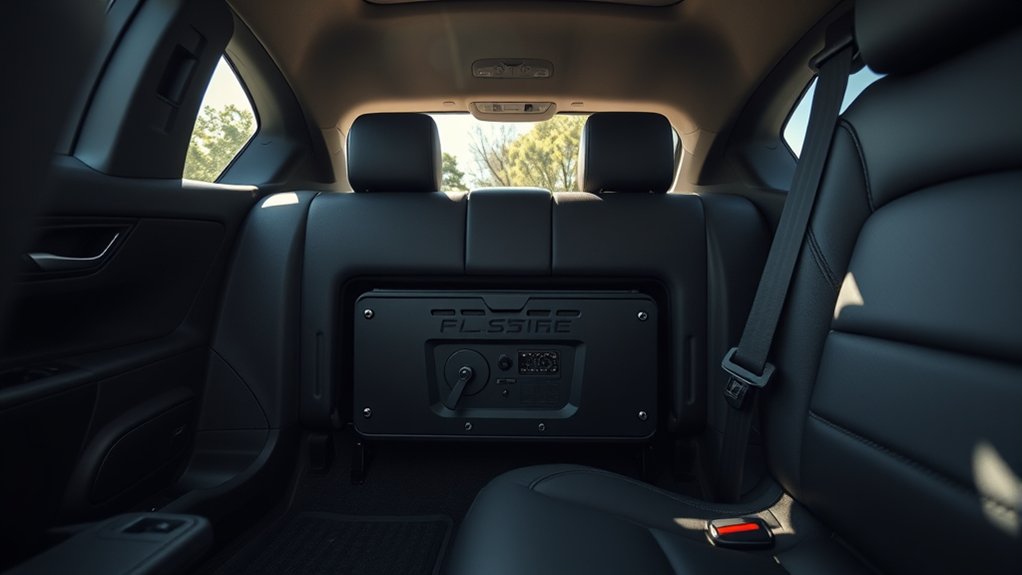
Where you install your car gun safe plays a crucial role in both security and accessibility. You should select a discreet location, such as under or between seats, to maintain concealment while ensuring the safe fits your vehicle’s dimensions without obstructing controls.
Prioritize a secure area like floorboards or the trunk, where the safe remains stable and doesn’t shift during travel. Avoid placing it near airbags, fuel lines, or electrical components to eliminate safety risks.
The position must allow easy access when you need it but stay hidden from plain sight to prevent theft or unwanted attention.
Careful evaluation of space and vehicle layout ensures your gun safe is both secure and readily accessible without compromising safety or convenience.
Gather Tools and Prepare Your Vehicle
After selecting the ideal spot for your car gun safe, the next step is to gather the necessary tools and prepare your vehicle for installation. Collect all essential tools upfront, like screwdrivers, measuring tape, and a drill with the correct bits to avoid interruptions.
Park your vehicle on a flat, well-lit surface free of obstructions to guarantee safety and accuracy. Remove any personal items and debris from the installation area to keep a clean workspace and protect your vehicle’s interior.
Ensure safety by parking on flat ground and clearing the area of personal items and debris.
Double-check the safe’s dimensions against the available space to confirm compatibility. Take some time to familiarize yourself with your vehicle’s interior layout, especially the headrest holes and structural supports. This way, you can plan secure mounting points.
Proper preparation really streamlines the installation and helps ensure a stable, professional fit. It’s worth taking these steps to make the whole process smoother.
Install Your Car Gun Safe: Drilling and No-Drill Methods
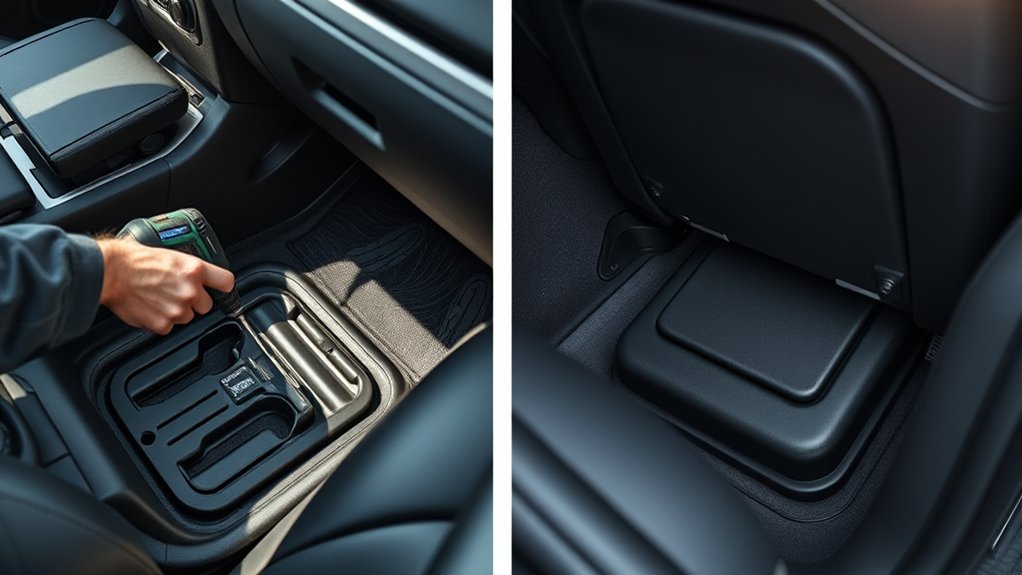
You have two main options when installing your car gun safe. You can either drill directly into your vehicle’s frame, which offers maximum security, or go with no-drill methods.
The no-drill options use existing anchors or adhesive mounts, so you won’t have to worry about damaging your vehicle.
Whichever method you choose, it’s important to place the safe carefully. You want it to be stable and easy to access, but without interfering with any vehicle systems.
Knowing the pros and cons of each approach makes it easier to find the right balance between security and convenience for your setup.
Drilling Installation Basics
Although drilling installation demands careful preparation, it offers the most secure method to mount your gun safe in the vehicle. First, inspect the area for wiring, fuel lines, or airbags to avoid hazards. Use a measuring tape and level to mark drill points carefully.
Choose drill bits that match your safe’s mounting bolts for a precise fit. After drilling, clean the area thoroughly and bolt the safe firmly. Make sure to check stability and clearance once everything is in place.
| Step | Action | Purpose |
|---|---|---|
| 1 | Inspect area | Avoid hazards |
| 2 | Mark drill points | Ensure level installation |
| 3 | Select drill bits | Match bolt size |
| 4 | Drill and fasten safe | Secure installation |
This drilling installation guarantees your safe is firmly and securely mounted. It’s a reliable way to keep your gun safe exactly where you want it.
No-Drill Installation Options
When you want a secure gun safe installation without altering your vehicle, no-drill methods provide an effective solution. No-drill installations leverage existing vehicle features such as headrest posts or seat anchors, using specially designed adapters or mounting brackets that fit standard points without permanent modifications.
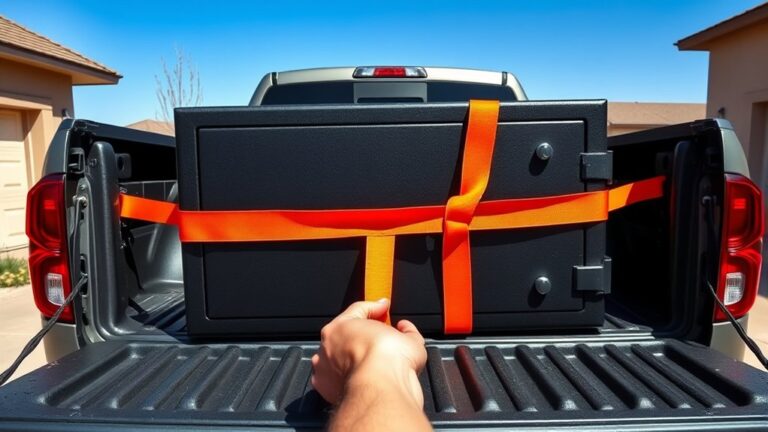
This approach secures the vehicle safe with straps, clamps, or threaded rods that lock into factory hardware, ensuring stability during transit.
No-drill options require no power tools and typically install in under 15 minutes, making the process quick and straightforward.
Plus, these setups are removable and transferable, which is ideal if you need to relocate the safe or avoid permanent changes.
Choosing a no-drill installation balances security and convenience. It keeps your vehicle’s integrity intact while making sure your gun safe stays firmly in place.
Security Considerations
Two primary methods secure your car gun safe: drilling directly into your vehicle’s frame or opting for no-drill installations that utilize existing anchor points. Drilling offers maximum security by anchoring the safe firmly, but you need to be careful to avoid critical components like fuel lines or airbags.
No-drill installations use cable locks, adhesive mounts, or vehicle anchors. They provide solid security without permanent modifications.
| Method | Security Features |
|---|---|
| Drilling | Direct frame attachment, high stability |
| No-Drill | Uses anchors or straps, no damage |
| Both | Guarantee discretion, stability, and accessibility |
Choose the method that best balances installation complexity and security for your vehicle safe.
Secure Your Safe With Cables or Bolts
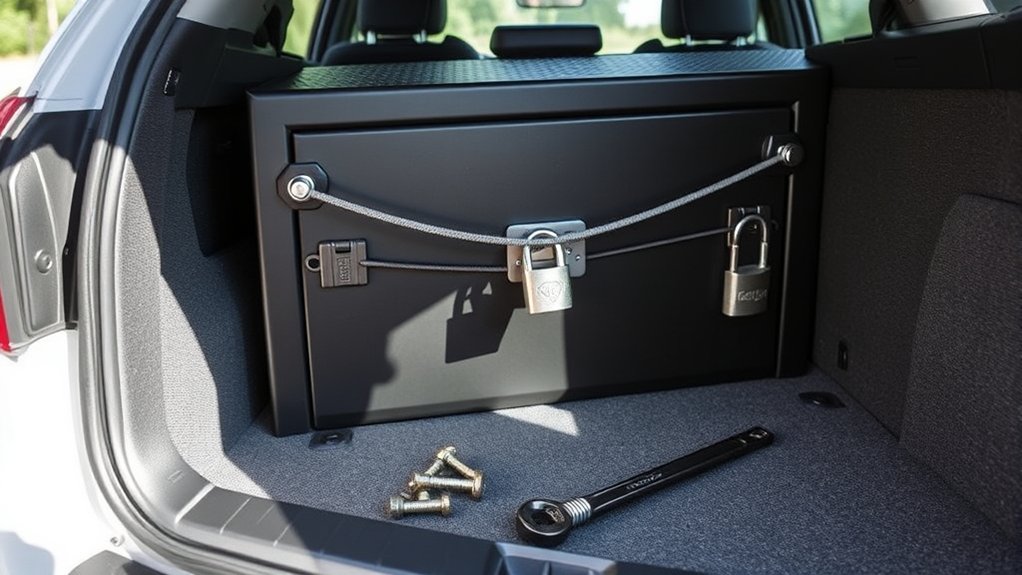
Securing your gun safe with cables or bolts considerably reduces the risk of theft by making quick removal difficult.
Using cables or bolts to secure your gun safe significantly lowers theft risk by preventing fast removal.
When bolting your vehicle gun safe, use sturdy bolts to anchor it firmly to the car’s frame or seat rails. This way, it can’t be easily pried loose.
If bolting isn’t feasible, loop heavy-duty cables tightly around fixed vehicle components like seat rails or trunk mounts. Lock these cables securely to prevent tampering.
Cables not only add a robust physical barrier but also act as a visual deterrent, signaling the safe is well-secured.
For maximum protection, combine both methods. Bolts provide a solid base, while cables add an extra theft deterrent layer.
This dual approach greatly enhances your vehicle gun safe’s security and peace of mind.
Test and Adjust Your Car Gun Safe Installation
You’ll want to make sure the lock engages securely and works smoothly every time.
Also, check that the safe stays stable and doesn’t shift or rattle when you’re using it.
Lastly, double-check that the car seat closes fully and comfortably over the safe—this helps keep everything safe and easy to access.
Verify Lock Functionality
How can you be sure your car gun safe’s lock is working flawlessly? Proper verification is essential to guarantee security and ease of access. Begin by regularly opening and closing the safe, making sure the lock engages and disengages smoothly without sticking.
Next, test the biometric or combination lock using enrolled fingerprints or codes to confirm accurate recognition and functionality. Finally, check that the safe remains securely locked after each use to prevent accidental openings.
- Conduct lock verification after battery changes or updates to maintain consistent performance.
- Re-enroll fingerprints or recalibrate the biometric system if recognition falters.
- Perform periodic tests to catch any signs of malfunction early.
Ensure Stability During Use
Although installing your car gun safe properly is essential, making sure it stays stable during everyday use is just as important. Start by doing a thorough stability test: open and close the safe several times to check for smooth operation and proper alignment.
Next, gently shake or apply slight pressure to confirm it’s securely mounted. There shouldn’t be any movement or rattling. If you notice any looseness, adjust the installation by tightening screws or repositioning mounting parts.
Also, check that the safe doesn’t interfere with seat movement or vehicle controls. Keep in mind, stability isn’t a one-time thing. It’s a good idea to recheck your installation regularly, especially after long drives or rough terrain, to keep it securely mounted and ensure consistent safety and functionality throughout your safe’s use.
Confirm Seat Closure
When can you be sure your car gun safe won’t interfere with seat operation? Confirm seat closure by testing seat clearance and safe operation thoroughly.
After installation, open and close both the seat and safe lid multiple times to check for smooth movement. Focus on these key steps:
- Verify the seat fully closes without obstruction. Adjust the safe’s placement if necessary.
- Make sure the safe lid opens smoothly and locks securely without catching on the seat or trim.
- Test accessibility from your usual position to confirm comfortable, unobstructed use.
If you notice excessive pressure or the seat is hard to close, reposition the safe. This helps maintain optimal seat clearance and safe operation.
Doing this ensures your car gun safe fits in seamlessly without messing with how your seat works.
Avoid Common Installation Mistakes
Because your car safe’s security depends on proper installation, you must avoid common mistakes that compromise its effectiveness. First, make certain all hooks fully engage on both sides to guarantee a secure attachment. Avoid installation mistakes like positioning the safe too far from vehicle anchors, which prevents the connectors from fully engaging.
Make sure the safe is placed close enough to anchors so you don’t have to force connections. Check that the seat closes properly without pressure or bulging caused by the safe or its connectors.
Finally, verify the safe remains stable and doesn’t rattle or shift during vehicle movement.
Prioritize precise safe positioning and secure attachment to maintain both safety and convenience in your installation process. Taking these steps will help keep your valuables protected without any hassle.
Know When to Call a Professional Installer
If you don’t have the right tools or experience with vehicle modifications, hiring a professional installer is the safest choice. A professional installer ensures secure mounting of your gun safe without damaging critical vehicle components like wiring or airbags.
Plus, they make sure the installation meets all legal regulations, which helps keep you safe from any compliance issues. It’s definitely worth considering if you want peace of mind.
Think about calling a professional installer when you’re unsure about safely securing the safe without compromising your vehicle’s integrity. Or if you want to guarantee everything follows complex legal rules.
Also, if you need certification of the installation for insurance or legal reasons, a pro can provide that for you. It just makes the whole process easier and less stressful.
Maintain and Transfer Your Car Gun Safe
Although designed for secure installation, your car gun safe needs regular maintenance to keep it working reliably. This also makes transferring it between vehicles easier. Make sure to inspect the locking mechanism often and clean the safe to prevent dust buildup that could mess with its function.
When it’s time to transfer the safe, carefully disconnect any securing cables or bolts. Before reinstalling, double-check that the new vehicle is a good fit for the safe.
| Maintenance Task | Key Action |
|---|---|
| Locking Mechanism | Check for smooth operation |
| Cleaning | Remove dust and debris |
| Transfer Preparation | Disconnect cables/bolts |
| Vehicle Compatibility | Confirm fit before installation |
Frequently Asked Questions
What Types of Firearms Fit Best in Car Gun Safes?
Compact firearms like pistols and revolvers fit best in car gun safes because of their smaller size and ease of storage. You’ll find these safes often designed to securely hold multiple handguns with foam inserts or customizable compartments.
Larger firearms, such as shotguns or rifles, usually won’t fit unless you have a specialized, larger safe.
Always check your firearm’s dimensions against the safe’s capacity to guarantee a snug, secure fit.
It just makes sense to match the size of your gun to the right safe to keep everything secure and accessible.
Can I Install a Gun Safe Without Damaging My Car’s Warranty?
Yes, you can install a gun safe without compromising your car’s warranty if you avoid drilling into critical components and use non-invasive methods like bolting to existing anchors.
It’s best to use manufacturer-approved mounting kits or consult your vehicle manufacturer beforehand.
Hiring professional installers is a smart move because they know how to keep everything compliant with warranty terms.
Plus, always keep documentation of the installation process and any professional services you use.
That way, you have proof the setup didn’t void your warranty.
Are There Specific Gun Safe Brands Recommended for Vehicles?
You might be surprised which brands stand out for vehicle gun safes. Console Vault and GunVault top the list, known for secure, discreet designs and easy installation.
Nissi Safes also earns high marks, especially with their professional installers ensuring a perfect fit without risking your car’s integrity.
When choosing, focus on compliance with local laws, tamper-proof features, and biometric options to keep your firearm safe and accessible exactly when you need it.
How Do Weather Conditions Affect the Gun Safe’s Durability?
Weather conditions directly impact your gun safe’s durability. High humidity and moisture cause rust on metal parts.
At the same time, extreme temperatures can damage electronic locks and batteries.
Frequent temperature changes lead to condensation inside, which risks damaging your firearms or valuables.
UV rays also degrade plastic components and weaken the exterior over time.
To protect your safe, you need proper weatherproofing and sealants.
This will help ensure it withstands harsh environments and maintains long-term reliability.
Taking these steps makes all the difference.
Is Insurance Coverage Impacted by Having a Gun Safe in My Car?
Yes, having a gun safe in your car can impact your insurance coverage. Insurers often view a gun safe as a security enhancement, which might lower your premiums or qualify you for discounts.
However, you must inform your provider about the safe and firearms to avoid policy violations or claim denials.
Coverage terms could vary depending on the safe’s security features and proper installation.
Always verify specifics with your insurance company first. It’s better to be upfront and clear so you know exactly how your coverage works.
Conclusion
Installing a gun safe in your car enhances security and peace of mind. Studies show that 60% of firearm thefts happen from vehicles, so it’s a smart move to protect yours.
Start by choosing the right location in your car. Use proper tools to secure your safe with bolts or cables, which helps minimize theft risks.
Don’t make common mistakes—test your installation thoroughly. And if you’re unsure, don’t hesitate to call a professional for help.
Finally, regular maintenance is key. It keeps your safe reliable and ensures your firearm stays protected wherever you go.