How To Organize Gun Safe – Storage Tips And Ideas
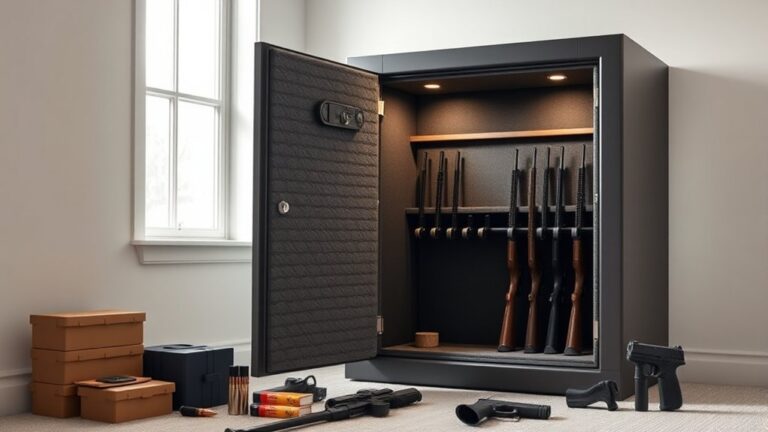
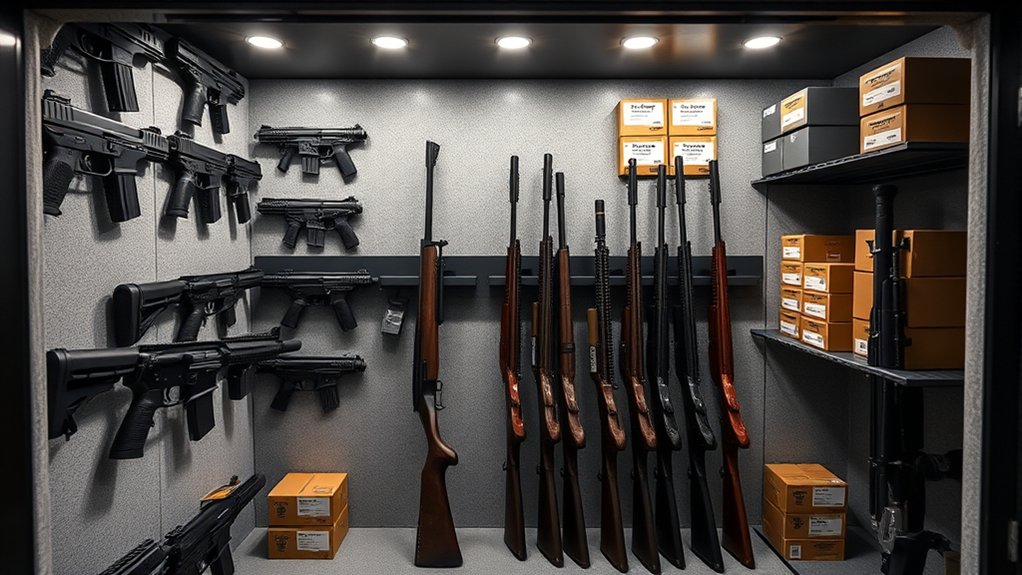
To organize your gun safe effectively, designate separate zones for long guns and handguns using adjustable shelves and racks. Use door-mounted organizers or magnetic strips for accessories and protect firearms with gun socks to control moisture.
Clean the interior regularly and maintain humidity around 30-50%. Also, secure the safe firmly to the floor or wall to keep everything stable.
Keep an updated inventory with detailed records for quick retrieval. These strategies help maximize space, enhance safety, and preserve your collection’s condition. There’s more to explore for the perfect setup.
Key Takeaways
- Designate separate zones for handguns and long guns using adjustable shelves and rack systems for customized, efficient storage.
- Use door-mounted organizers, magnetic strips, and gun socks to protect firearms and keep accessories accessible.
- Maintain humidity between 30-50% with silica gel packs or dehumidifiers to prevent rust and moisture damage.
- Securely bolt down the safe to solid floors or walls and regularly test locks for enhanced security.
- Keep an updated firearm inventory with serial numbers, photos, and digital tools for quick retrieval and management.
How Proper Gun Safe Organization Improves Safety and Access
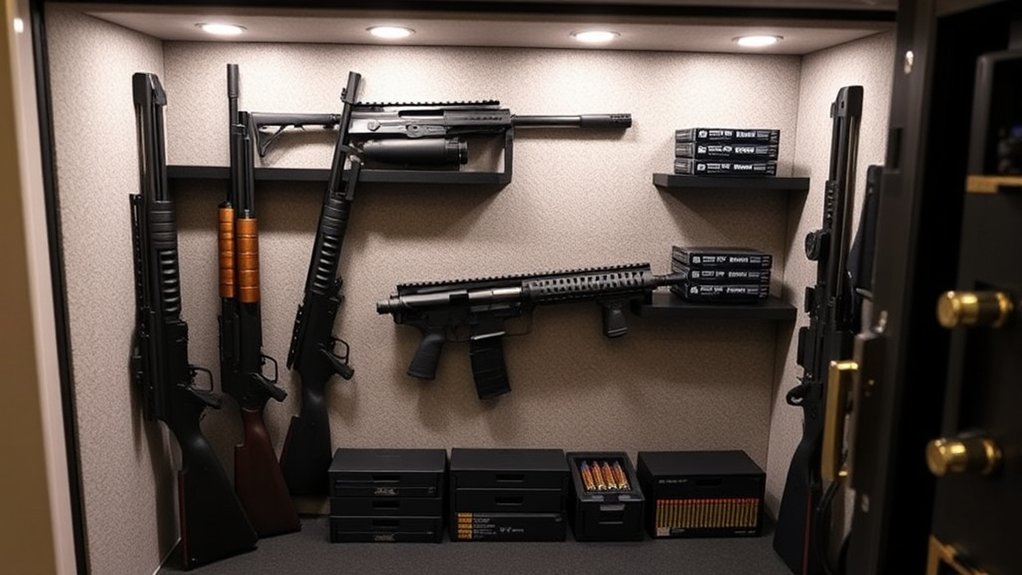
When you organize your gun safe properly, you guarantee quick and easy access to your firearms during emergencies, cutting down retrieval time considerably. Proper organization enhances fire safety by reducing clutter, which minimizes the risk of accidental damage or injury.
By designating clear, separate spaces for each firearm, you prevent accidental discharges and misfires, ensuring safer storage. Using specialized accessories like handgun hangers and rifle rods keeps your firearms secure and supported, promoting safer handling.
Plus, a well-organized safe lets you inspect and maintain your guns regularly, which extends their lifespan and keeps you in line with safety standards.
Prioritizing fire safety through systematic organization not only protects your firearms but also safeguards you and others in critical situations.
Efficient Layouts for Long Gun and Handgun Storage in Your Safe
Although organizing a gun safe can seem intimidating, creating efficient layouts for long gun and handgun storage guarantees you make the most of your space while keeping firearms accessible and protected.
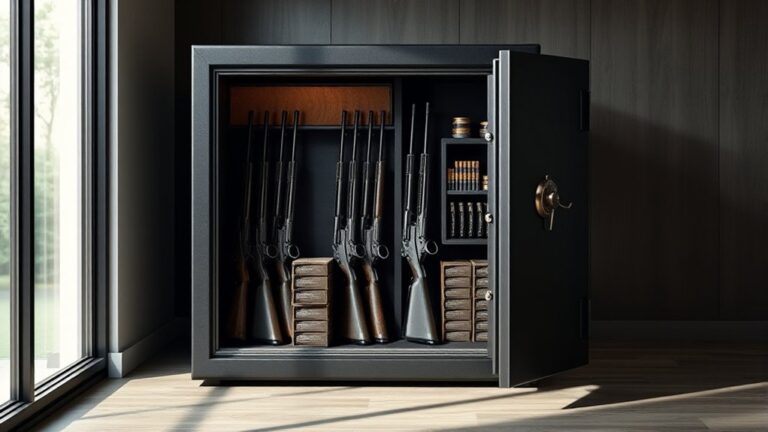
Use adjustable shelves and rack systems to customize your safe’s interior. This helps maximize storage without compromising its fire rating.
Designate zones for long guns and handguns to prevent overcrowding and damage. Installing handgun hangers or hooks under shelves makes for quick access.
Don’t forget door-mounted organizers or magnetic strips to store accessories neatly.
Regularly revisit your layout to accommodate new firearms or changing needs. This ensures maximum efficiency over time.
How to Clean and Maintain Your Gun Safe Interior
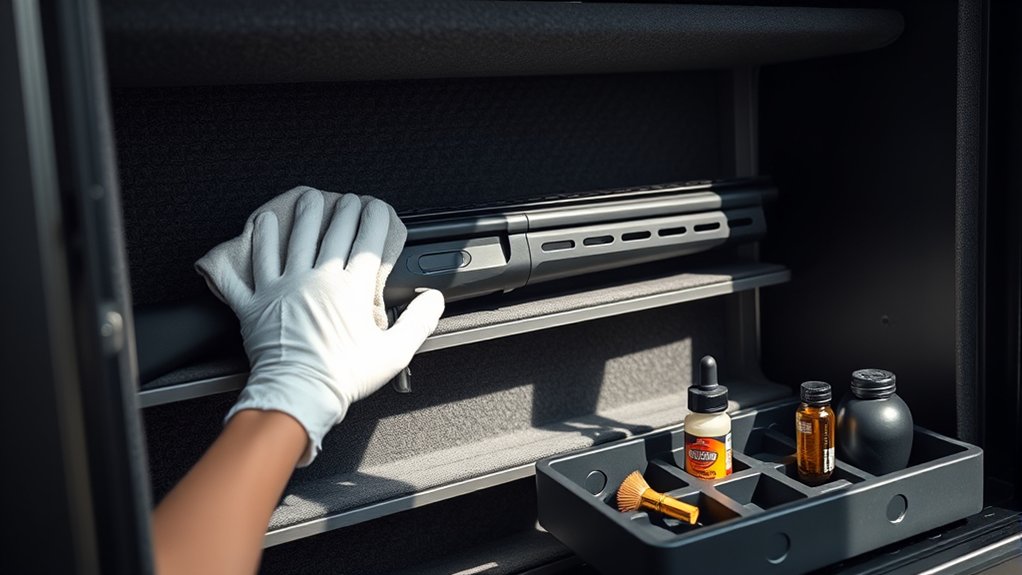
To keep your gun safe in top condition, you need to clean and maintain its interior regularly. Proper cleaning and maintenance prevent rust, moisture damage, and assure long-lasting protection for your firearms.
Follow these essential steps:
- Remove dust and debris using a dry cloth or vacuum to keep the interior spotless.
- Wipe metal surfaces with ammonia-free cleaner to eliminate fingerprints and prevent salt buildup.
- Apply a light coat of lubricant or gun oil on firearm metal parts for moisture protection.
- Inspect the interior periodically for rust, mold, or damage and address issues immediately.
Consistent attention to your gun safe’s interior guarantees a safe, functional environment. This helps safeguard your collection from corrosion and deterioration.
Best Ways to Control Gun Safe Humidity and Prevent Moisture Damage
To keep your gun safe in good shape, you want to maintain the humidity between 30-50% at about 70°F. This helps prevent rust and corrosion from damaging your firearms.
One easy way to do this is by using silica gel packs or a dehumidifier, which soak up any extra moisture inside the safe. It’s a simple step that can really protect your collection.
If you want to go a step further, think about climate-controlled storage. This keeps the environment steady and can help preserve your guns over the long haul.
Taking these measures will give you peace of mind knowing your firearms are well cared for.
Optimal Humidity Levels
How do you keep your firearms safe from rust and corrosion inside your gun safe? Maintaining ideal humidity levels is key. Aim for 30-50% humidity at around 70°F to prevent moisture damage.
Here’s how you can control humidity effectively: Use silica gel packs or a dehumidifier to absorb excess moisture. Regularly check and recharge moisture-absorbing products to maintain consistent humidity.
Also, make sure there’s proper ventilation around your safe to minimize humidity buildup, especially in humid climates.
And try to avoid placing your gun safe in damp or poorly ventilated areas to reduce the risk of rust.
Effective Moisture Absorbers
Where can you find the most reliable protection against moisture inside your gun safe? Moisture absorbers like silica gel packs, such as Liberty Safe Hydrosorbent, are your best bet. These packs effectively absorb humidity, keeping your firearms and accessories dry and rust-free.
You can also use dehumidifiers, either continuously or intermittently, to maintain ideal moisture levels and prevent mildew. Proper placement of these moisture absorbers inside the safe ensures uniform humidity control throughout the storage space.
Remember, to keep them working well, you need to replace or recharge moisture absorbers regularly.
Climate-Controlled Storage
Effective moisture absorbing products like silica gel packs play a vital role in protecting your firearms.
But maintaining the right humidity level inside your gun safe demands more thorough climate control strategies.
To guarantee effective climate-controlled storage and moisture control, focus on these essentials: Keep humidity between 30-50% at 70°F to prevent rust and corrosion.
Use a reliable hygrometer to monitor humidity consistently.
Make sure there’s proper ventilation and airflow inside the gun safe to reduce moisture buildup.
Also, consider electric dehumidifiers for humid climates to prolong your firearm’s lifespan.
These steps really help keep your guns in top condition over time.
Using Gun Storage Accessories to Protect and Maximize Space
When you incorporate gun storage accessories like magnetic holders and pistol racks, you not only keep your firearms organized but also protect them from scratches and damage.
Gun safes equipped with adjustable door organizers and interior shelves let you maximize space while keeping magazines and documents within easy reach.
Adjustable door organizers and shelves in gun safes optimize storage and keep essentials easily accessible.
Using gun socks made of stretch-knit fabric adds moisture protection and keeps your firearms clean during storage.
Display stands and custom branding options enhance the presentation, creating a professional, orderly firearm display.
Properly using these accessories prevents overcrowding and reduces firearm contact, allowing you to retrieve your guns quickly in emergencies.
How to Secure and Bolt Down Your Gun Safe Properly
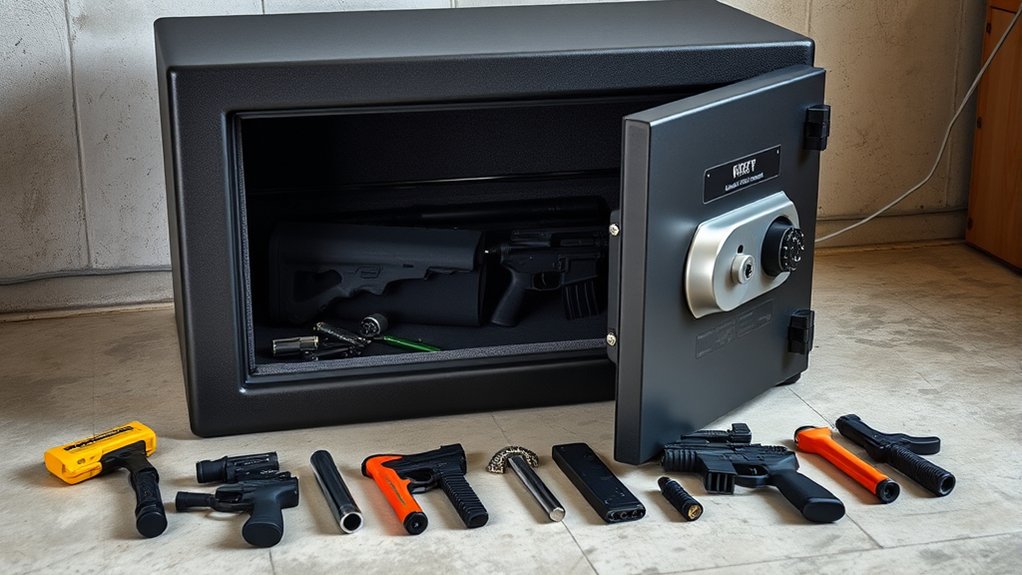
After organizing your firearms with the right storage accessories, securing your gun safe properly becomes the next priority. This helps protect your collection from theft or accidental tipping.
To bolt down your safe effectively and enhance security, follow these steps:
First, use manufacturer-approved bolts and hardware to anchor your safe securely to a solid floor or wall. Make sure the safe is level before tightening the bolts to prevent shifting or tilting over time.
Next, select appropriate anchors. Use masonry anchors for concrete floors or wood anchors for wooden floors, and drill precisely.
Position the anchoring points carefully to maximize stability and deter movement during tampering attempts.
Maintaining Locks and Electronics for Safe Security
Although securing your gun safe physically is crucial, maintaining its locks and electronic components is just as important to guarantee ongoing security. Regularly test the electronics and keypad batteries to avoid lockouts and ensure reliable operation. Replace batteries at least once a year or as your manufacturer recommends.
Clean and inspect all lock mechanisms periodically, following guidelines to prevent dirt and debris buildup that could impair function. Use only manufacturer-approved lubricants to keep locks smooth and prevent corrosion. If you notice difficulty turning dials or keypad errors, contact authorized technicians for professional maintenance.
Proper upkeep of your safe’s locks and electronics preserves security, extends lifespan, and prevents unexpected failures. Consistent maintenance isn’t optional; it’s essential for protecting your firearms effectively.
Keeping an Updated Inventory for Easy Firearm Retrieval
Why is keeping an updated firearm inventory crucial for your gun safe organization? An accurate inventory ensures quick firearm retrieval, enhances security, and aids in legal compliance. It prevents confusion and saves time when locating specific guns.
To maintain an effective inventory, you should:
- Record serial numbers, detailed descriptions, and photos for each firearm.
- Store copies of the inventory in a secure, separate location like a safe deposit box.
- Update the inventory promptly after adding, removing, or relocating firearms inside the safe.
- Utilize digital inventory tools or apps for easy access and thorough record-keeping, including purchase dates and modifications.
Frequently Asked Questions
What Is the Best Temperature to Store Firearms Safely?
You should store firearms at a consistent temperature between 55°F and 75°F (13°C to 24°C) to keep them safe. Avoid extreme heat or cold, as these can cause metal parts to expand or contract, leading to damage.
Also, control humidity around 40-50% to prevent rust and corrosion. Using a dehumidifier or silica gel packs in your storage area will help maintain these conditions and protect your firearms effectively.
Keeping these factors in check might seem like a lot, but it really just comes down to creating a stable environment. That way, your firearms stay in good shape for the long haul.
Can I Store Ammunition Inside the Gun Safe?
Yes, you can store ammunition inside your gun safe, but you should do it carefully. Keep ammo in a cool, dry place to prevent corrosion. Using airtight containers or ammo cans with desiccants really helps with that.
If possible, separate ammunition from firearms to boost safety and follow local laws. It’s a good idea to avoid storing large quantities of ammo in the same safe unless it’s designed for that.
Heat buildup and humidity can cause problems over time, so be mindful of that.
How Often Should I Replace Gun Safe Locking Mechanisms?
You should replace your gun safe’s locking mechanisms every 5 to 10 years, or sooner if you notice signs of wear or malfunction. Regular maintenance checks often reveal subtle issues that, if ignored, could compromise security.
Staying proactive guarantees your firearms remain protected. Don’t wait for a problem. Upgrade or service locks promptly to maintain reliability and peace of mind.
This is especially important if you live in a high-risk area or have recently moved.
Are There Specific Gun Cleaning Products Recommended for Safe Storage?
Yes, you should use gun cleaning products specifically designed for long-term protection, like CLP (Cleaner, Lubricant, Protectant) or corrosion inhibitors. These products keep your firearms free from rust and moisture inside the safe.
Avoid harsh chemicals that can damage finishes.
Also, use silicone-treated cloths to wipe down your guns before storage.
Regularly check and reapply these products to guarantee your firearms stay in excellent condition while stored safely.
Taking these steps really helps your guns last longer and perform better when you need them.
What Legal Requirements Apply to Gun Safe Storage in My Area?
Don’t beat around the bush. Your gun safe must meet specific legal standards, which vary by state and locality. You’ll need to check laws about locking mechanisms, safe construction, and storage location.
Some areas require safes to be tamper-resistant or secured to a fixed object. Always verify your local regulations through official government websites or consult a legal expert.
This way, you can guarantee you’re fully compliant and keep firearms out of unauthorized hands.
Conclusion
By organizing your gun safe properly, you’re not just keeping your firearms secure. You’re also making sure they’re ready to go when you need them. A well-planned setup prevents damage, saves space, and keeps everything within reach.
With regular maintenance and the right accessories, you’ll avoid any surprises down the road. Remember, a stitch in time saves nine. Taking these steps now means less hassle later and peace of mind every day.