When Did Glock Come Out – History And Timeline
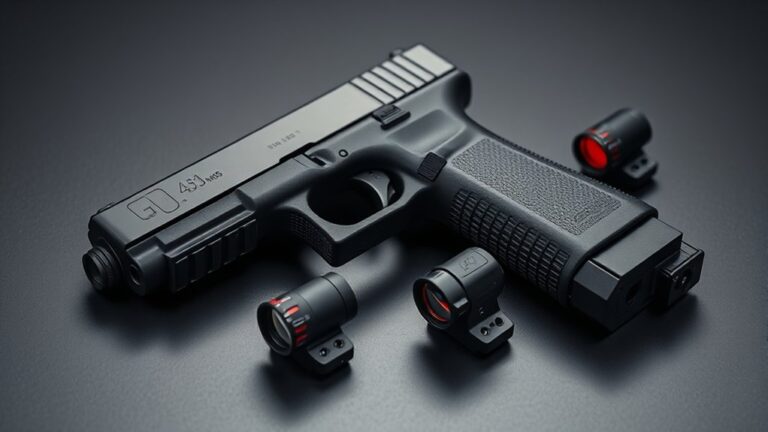
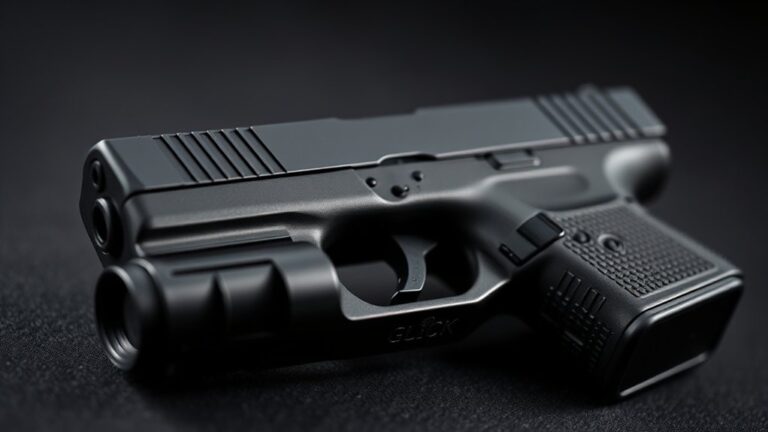
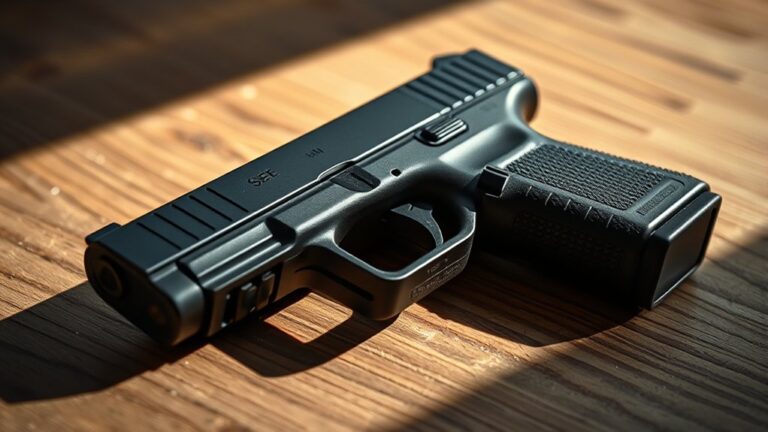
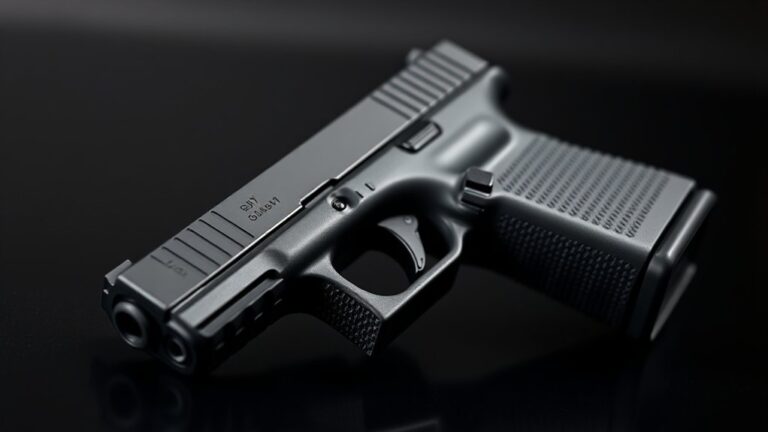
You’ll find that Glock first came out in 1982 when Gaston Glock introduced the innovative Glock 17. It was a lightweight polymer-framed pistol with a 17-round magazine that really changed how sidearms are designed.
Though Glock started in 1963 with consumer goods, the company shifted to firearms in the early 1980s. They quickly gained military adoption by Austria in 1983.
Glock’s continued innovations across five generations have reshaped law enforcement and military standards around the world.
Exploring further shows how Glock expanded and evolved over four decades.
When and Why Glock Was First Introduced
Although Gaston Glock had no prior experience in firearm design, he led the development of the Glock pistol in 1982. This happened after Austrian military officials were looking for a modern, reliable service weapon to replace their outdated models.
Gaston Glock, new to firearms, spearheaded the Glock pistol’s creation amid Austria’s search for modern service weapons.
You’ll find that the Glock was first introduced as a response to Austria’s need for a durable, lightweight pistol made with synthetic materials. Specifically, it featured a polymer frame, which was pretty innovative at the time.
This set the Glock apart from traditional all-metal firearms.
The Glock 17, named for its 17-round magazine capacity, was officially adopted by the Austrian military in 1983. That marked its first entry into military use.
Its polymer frame not only made it lighter but also improved durability and resistance to corrosion.
All of these features met the strict demands of the military, and this introduction helped Glock establish a global presence in military and law enforcement circles.
Key Glock Milestones in Early Military and Product History (1963–1985)
Since its founding in 1963, Glock steadily evolved from producing polymer and metal consumer goods into a key military supplier by the 1970s. They made items like knives and machine gun components during this time.
This early military focus laid the groundwork for Glock’s significant firearms development in Austria. By the early 1980s, the company shifted its focus to handguns.
This shift led to the Glock 17 prototype, which was patented in 1982. Austria’s military recognized its innovation and awarded Glock a military contract that same year.
In 1983, the pistol was adopted as the P80 service weapon. The Glock 17’s successful NATO durability tests in 1984 marked a major milestone.
These tests confirmed its reliability for international military use. This product timeline highlights Glock’s evolution from diverse manufacturing to a specialized firearms leader by 1985.
How Glock Revolutionized Military and Police Sidearms
You can really see how Glock changed the game when they introduced their polymer-framed pistol back in 1982. It wasn’t just about making a new gun; it was about making a sidearm that was tougher and more reliable than anything before.
The lightweight, corrosion-resistant frame meant that officers and soldiers could handle their weapons more easily and keep them in good shape without much hassle.
And it didn’t stop there. After passing tough NATO tests, Glock’s guns quickly became a favorite for military and police forces around the world. This was a big deal because it set new standards for what a service pistol should be—more durable, easier to maintain, and ready to perform when needed most.
Basically, Glock’s innovation reshaped how agencies think about their sidearms.
Polymer Frame Innovation
When Glock introduced the Glock 17 in 1982, it changed the game for military and police sidearms by pioneering the use of a polymer frame.
This innovation replaced traditional metal frames with a high-strength nylon-based plastic called Polymer 2. It was incredibly durable and resistant to shocks, extreme temperatures, and corrosive liquids.
The Glock 17’s lightweight design made it easier to carry more ammo and gear without feeling weighed down or tiring you out.
Glock also kept things simple with a design that uses only about 35 parts. That made the gun more reliable and easier to maintain.
Plus, having fewer parts meant manufacturing was more efficient. This helped ensure consistent quality and faster production.
By introducing the polymer frame, Glock set a new standard in sidearm design.
It changed what people expected in terms of durability, weight, and reliability for military and police firearms.
Global Adoption Impact
Glock’s introduction of a polymer frame didn’t just change how guns were built; it also paved the way for its widespread use around the world in military and law enforcement. The lightweight, polymer-framed design combined with exceptional reliability quickly caught on globally.
Their groundbreaking Safe Action system made guns safer and easier to handle, which helped boost their popularity even more.
Some key reasons behind Glock’s international success include being the first polymer-framed pistol to pass tough NATO tests, which helped them secure military contracts.
Over 48 countries’ military and law enforcement agencies now use Glock models.
By the 1990s, Glock had become dominant in the U.S. law enforcement market, with about 65% of agencies adopting their pistols.
Glock keeps leading the way through continuous innovation, maintaining its status as a top name in sidearm technology.
All of this has transformed how military and police sidearms are viewed, making Glock a symbol of reliability and innovation worldwide.
Evolution of Glock Pistols Through Generations 1 to 5
You can really see how Glock’s original design made a big splash back in 1982 with the Glock 17, focusing on keeping things simple and tough. It set a new standard for what a reliable pistol should be.
Then, with each new generation, they made some pretty cool improvements. Gen 2, for example, added safety features that made it even safer to handle.
Gen 3 brought in accessory rails, so you could add lights or lasers.
And Gen 4 stepped up the ergonomics game with modular backstraps, making it more comfortable to hold.
By the time they got to Gen 5, Glock really refined things further. They removed the finger grooves for a cleaner grip and added ambidextrous controls, so both right- and left-handed shooters could operate it more easily.
It’s like they kept fine-tuning the pistol to meet what modern shooters want.
Early Design Features
Although many pistols before it relied on metal frames, the original Glock 17, introduced in 1982, transformed handgun design by using a polymer frame and a tilting barrel mechanism. This made the construction much simpler, with only 35 parts.
This innovation was a big shift in pistol engineering. It focused on reliability and easy maintenance.
As Glock’s design evolved, Generation 2 made improvements like adding checkered grip panels. These tweaks improved control without changing the core design.
Some key early features include a polymer frame that reduces weight and resists corrosion. The tilting barrel helps manage recoil efficiently.
Plus, the simplified construction with fewer parts makes the gun more durable.
In Generation 2, the checkered grip improved handling comfort. These foundational elements set the stage for later generations, all while keeping Glock’s hallmark simplicity and function.
Key Generation Improvements
As Glock pistols evolved through five generations, each iteration brought significant improvements that sharpened functionality, ergonomics, and user control.
The second generation, launched in 1988, focused on safety upgrades and added checkered grip surfaces for better handling. By 1998, finger grooves were introduced to make gripping more comfortable and secure.
Moving on to the third generation, Glock made even more ergonomic enhancements. They incorporated accessory rails and thumb rests, along with textured grips for a firm hold. The slides were reshaped to help with better control during firing.
The fourth generation was a big leap with a design overhaul. It introduced modular backstraps, so you could customize the grip to fit you perfectly. Dual recoil springs were added to reduce felt recoil, and grip textures were improved for better control.
Even though the fifth generation brings major updates, the earlier steps laid a strong foundation. They focused on improving ergonomics and making the user interface more intuitive.
One notable upgrade is the Glock Marksman barrel, which boosts accuracy. This feature set the stage for future refinements and made shooting more precise.
Gen5 Innovations
While each Glock generation brought its own set of refinements, the Gen5 series, introduced in 2017, marked a big step forward. It focused on making the gun more comfortable and easier to use, which really helps with performance.
You’ll notice some standout features that improve the shooting experience and reliability. For example, the finger grooves were removed to give you a better grip and more comfort. The slide stop is now ambidextrous, so it works equally well for both left- and right-handed shooters.
Glock also introduced its Marksman Barrel, which offers tighter tolerances for better accuracy. The magazine well was redesigned with beveled and flared edges, making reloads faster and smoother.
Plus, the Gen5 includes a tough nDLC coating and an improved trigger system. All these upgrades show Glock’s commitment to making their pistols durable, precise, and user-friendly.
These innovations really mark a new chapter in Glock’s evolution through the generations.
Major Glock Pistol Models and Innovations
Five key Glock pistol models have shaped the brand’s reputation for innovation and reliability since its debut in 1982.
The Glock 17 introduced a polymer frame and integrated safety, revolutionizing pistol design. This was a game-changer at the time and set the stage for future developments.
The subcompact Glock 26 expanded the lineup for concealed carry, making it easier for people to carry a reliable firearm discreetly.
Then came the Gen4 pistols, launched in 2010. They added modular backstraps and an accessory rail, allowing users to customize their guns and improve ergonomics.
The Glock Gen5 series, released in 2017, took things further. It removed finger grooves, added ambidextrous controls, and introduced the GLOCK Marksman Barrel, which boosted accuracy.
Each of these innovations responded to user needs without sacrificing durability or simplicity.
Together, these Glock models show a continuous evolution, balancing technological advances with practical functionality.
This ongoing development has solidified Glock’s position as a leader in modern handgun design.
Glock’s Global Expansion and Entry Into the U.S. Market
Glock’s innovations in pistol design laid a strong foundation for expanding beyond its Austrian origins. When Glock Inc. entered the U.S. market in 1985, it quickly gained traction among law enforcement and civilian users.
The arrival of the Glock 17 was a game-changer. It became a standard issue for many agencies, helping Glock establish a foothold in North America.
Glock’s expansion was strategic. They supported this growth with ballistic products tailored to different needs.
Key factors in Glock’s U.S. growth include the establishment of Glock Inc. in Smyrna, Georgia, to better serve North American customers.
The late 1980s saw rapid adoption of the Glock 17 by law enforcement agencies, boosting the brand’s reputation.
Glock also introduced models like the Glock 19 and Glock 26, which met the needs for concealed carry and tactical use.
Recent Developments and Glock’s Legacy After 2023
Although the passing of Gaston Glock in December 2023 marked the end of an era, the company has doubled down on innovation and quality to honor his legacy. You’ll see this reflected in their recent models introduced throughout 2024, which emphasize versatility and incorporate cutting-edge technological advancements.
Following Gaston Glock’s passing, the company intensified innovation, showcasing versatile, advanced models throughout 2024.
Glock’s firearm design continues to set industry standards, maintaining reliability while integrating improvements that meet evolving market demands.
Post-2023 developments also include legislative-driven redesigns, such as efforts to prevent full-auto conversions announced in late 2025.
As you follow the company’s history, it’s clear that Glock’s legacy remains central to its strategic direction. It helps safeguard its leadership in law enforcement and civilian markets worldwide.
This focus guarantees that Glock’s influence and innovation will persist well beyond its founder’s tenure.
Frequently Asked Questions
What Materials Are Used in Glock Pistol Construction?
You’ll find Glock pistols use a polymer frame for durability and a reinforced grip for better control.
Their steel barrel ensures precision and longevity. The slide, often polymer-coated or steel, offers corrosion resistance.
Inside, the internal components like the firing pin and recoil spring are crafted from hardened steel to handle repeated use.
The magazine well is also reinforced to withstand constant loading and unloading, guaranteeing reliability.
How Does Glock Maintenance Compare to Other Handguns?
You’ll find Glock maintenance easier than many other handguns because of its durability and simple cleaning process.
It doesn’t need to be cleaned as often since Glocks resist wear and corrosion well. This means less time spent on upkeep and more time shooting.
Lubrication is straightforward, focusing on key points without over-oiling.
Parts replacement is also user-friendly thanks to the modular design and clear troubleshooting tips.
By following basic safety procedures, you’ll enjoy long-lasting performance.
What Are Common Glock Customization Options?
You’ll find Glock accessory trends focus on trigger modification techniques and sight enhancement methods like red dot optics for quicker target acquisition.
Custom grip options, such as stippling or backstrap replacements, improve control.
Barrel upgrade choices include match-grade or threaded barrels for accuracy and suppressor use.
Magazine extension ideas boost capacity.
Slide customization options often involve optic-ready plates.
Laser attachment benefits add aiming precision, making your Glock more versatile and user-friendly.
Are There Notable Glock-Related Shooting Sports or Competitions?
You’re in the thick of action when you join Glock shooting sports, renowned for intense Glock competition events worldwide.
The Glock tournament history runs deep, backed by strict Glock match regulations that ensure fairness.
The Glock sporting community thrives on camaraderie, and this is boosted by Glock training courses and event sponsorships that support shooters.
Don’t forget about Glock competitive accessories—they can give you that extra edge.
These elements make Glock events a hotbed for sharpening your skills and testing your precision.
How Do Glock Pistols Perform in Extreme Weather Conditions?
You’ll find Glock pistols excel in extreme weather testing thanks to their temperature resilience and corrosion resistance. Their polymer frames and steel slides handle freezing conditions and heat tolerance without warping or cracking.
In snow performance and rain durability, sealed internals prevent humidity effects and debris from impairing function. This means they keep working smoothly no matter what the weather throws at them.
Whether you’re facing cold, heat, or moisture, Glock’s robust design guarantees reliable operation. That makes them a great choice for harsh environments where dependability counts.
Conclusion
When you look at Glock’s journey from its debut in 1982 to becoming a dominant force in military and police circles worldwide, you see innovation driving its evolution.
Take the FBI’s adoption of the Glock 17 in 1988. It set a new standard for reliability and ease of use.
Glock didn’t just enter the market; it transformed it.
Understanding this history helps you see how Glock’s design and global reach continue to shape firearm technology and law enforcement tactics today.