What States Require A Concealed Carry Permit – State-By-State Guide
If you want to carry concealed, you’ll need a permit in 21 states like California, Colorado, and Connecticut. These states typically require you to complete firearm training, pass background checks, and renew your permit periodically.
Rules about where you can carry and reciprocity with other states vary, so staying informed is essential. Meanwhile, 29 states allow permitless concealed carry for eligible individuals.
Understanding these details can help you comply with laws and carry responsibly wherever you go.
Key Takeaways
- 21 states, including California, Colorado, and Connecticut, require permits for concealed carry with mandatory background checks and training.
- Permit validity periods and renewal requirements vary by state, affecting legal carry status.
- States have different criteria for permit denial, revocation, and location-specific carry restrictions.
- Out-of-state permit recognition depends on reciprocity agreements, which vary significantly among states.
- Training and live-fire exercises are often mandatory before permit issuance in states requiring concealed carry permits.
Which States Require a Concealed Carry Permit?
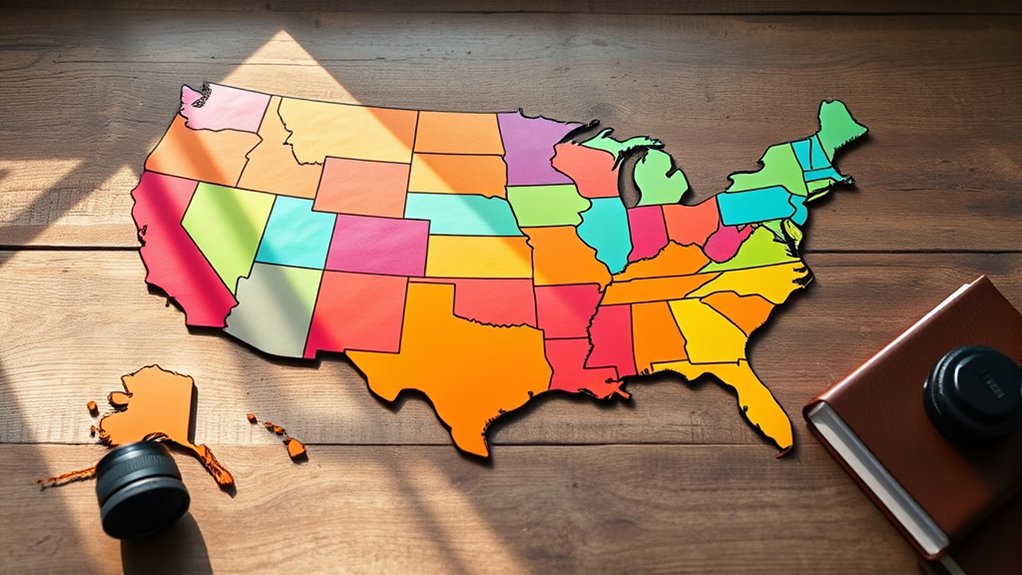
Which states require you to have a permit to carry a concealed firearm in public? Currently, 21 states, including California, Colorado, and Connecticut, mandate concealed carry permits. These states have specific permit requirements that often include completing firearm training and safety courses before issuance.
Twenty-one states, such as California and Colorado, require permits with training to carry concealed firearms legally.
You’ll find that permits are valid for a set period and must be renewed regularly to remain active. When applying, expect thorough background checks to ensure responsible carry.
Recognition of out-of-state permits varies, so you’ll need to verify if your permit is accepted when traveling.
States enforcing permit requirements emphasize safety and accountability, aiming to balance lawful concealed carry with public security. Understanding these rules is essential if you plan to carry concealed in these jurisdictions.
It’s always a good idea to stay informed and follow the law closely.
Permitless Concealed Carry States and What That Means
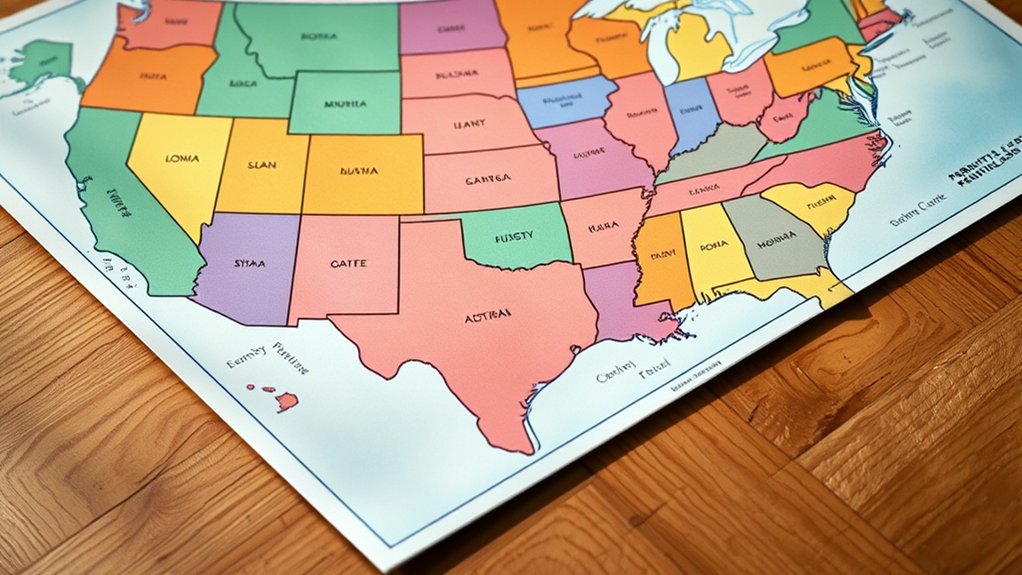
In 29 states, you can carry a concealed firearm without needing a permit, thanks to permitless carry laws, which are often called constitutional carry.
Basically, these laws do away with some of the usual requirements, like background checks and safety training, when it comes to carrying a concealed weapon.
That said, law enforcement officers might still ask you to show proof that you legally own the firearm.
And it’s important to remember that federal restrictions still apply, meaning certain individuals are prohibited from carrying regardless of state laws.
Permitless Carry Overview
Although permitless carry laws vary by state, 29 states have adopted policies allowing individuals to carry concealed firearms without a permit as of 2023. This means you can carry a concealed firearm without going through traditional firearm licensing processes, provided you’re legally eligible.
Permitless carry typically excludes felons and others prohibited from owning guns.
These states often don’t require background checks or safety training for concealed carry.
Permitless carry has become more common in rural areas but also includes larger states like Texas and Florida. So, it’s not just a small-town thing anymore.
Key points to weigh:
- No permit required for concealed carry
- Applies only to legally eligible individuals
- Background checks and training not mandatory
- Law enforcement may face challenges verifying legal carry
- Policies vary widely by state jurisdiction
Implications Of No Permits
When states allow permitless concealed carry, they remove several layers of oversight designed to guarantee responsible firearm ownership. You can carry a concealed firearm without a permit or mandatory safety training.
This might reduce public awareness about proper gun handling and legal responsibilities.
Without background checks for private sales, the risk of firearms reaching prohibited individuals increases. Research shows that relaxed permit requirements are linked to a 13-15% rise in violent crime and homicide rates. That’s a pretty significant jump.
The lack of required training can lead to less competent gun handling, which raises the chances of accidental injuries or theft. Federal and state safety advocates warn these laws reduce accountability and oversight.
In the end, this could undermine overall public safety and responsible gun ownership in the states affected.
Training and Background Checks for Concealed Carry Permits
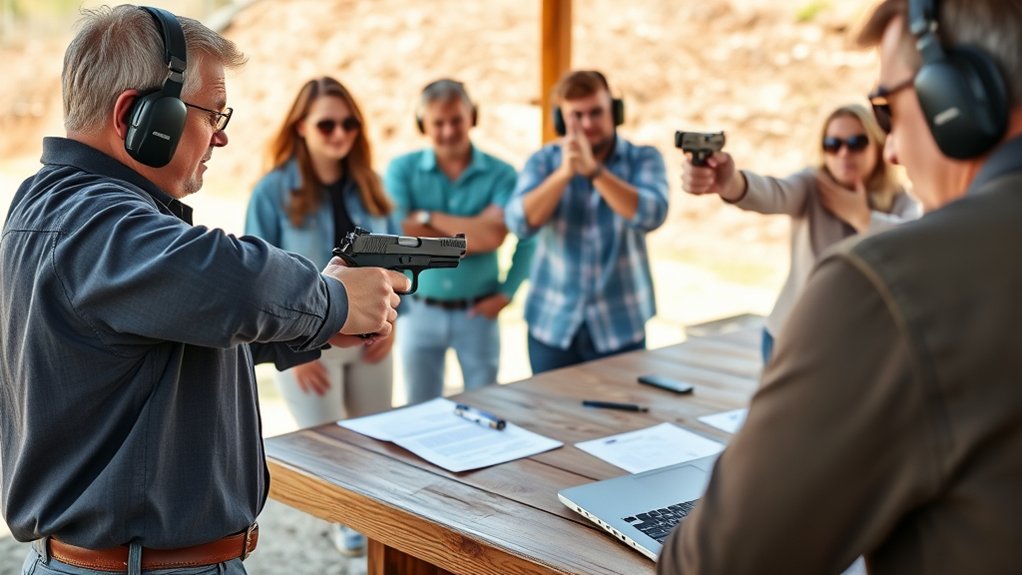
Since carrying a concealed firearm involves significant responsibility, twenty-one states require applicants to complete firearm safety training and live-fire exercises before issuing a permit. These states prioritize firearm licensing by enforcing strict safety protocols and thorough background checks.
Twenty-one states require firearm safety training and live-fire exercises before issuing concealed carry permits.
For example, California, Connecticut, and Delaware mandate courses on firearm handling, legal regulations, and conflict resolution. Meanwhile, some states like Pennsylvania and Montana require permits but lack explicit training requirements.
When applying, you can expect completion of certified firearm safety courses, live-fire proficiency demonstrations, thorough background checks, instruction on relevant state laws, and an emphasis on responsible firearm use and conflict management.
These measures ensure you’re both morally suitable and technically competent to carry a concealed weapon responsibly. It’s all about making sure you’re prepared in every way before you carry.
Concealed Carry Permit Reciprocity Across States
How does concealed carry permit reciprocity work across states? Reciprocity agreements allow you to carry concealed firearms in states other than the one that issued your permit, but these agreements vary widely because each state has different rules.
Some states only recognize permits from states with similar training and background check requirements. This limits cross-recognition quite a bit. For example, North Carolina honors out-of-state permits from all states but advises you to review local laws first.
On the other hand, states like California and New York have stricter reciprocity policies. They often recognize only permits from a few states with comparable standards.
Since federal law doesn’t require states to honor other states’ permits, you have to understand each state’s reciprocity agreements carefully before carrying concealed firearms across state lines.
Common Restrictions on Where You Can Carry Concealed Firearms
Although concealed carry permits allow you to legally carry firearms, most states strictly regulate where you can do so. You must be aware of specific location restrictions that vary widely but commonly include sensitive areas. States often require clear location signage to notify you of firearm prohibitions.
Carrying in prohibited zones can result in criminal charges or permit revocation. So, it’s really important to know the rules before you carry.
Common restrictions include carrying concealed firearms in:
- Schools, courthouses, and hospitals
- Polling stations during elections
- Government buildings and secure facilities
- Establishments serving alcohol
- Private property explicitly posted with firearm bans
Understanding these restrictions and respecting location signage helps you comply with state laws and avoid legal complications. Staying informed is key to staying safe and legal.
How Concealed Carry Permit Laws Affect Public Safety and Crime
When states require concealed carry permits, they often see a reduction in firearm-related homicides and violent crimes. This form of gun control promotes public safety by ensuring that permit holders undergo background checks and safety training. These requirements help lower firearm thefts and unintentional injuries by vetting carriers to meet moral and safety standards.
On the other hand, permitless carry laws have been linked to a 13-15% increase in violent crime and police shootings in some regions. Research also shows that relaxed concealed carry laws correlate with more firearm injuries and a higher likelihood of gun-related incidents in public spaces.
Choosing the Right Concealed Carry Permit: Key Factors to Consider
When you’re choosing a concealed carry permit, it’s important to think about the mandatory training and safety requirements that each state has. These can be pretty different depending on where you are.
Also, you’ll want to check out the reciprocity benefits. This is especially key if you plan to carry your firearm across state lines since recognition laws can vary a lot from one state to another.
And don’t forget to understand any legal restrictions or limits that come with the permit. This includes knowing where you’re allowed to carry and what the renewal process looks like.
Keeping these factors in mind will help you make a smart choice.
Training And Safety Requirements
Since safety is paramount, many states require you to complete firearm training courses before granting a concealed carry permit. These courses focus on proper firearm handling and safety protocols to guarantee you’re prepared to carry responsibly.
Training often includes completion of approved safety courses covering legal use and safe firearm handling. You’ll also need to get certification of handgun qualification through firing tests. Sometimes, live-fire exercises are part of the process, requiring a minimum number of rounds fired (like 100 rounds in Delaware).
You’ll receive instruction on state-specific laws and regulations regarding concealed carry. Plus, they’ll want to see demonstrations of your competency and responsible firearm use.
Over half of U.S. states and D.C. mandate such training to confirm that you understand safety and legal responsibilities before issuing a permit. This way, they make sure you’re equipped to handle a firearm safely in public.
Permit Reciprocity Benefits
Although concealed carry permit laws differ across states, understanding reciprocity agreements can considerably impact how and where you legally carry your firearm. Permit recognition varies widely; a valid permit from one state may be accepted in others, but this depends on each state’s specific laws and reciprocity agreements.
Choosing a permit from a state with broad reciprocity can simplify traveling with your firearm legally. However, some states require additional background checks or training for acknowledging out-of-state permits, so you must verify these conditions before carrying.
Legal Restrictions And Limits
Because states impose varied legal restrictions and limits on concealed carry permits, you must carefully evaluate these factors before choosing the right permit. Consider how each state’s requirements impact your eligibility and compliance. This is especially true when it comes to firearm registration and storage regulations.
Key aspects include mandatory firearm safety training and live-fire testing. You’ll also want to look at thorough background checks and moral character assessments. Plus, keep in mind the criteria for denial or revocation based on criminal or mental health history.
There are specific restrictions on where you can carry concealed firearms, too. Don’t forget about renewal procedures and how they affect permit validity and reciprocity.
Understanding these legal nuances ensures you select a permit that aligns with your needs. It also helps you stay compliant with state laws, avoiding penalties or permit loss.
Frequently Asked Questions
Can Non-U.S. Citizens Apply for Concealed Carry Permits?
You can apply for concealed carry permits as an international applicant in some states, but you’ll face stricter eligibility and permit renewal processes. Always provide the required documentation, and expect thorough background checks compared to U.S. citizens.
It’s important to know that rules vary by state, so make sure to check the specific requirements where you live. Being prepared and informed will help make the process smoother for you.
How Do Concealed Carry Laws Affect Private Property Rights?
Think of private property as your castle; permit restrictions let you decide if concealed carry is allowed inside. Depending on your state, you can either restrict firearms or must permit them, shaping how you control your property’s safety.
It’s all about how much control you get over your space. Some states give you full say, while others set rules that limit your options. Either way, these laws impact your rights as a property owner.
Are There Age Restrictions for Concealed Carry Permits?
Yes, you’ll face age restrictions for concealed carry permits, usually 21. Some states allow 18-year-olds. Permit reciprocity depends on age limits, and background checks verify you meet all legal age requirements before approval.
It’s important to check the specific rules in your state because they can vary quite a bit. Some places might have different age criteria or additional requirements. So, make sure you know what applies to you before applying.
What Happens if a Permit Is Lost or Stolen?
Nearly 30% of permit holders lose their concealed carry permits. If yours is lost or stolen, you need to act quickly and follow the proper lost permit procedures.
Make sure to report it to law enforcement as soon as possible. Also, keep your permit information confidential to avoid any legal trouble.
It’s important to stay on top of this so you don’t run into issues later on. Just take care of it right away, and you’ll be fine.
Can Concealed Carry Permits Be Revoked or Suspended?
Yes, your concealed carry permit can be revoked or suspended if you violate laws or fail permit renewal requirements. Authorities often conduct background checks and may suspend permits after criminal convictions or mental health evaluations.
It’s important to stay on top of all the rules and renewals to keep your permit valid. If you slip up or something serious happens, the authorities have the power to step in and take action. So, always be aware of the legal responsibilities that come with carrying concealed.
Conclusion
Finding your way through concealed carry permits can feel like piecing together a complex puzzle. Each state sets its own rules, so it’s important to know what applies where.
You need to understand which states require permits, the training involved, and reciprocity agreements before you carry. Keep in mind common restrictions on where you can legally carry your weapon.
Staying informed helps you comply with the law and enhances public safety. It also ensures your rights and responsibilities align clearly wherever you go.