Do You Need A Concealed Carry License In Florida – Current Carry Laws
You don’t need a concealed carry license in Florida if you’re 21 or older and meet certain criteria set in 2023. Permitless carry lets you carry concealed handguns and other specified weapons without a license. But a license still offers benefits like out-of-state reciprocity and access to some restricted places.
However, carrying is prohibited in specific locations regardless of license status. Understanding these rules helps you stay compliant and informed about your rights and responsibilities. It’s always a good idea to know where you can and can’t carry before you head out.
What Is Permitless Concealed Carry in Florida?
Although Florida has long required permits for concealed carry, as of July 1, 2023, you can legally carry a concealed firearm without a permit if you’re 21 or older and meet certain criteria. This change introduces permitless carry under Florida law, eliminating the previous license requirement for carrying concealed weapons.
Starting July 1, 2023, Florida allows permitless concealed carry for those 21 and older meeting specific criteria.
You no longer need a background check or firearms safety training to carry a concealed firearm. This includes handguns, electronic devices, tear gas guns, knives, or billie clubs that aren’t openly visible.
While permitless carry is generally allowed, Florida’s carry laws still prohibit concealed weapons in specific locations such as schools, courthouses, and polling places.
Importantly, existing concealed carry licenses remain valid and continue to offer benefits like reciprocity with other states, even with the new permitless carry option.
Who Can Carry Concealed Without a License in Florida?
If you’re 21 or older and meet Florida’s legal requirements, you can carry a concealed firearm without a license. Permitless carry allows both residents and non-residents to exercise concealed carry under specific conditions.
To understand your legal eligibility, consider these points:
You must be 21 or older to carry concealed without a license. You can’t have recent DUI convictions or other disqualifying criminal records. Persons under 21 generally need a valid permit or fall under narrow exceptions.
Concealed carry is prohibited in certain locations such as schools and government buildings, regardless of license status. Florida’s permitless carry law simplifies concealed carry for eligible individuals but doesn’t legalize open carry except in limited circumstances.
Which Weapons Are Considered Concealed Weapons Under Florida Law?
You should know that Florida law considers several items as concealed weapons. This includes handguns, electronic devices, tear gas guns, knives, and billie clubs.
But not all firearms fall under this category. For example, machine guns are specifically excluded from being called concealed weapons.
Whether a weapon is considered concealed really comes down to if it’s carried out of sight.
This rule applies to both people with licenses and those who carry without permits, though there are certain regulations in place.
Types Of Concealed Weapons
Several types of weapons qualify as concealed under Florida law, including handguns, electronic devices, tear gas guns, knives, and billie clubs when carried in a concealed manner. Understanding which concealed weapons require a license is essential to avoid prohibited conduct.
Under Florida law, the following are considered concealed weapons: Firearms, such as handguns, carried hidden on or about your person. Electronic devices designed for self-defense carried discreetly. Tear gas guns, which you must carry concealed to be regulated as such. Knives and billie clubs, when hidden from plain view.
Keep in mind that carrying these without a proper license or outside legal allowances is prohibited and can lead to penalties. Also, machine guns are explicitly excluded from this definition under Florida law.
Excluded Firearm Categories
Understanding which weapons Florida law includes as concealed is only part of the picture. It’s equally important to recognize which firearms and devices are explicitly excluded from this classification. Under section 790.001(9), Florida Statutes, machine guns fall under excluded firearm categories. This means they are not considered concealed weapons regardless of how you carry them.
The law defines concealed weapons broadly, including handguns, electronic devices, tear gas guns, knives, and billie clubs, but it excludes machine guns. You should know this distinction to comply with Florida carry laws and avoid penalties for carrying concealed weapons unlawfully.
| Included Concealed Weapons | Excluded Firearm Categories |
|---|---|
| Handguns | Machine guns |
| Tear gas guns | Certain automatic firearms |
| Knives |
When Do You Still Need a Concealed Carry License in Florida?
You still need a concealed carry license in Florida if you want to carry concealed in most places.
Plus, having that license helps make sure your permit is recognized by other states.
It’s also handy because it lets you carry in spots where open carry isn’t allowed, like certain businesses and public areas.
Knowing when you need a permit helps you stay on the right side of the law and fully enjoy your rights.
License Benefits Explained
Although Florida allows permitless carry for many residents, you still need a concealed carry license to access several important benefits. This license offers advantages beyond basic carry rights, especially if you travel or purchase firearms.
For example, a concealed carry license lets you carry in other states that recognize permits but don’t allow permitless carry. It also gives you access to restricted areas where permitless carry is prohibited.
Plus, the license allows same-day firearm purchases without waiting periods or extra background checks.
And there’s more. Having a license provides enhanced legal protection in certain situations involving firearm possession or use.
Situations Requiring Permits
Even with permitless carry laws in Florida, certain situations still require you to have a concealed carry license. If you’re under 21, you must hold a license to carry concealed, since permitless carry only applies to those 21 and older.
Non-residents also need a concealed carry license unless their home state’s permit is recognized through reciprocity agreements under Florida laws.
Carrying in prohibited places like schools, courthouses, or establishments serving alcohol is illegal no matter what. Permitless carry doesn’t change that.
Also, if you want to carry concealed in other states that recognize Florida’s permit, you have to have a valid license. That’s because permitless carry doesn’t apply outside Florida.
Finally, individuals with disqualifying convictions or mental health adjudications must have a concealed carry license to carry legally. So, even with relaxed rules, some restrictions still apply.
How to Apply for a Florida Concealed Weapons License

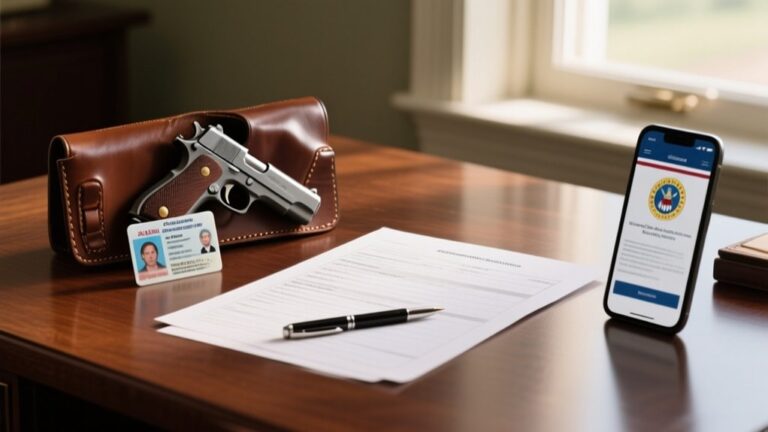
When applying for a Florida concealed weapons license, you can choose to submit your application online, in person, by mail, or renew at authorized tax collector locations or regional offices.
The application process involves these key steps:
First, confirm you meet eligibility requirements, including being at least 21 years old and having no disqualifying criminal or mental health records.
Ensure you meet eligibility criteria like being 21+ and having no disqualifying criminal or mental health history.
Next, provide a valid photo ID and proof of firearm proficiency through approved training.
Then, pay the required fees. If you’re applying in person, you’ll also complete fingerprinting and have your photograph taken.
Finally, submit your completed application to the Florida Department of Agriculture. They’ve 90 days to approve or deny it.
Following these steps will help you navigate the concealed weapons license application process smoothly and stay compliant with Florida law.
Permitless vs. Licensed Concealed Carry: Key Differences
Since Florida recently adopted a permitless carry law, you can now carry a concealed firearm without a license if you’re 21 or older and meet specific requirements.
Permitless carry lets you legally carry concealed within Florida without obtaining a concealed carry license. However, a license still offers significant advantages.
With a concealed carry license, you gain reciprocity, allowing you to carry concealed in other states recognizing Florida’s permits. License holders also benefit from legal protections and privileges, such as same-day firearm purchases and carrying in certain restricted areas where permitless carry doesn’t apply.
Understanding these key differences helps you navigate Florida’s firearm laws effectively. This way, you can choose the option that best fits your needs and legal responsibilities.
Where You Cannot Carry a Concealed Firearm in Florida
Although Florida law allows concealed carry in many places, it strictly prohibits carrying a concealed firearm in specific locations to guarantee public safety and order.
Understanding these concealed carry restrictions is essential to comply with Florida carry laws and avoid legal issues related to prohibited areas.
Knowing concealed carry restrictions is key to staying compliant and avoiding legal trouble in Florida.
You can’t carry a concealed firearm in the following locations:
- Police stations, detention facilities, courthouses, and courtrooms
- Polling places, legislative sessions, and meetings of governing bodies
- Schools, colleges, athletic events, and licensed alcohol-serving establishments
- Nuisance places as defined by Section 823.05
These restrictions apply regardless of the license requirement status.
What Happens If You Carry Without a License?
If you carry a firearm without a license in Florida, you’re actually committing a second-degree misdemeanor. That means you could face fines and even some possible jail time.
Law enforcement officers can either arrest you or give you a citation, especially if you’re caught in places where firearms aren’t allowed, like schools or government buildings.
On top of that, getting caught can impact your chances of getting permits in the future or legally owning a firearm down the road.
Legal Risks Explained
What consequences do you face for carrying a concealed firearm without a license in Florida? Violating the law by illegal carry exposes you to serious legal risks. Here’s what you need to know:
First, you commit a second-degree misdemeanor, which carries penalties of up to 60 days in jail and fines.
Also, carrying in prohibited places like schools, courthouses, or bars triggers criminal charges regardless of your license status.
Law enforcement can arrest you for illegal carry if you’re found with a firearm in restricted areas.
Plus, license violations can jeopardize your future applications, risking legal disputes and loss of firearm rights.
Understanding these legal risks helps you comply with Florida’s carry laws and avoid criminal penalties associated with unauthorized firearm possession. So, it’s really important to know the rules before you carry.
Penalties And Consequences
Carrying a concealed firearm without a license in Florida can get you into serious legal trouble. It’s considered a second-degree misdemeanor, which isn’t something to take lightly. You could face up to 60 days in jail and fines up to $500.
If you carry a firearm in places where it’s not allowed, the charges get even more severe. Law enforcement can confiscate your gun as soon as they find out you’re carrying it unlawfully.
Besides the immediate penalties, you also risk being arrested and possibly losing your rights to own or carry firearms in the future. To avoid all this hassle, it’s really important to get a valid concealed carry license.
Knowing the laws helps you keep your rights intact and stay on the right side of Florida’s carry regulations. It’s just smart to be informed and prepared.
Benefits of Having a Florida Concealed Carry License
Although Florida allows permitless carry in some cases, having a concealed carry license offers some pretty important advantages. With a license, you get legal protection and clear compliance with Florida carry laws.
Florida permitless carry is allowed, but a concealed carry license provides vital legal protection and clarity.
Here are four key benefits:
- Reciprocity: Your Florida concealed carry license is recognized in many states, which means you can carry beyond Florida.
- Reduced Restrictions: Licensed carriers can carry in places off-limits under permitless carry and avoid mandatory waiting periods when buying handguns.
- Legal Clarity: Holding a license shows you’ve completed safety training and background checks, which helps minimize legal risks and penalties.
- Purchase Advantages: You can often buy firearms the same day without the three-day waiting period, making the process quicker.
How Florida’s Concealed Carry Laws Compare With Other States
Florida’s concealed carry laws stand out by allowing permitless carry for individuals 21 and older who meet specific criteria. This policy is different from many states that require licenses. While you can carry without a permit in Florida, you still have to follow firearm regulations and avoid prohibited locations.
Florida’s licensing system is still active and offers some perks. For example, it provides reciprocity with states that honor its permits. That’s unlike some states that have abolished licensing entirely.
Here’s a quick comparison:
| State Type | Permitless Carry Allowed | Licensing Requirements |
|---|---|---|
| Florida | Yes | License optional, benefits reciprocity |
| Strict Licensing | No | Mandatory permit for concealed carry |
| Constitutional Carry | Yes | No license required, no reciprocity |
| States with Reciprocity | Varies | Recognize select out-of-state permits |
This shows Florida’s balanced approach within U.S. concealed carry laws.
Reciprocity: Carrying Concealed Out of State
How do you know if your concealed carry permit is valid when traveling outside Florida? Reciprocity plays a key role in out-of-state carry legality. Florida honors concealed carry permits from specific states, but the reverse isn’t always true.
To make sure your Florida license is recognized elsewhere, follow these steps:
- Check if the destination state has a reciprocity agreement with Florida.
- Verify that your concealed carry permits meet that state’s requirements.
- Confirm the state doesn’t allow permitless carry if you rely solely on reciprocity.
- Avoid states like New York and California, which don’t recognize Florida permits.
Always research reciprocity before traveling so you can stay legal with out-of-state carry laws. It’s better to be safe than sorry when you’re carrying concealed outside Florida.
Tips for Staying Compliant With Florida’s Carry Laws
When carrying concealed in Florida, you must meet specific eligibility criteria to carry without a license legally. To guarantee legal compliance, always carry valid identification and know Florida carry laws thoroughly.
Avoid prohibited locations such as schools, courthouses, and establishments serving alcohol, as carrying firearms there can lead to serious legal consequences.
Staying informed on any updates to these laws is vital for maintaining compliance. If you possess a concealed carry license, adhere strictly to its terms.
Furthermore, proper firearm storage is essential; secure your weapon to prevent access by minors and comply with storage regulations.
Frequently Asked Questions
How Long Does It Take to Renew a Florida Concealed Carry License?
It typically takes up to 90 days for Florida to process your concealed carry license renewal after they receive your complete application.
You can start the renewal process online, by mail, or in person.
You might need to update your fingerprints and background check.
Make sure you apply at least 90 days before your license expires to avoid any lapse in your renewal.
Staying proactive helps ensure a smooth renewal experience.
It’s always better to get ahead of it so you don’t run into any issues.
Can Non-Residents Apply for a Florida Concealed Carry License?
Yes, you can definitely pursue a Florida concealed carry license even if you don’t call Florida home.
If you’re a U.S. citizen, permanent resident, or foreign diplomatic official, you just need to meet the standard eligibility requirements, including firearm proficiency.
Florida welcomes non-residents to apply through in-person, online, or mail-in options.
Meeting these criteria allows you to legally carry concealed firearms in Florida with your own license.
It’s pretty straightforward once you know the steps.
Are There Any Fees Associated With Obtaining a Concealed Carry License?
Yes, you’ll pay fees to get a concealed carry license in Florida. The initial application costs $70, while renewals are $60.
You might also pay up to $5 for fingerprinting, depending on the agency.
If you apply through certain tax collectors, there’s a convenience fee up to $22.
Remember, if you carry without a license under permitless carry, no fees apply.
Fees remain consistent for renewals and vary by application method.
What Training Is Required for Florida Concealed Carry Applicants?
You need to complete an approved firearms training course that covers safety, handling, and responsible carry practices. This can be a hunter safety course, an NRA-certified class, or another law enforcement-approved program.
Alternatively, if you have equivalent experience, like military service or competitive shooting, you can use that instead. The key is showing that you know how to handle a firearm safely and responsibly to meet Florida’s requirements before you apply for a concealed carry license.
Can a Concealed Carry License Be Revoked, and Under What Circumstances?
You know the saying, “What’s gained in a moment can be lost in a second.” Yes, your concealed carry license can be revoked if you break laws, provide false info, or commit certain crimes.
Law enforcement can act if you’re deemed a public safety risk. You’ll be officially notified and have the right to appeal and contest the revocation in a hearing, ensuring due process is followed.
Conclusion
So, you don’t need a concealed carry license in Florida unless you want one. It’s kind of ironic that the state lets you carry without a permit but still offers a license with some solid benefits like reciprocity and easier access.
Knowing when and how to carry legally helps keep you out of trouble. In the end, understanding these details isn’t just smart. It’s essential for staying on the right side of the law while exercising your rights.