What Is A Good Scope For Long Range Shooting – Buying Guide And Tips
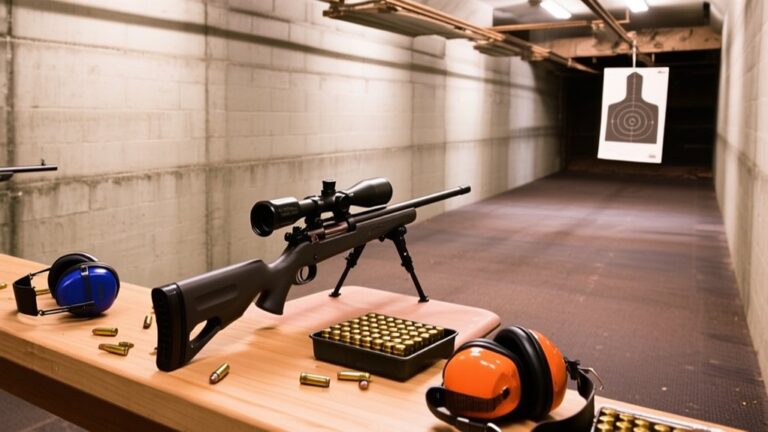
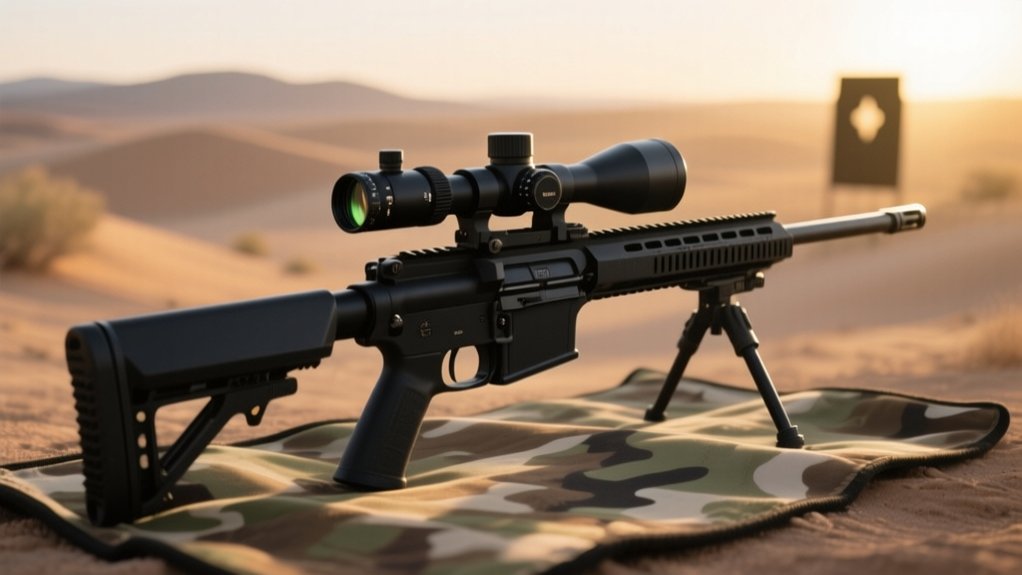
For long-range shooting, choose a scope with versatile 5-25x magnification to adapt between close and distant targets. Look for first focal plane reticles for precise holdovers at any zoom, and prioritize high-quality glass with anti-reflective coatings for clear, bright images.
Durable, weatherproof construction guarantees reliability in harsh conditions. Don’t forget adjustable parallax and comfortable eye relief for accuracy and comfort.
To master your choice, explore key features and accessories that boost performance and precision.
What Magnification Range Is Best For Long Range Shooting?
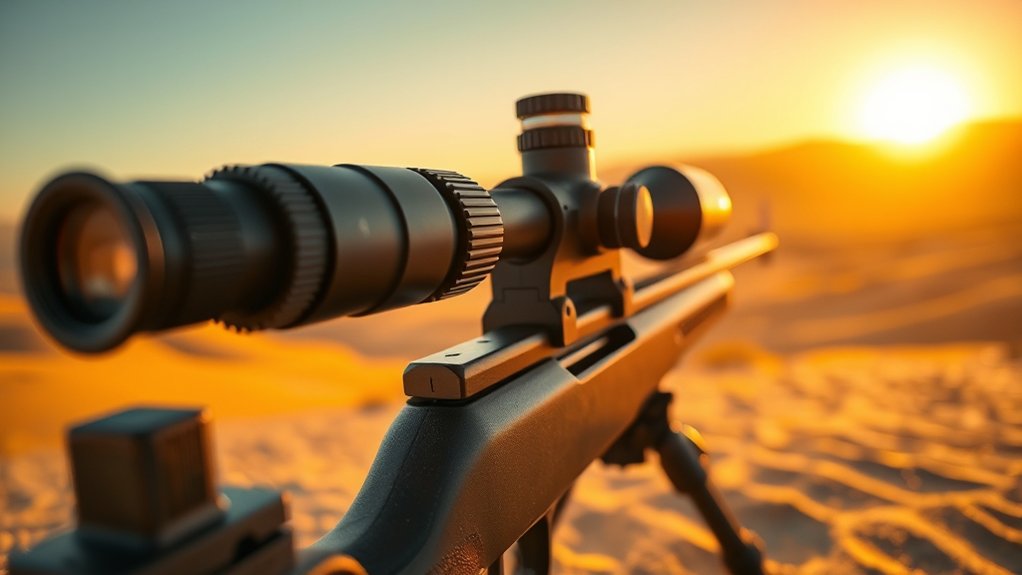
Choosing the right magnification range is key for long-range shooting success. When selecting Long Range Scopes, you want a magnification range that offers flexibility. An ideal variable magnification falls between 5-25x, letting you handle close-range engagements and extreme distances with ease.
Lower magnification around 3-4x improves your field of view for quick target acquisition nearby, while high magnification, 20x or more, enables precision shots at long distances beyond 500 yards. This range guarantees you see details clearly without swapping scopes.
With variable magnification, you get the adaptability needed for varying shooting scenarios. So, aim for scopes that balance wide zoom ranges, giving you the versatility to switch smoothly from close to far targets without losing clarity or control.
How Glass Quality Affects Scope Clarity And Accuracy
When you invest in high-quality glass for your scope, you get clearer, brighter images that make a real difference, especially in low-light conditions.
Premium glass enhances light transmission, boosting optical clarity and allowing you to see targets with greater precision.
Anti-reflective coatings reduce glare, improving clarity even at dawn or dusk.
Here’s how glass quality affects your shooting accuracy:
- Edge-to-edge sharpness guarantees consistent clarity across the entire field of view, preventing distortion at high magnifications.
- Resolution defines your scope’s ability to resolve fine details, critical for accurate shot placement at long range.
- Chromatic aberration is minimized with premium glass, reducing color fringing that can obscure target edges.
Choosing a scope with superior glass quality means better clarity and confidence in every shot.
Which Reticle Is Best For Precision And Holdovers?
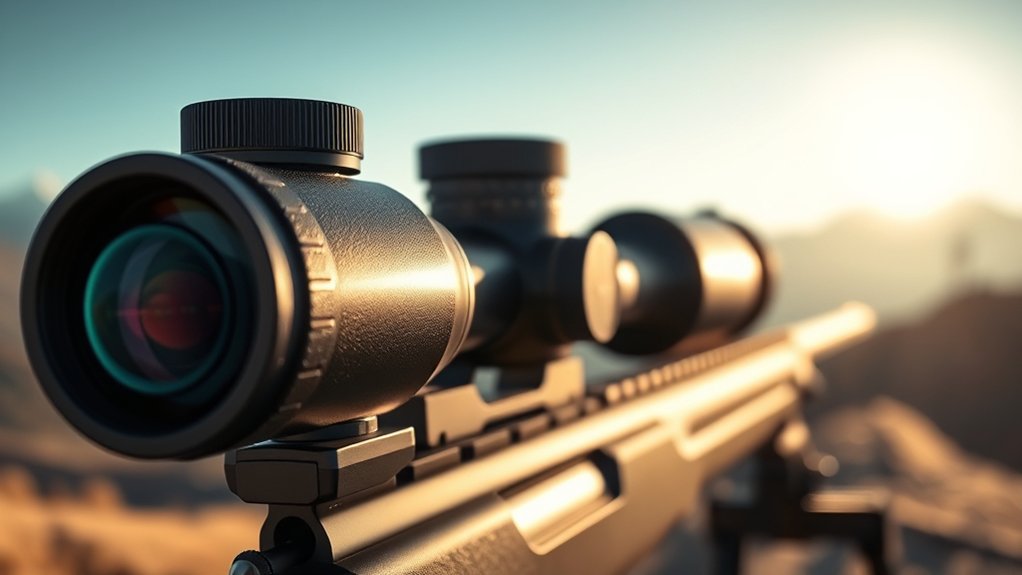
How do you pick the best reticle for precision and holdovers? Start by considering first focal plane (FFP) reticles, which keep holdover points accurate across all magnifications. This is essential for long-range precision shooting.
Milling reticles with evenly spaced dots or hash marks help you make quick windage and elevation adjustments without guesswork. Christmas Tree Reticles add vertical and horizontal lines that simplify holdovers for bullet drop and wind drift, speeding target acquisition.
Fine crosshairs reduce target obstruction, letting you aim precisely, especially at high magnifications. Illuminated reticles enhance visibility in low light, preventing target washout while maintaining clarity.
Combining these features guarantees your reticle supports fast, accurate shots with reliable holdovers and adjustments. That makes it ideal for serious long-range shooters.
Why Durable Construction And Weatherproofing Matter For Long Range Scopes
Because you rely on your scope for consistent accuracy, durable construction and weatherproofing are critical features for long-range shooting. A scope’s rugged build, often using aircraft-grade aluminum, provides shock resistance and maintains optical alignment essential for long-range accuracy.
Weatherproofing features like gas-purged and O-ring sealed components prevent fogging and water damage, guaranteeing clear views in all conditions. Here’s why they matter:
- Durable construction resists heavy recoil and rough handling without losing zero, preserving your shot precision.
- High-quality coatings enhance light transmission and protect lenses from scratches, maintaining clarity over time.
- Weatherproofing features boost portability by letting you trust your scope in humid, rainy, or snowy environments.
Choosing a scope with these traits guarantees reliable, long-lasting performance in the field.
How To Check Turret Adjustments And Tracking Accuracy
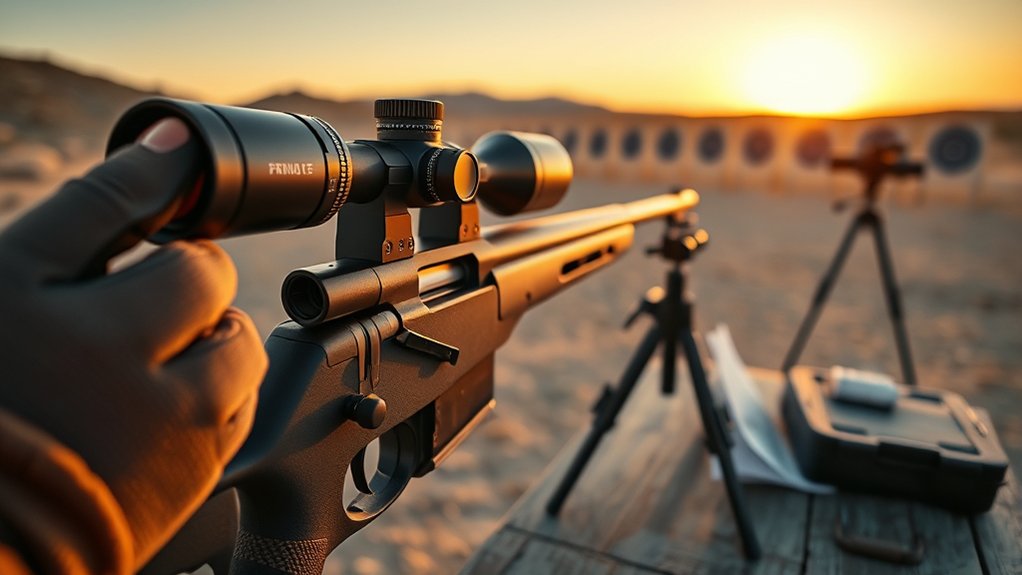
Turret adjustments play an essential role in guaranteeing your scope delivers precise shot placement at varying distances. To check tracking accuracy, start with a tall target test: dial a known distance, like 20 MOA, then return to zero and verify the point of impact matches your original shot.
Next, perform box tests by dialing right 5 mils, up 5, left 5, and down 5, confirming the point of impact returns exactly to the start. High-quality scopes offer distinct clicks for each adjustment, so you can trust your settings.
Always guarantee your turret adjustments correspond precisely. Ten mils dialed must equal 10 mils moved.
Finally, test zero retention after simulating transport bumps to maintain consistent accuracy in long-range shooting.
Why Parallax And Eye Relief Matter For Long Range Shooting
You need to understand how parallax adjustment keeps your reticle perfectly aligned with the target. This helps you avoid those costly shooting errors, especially at long range.
Eye relief is important too. It not only guarantees comfort and safety but also helps you maintain a steady sight picture.
When you put them together, parallax and eye relief play a big role in improving your accuracy and overall shooting experience.
Parallax Adjustment Importance
When you adjust the parallax on your scope correctly, the reticle stays perfectly aligned with your target at different distances. This is essential for long-range shooting because it prevents errors that could cause missed targets.
Parallax adjustment directly impacts your accuracy and shooting stability, especially in varied shooting scenarios.
Combining this with proper eye relief enhances comfort and helps avoid scope bite from recoil.
To optimize your long-range shooting setup, focus on:
- Confirming parallax adjustment matches the distance to your target for a clear, aligned reticle.
- Maintaining adequate eye relief (3.5-4 inches) to protect your eye and improve comfort.
- Regularly checking adjustments during shooting to adapt to changing distances and enhance accuracy.
Mastering these elements guarantees confident, consistent shots in any long-range shooting situation.
Eye Relief Comfort Benefits
Parallax adjustment keeps your reticle aligned with the target, but pairing that accuracy with proper eye relief makes a big difference in comfort and safety.
Eye relief, the distance between your eye and the scope’s ocular lens, typically ranges from 3.5 to 4.5 inches. This distance provides vital cushioning against recoil.
It guarantees you maintain a consistent shooting position without risking injury, especially during long range shooting sessions.
Scopes with adjustable parallax allow you to fine-tune focus, enhancing target acquisition and shooting accuracy at varied distances.
By combining adjustable parallax with adequate eye relief, you improve comfort and minimize strain.
This lets you stay on target longer and react faster.
Prioritizing both features leads to better shooting accuracy and a safer, more enjoyable experience overall.
Impact On Accuracy
Although minor, misalignments between your eye and the scope can throw off your shot, especially beyond 300 yards.
Parallax adjustment is essential for long-range shooting accuracy; it fine-tunes the reticle alignment, ensuring your sight picture stays precise despite head movement.
Eye relief also plays a key role. Not only does it protect you from scope bite by maintaining a safe distance, but it also helps with quick target acquisition.
To maximize precision and optical quality, focus on:
- Using a scope with adjustable parallax to eliminate aiming errors at extended ranges.
- Ensuring proper eye relief (3.5 to 4.5 inches) for comfort and consistent sight picture.
- Prioritizing light transmission for clear visuals in varying light conditions.
Together, these factors enhance your accuracy and confidence on every long-range shot.
Which Accessories Improve Long Range Scope Performance?
To get the most out of your long-range scope, you’ll want to equip it with accessories that enhance accuracy and usability. Throw levers speed up magnification adjustments, letting you adapt quickly.
Quality scope rings guarantee stability and maintain zero. Sunshades reduce glare, improving target acquisition in bright conditions. Flip-up lens covers protect optics, preserving optical performance. Leveling tools help keep your scope perfectly aligned for precise shots.
| Accessory | Benefit |
|---|---|
| Throw Levers | Quick magnification adjustments |
| Scope Rings | Stability and zero retention |
| Sunshades | Glare reduction for clearer view |
| Flip-Up Lens Covers | Lens protection, optical clarity |
| Leveling Tools | Proper scope alignment |
These accessories collectively boost your shooting efficiency and accuracy at long range.
How To Choose A Scope For Hunting Or Competition Needs
After outfitting your scope with the right accessories, the next step is choosing a model that fits your hunting or competition needs.
Focus on these three key factors:
Prioritize these three essential elements for optimal scope performance and accuracy.
- Magnification and Objective Lens Size: Aim for at least 18x magnification with a large objective lens (50mm or more) to maximize light transmission and clarity, especially in low-light conditions.
- First Focal Plane (FFP) Reticle: This guarantees your reticle scales with magnification changes, allowing precise holdovers and ethical shots at varying distances.
- Durability and Repeatable Adjustments: Select a scope with high-quality glass, weather resistance, and shockproof construction.
Reliable repeatable adjustments and a solid return to zero are critical for consistent accuracy in competition or hunting environments.
Frequently Asked Questions
How Do I Mount My Scope Correctly for Long-Range Shooting?
To mount your scope correctly, start by choosing rings wisely for your rifle’s rail system.
Use mounting accessories to secure it, then focus on scope alignment techniques and leveling your scope to avoid canting.
Check eye relief considerations to get a comfortable cheek weld.
Adjust turrets properly and use parallax adjustment tips for clear targeting.
Tighten screws to the manufacturer’s torque specifications.
Finally, test accuracy methods by zeroing at 100 yards before long-range shots.
What Is the Best Way to Clean and Maintain My Scope?
To clean and maintain your scope, focus on regular lens care using microfiber cloths and proper cleaning tools to preserve optical clarity.
Gently clean the reticle and turret adjustments to avoid damage.
Always use lens caps to protect from dust and moisture, which also helps prevent fog.
Store your scope in a dry case for moisture protection.
Keep a maintenance schedule to check barrel alignment and turret performance.
This way, everything stays accurate and reliable every time you shoot.
Can I Use a Long-Range Scope With Night Vision or Thermal Optics?
Think of pairing your long-range scope with night vision or thermal optics like assembling a symphony. Each instrument must harmonize. You can use them together, but night vision compatibility depends on reticle types and magnification range choices.
Thermal optics advantages shine in low light. Prioritize lens quality, objective lens size, and scope durability factors.
Evaluate mounting options carefully to maintain eye relief significance.
Also, consider environmental factors for peak performance in the field.
How Important Is Scope Weight for Carrying During Long Hunts?
Scope weight is essential for your hunting comfort and field mobility during long hunts. Lightweight scope materials help reduce pack weight and improve gear efficiency, so you won’t tire quickly.
Proper scope balance and weight distribution enhance your shooting posture and target stability, making elevation adjustments easier. A well-balanced setup keeps you steady without sacrificing durability.
This allows you to stay focused and comfortable while tracking targets over extended periods in rugged terrain.
What Are the Common Mistakes to Avoid When Zeroing a Long-Range Scope?
When zeroing your long-range scope, avoid common mistakes like scope calibration errors and improper distance estimation.
Don’t overlook windage adjustments or ignore bullet drop, as these affect accuracy.
Stay consistent with your shooting position and never neglect parallax adjustment.
Skipping range verification or using a poor reticle choice can cost you shots.
Also, avoid inadequate lighting conditions and always record data to track your zeroing progress effectively.
Conclusion
When you lift your rifle, imagine the world sharpening through your scope’s crystal-clear glass, every detail crisp and alive. Choosing the right magnification, reticle, and rugged build means you’re ready for any challenge, rain or shine.
Feel the confidence as your turret clicks precisely, and your eye finds perfect relief with each shot. With the right scope and accessories, you’re not just aiming—you’re mastering the art of long-range shooting.