What Is A Good Concealed Carry Gun – Best Options And Buying Tips
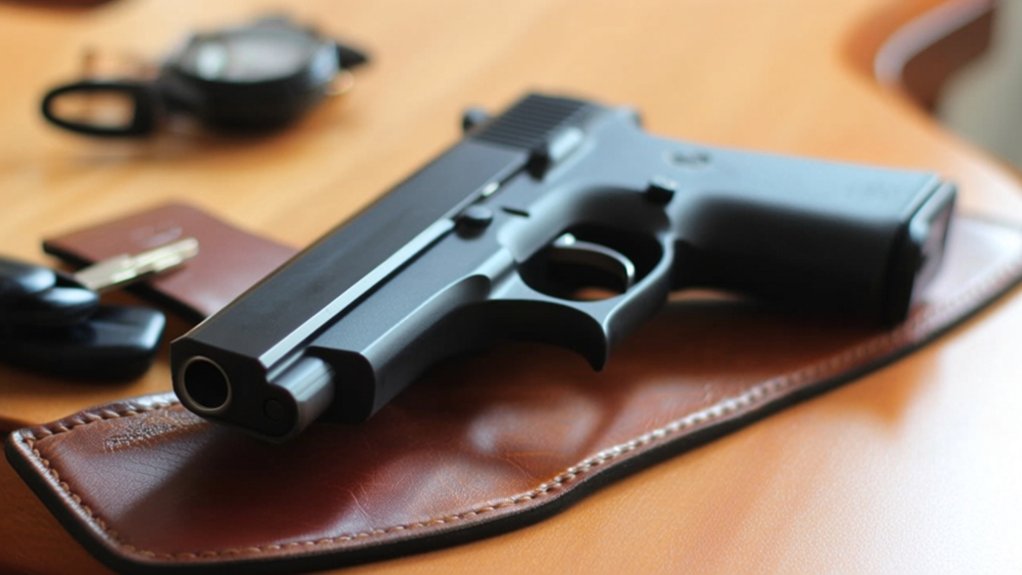
A good concealed carry gun balances size, weight, capacity, and reliability for comfort and confidence. Look for compact, lightweight pistols under 20 ounces with slim profiles to reduce printing. Prioritize models with manageable recoil and essential safety features like trigger safeties and proper holster compatibility.
Choose a firearm that fits your hand well and suits your daily lifestyle. With the right selection, you’ll carry securely and shoot accurately. Explore what else makes these guns the best choice.
What Makes a Gun Ideal for Concealed Carry?
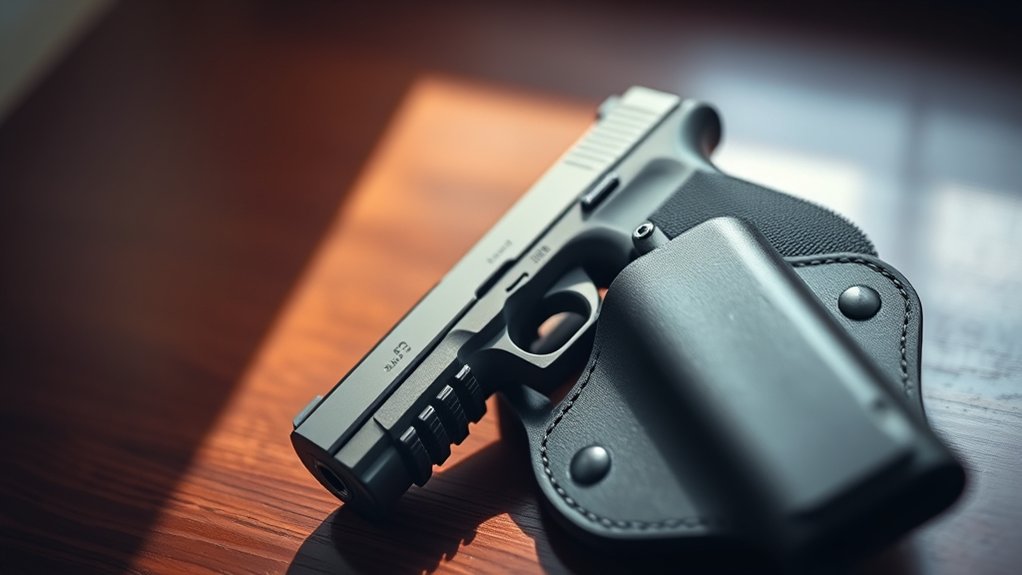
When choosing a gun for concealed carry, you want one that’s compact and lightweight, ideally under 20 ounces, to guarantee comfort throughout the day. A slim profile, generally less than an inch wide, is vital to reduce printing and enhance concealment.
Reliability is non-negotiable; your gun must perform consistently with various ammunition types without failure.
Safety features such as trigger or grip safeties are essential to prevent accidental discharges while carrying.
Moreover, customizability plays a key role in optimizing performance. Options like adjustable sights or compatibility with red dot sights allow you to tailor the gun to your preferences.
By focusing on these elements—compact size, lightweight materials, slim profile, reliability, safety features, and customizability—you guarantee your concealed carry firearm delivers effective, safe, and comfortable performance every day.
It’s all about making sure your gun works for you in every way.
Comparing Concealed Carry Pistols by Capacity and Design
Selecting a concealed carry pistol involves balancing size, capacity, and design to fit your daily needs. When comparing concealed carry pistols, understanding capacity and design is essential to maximize concealability without sacrificing firepower.
Compact designs like the SIG Sauer P365 offer 10+1 rounds, combining high capacity with a small frame.
Single-stack firearms, such as the Glock G43, favor slim profiles holding 6 to 10 rounds, enhancing concealability.
Double-stack pistols like the Springfield Hellcat or Glock 19 provide larger capacities (12-15 rounds) but require careful holster and clothing choices.
Revolvers like the Kimber K6s offer simplicity and reliability with a 6-round capacity in a compact, concealable package.
Evaluating these firearm options by capacity and design helps you select a pistol that fits your lifestyle and concealment needs. It’s all about finding the right balance for you.
How Size and Weight Affect Concealed Carry Comfort
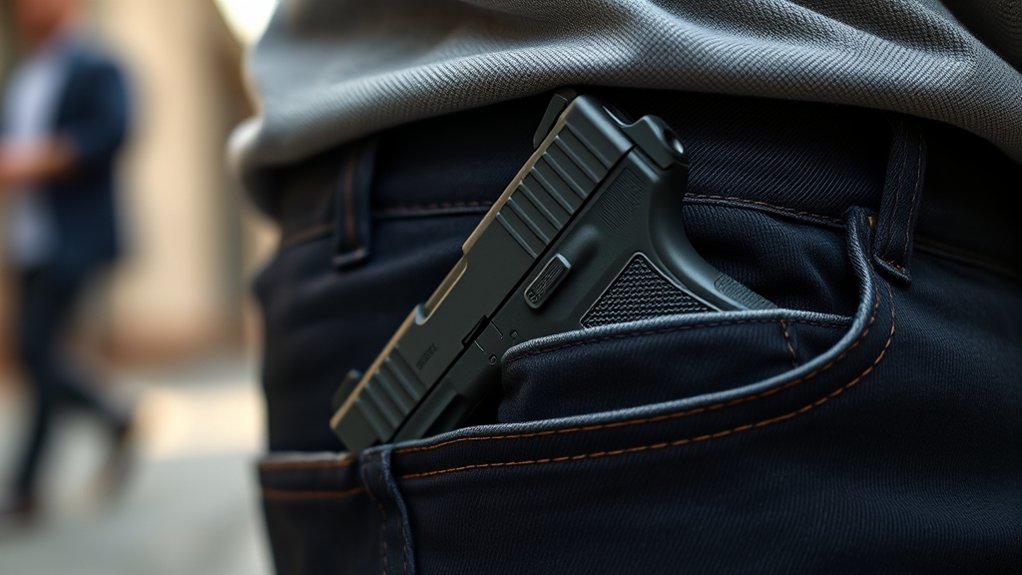
When you’re picking out a concealed carry gun, it’s important to find the right balance between size and how easily you can hide it. You want something comfortable enough to carry all day without feeling weighed down.
Lighter guns definitely help reduce fatigue, making it easier to wear them for longer periods.
But keep in mind, smaller sizes might make it trickier to get a good grip and maintain control.
Size Versus Concealability
Because size and weight directly influence how comfortably you can carry a firearm, choosing a gun that balances compactness with manageable recoil is crucial.
For concealed carry, smaller, subcompact guns under a pound typically offer superior concealability and comfort. Larger handguns may compromise your ability to remain discreet and cause discomfort over time.
Consider these factors for ideal size versus concealability:
- A subcompact size fits easily in a variety of holsters and clothing styles
- Reduced weight minimizes printing and discomfort during extended wear
- Smaller guns enhance mobility and reduce fatigue when sitting or moving
- Balance size to maintain control without sacrificing concealability
Selecting a firearm that matches your body and lifestyle ensures you carry confidently with maximum comfort.
Weight Impact On Comfort
Size plays a significant role in how comfortable your concealed carry experience will be, but weight often has an even greater impact. Lightweight guns under 20 ounces are generally more comfortable for extended wear, reducing fatigue during daily concealed carry.
Compact models tend to be lighter, making them easier to conceal without printing and more comfortable to shoot.
That said, they might sacrifice grip size and capacity. Heavier firearms, especially those over 25 ounces, can cause discomfort and limit your carry method options.
For instance, heavier guns often require more supportive holsters to maintain comfort and concealment.
When selecting your firearm, consider how weight influences not only extended wear comfort but also holster choice and carry method.
Make sure your setup fits your lifestyle and comfort needs.
Safety Features You Need to Know
How can you guarantee your concealed carry firearm operates safely under pressure? Understanding key safety features is essential.
Many guns include passive safety mechanisms like trigger safety and active grip safety, which only disengage when you firmly hold the firearm. This prevents accidental discharge.
The trigger guard protects against unintentional trigger pulls, enhancing holster safety.
Effective sighting options, such as night sights, help you acquire targets quickly and safely.
Don’t overlook safety training. It guarantees you handle your firearm confidently and responsibly.
- Passive safety features like grip and trigger safeties
- Active grip safety engaging only with a firm hold
- Sighting options that improve accuracy while minimizing handling
- Importance of safety training and holster safety practices
These elements collectively guarantee your concealed carry gun is reliable and secure.
How Holster Compatibility Shapes Your Gun Choice
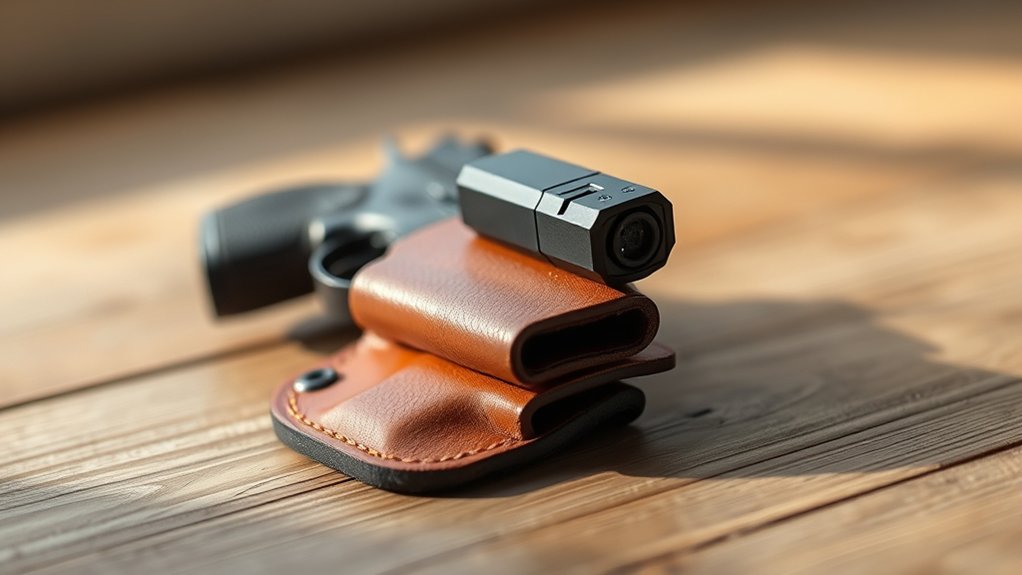
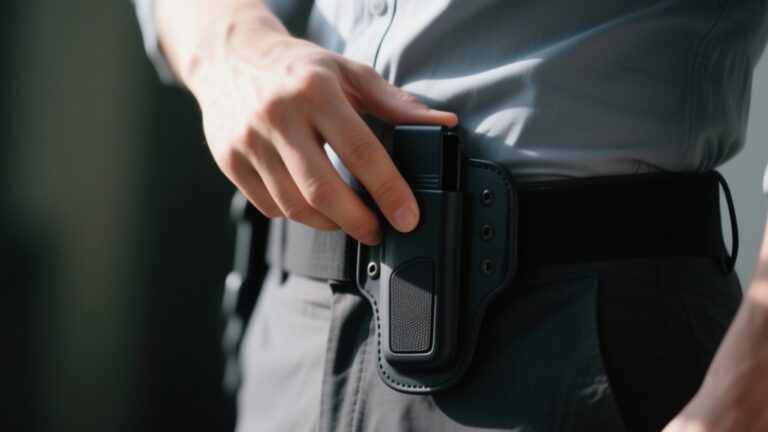
When selecting a concealed carry firearm, you’ll want to think about holster compatibility carefully. It directly impacts comfort, security, and accessibility. Your gun’s size and slide design must align with the holster type you prefer, whether IWB, OWB, or appendix carry. This guarantees proper retention and firearm fit.
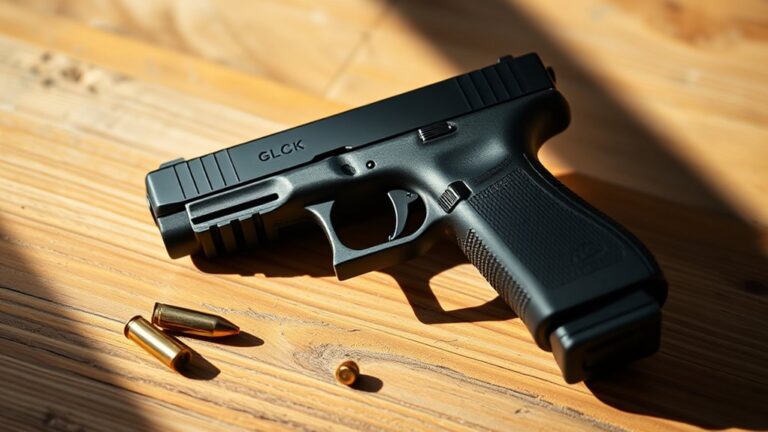
Models like Glock and SIG Sauer offer extensive holster support. This gives you more options and adaptability across brands and carry styles.
Glock and SIG Sauer provide broad holster compatibility, enhancing versatility across various carry methods and brands.
Firearms with modular slides or frames further enhance holster compatibility. They allow upgrades without compromising fit.
Choosing a gun that sits securely in your holster reduces printing, improves draw speed, and maintains safety. Ultimately, prioritizing holster compatibility shapes your gun choice by balancing concealment needs with practical carry performance.
It’s all about finding what works best for you.
How to Customize Your Concealed Carry Gun
Although concealed carry guns come ready for use, customizing your firearm can really enhance your shooting experience and effectiveness.
Concealed carry customization lets you tailor your gun for comfort, speed, and accuracy using reliable aftermarket parts. Think about these key upgrades:
- Install fiber optic sights or a red dot sight for faster target acquisition in varied lighting.
- Upgrade the trigger with a lighter, more responsive option to improve shot control.
- Add custom grips or grip texturing to enhance handling and reduce fatigue.
- Use slide milling to slim down your firearm’s profile or remove bulky sights for better concealment.
These modifications refine your pistol’s ergonomics and performance, making it uniquely suited to your needs while keeping reliability and concealability intact.
Tips to Choose Your Ideal Concealed Carry Gun
When you’re picking out your ideal concealed carry gun, you’ll want to pay close attention to size and weight. After all, comfort matters—you want something you can carry all day without feeling weighed down or uncomfortable.
At the same time, don’t overlook reliable safety features. They’re key to ensuring secure handling and preventing any accidental discharge.
Size And Weight
Since concealed carry demands both comfort and practicality, selecting a gun with the right size and weight is crucial. The ideal concealed carry firearm balances concealability, carry comfort, and firearm ergonomics. This guarantees you can carry it all day without fatigue or control issues.
Consider these factors: Smaller guns with barrel lengths under 4 inches, like the Glock 42, excel in concealability for pocket or ankle carry.
Lightweight firearms, such as the Smith & Wesson 442 (~16 oz), minimize carry fatigue during extended use.
Heavier pistols (over 29 oz) improve recoil management but can reduce carry comfort.
Compact guns (16–25 oz) offer a practical middle ground between concealability and shootability.
Choose a gun that fits your hand well and matches your lifestyle for ideal concealed carry performance.
It’s all about finding what works best for you.
Safety And Handling
Choosing a concealed carry gun with reliable safety features is crucial to prevent accidental discharge and guarantee confident handling. Prioritize models with passive safety mechanisms like trigger or grip safeties. These features reduce the risk of unintentional firing.
Recoil management plays a critical role too. Selecting firearms with softer recoil springs ensures better control and faster follow-up shots.
Proper holster selection and mastering draw techniques are indispensable to maintain safety while enabling quick access.
Focus on guns with intuitive handling characteristics to simplify operation under stress.
Consistent training builds muscle memory, reinforcing safe handling and effective responses.
Frequently Asked Questions
How Often Should I Clean My Concealed Carry Gun?
You should clean your concealed carry gun every 200 to 300 rounds or at least once a month if you carry it regularly. This routine prevents buildup of carbon, dirt, and moisture that could cause malfunctions or corrosion.
Always clean it before long-term storage. Use proper cleaning tools and lubricants, and inspect your firearm carefully for any wear or damage that might need professional attention.
Staying consistent guarantees reliability and safety.
Can I Carry Concealed While Traveling Out of State?
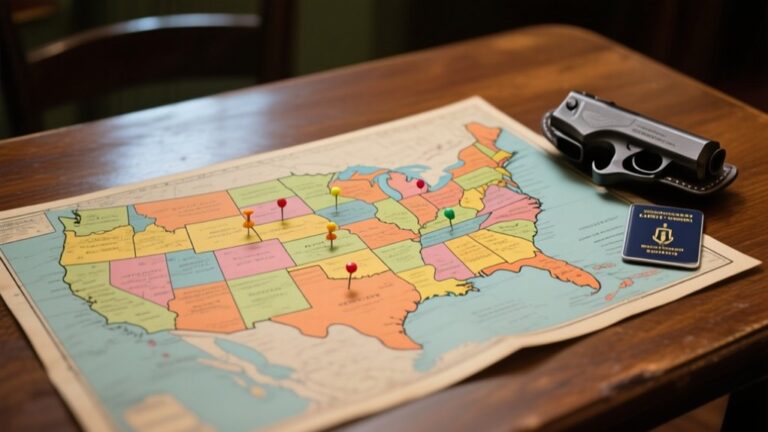
You can carry concealed while traveling out of state, but you need to check each state’s laws and reciprocity agreements first.
Only carry if your permit is recognized in the state you’re visiting. Don’t assume there’s federal reciprocity because it doesn’t exist.
Always carry your valid permit and understand local rules about firearms, magazine capacity, and storage.
If you don’t follow the rules, you could face serious legal trouble like fines or arrest.
What Legal Permits Do I Need for Concealed Carry?
You need to obtain a concealed carry permit or license specific to your state. This often requires background checks, fingerprinting, and safety training.
Some states allow permitless or constitutional carry, so make sure to check your local laws carefully.
If you plan to carry out of state, verify reciprocity agreements because not all permits are recognized everywhere.
Always research and comply with federal, state, and local regulations to avoid legal issues.
It’s better to be safe and informed than to face unexpected trouble.
How Do Weather Conditions Affect Concealed Carry Firearms?
Ever wondered how weather might sabotage your firearm’s reliability? Hot, sweaty conditions can cause rust if you don’t clean and store your gun properly.
Cold weather thickens lubricants, slowing slide and trigger action.
Rain and humidity increase moisture, which means you’ll need more frequent maintenance.
Plus, heavy winter clothes can make quick draws harder.
You’ve got to adapt your firearm care and carry method to stay ready, no matter the weather.
Are There Specific Clothing Recommendations for Concealed Carry?
Yes, you should wear loose-fitting or layered clothing to effectively conceal your firearm’s outline. Choose thicker fabrics like denim or flannel to reduce printing, and opt for darker colors or patterns to camouflage bulges.
Longer hemlines and layering with vests or cardigans help hide larger guns.
Make sure your clothing allows quick, unobstructed access to your holster for a smooth, safe draw.
Conclusion
Choosing the right concealed carry gun means balancing size, capacity, safety, and comfort. Remember, “measure twice, cut once” applies here. Take time to evaluate your needs and preferences carefully.
By prioritizing holster compatibility and exploring customization options, you’ll find a reliable, comfortable firearm that suits your lifestyle.
Ultimately, a well-chosen gun not only boosts your confidence but also makes sure you’re prepared and secure every time you carry.