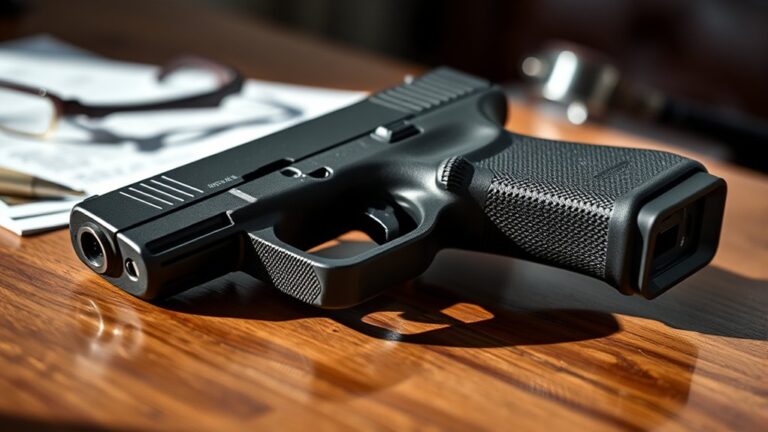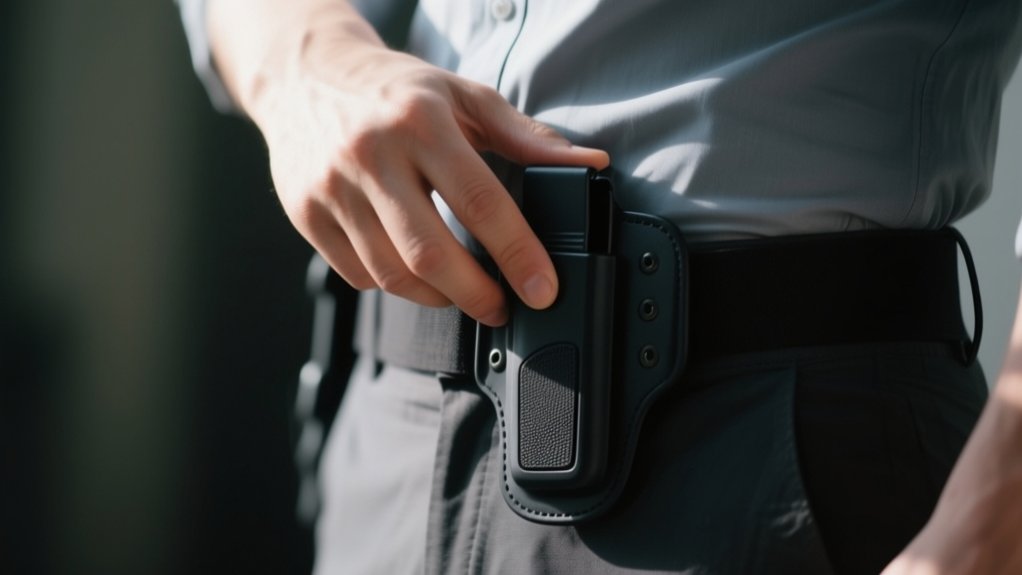
How To Wear A Concealed Carry Holster – Comfort And Safety Tips
To wear a concealed carry holster comfortably and safely, choose one that fits your body shape and daily activities. You want to find a good balance between retention and ease of draw.
Position the holster where it’s secure yet accessible. Appendix, strong side, or cross draw all work well depending on what you need.
Make sure you use a sturdy gun belt to keep the holster stable. Also, pick clothing that conceals well without compromising comfort.
Regularly adjust retention and practice safe draws to build your confidence. Try out these strategies to optimize your carry setup and make it work best for you.
How To Choose The Right Concealed Carry Holster For Your Body And Lifestyle
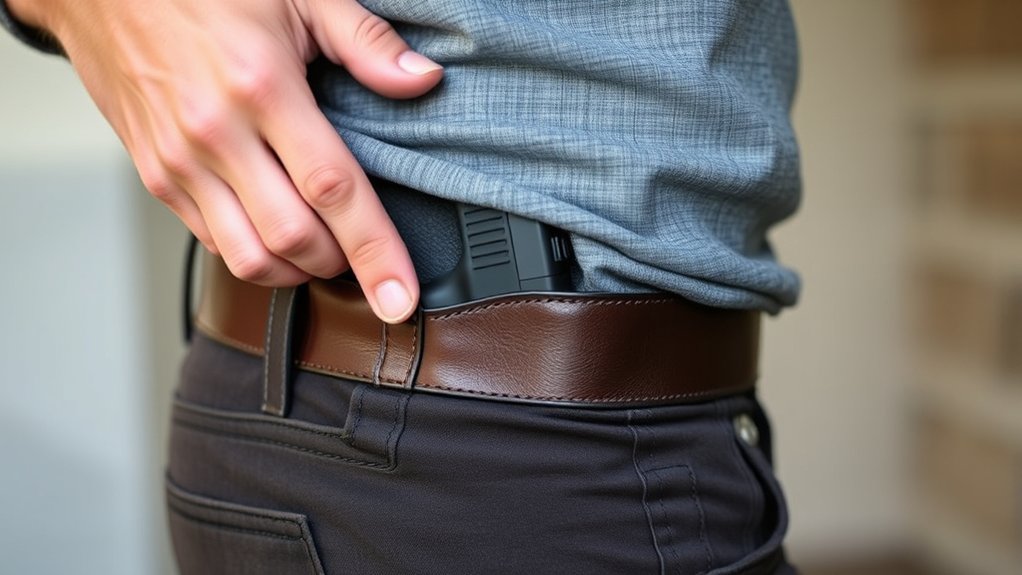
When choosing the right concealed carry holster for your body and lifestyle, you need to prioritize both comfort and functionality. First, match the holster type to your body shape and daily activities to guarantee seamless integration.
Prioritize comfort and functionality by matching your holster type to your body and daily routine.
Experiment with carry position and cant angle to find what suits your natural movements and provides quick access.
Make sure your concealed carry holster fits your specific firearm snugly, preventing shifting or accidental exposure. Look for adjustable retention features so you can customize security based on your environment and activity level.
Select materials that balance comfort for extended wear with reliable safety.
Comparing IWB, OWB, And Other Concealed Carry Holster Types
When you’re comparing IWB, OWB, and other holster types, it’s all about finding the right balance between comfort and concealment.
Think about your daily activities and what kind of clothes you usually wear—that plays a big role in what’ll work best for you.
A holster that fits well isn’t just about feeling good; it also keeps your firearm secure and easy to get to when you need it.
Knowing these trade-offs makes it easier to pick the best option so you can carry confidently and consistently every day.
Comfort Versus Concealment
Although concealed carry holsters come in various styles, you’ll often find yourself weighing comfort against concealment. An IWB holster excels at concealment by sitting close to your body, but it may sacrifice comfort due to limited airflow and pressure during extended wear.
Conversely, an OWB holster offers superior comfort and quicker access, yet it demands extra clothing layers to maintain effective concealment.
Appendix carry, typically with IWB holsters, prioritizes fast draw times but can become uncomfortable, especially when seated.
Shoulder and ankle holsters increase comfort in niche scenarios but usually reduce concealment and slow your draw.
Ultimately, selecting the right holster depends on your body shape, daily activities, and clothing choices, balancing comfort and concealment to suit your concealed carry needs.
Holster Fit Importance
Balancing comfort and concealment hinges greatly on how well your holster fits. Whether you choose IWB, OWB, or another holster type, a proper fit guarantees safety and comfort during concealed carry. Your holster must fit snugly to prevent shifting or accidental discharge.
Consider these key fit factors:
- IWB holsters demand precise sizing to avoid discomfort and printing through clothing.
- OWB holsters allow for slight size variations but still require a secure fit for safety.
- Specialty holsters (ankle, shoulder) need tailored sizing to maintain concealment without sacrificing stability.
Always prioritize holster fit to reduce firearm movement or falling out during daily activities. A properly fitted holster is essential for secure, comfortable concealed carry.
How To Ensure A Safe And Secure Holster Fit And Retention
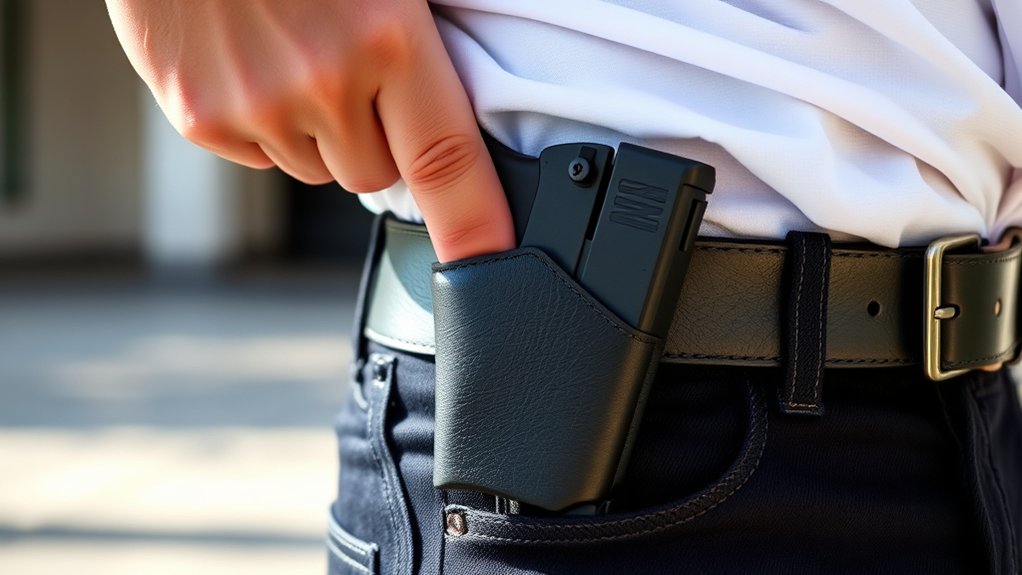
To guarantee your concealed carry holster fits safely and securely, you need to make sure it holds your firearm snugly without allowing any shifting or accidental dislodging during movement. Achieving the proper holster fit is essential.
Use holsters with adjustable retention features so you can customize how securely your firearm sits.
Adjust retention screws or mechanisms carefully. Your gun should remain secure but still allow a smooth, controlled draw without excessive force.
Regularly inspect the holster’s fit and retention, especially after cleaning or extended wear, to maintain consistent security.
Conduct daily safety checks to ensure your firearm stays firmly retained and your holster remains correctly positioned for safe carry.
Prioritizing these steps ensures both comfort and safety during concealed carry. It’s all about finding that balance between security and ease of use.
Best Holster Positions For Easy Concealment And Quick Draw
When choosing the best holster position, you want to prioritize both concealment and quick access. These factors directly impact your safety and comfort. Selecting from common carry positions will help you holster properly and confidently.
- Appendix (AIWB) offers rapid, natural quick access with excellent concealment. It does require proper adjustment to avoid discomfort, though.
- Strong Side (3 o’clock) balances concealment and fast draw. This makes it ideal for everyday carry without compromising comfort.
- Cross Draw (10-11 o’clock) facilitates easier access while seated. It does demand practice to draw safely and efficiently.
Adjusting the cant angle can enhance both concealment and draw speed.
Pros And Cons Of Appendix, Strong Side, And Small-Of-Back Carry
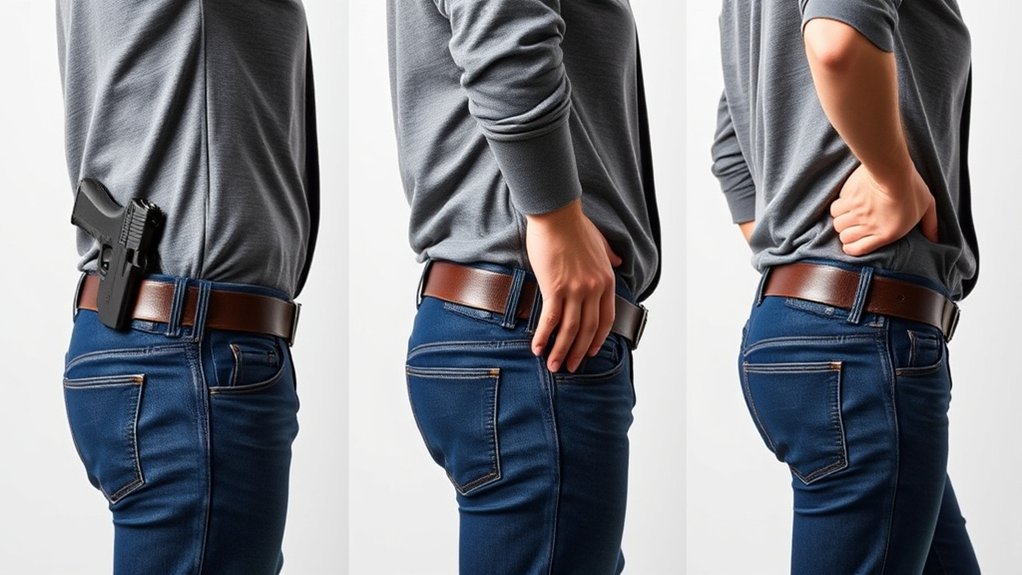
Although each holster position offers unique advantages, understanding the pros and cons of appendix, strong side, and small-of-back carry is essential for choosing what suits your needs best.
Appendix carry offers the fastest draw and discreet concealment. But it may cause discomfort and safety concerns if mispositioned.
Strong side carry balances ease of draw and concealment. However, it can print when you bend or sit.
Small-of-back carry provides excellent concealment and comfort for some. Still, it poses safety risks and accessibility issues.
| Carry Position | Pros |
|---|---|
| Appendix | Quick draw, discreet concealment |
| Strong Side | Balanced draw/concealment |
| Small-of-Back | Comfortable, excellent concealment |
| Carry Position | Cons |
| Appendix | Discomfort, safety risks |
| Strong Side | Printing when bending/sitting |
| Small-of-Back | Safety concerns, difficult seated draw |
Choose holsters wisely to fit your body and lifestyle.
Adjusting Holster Cant And Ride Height For Comfort And Access
You’ll want to adjust your holster’s cant angle so the grip lines up with how you naturally draw your gun. This helps make your draw smooth and quick.
Then, tweak the ride height to find the right balance between comfort and concealment. Higher positions tend to hide the gun better but might slow you down a bit when drawing.
It’s a good idea to regularly test different cant angles and ride heights while you practice to figure out what works best for you.
Cant Angle Adjustment
Since the cant angle directly affects how your hand naturally grips the firearm, adjusting it can considerably speed up your draw and improve comfort.
Proper cant angle adjustment customizes holster positioning to your body mechanics and preferred draw method, enhancing both concealment and accessibility.
For example, a forward cant (positive tilt) suits appendix carry by improving concealment and allowing a natural hand movement.
A zero-degree cant aligns the firearm vertically, which may feel less ergonomic depending on your draw style.
Testing various angles in front of a mirror helps you find the ideal balance between quick access and minimal printing.
Fine-tuning your cant angle ensures your concealed carry setup feels intuitive, safe, and comfortable throughout daily wear.
It’s all about making the draw feel natural for you. So, take some time to experiment and see what works best.
Ride Height Optimization
When you adjust your holster’s ride height, you directly influence both comfort and how quickly you can access your firearm. Higher ride heights offer faster draws but may reduce concealment.
On the other hand, lower positions enhance concealment by minimizing printing, especially with looser clothing or larger firearms.
Proper holster adjustment involves finding the right balance between ride height and cant angle to ensure a natural, strain-free draw motion.
Try making small changes to optimize comfort and access.
Tailor the setup to your body and clothing style.
Remember, as your wardrobe or posture changes, regularly re-evaluate your concealed carry holster’s ride height.
This helps maintain comfort and efficient draw speed in all situations.
Avoiding Common Holster Mistakes For Better Carry
Although carrying a concealed holster requires careful attention, avoiding common mistakes can drastically improve your comfort, safety, and concealment. To enhance your concealed carrying experience, focus on these key areas:
- Use a sturdy gun belt to prevent holster sagging. Sagging can cause instability and might expose your firearm unintentionally. A solid belt keeps everything secure and comfortable.
- Guarantee proper positioning. Too high causes printing when bending and discomfort. Too low slows your draw. Find a balanced ride height that allows quick access but still keeps you well concealed.
- Avoid tight or light clothing that reveals your firearm’s outline. Instead, choose loose or patterned fabrics to mask printing effectively. This way, you keep your carry discreet without sacrificing style.
Master these essentials to maintain safety, reduce accidental exposure, and carry comfortably every day. Your vigilance in avoiding these pitfalls will elevate your concealed carry proficiency.
Clothing Tips To Enhance Concealed Carry Holster Effectiveness
To maximize your concealed carry holster’s effectiveness, you need to carefully select clothing that masks your firearm’s presence without restricting access. Choose loose, draping clothing like untucked shirts or sweaters to prevent printing and improve concealment.
Select loose, draping clothing like untucked shirts to conceal your firearm without restricting access.
Opt for darker colors or patterned fabrics, like plaid, floral, or camo, to hide your holster’s outline.
Layering with jackets, vests, or cardigans adds extra coverage, especially in colder weather, enhancing concealment further.
Wear pants with belt loops to support your holster properly, making sure it stays stable and reduces sagging.
Regularly check your reflection or use a mirror to confirm your clothing effectively conceals your firearm from all angles.
Thoughtful clothing choices combined with proper layering will keep your holster discreet while maintaining quick, safe access.
Why A Proper Gun Belt Is Essential For Holster Stability
Ensuring your holster remains stable throughout the day depends heavily on the belt you choose to wear. A proper gun belt is essential for holster stability, providing the foundation for a secure carry. Reinforced belts, made from stiff materials like leather or nylon, prevent sagging and shifting.
This keeps your firearm in place no matter your movement.
Here’s why a quality gun belt matters:
- It distributes your firearm’s weight evenly across your waist, reducing discomfort.
- It maintains holster position for quick, consistent draws.
- It minimizes the risk of slipping or twisting, enhancing safety and retention.
Choosing the right gun belt ensures your holster stays secure under clothing layers. This improves comfort and confidence during carry.
Safe Drawing Practice To Improve Speed And Confidence
To really improve your speed and confidence with your concealed carry holster, you’ve got to make safe and consistent draw practice a priority. Try to work in dry fire drills regularly. These help you focus on getting your grip, stance, and trigger discipline just right.
The best part? You’re building muscle memory without any risk. Just make sure you’re always practicing in an environment that is controlled and safe, with an unloaded firearm. That way, your technique stays smooth and safe, even when the pressure’s on.
Dry Fire Drills
Although handling a firearm with live ammunition is necessary for real-world practice, dry fire drills offer a safe and effective way to improve your draw speed and confidence without any risk. These drills build vital muscle memory while reinforcing safety habits. Before starting, always double-check your firearm is unloaded and pointed in a safe direction.
To maximize your dry fire drills, use a mirror or video to analyze your technique and identify areas for improvement. Practice smooth and controlled draws to enhance draw speed, avoiding jerky movements.
Repeat regularly to build familiarity with your holster and carry position, reducing hesitation.
Consistent dry fire drills sharpen your skills safely. They make your concealed carry more instinctive and reliable under pressure. So, stick with it and you’ll notice the difference.
Consistent Draw Practice
When you commit to consistent draw practice, you build the muscle memory and confidence needed for quick, safe firearm access under pressure. Start by drawing from your holster with an unloaded firearm or training tool to minimize risk. Use a mirror to observe your technique closely, identifying inefficient or unsafe movements.
Repeat the draw process multiple times daily, focusing on a smooth, controlled motion to develop reliable muscle memory. Incorporate timed drills to sharpen your reaction speed and simulate real scenarios. This disciplined approach ensures your draw becomes instinctive and efficient, minimizing hesitation.
Regular, focused practice not only improves your speed but also reinforces the correct grip, stance, and draw path necessary for safe concealed carry performance. Keep at it, and over time, drawing your firearm will feel natural and second nature.
Safety First Techniques
Building reliable draw skills means prioritizing safety at every step to improve both speed and confidence. To master safe drawing, you must integrate firearm safety into your routine and consistently perform thorough safety checks.
Always use an unloaded firearm when you practice drawing. Make sure your holster retention is secure before and after each session. Keep your finger off the trigger until you’re prepared to fire to avoid accidental discharges.
Focus on these key safety first techniques:
- Regularly practice drawing with an unloaded weapon to build muscle memory and smooth execution.
- Record or observe your practice drawing to identify and correct unsafe or inefficient movements.
- Incorporate dry fire drills to enhance trigger control and stance without live ammunition.
This disciplined approach reinforces safety while boosting your speed and confidence. It’s all about making safety second nature while you improve.
Comfort And Security Tips For Daily Concealed Carry
To maintain comfort and security during daily concealed carry, you need a holster with adjustable retention and cant that fits snugly while minimizing discomfort throughout your activities.
Choose a sturdy, supportive gun belt designed specifically for concealed carry to prevent holster sagging and enhance stability.
Opt for loose-fitting, layered clothing like draping shirts or jackets to improve concealment and reduce printing.
Regularly practice drawing and re-holstering to build muscle memory, ensuring both comfort and safety during quick access.
Don’t hesitate to adjust your holster’s position and height throughout the day to find the most comfortable and accessible angle for your body.
Prioritizing these factors will help you maintain effective concealed carry without sacrificing comfort or safety.
Frequently Asked Questions
How Do I Clean and Maintain My Concealed Carry Holster?
To clean your concealed carry holster, wipe it down regularly with a damp cloth and mild soap to remove sweat and dirt.
If it’s leather, apply a leather conditioner occasionally to keep it flexible and prevent cracking.
Never soak it in water, as that damages materials and retention.
Check for wear like frayed stitching or cracks, and replace or repair if needed.
Store your holster in a cool, dry place to protect it.
Keeping up with these simple steps will help your holster last longer and stay reliable.
It’s all about regular care and paying attention to any signs of damage.
Can I Carry a Concealed Holster While Sitting or Driving Comfortably?
Yes, you can carry a concealed holster comfortably while sitting or driving, but it really depends on your setup. Choosing positions like appendix or strong side hip makes a big difference.
Using holsters with adjustable cant and ride height helps too.
Lightweight, flexible materials reduce pressure and chafing, which is key for comfort.
You’ll want to practice drawing and reholstering from these positions to guarantee safety and smooth access during daily activities.
And don’t forget to wear layers that prevent printing. That way, your carry stays discreet no matter what you’re doing.
Are There Legal Restrictions on Carrying Certain Types of Holsters?
Yes, you need to be aware that legal restrictions often limit which holster types you can carry concealed. Some states or localities prohibit shoulder holsters, appendix carry, or other unconventional styles.
You might also face rules requiring holsters to meet specific safety standards, which means homemade or modified ones could be disallowed. It’s always a good idea to research and stick to your local, state, and federal laws.
That way, you can avoid legal trouble and make sure your holster is both safe and lawful.
How Do Temperature and Weather Affect Holster Comfort and Durability?
Did you know hot weather can increase sweat by up to 50%, causing holster materials to wear faster? Temperature and weather directly impact your holster’s comfort and durability.
Heat makes materials sticky and prone to faster wear, while cold stiffens leather and can crack plastics.
Moisture degrades leather and weakens synthetics. You need to regularly inspect and maintain your holster.
Also, adjusting your choice based on weather guarantees safety and comfort.
What Are the Best Holster Materials for All-Day Wear?
For all-day wear, Kydex, leather, and polymer holsters stand out as the best choices. You’ll appreciate Kydex for its durability and moisture resistance, keeping you comfortable and secure.
Leather offers unmatched comfort and a smooth draw but needs upkeep.
Polymer balances lightweight design with impact resistance, which is ideal if you want protection without added bulk.
Choose based on your daily activities. Prioritize breathability, retention, and weight to stay comfortable all day.
Conclusion
Choosing the right concealed carry holster affects both your comfort and safety every day. Studies show that 68% of concealed carriers feel more confident and respond quicker when they use properly fitted holsters.
By picking the best holster type and position, and pairing it with a quality gun belt, you ensure secure retention and easier draws.
Remember, practicing safe drawing consistently and choosing the right clothing are key to making your concealed carry experience both effective and comfortable.