Should I Keep My Gun Loaded In My Safe – Storage Considerations Explained
You should weigh legal rules, safety risks, and emergency needs before keeping your gun loaded in a safe. Many laws require unloaded storage or safety devices to prevent unauthorized access and accidents. Loaded guns offer quick access but increase theft and liability risks.
Choose safes with advanced locks and moisture control, and maintain your firearm regularly. Balancing readiness with security and legality is key. Explore how to make informed storage decisions that protect both you and others.
Key Takeaways
- Storing guns loaded in safes ensures quick access during emergencies but increases risks of accidental discharge and legal liabilities.
- Compliance with local laws often requires firearms to be unloaded or secured with safety devices to prevent unauthorized access.
- Advanced safes with biometric or keypad locks provide a balance of security and rapid accessibility for loaded firearms.
- Regular maintenance and moisture control inside safes prevent corrosion and keep loaded guns functional and reliable.
- Consider alternatives like storing guns unloaded with separate ammo or using trigger locks to enhance safety without sacrificing readiness.
Legal Considerations for Storing Loaded Guns
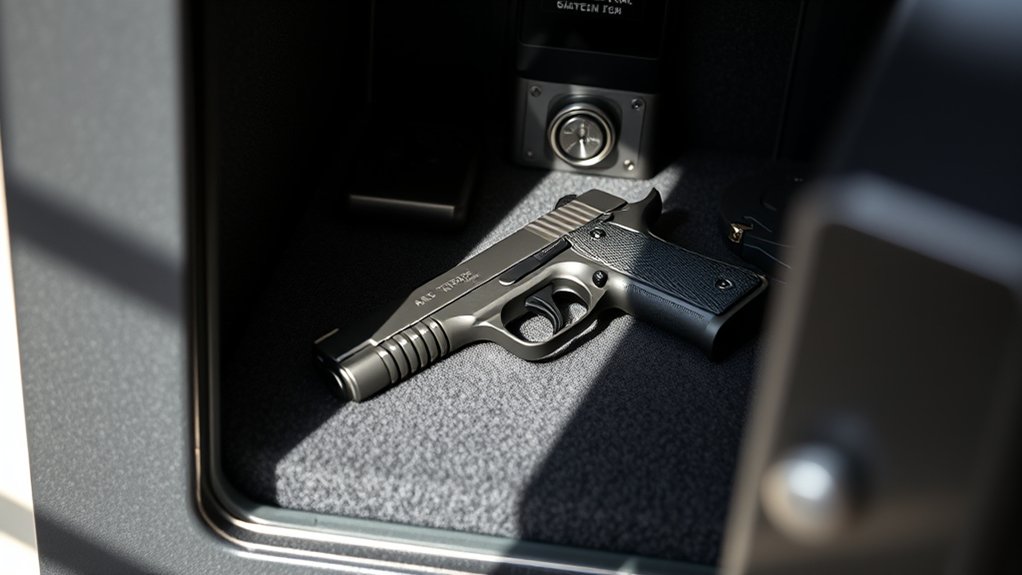
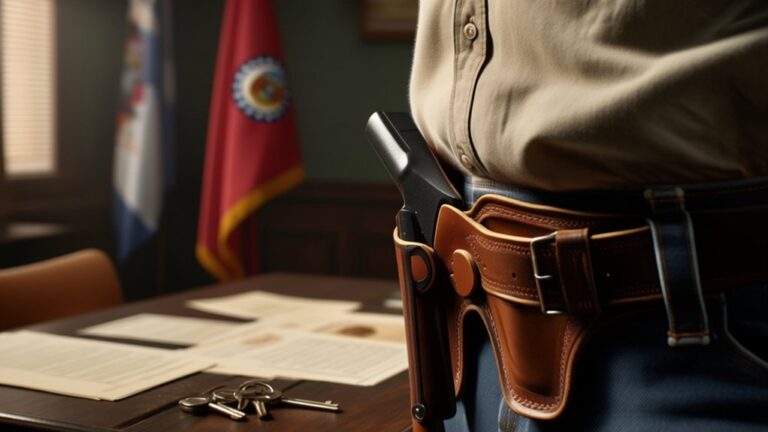
Although you might want quick access to a loaded gun in a safe, you must first understand that many jurisdictions require firearms to be stored unloaded or with safety devices engaged.
Legal storage regulations vary, but compliance is essential to avoid criminal penalties or civil liabilities.
Storage laws differ widely; following them is crucial to prevent legal trouble and ensure safety.
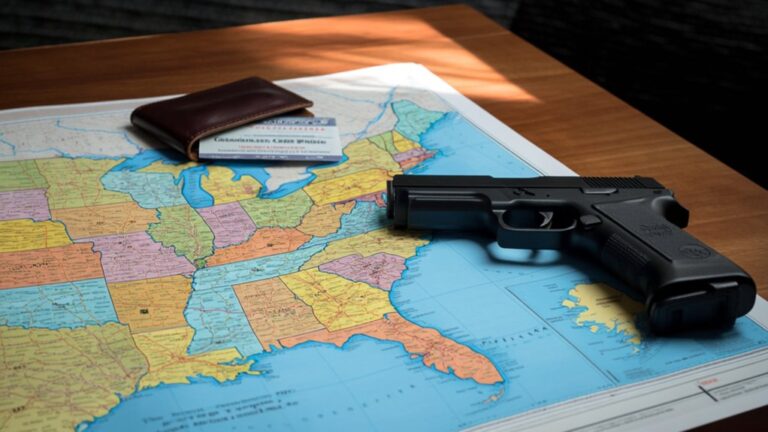
For example, California mandates handguns be stored unloaded and secured with a lock or in a certified safe.
If an unauthorized person, especially a minor, gains access and causes harm, you could face serious consequences.
You need to verify local, state, and federal laws before deciding how to store loaded guns.
Using safety devices like trigger locks or safes meeting safety standards is often required to meet legal storage obligations.
Responsible adherence to these rules protects you legally and promotes safe firearm handling.
Safety Risks of Storing a Loaded Gun
Beyond legal requirements, storing a loaded gun in a safe introduces significant safety risks you need to keep in mind. A loaded gun increases the chance of accidental discharge if unauthorized users, like children or burglars, get access to your safe. This can be especially dangerous in homes where people may not have much experience handling firearms.
Improper safe storage can lead to serious injuries or even fatalities. Also, keeping a loaded firearm in a safe for long periods can cause corrosion and wear on its parts, which might affect how reliably and safely it works. On top of that, you take on extra liability if the loaded gun is misused or stolen.
| Risk Category | Description | Impact |
|---|---|---|
| Accidental Discharge | Unauthorized access causes firing | Injury or fatality |
| Corrosion | Moisture buildup inside the safe | Firearm damage |
| Legal Liability | Misuse or theft of loaded gun | Civil or criminal consequences |
| User Inexperience | Lack of training increases risk | Unsafe handling |
| Compliance | Violates storage laws in some areas | Legal penalties |
Key Reasons Gun Owners Store Loaded Guns in Safes
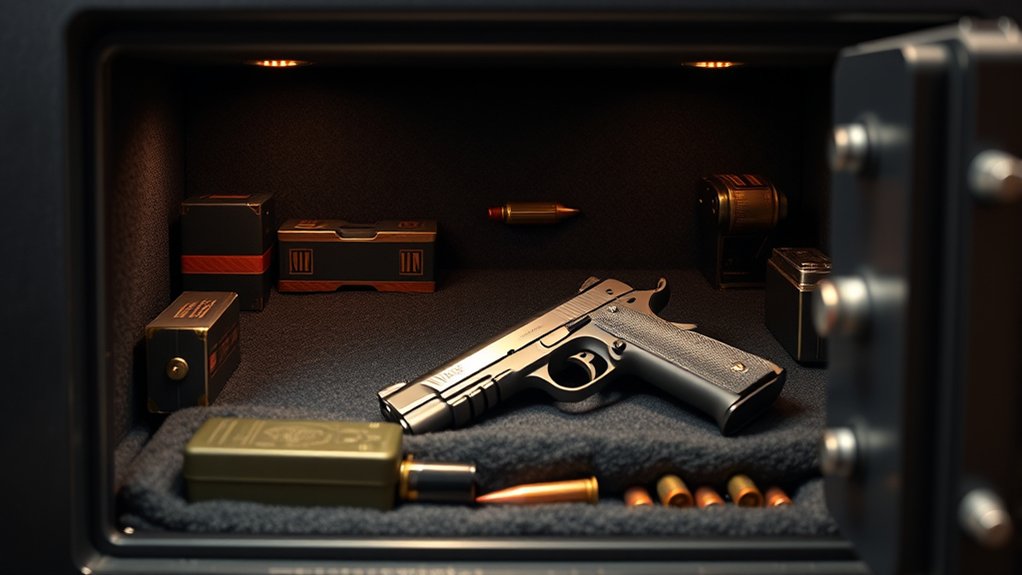
Since emergencies demand immediate action, many gun owners choose to store loaded firearms in safes to guarantee quick and reliable access. Storing a loaded gun in safe storage ensures you can respond instantly to threats without fumbling or misloading under stress. It also reduces the chance of selecting the wrong caliber or experiencing a jam, which is essential when seconds count.
Properly secured loaded guns enhance gun safety by preventing unauthorized use by children or intruders. When you maintain and organize your safe correctly, your firearm stays functional and ready for use.
Compared to leaving guns exposed or unsecured, safe storage of loaded firearms offers a controlled environment that protects both your weapon and those around you.
Key Safe Features for Loaded Gun Storage
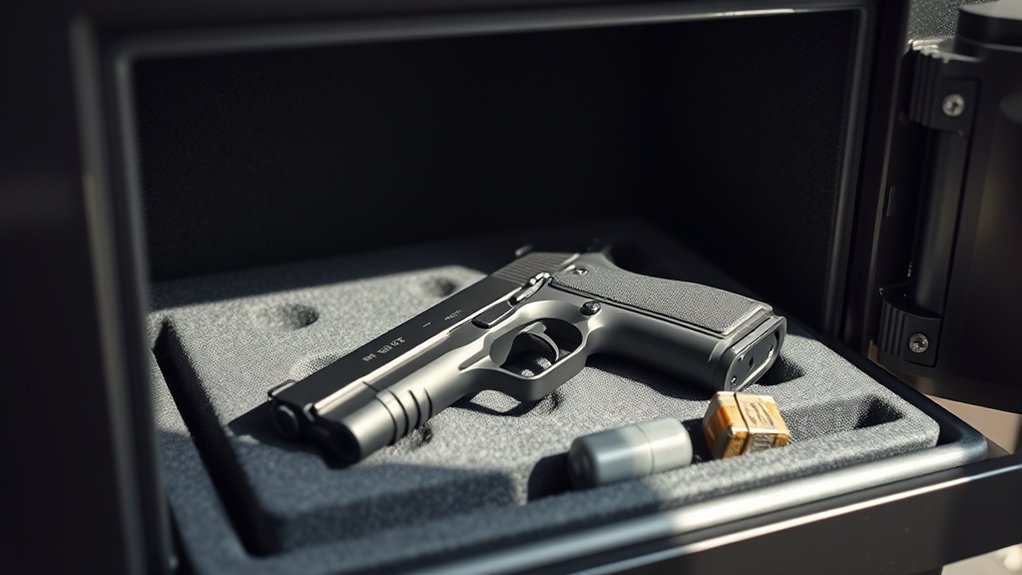
When storing loaded guns, you need a safe that combines security, accessibility, and protection. The best safes feature advanced locking mechanisms and reinforced steel to prevent unauthorized access.
Many safes include interior organization like foam padding and adjustable shelves, ensuring your firearm stays secure without damage.
Trigger locks add an extra layer of safety inside the safe. Consider these key features:
- High-security locking mechanisms, such as biometric or keypad entry for quick, secure access.
- Durable construction with steel and fireproof materials to protect against theft and fire.
- Interior customization like foam padding and shelves to prevent scratches and make retrieval easy.
- Moisture control with dehumidifiers to prevent rust and corrosion inside the safe.
Choosing a safe with these features helps you store loaded guns responsibly and securely. It’s all about balancing security and convenience so you have peace of mind.
How to Maintain a Loaded Gun in a Safe
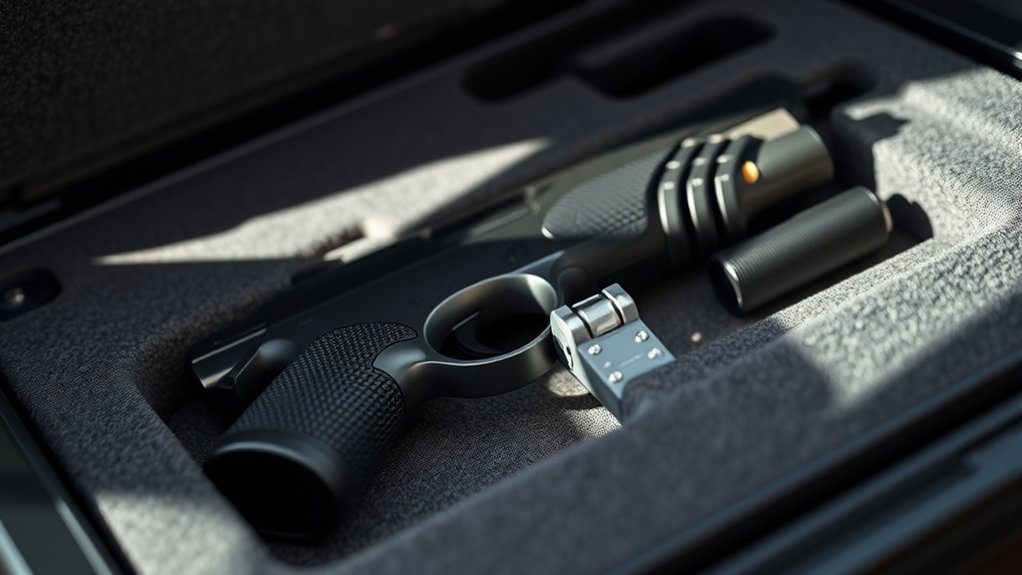
You’ll want to set up a regular cleaning routine to keep your loaded gun in top shape. It’s important to prevent moisture from building up inside the safe because that can cause rust and corrosion on both your firearm and ammo.
Also, don’t forget to check your ammunition every now and then to make sure it’s still safe and reliable when you need it.
Regular Cleaning Routine
Although it might seem challenging to clean a loaded gun stored in a safe, maintaining a regular cleaning routine is essential to prevent corrosion and moisture buildup. These issues can compromise your firearm’s performance and safety.
Proper firearm maintenance guarantees your gun remains reliable and ready.
Follow these steps for effective cleaning and storage:
- Use firearm-specific solvents and lubricants to clean and protect components.
- Inspect and clean the barrel, firing pin, and moving parts every few months.
- Store cleaning supplies outside the safe to avoid contamination inside.
- After cleaning, thoroughly dry and lubricate your firearm before returning it to storage.
Keeping up with this routine might take a little effort, but it’s well worth it for the peace of mind and safety you get in return.
Moisture Prevention Methods
Since moisture poses a significant threat to loaded firearms stored in safes, taking proactive steps to control humidity is essential. You should focus on moisture prevention to maintain safe humidity levels and guarantee rust prevention. Use silica gel packs or desiccants inside your safe to absorb moisture.
Regularly monitor humidity with a hygrometer. Applying a light coat of gun oil creates a protective barrier on metal parts. Consider installing a dehumidifier designed for safes or using a corrosion-resistant safe to minimize moisture risks.
| Method | Benefit |
|---|---|
| Silica gel packs | Absorbs moisture |
| Hygrometer checks | Maintains safe humidity levels |
| Gun oil application | Provides rust prevention |
| Dehumidifier installation | Reduces overall humidity |
Ammunition Inspection Tips
Controlling moisture in your safe protects both firearms and ammunition. But maintaining your ammo’s condition requires a bit more attention.
Regular ammunition inspection is essential for safe, reliable storage. Here are some key tips to follow:
- Inspect ammunition regularly for corrosion, dents, or misfires. Replace any compromised rounds immediately.
- Store ammunition separately in a dry, cool compartment. This helps prevent moisture damage and degradation.
- Use airtight containers or desiccants within storage areas to control humidity and avoid rust.
- Check expiration dates and overall condition periodically, especially for long-term storage. Replace outdated ammo as needed.
Access and Emergency Use Best Practices for Loaded Guns
When you store a loaded gun in a safe designed for quick access, you guarantee that you can respond rapidly during emergencies without fumbling under pressure. Prioritize safe storage solutions with fast-opening mechanisms, ensuring authorized users retrieve your loaded gun instantly when needed.
Regularly maintain your firearm and practice handling it under stress to reduce errors and hesitation.
Educate everyone with access on proper procedures and legal requirements for storing loaded guns securely.
Remember, compliance with laws regarding safe types and locking mechanisms is critical to both safety and emergency readiness.
Alternatives to Loaded Gun Storage in Safes
Balancing quick access with safety means considering alternatives to storing loaded guns in safes. You can enhance security without compromising readiness by exploring these options:
- Store your firearm unloaded inside secure gun safes to reduce accidental discharge risk.
- Use a trigger lock or cable lock on the unloaded gun for an added safety layer while maintaining quick access.
- Keep ammunition separate from the firearm within the safe to prevent misuse or accidental loading.
- Choose fireproof and burglar-proof safes with compartments designed for organized, secure storage.
Make sure to regularly inspect your firearm and safety devices to ensure they work properly. These alternatives help you keep a secure environment while minimizing the risks that come with storing loaded guns.
It’s all about finding the right balance between safety and readiness.
Balancing Safety, Law, and Readiness in Gun Storage Decisions
You’ve got to find the right balance between quick access to your firearm and following the law, while keeping safety in mind. It’s really important that your storage solution meets local legal requirements but also lets you be ready when you need it.
Think about emergency preparedness as a combination of secure storage, good user education, and dependable locking mechanisms. When these elements come together, you’re not just protecting yourself—you’re also making sure you’re prepared in any situation.
Safety Versus Accessibility
Although storing a loaded gun in a safe grants immediate access during emergencies, you must carefully weigh this advantage against increased risks of theft, accidental discharge, and legal restrictions. Balancing safety and accessibility requires thoughtful decisions about your safe storage setup.
Consider these key points:
- A loaded gun offers readiness but demands secure locking mechanisms to prevent unauthorized use.
- Quick-access safes can improve response time without compromising safety.
- Regular maintenance and user training ensure the firearm remains safe and functional.
- Understanding local laws is vital to align your storage choices with legal requirements.
Taking the time to evaluate these factors will help you strike the right balance between safety and accessibility. It’s all about making decisions that protect you and those around you without sacrificing preparedness.
Legal Compliance Essentials
When deciding how to store a loaded gun, understanding the legal landscape is just as important as thinking about safety and accessibility. You need to make sure your storage method meets all firearm storage laws in your area. These laws often require guns to be unloaded and secured with locking devices.
For example, states like California require firearms to be stored unloaded and locked. This directly affects whether you can legally keep a gun loaded in a safe. Following these laws protects you from criminal penalties and civil liability.
Balancing safety, the law, and readiness means you should check local regulations before deciding to store a loaded firearm. If the law allows it, using a high-quality safe with secure locks helps minimize accidental discharge and unauthorized access. Plus, it keeps you prepared.
Always put legal compliance first when making storage decisions.
Emergency Preparedness Strategies
Since emergencies demand quick action, storing a loaded gun in a safe can provide the rapid access necessary for effective self-defense. When planning your emergency preparedness strategy, it’s important to balance safety, legal requirements, and readiness carefully.
Consider these key points:
- Know your jurisdiction’s laws on loaded gun safe storage to stay compliant.
- Use quick-access safes designed for rapid retrieval without compromising security.
- Regularly maintain your firearm and educate authorized users on safe handling.
- Weigh the risk of accidental discharge against the need for immediate access.
Keeping these factors in mind will help you create a safer and more effective emergency plan.
Frequently Asked Questions
How Often Should I Check the Condition of a Loaded Gun in My Safe?
You should check the condition of a loaded gun in your safe at least every 3 to 6 months. Regular inspections help you catch rust, corrosion, or moisture early. This way, you can prevent any malfunctions before they happen.
When you do these checks, be sure to clean and lubricate your firearm. It’s a key step to keep it reliable.
Also, take a look at the ammunition to make sure it hasn’t deteriorated.
Keeping up with these regular assessments will keep your gun safe and functional. Plus, it ensures your firearm is ready whenever you need it most.
Can Humidity Affect a Loaded Gun Stored in a Safe?
Yes, humidity can definitely affect a loaded gun stored in your safe. Moisture speeds up rust and corrosion, which can mess with your firearm’s reliability and safety.
To protect your gun, use desiccants like silica gel packs or dehumidifiers inside the safe. It’s a good idea to check and clean your firearm regularly to keep moisture from building up.
Also, make sure your safe has proper ventilation and climate control. These steps are key to keeping your gun in good shape, especially in humid environments.
What Types of Gun Safes Are Best for Long-Term Loaded Storage?
When it comes to long-term loaded gun storage, you want a safe that’s the cream of the crop. High-security safes with reinforced steel and advanced locks keep your firearm secure and protected.
Fireproof models guard against disasters.
Plus, built-in dehumidifiers or desiccant packs help prevent rust.
Wall safes like the Liberty HDW-100X offer discreet, space-saving options.
Are There Insurance Implications for Storing Loaded Guns at Home?
Yes, storing loaded guns at home can affect your insurance. If your firearm isn’t secured properly, like unloaded and locked, you risk higher premiums, denied claims, or policy exclusions.
Insurers often require compliance with safe storage laws to minimize liability. You should review your homeowner’s policy and local regulations carefully to guarantee you meet all requirements.
Taking proper precautions protects your coverage and reduces legal risks if accidents or theft occur. It’s always better to be safe and know the rules.
How Do Temperature Changes Impact a Loaded Gun in a Safe?
Temperature changes can seriously affect your loaded gun in a safe. When metal parts expand and contract, your gun’s accuracy and function can degrade over time.
High heat risks ammo deterioration or even explosions, while cold causes moisture buildup, leading to rust and corrosion. Rapid temperature swings create condensation inside your firearm, which speeds up damage.
You need to maintain a stable, moderate temperature to keep your gun reliable and safe. It’s all about avoiding extremes so your firearm stays in good shape.
Conclusion
You might worry that keeping your gun unloaded slows your response in an emergency. But imagine fumbling with ammo under stress. That delay can cost precious seconds.
Storing a loaded gun in a safe with the right safety features balances readiness with responsibility. It protects your household while ensuring quick access.
By following legal guidelines and best practices, you can confidently keep your firearm secure. This way, you don’t have to sacrifice peace of mind or safety.