Is Texas A Concealed Carry State – Current Carry Laws Explained
In Texas, you can carry a handgun openly or concealed if you’re 21 or older without a license, thanks to permitless carry laws. Those 18 to 20 can carry under recent federal rulings but can get a License to Carry (LTC) starting at 18 after training.
The LTC offers benefits like reciprocity and access to restricted places. However, certain locations prohibit firearms, and proper storage and handling rules apply. You’ll find more details about legal carry and restrictions ahead.
Key Takeaways
- Texas allows concealed carry of handguns both with and without a license for individuals 21 and older.
- License to Carry (LTC) requires firearm training and offers benefits like reciprocity and access to restricted locations.
- Persons aged 18-20 can carry handguns publicly due to recent federal rulings, even without an LTC.
- Permitless carry applies to those 21+ who legally own firearms, but LTC remains available and advantageous.
- Carrying firearms is restricted in schools, courthouses, polling places, airports, and private properties with proper signage.
Who Can Carry a Gun in Texas Under Current Laws

Although Texas has long permitted firearm possession, recent changes have expanded who can carry handguns openly or concealed without a permit. Now, individuals aged 21 and older who legally possess firearms can carry without licensing.
Following a 2022 court ruling, those aged 18 to 20 may also carry publicly, as the Department of Public Safety no longer blocks licenses solely due to age.
However, gun safety remains paramount. Prohibited persons, including felons and those under protective orders, can’t carry regardless of permit status.
Private property owners can restrict firearm carry through signage.
Carrying in specific locations like schools and airports is still illegal. Whether licensed or not, you need to comply with these restrictions.
It’s also important to prioritize firearm training to ensure responsible and safe handling under Texas law.
What Are the Age Requirements for Carrying Handguns?
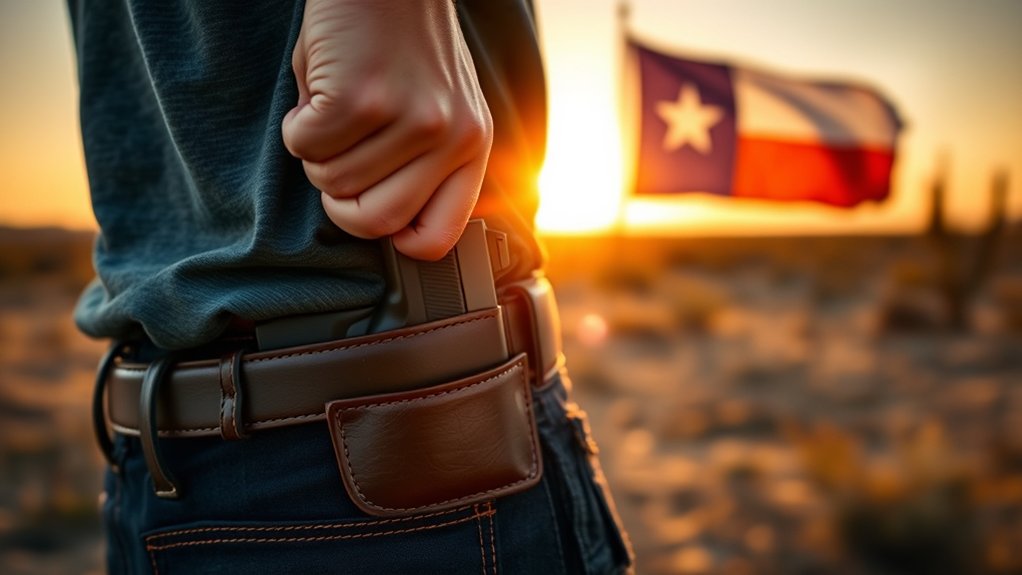
Understanding who can carry handguns in Texas naturally leads to examining the specific age requirements involved. You must be at least 18 to carry a handgun, following recent court rulings allowing 18-20-year-olds to carry without a license.
You can also obtain a License to Carry (LTC) at 18 if you complete required firearm training and meet eligibility standards. Gun safety remains a priority regardless of age.
| Age Group | Carrying Rights |
|---|---|
| Under 18 | Cannot legally carry handguns |
| 18-20 | Can carry without a license |
| 18+ | Eligible for LTC after training |
| 21+ | Previously minimum age for carry |
| All | Must adhere to gun safety laws |
These laws emphasize responsible firearm training and safe handling. It’s all about making sure everyone carries safely and responsibly.
Texas Permitless Carry and When a License Is Needed
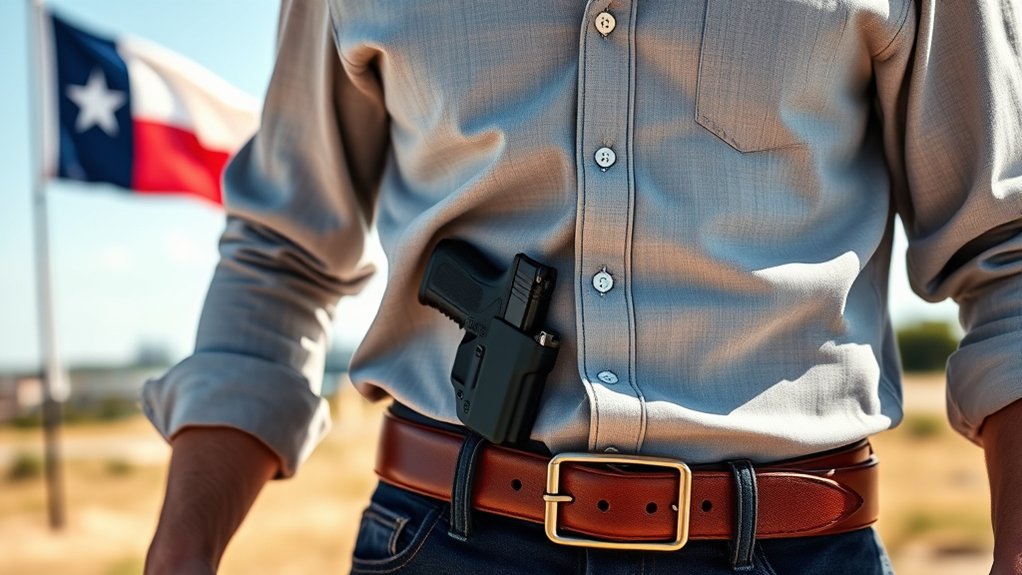
Since September 2021, if you’re 21 or older and legally allowed to own a firearm, you can carry a handgun in Texas without needing a license. That means for most public carry situations, a license isn’t required.
However, getting a License to Carry (LTC) still comes with perks. For example, it can give you access to places where carry is usually restricted, plus other states might recognize your license, which is handy if you travel.
Also, thanks to some recent legal changes, people aged 18 to 20 can now carry in public, too. Even so, having an LTC can still be important depending on your personal situation.
Permitless Carry Age
When you’re 21 or older and legally allowed to possess a firearm in Texas, you can carry a handgun openly or concealed without a license as of September 1, 2021. This permitless carry law makes carrying a gun easier. But it’s still super important to practice responsible firearm storage and gun safety.
For those aged 18-20, federal rulings allow carrying. Also, LTC applications won’t be denied just because of age.
| Age Group | Permit Required | Notes |
|---|---|---|
| 18-20 | No (court ruling) | LTC applications accepted |
| 21+ | No | Open/concealed carry allowed |
| Under 18 | Yes | License required (rare cases) |
| Residents | No | Permitless carry applies |
| Non-Residents | No | Permitless carry applies |
Always prioritize safe handling and secure storage to prevent accidents.
License Benefits and Limits
While Texas now allows permitless carry for those 21 and older, obtaining a License to Carry (LTC) still offers important advantages.
The LTC provides formal legal recognition, which means you can carry in certain restricted locations where permitless carry isn’t allowed. It also helps with reciprocity, so you can legally carry in other states that recognize the Texas LTC.
To get the license, you need to complete required firearm training. This ensures you understand safe handling and state laws.
The LTC also requires periodic renewal to keep it valid and maintain its benefits.
Without a license, you can carry openly or concealed in most public areas, but you must follow specific signage restrictions.
Who Is Legally Prohibited From Carrying a Firearm
Although Texas allows many individuals to carry firearms, certain people are legally prohibited from doing so to guarantee public safety. Firearm registration and background checks play a critical role in identifying who’s disqualified from carrying a gun.
You can’t legally carry a firearm in Texas if you fall into any of these categories:
- You have a felony conviction, as this permanently bars firearm possession.
- You’re under an active protective order related to family violence.
- You were convicted of specific misdemeanors like assault or terroristic threats within the last five years.
- You have been adjudicated mentally incompetent or committed to a mental health facility.
Additionally, illegal non-citizens and those dishonorably discharged from the military are also prohibited from carrying firearms.
Where You Can and Cannot Carry a Gun in Texas
Understanding who can’t carry a firearm in Texas sets the stage for knowing where you can legally carry one. Since September 2021, if you’re 21 or older and legally allowed to possess a firearm, you can carry a handgun publicly without a permit.
However, gun safety regulations prohibit carrying firearms in specific places, including schools, courthouses, polling sites, correctional facilities, airports, and within 1,000 feet of execution sites.
Private property owners may also restrict guns through clear signage.
Open carry requires the handgun to be holstered and is banned on college campuses, hospitals, and certain event venues.
Alcohol-serving establishments with over 51% alcohol revenue typically prohibit firearms.
Remember, Texas doesn’t require firearm registration, but abiding by these location restrictions is essential for responsible carry and gun safety compliance.
How to Legally Carry Handguns in Vehicles and Watercraft
If you’re 21 or older and legally allowed to possess a firearm, Texas law lets you carry handguns openly or concealed in vehicles and watercraft without a license.
To comply with gun safety and firearm storage requirements, follow these rules:
Carry your handgun in a holster or secure, accessible container. If not in a holster, store the handgun in a locked container or in plain view but out of immediate reach.
Never carry or handle a handgun while intoxicated; it’s illegal regardless of license status.
Avoid displaying or discharging firearms in vehicles or watercraft in ways that cause alarm or disturb the peace.
Following these guidelines helps you carry your handgun responsibly and legally in Texas vehicles and watercraft.
Open Carry vs. Concealed Carry Rules in Texas
Since September 1, 2021, Texas lets you carry handguns openly or concealed without a license if you’re 21 or older and legally allowed to possess a firearm.
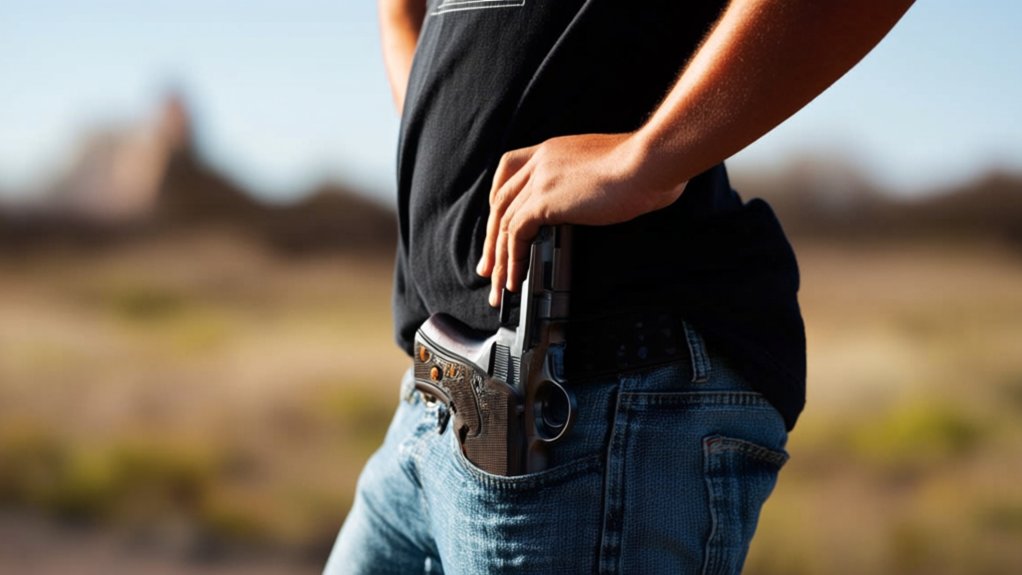
For open carry, you must carry the handgun in a shoulder or belt holster. Texas law requires a holster but doesn’t specify the type.
Concealed carry doesn’t require a holster, as long as the firearm remains hidden from view.
Both open and concealed carry are subject to carrying restrictions. You can’t carry in schools, courthouses, certain public buildings, or private property displaying proper signage.
Open carry is also prohibited on college campuses.
Where You Can and Can’t Show or Use Your Gun in Public
In Texas, if you’re 21 or older and legally allowed to have a handgun, you can carry it openly or concealed in most public places. Just keep in mind, you shouldn’t show your firearm in a way that might scare people or cause a scene.
There are some spots where carrying a gun is a no-go, like schools, courthouses, and airports, especially if there’s a sign saying you can’t. Also, firing your gun or waving it around to threaten someone in public is against the law and can get you in serious trouble.
Prohibited Carry Locations
Although Texas allows carrying firearms in many public spaces, several locations strictly prohibit carrying guns, whether openly or concealed. You must follow these restrictions to avoid legal trouble and guarantee proper gun storage and adherence to background checks.
Courthouses, correctional facilities, polling places, and airports prohibit firearms regardless of your license status.
Carrying in school buildings, on grounds, or within 1,000 feet of schools is illegal unless explicitly authorized.
Private businesses and hospitals can ban firearms by posting 30.06 or 30.07 signs. Ignoring these signs may lead to criminal charges.
Venues serving alcohol with over 51% of revenue from sales and certain event locations also prohibit carrying firearms, and these places often have clear signs.
Respecting these rules is crucial for responsible gun ownership in Texas. It helps keep everyone safe and ensures you stay on the right side of the law.
Displaying Firearms Publicly
Understanding where you can carry a firearm is only part of Texas gun laws; how you display that firearm in public is just as important. You have to carry handguns in a holster when openly carrying. Displaying a firearm without one is illegal and can be treated as disorderly conduct.
This rule is all about protecting public safety by preventing alarm or fear. Gun safety means you should avoid showing your firearm in a way that might intimidate others.
Also, certain places like schools, courthouses, and airports strictly prohibit firearms, no matter what permits you have.
Private and public properties use clearly visible signs—contrasting colors and block letters at least one inch high—to legally restrict firearms.
Proper firearm storage and responsible display help you stay within Texas law and promote public safety. It’s really about being respectful and aware of your surroundings.
Use and Discharge Rules
Since Texas law strictly regulates where and how you can use or display a firearm, it’s essential to know the specific locations and circumstances where carrying or discharging a gun is prohibited. You must always prioritize firearm safety and understand your legal responsibilities to avoid violations.
Here are some key restrictions to keep in mind:
- Handguns must be carried in a holster to be legally visible. Displaying a firearm just to alarm others is illegal.
- Discharging or displaying firearms in schools, courthouses, airports, hospitals, and correctional facilities is prohibited.
- Carrying firearms during official proceedings or elections isn’t allowed.
- Discharging a firearm in public or in a way that causes alarm is considered a criminal offense.
Make sure to observe proper signage so you respect these rules and guarantee safe, lawful carry practices. It really helps keep things safe for everyone.
Frequently Asked Questions
Can I Carry a Firearm While Intoxicated in Texas?
You can’t carry a firearm while intoxicated in Texas. Alcohol restrictions prohibit carrying if your blood alcohol concentration is 0.08% or higher.
If you’re caught, the penalties can be pretty serious. They include criminal charges, even if you’re just carrying openly or concealed.
Are There Restrictions on the Type of Handgun I Can Carry?
Think of Texas like an open book. There are no handgun restrictions or carry limitations on legally owned handguns, as long as you carry them in a holster and avoid prohibited weapons under state or federal law.
It’s pretty straightforward. Just make sure you follow the basic rules, and you’re good to go.
How Do Texas Gun Laws Affect Carrying on College Campuses?
You must follow Texas gun laws that restrict carrying firearms inside college buildings. This helps balance campus safety with student rights.
You can carry concealed only in specific outdoor areas. Just be sure to respect university signage and policies.
What Are the Penalties for Carrying Without a License Where Required?
Coincidentally, if you carry without meeting license requirements, penalty severity ramps up quickly. Expect felony charges, 2-10 years imprisonment, hefty fines, and potential loss of firearm rights.
This is especially true in restricted areas or if you have prior offenses. The consequences can be quite serious, so it’s important to stay informed and comply with all licensing laws.
Can Employers Prohibit Employees From Carrying Firearms at Work?
Yes, your employer can enforce workplace policies with firearm restrictions inside buildings or during work hours.
But they can’t ban you from storing firearms in your locked vehicle on company property unless proper signage is posted.
Conclusion
In Texas, carrying a gun feels like walking through a minefield of laws. One wrong step, and you’re in hot water. You can carry openly or concealed, but knowing the age limits, permit rules, and off-limit places is essential.
From vehicles to watercraft, every detail matters. Don’t let confusion turn your right to carry into a legal nightmare. Stay sharp, follow the rules, and carry responsibly to keep yourself safe and compliant in the Lone Star State.