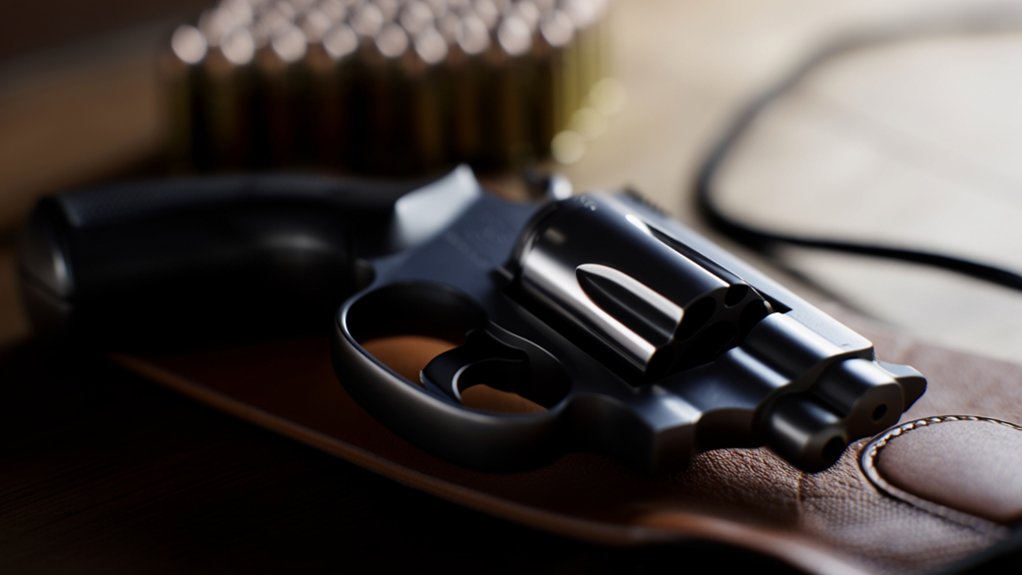
What Is The Best Revolver For Concealed Carry – Top Picks And Buying Tips
For concealed carry, choose a compact revolver with a 2-3 inch barrel and a lightweight frame under 20 ounces. This makes it easier to conceal and allows for quicker draws. Calibers like .38 Special offer controllable recoil.
If you can handle the kick, .357 Magnum provides more stopping power. Models like the Ruger LCR balance durability and low weight. Heavier revolvers can improve recoil control.
Think about grip ergonomics, capacity, and legal requirements when picking your ideal carry piece. Explore different options and features to help refine your choice.
Key Takeaways
- Choose compact revolvers with 2-3 inch barrels and lightweight frames under 20 ounces for easy concealment and quick draws.
- Select calibers like .38 Special for manageable recoil or .357 Magnum for higher stopping power based on shooting proficiency.
- Consider models like Ruger LCR for lightweight portability or heavier 22-27 ounce revolvers for better recoil control and accuracy.
- Buy from licensed dealers, verify local laws, and ensure the revolver meets safety standards for legal and secure ownership.
- Balance price, grip ergonomics, holster compatibility, and functional features to find a reliable revolver that fits your concealment needs.
Essential Traits of Concealed Carry Revolvers
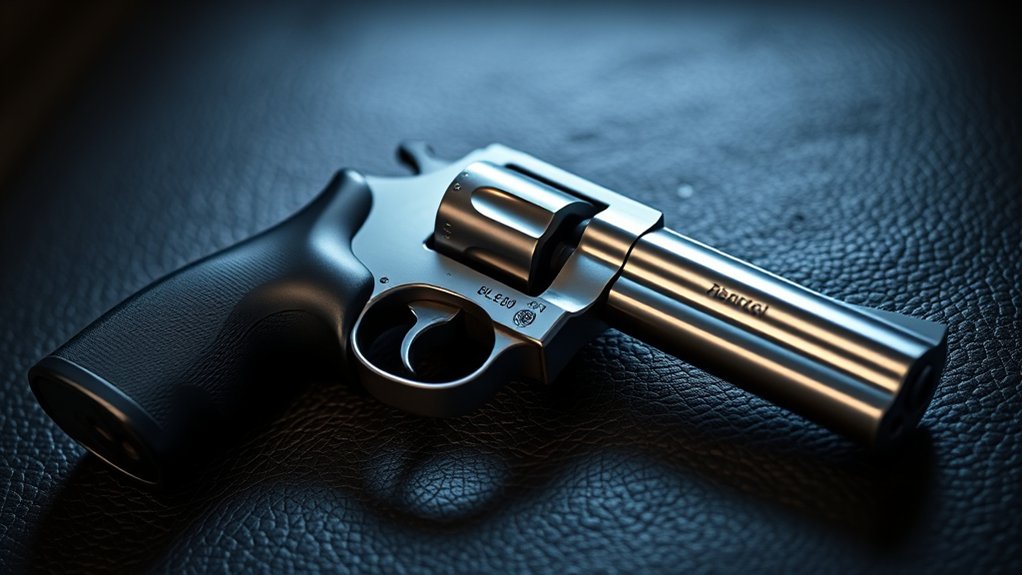
When selecting a concealed carry revolver, you’ll want to prioritize compactness and lightweight construction to guarantee comfortable, discreet carry.
Opt for models with barrel lengths between 2 to 3 inches and frames made from aluminum alloys or polymer to reduce weight.
Choose revolvers with 2-3 inch barrels and lightweight aluminum or polymer frames for comfortable carry.
Snag-free designs, such as shrouded or enclosed hammers, ensure smooth draws without catching on clothing or holster styles.
Capacity typically ranges from 5 to 7 rounds, balancing sufficient firepower while maintaining concealability.
Features like adjustable sights, smooth triggers, and durable finishes enhance reliability and ease of use.
Always verify your revolver complies with local concealed carry laws, as regulations differ on size and features.
Integrating these essential traits guarantees your revolver meets both practical and legal requirements for daily concealed carry.
It’s all about finding the right balance that works for you.
Choosing the Right Caliber for Concealed Carry Revolvers?
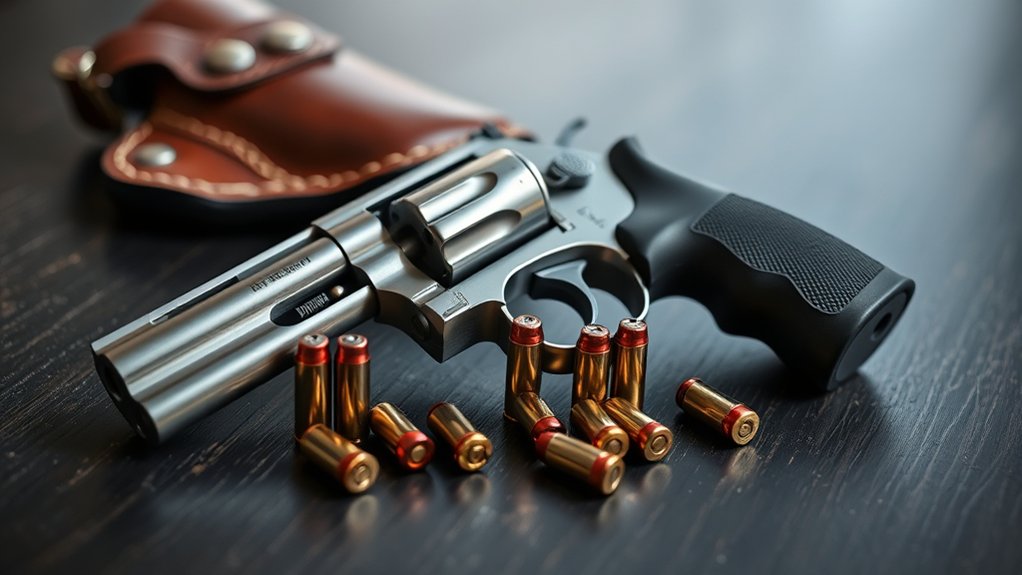
Selecting the right caliber plays a significant role in how your concealed carry revolver performs in real-world situations. You’ll want to balance stopping power, recoil, and ammunition storage when choosing your caliber. Consider these points:
- .38 Special offers manageable recoil, widespread availability, and affordability. It’s ideal for everyday concealed carry.
- .357 Magnum delivers superior velocity and stopping power but comes with increased recoil and muzzle blast. This might affect your comfort when shooting.
- .327 Federal Magnum allows firing lighter .32 caliber rounds, providing lower recoil with higher capacity in a compact frame.
When it comes to revolver accessories, look for efficient ammunition storage solutions that complement your chosen caliber. These can help you reload quickly when it counts.
Ultimately, pick a caliber that matches your recoil tolerance and shooting proficiency. That way, you can ensure effective concealed carry performance every time.
Top Lightweight Revolvers for Concealed Carry
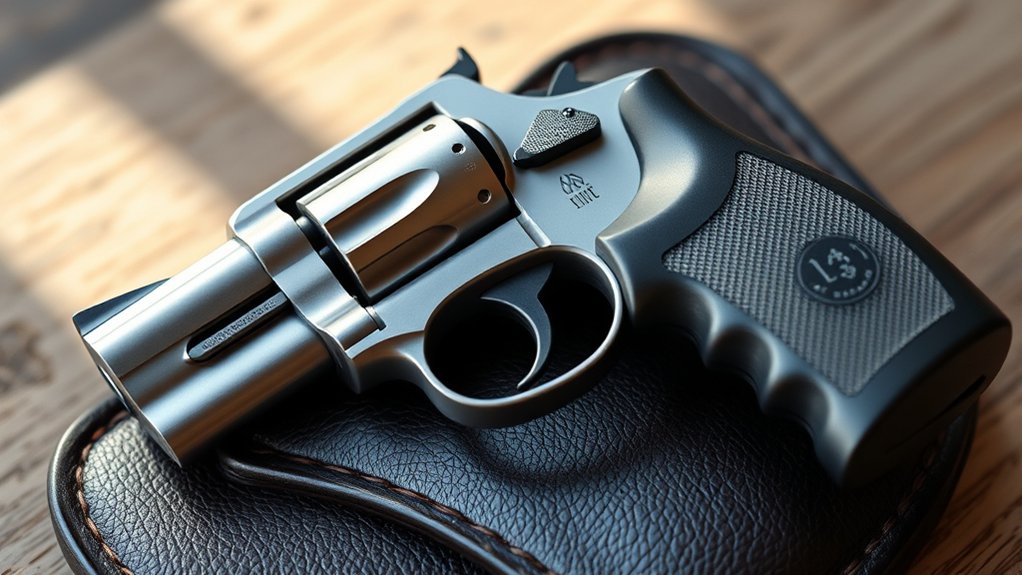
Although concealed carry revolvers are often associated with heavier frames, lightweight models like the Ruger LCR prove that you don’t have to sacrifice durability or performance for portability.
Lightweight concealed carry revolvers like the Ruger LCR combine durability and performance without the bulk.
Weighing just 13.5 ounces, the LCR’s hybrid aluminum and polymer frame offers exceptional strength while minimizing weight. It’s ideal for daily concealed carry.
Its compact size and smooth double-action trigger make quick draws and accurate shots in confined spaces easier. That’s essential under concealed carry laws that require safe, accessible handling.
Plus, it’s available in versatile calibers such as .38 Special +P and 9mm, so it adapts to your defensive preferences.
Pairing the LCR with appropriate holster styles like inside-the-waistband or pocket holsters enhances concealment and comfort. This way, your lightweight revolver stays discreet yet ready when you need it most.
Midweight and Heavy Revolvers for Better Control and Power
You’ll find that midweight and heavy revolvers offer superior recoil management. This makes powerful calibers like the .357 Magnum much easier to control.
Because they’re heavier and have larger grips, they help you stay accurate even during rapid fire. Plus, many of these revolvers come with higher capacity cylinders, which is a nice bonus.
Balancing these factors is really important when you’re picking out a revolver. You want something that gives you both power and manageable shooting dynamics.
Enhanced Recoil Management
When you carry a midweight or heavy revolver like the Smith & Wesson 640 Pro or Ruger SP101, the added mass, typically between 22 to 27 ounces, significantly reduces felt recoil. This enhanced recoil management improves control and follow-up shot accuracy. Plus, it maintains holster compatibility and trigger safety.
Key factors include:
- Stainless steel or alloy frames absorb and dampen recoil shock effectively.
- Larger grips distribute recoil force evenly across your hand.
- Ported barrels reduce muzzle rise, aiding rapid target reacquisition.
- Heavier weight stabilizes the firearm during powerful shots, decreasing muzzle flip.
These design elements make midweight and heavy revolvers excellent for concealed carry. They balance power with manageable recoil without compromising your ability to draw quickly or engage the trigger safely under stress. It’s a smart setup for reliability and comfort.
Caliber Options and Capacity
How do caliber choices and capacity impact your effectiveness with midweight and heavy revolvers? These models typically chamber calibers like .357 Magnum and .44 Special, which offer superior stopping power for self-defense. Their compatibility with robust rounds enhances terminal ballistics while keeping recoil manageable.
Midweight and heavy revolvers often provide a magazine capacity of six or more rounds, giving you more flexibility during critical encounters. The increased mass helps absorb recoil and improves stability. This allows for quicker target reacquisition and better shot placement under stress.
While they’re heavier than lightweight options, these revolvers strike a good balance between concealability and enhanced control and power. They’re ideal for experienced shooters who prioritize reliability and accuracy.
Understanding these factors ensures you pick a revolver that maximizes performance without making it hard to carry discreetly.
Features You Need in a Concealed Carry Revolver
Although concealed carry revolvers come in various designs, certain features remain essential for effective everyday carry. You need a revolver that’s lightweight, ideally under 20 ounces, for comfort and holster compatibility. This helps guarantee a smooth draw without snagging.
For everyday carry, choose a lightweight revolver under 20 ounces for comfort and a snag-free draw.
Also, make sure to comply with concealed carry laws by selecting a compact model with a 2-3 inch barrel. This balances concealment and accuracy.
Consider these features:
- Snag-free design with shrouded or internal hammers for quick, unobstructed draws.
- Adjustable sights (fiber optic or tritium) for reliable target acquisition in diverse lighting.
- Durable finishes like stainless steel or nitride coating to resist corrosion from daily carry.
- Compact dimensions that fit your concealment method and legal requirements.
These attributes ensure your revolver performs reliably and discreetly for self-defense. Just keep these points in mind when choosing your carry piece!
Customizing and Maintaining Your Concealed Carry Revolver
Selecting the right features for your concealed carry revolver sets the foundation, but fine-tuning it through customization and routine maintenance guarantees peak performance.
You can easily improve trigger sensitivity by installing lightweight springs, which enhances shooting comfort and control. Swapping grips not only refines handling but also optimizes holster compatibility and concealability.
Popular models like the Ruger LCR and Smith & Wesson are designed for straightforward modifications. This lets you personalize your revolver in under an hour, often for less than $100.
Regularly clean the cylinder, inspect for wear, and replace worn parts to maintain reliability and safety.
These adjustments and upkeep assure your revolver performs consistently, feels comfortable, and fits discreetly. These are key factors for effective concealed carry.
Where to Buy Concealed Carry Revolvers and What They Cost
You can buy concealed carry revolvers from licensed dealers, online stores, and gun shows, but it really depends on the laws where you live.
Prices usually start at under $500 for good budget-friendly models, and they can go over $1,000 if you’re looking for something more premium.
Just be sure to check the legal requirements in your area and confirm that you’re buying from authorized sellers. That way, you’ll have a smooth and secure transaction.
Authorized Dealer Locations
When purchasing a concealed carry revolver, it’s vital to buy from authorized dealers such as licensed firearm stores, major sporting goods retailers, or specialized gun shops across the U.S. These locations guarantee compliance with concealed carry laws and prioritize gun safety.
To verify authenticity, check dealer licensing via the Federal Firearms License (FFL) registry. Authorized dealers offer factory warranties guaranteeing product reliability and support.
They also provide a selection ranging from budget models to premium revolvers. You’ll find customization options and accessories tailored to your needs, plus firearms training programs to enhance safe handling and legal knowledge.
Buying through these channels protects you legally and ensures your revolver meets safety standards. That’s indispensable for responsible concealed carry.
Typical Price Ranges
Authorized dealers not only guarantee legal compliance and safety but also influence the price range you’ll encounter when purchasing concealed carry revolvers.
Typical models vary from under $500, like the Charter Arms Undercover, to over $1,000 for premium options such as the Kimber K6s.
The Ruger LCR series generally falls between $550 and $860, depending on caliber and features.
Smith & Wesson’s Performance Center models retail around $825 to $1,061.
Price differences come from materials, size, and added features.
When choosing, prioritize holster compatibility and grip ergonomics to assure comfort and concealability.
Most quality revolvers fall within the $500 to $1,000 range.
This balances cost with functional design, reliability, and ease of carry for everyday use.
It’s all about finding what works best for you without breaking the bank.
Frequently Asked Questions
Can I Carry a Revolver With a Concealed Carry Permit Nationwide?
You can’t carry a revolver nationwide with one concealed carry permit because concealed carry laws vary by state. Always check each state’s regulations and allowed revolver calibers to guarantee compliance before traveling or carrying concealed.
It’s important to understand that what works in one state might not work in another. So, don’t assume your permit automatically gives you the right to carry everywhere. When in doubt, look up the specific rules for each state you plan to visit.
How Do I Train Effectively With My Concealed Carry Revolver?
You train effectively by selecting reliable ammunition that cycles smoothly and practicing firm grip techniques to control recoil. Combine dry fire drills, live fire at close range, and reload exercises to improve speed, accuracy, and handling under stress.
It’s all about consistency. Keep your sessions regular, and focus on building muscle memory. That way, your responses become almost automatic when it counts.
What Holster Types Work Best for Revolvers?
Choosing the best holster for revolvers is like finding a needle in a haystack. Focus on durable holster materials and strong retention mechanisms. IWB and appendix holsters often balance concealment, comfort, and secure retention perfectly.
It’s all about finding something that feels right for you. Comfort and security should go hand in hand. So take your time and try a few styles to see what fits your needs best.
Are There Legal Restrictions on Revolver Barrel Length for Concealed Carry?
Yes, you’ll face barrel length regulations and legal restrictions on concealed carry revolvers. Many states require minimum barrel lengths, often 3 inches or more. So, always check local laws to guarantee your revolver complies before carrying.
It’s important to know these rules because they can vary quite a bit depending on where you live. Don’t assume what’s allowed in one state applies in another. When in doubt, look up the specific regulations for your area.
How Often Should I Practice Dry Firing My Revolver?
You should practice dry firing your revolver at least once a week, focusing on trigger control and grip stability.
Consistent sessions of 10-15 minutes help build muscle memory and improve your accuracy and shooting confidence.
It’s a simple routine, but sticking to it really makes a difference over time. Just a few minutes regularly can boost your skills more than occasional long sessions.
Conclusion
Choosing the best revolver for concealed carry demands deliberate decisions, balancing size, strength, and shooting stability. You’ll want a lightweight, reliable revolver with the right caliber to confidently carry and quickly control.
Customizing and consistent care cultivate peak performance. Plus, knowing where to purchase guarantees smart spending.
By prioritizing precision, power, and portability, you’ll secure a steadfast sidearm that seamlessly supports your safety and shooting skills.