Is South Carolina A Concealed Carry State – Laws And Permit Rules
Yes, South Carolina is a concealed carry state that allows you to carry openly or concealed without a permit if you’re 18 or older, effective March 2024. While permits aren’t required for general carry, they’re still available for interstate reciprocity and added legal protection.
You must follow location restrictions and property rules, and certain past convictions limit your rights. Understanding training, application, and reciprocity details will help you stay compliant and protect your carry privileges.
What South Carolina’s Permitless Carry Law Means
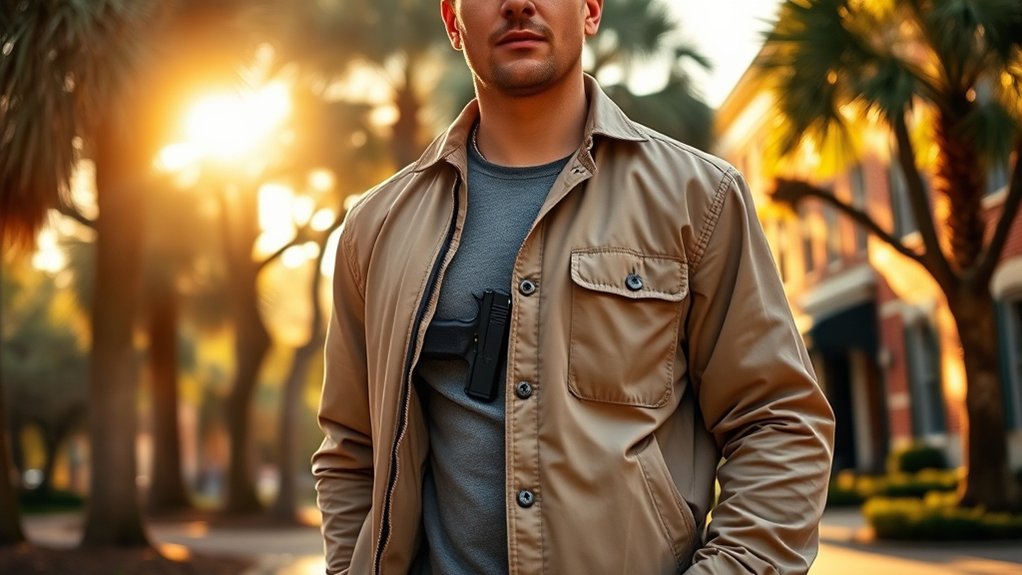
Although South Carolina’s permitless carry law took effect on March 7, 2024, it allows anyone 18 or older to carry a firearm openly or concealed without a permit. But don’t think this means all restrictions are gone.
South Carolina’s new law lets anyone 18+ carry firearms openly or concealed without a permit.
This concealed carry law repealed the requirement for a concealed weapons permit, which simplifies firearm laws across the state. Still, you need to respect certain limits, like no carrying in schools, courthouses, or private property that has no-carry signs posted.
Even though permitless carry means you don’t need a permit within South Carolina, you can still get a concealed weapons permit if you want. Many people do this for reciprocity with other states or for extra legal protections.
Law enforcement will keep enforcing restrictions on people who aren’t allowed to carry, such as felons or those under protective orders. So, understanding these details helps you stay on the right side of South Carolina’s changing firearm laws.
Who Can Carry Concealed Without a Permit in South Carolina?
Since March 7, 2024, South Carolina allows residents aged 18 and older to carry concealed firearms without a permit, as long as they follow specific legal restrictions. You can carry concealed weapons without a permit in most public spaces unless the law explicitly says otherwise.
This means residents 18 and older no longer need a concealed weapons permit to carry concealed, though getting one is still an option. However, some places like courthouses, schools, and private property with posted signs still don’t allow permitless carry.
Law enforcement makes sure these rules are followed to keep everyone safe.
Non-residents also have some limited rights to carry without a permit, depending on the location. So, it’s really important to understand where and how you can legally carry without a permit in South Carolina.
That way, you avoid breaking the law and carry responsibly.
When Do You Still Need a Concealed Weapons Permit?
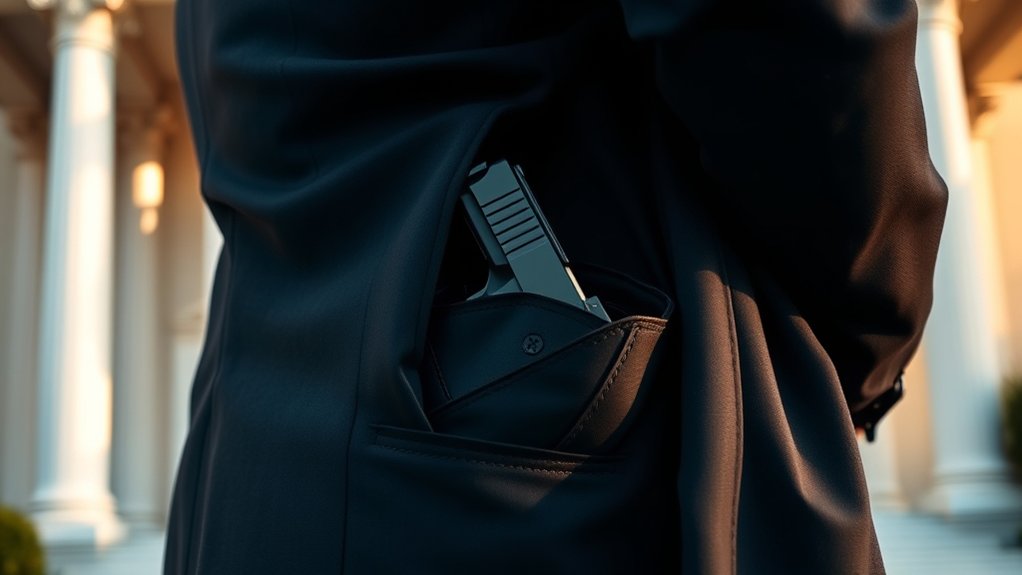
Even though South Carolina no longer requires a permit to carry a concealed weapon in most public places, you might still want to get one for some specific legal benefits. A concealed weapons permit offers enhanced legal protections that go beyond just constitutional carry, especially in tricky legal situations.
Plus, with reciprocity, your permit lets you carry concealed in other states that recognize South Carolina’s permit. This means you can legally carry in more places than you could without it.
With reciprocity, your permit expands where you can carry concealed beyond South Carolina’s borders.
Keep in mind, the permit requires firearm training and background checks. It’s valid for five years, and you’ll need to renew it to keep enjoying its benefits.
Whether or not you have a permit, you still need to follow the rules about places where carrying is prohibited. So, having a concealed weapons permit can give you extra peace of mind and flexibility, making it a smart choice despite the new carry laws.
How Do You Apply for a South Carolina Concealed Weapons Permit?
To apply for a South Carolina Concealed Weapons Permit, you’ll need to submit a completed application along with a fingerprint card, proof of recent firearms training, and proper ID to SLED.
You can do this online, by mail, or in person—whichever works best for you.
The process also includes a background check and a recommendation from your sheriff.
There’s a $50 fee for both initial permits and renewals.
Just keep in mind that these permits last for five years.
When it’s time to renew, you’ll need to provide updated documentation and go through another background review.
Application Requirements Overview
Although the process requires several specific documents, applying for a South Carolina Concealed Weapons Permit is straightforward if you prepare accordingly.
To meet application requirements, you must submit a completed application form, fingerprint cards, and proof of firearms training completed within three years.
You also need a valid South Carolina driver’s license reflecting your current address.
South Carolina conducts a thorough background check to verify applicant eligibility, screening for criminal convictions, mental health adjudications, and other disqualifications.
You can submit your application online, by mail, or in person at authorized fingerprinting sites.
Once issued, the permit requires renewal every five years with a $50 fee, and you must report lost or stolen permits within 48 hours.
Understanding these steps guarantees a compliant and efficient application process. It really helps to know what’s expected so you can get through it smoothly.
Online And Mail-In Options
Once you have gathered the necessary documents and completed the application form, you can submit your South Carolina Concealed Weapons Permit application online through the SLED EasyPath system or by mailing a paper form directly to SLED.
Since January 8, 2019, SLED EasyPath supports online renewal, replacement, and new applications, including electronic fingerprinting scheduling at IdentoGo sites.
If you opt for a mail-in application, download the form from the SLED website, complete it, and send it with fingerprint cards, proof of firearm training, and identification.
This dual submission method provides flexibility and accessibility for applicants.
For any questions during the process, you can contact SLED support via phone or email.
This way, you can make sure your South Carolina Concealed Carry permit application proceeds smoothly and complies with state requirements.
Renewal And Documentation
How do you apply for or renew a South Carolina Concealed Weapons Permit? You must submit a completed application, including fingerprints and documentation proving firearms training within the past three years.
Applicants aged 18 or older can apply online via the SLED EasyPath system or mail a paper application directly to SLED.
Your application must include a valid South Carolina driver’s license that matches your current address.
For renewal, you pay a $50 renewal fee and undergo a background check to confirm eligibility.
Felony convictions or disqualifying mental health records will prevent issuance.
Permits last five years, so you’ll need to renew before they expire.
Also, if your address changes, you must update your contact information within ten days.
Providing proof of training and accurate documentation helps make sure your application or renewal goes smoothly.
What Are the Training Requirements for a Concealed Weapons Permit?
Before you can obtain a concealed weapons permit in South Carolina, you must complete a firearms training course that proves your handgun proficiency and understanding of relevant laws. The training course includes handgun safety, proper storage, and firing at least 25 rounds under instructor supervision. It must also cover South Carolina law on handguns and the use of deadly force.
You can complete this training through law enforcement or nationally recognized organizations approved by SLED. When you apply, you must submit proof of training to meet the permit application requirements.
| Requirement | Details |
|---|---|
| Firearms Training | Completed within last 3 years |
| Handgun Proficiency | Firing minimum 25 rounds under supervision |
| Legal Knowledge | South Carolina law and use of deadly force |
| Proof of Training | Required with permit application |
Where Are Firearms Restricted Despite Permitless Carry?
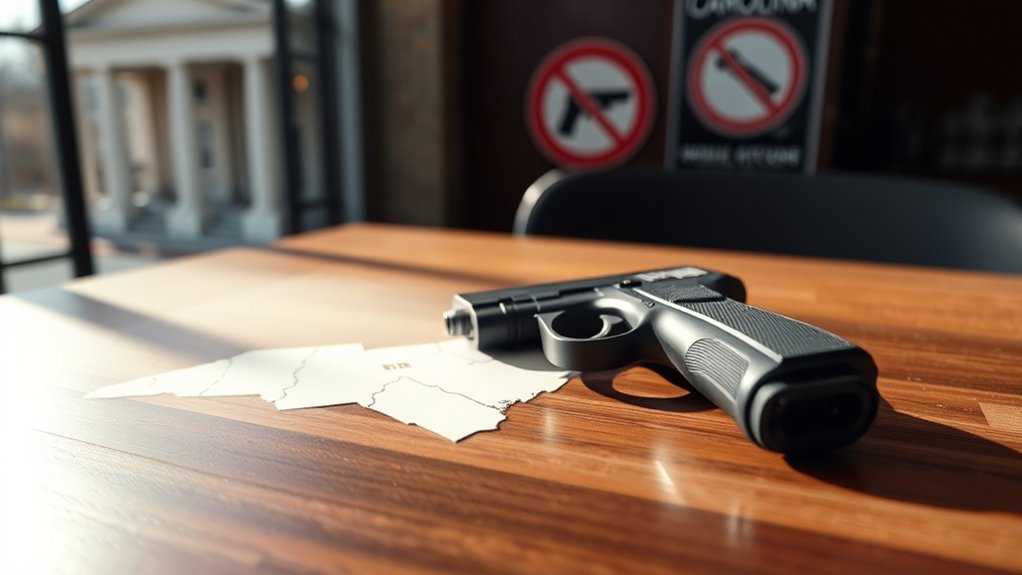
Even though you can carry firearms without a permit, there are still places where they’re off-limits. For example, you can’t bring guns into courthouses, polling places, or some public venues.
Also, if you’re on private property, the owner can prohibit concealed weapons by putting up clear signs.
And don’t forget—there are special rules about carrying firearms in vehicles, so it’s important to know those to stay on the right side of the law.
Prohibited Locations Overview
Where exactly can you not carry a firearm in South Carolina, despite the state’s permitless carry laws? The law clearly prohibits firearms in certain locations regardless of permits. You cannot carry a firearm in courthouses, courtrooms, or during court sessions.
Polling places on election days are also off-limits. Furthermore, firearms are banned at school or college athletic events, daycare centers, and medical facilities unless specifically authorized. The state capitol grounds and building strictly prohibit firearms as well.
Here’s a quick look at some of these prohibited locations:
| Prohibited Location | Reason/Context |
|---|---|
| Courthouses and Courtrooms | Legal proceedings require safety |
| Polling Places | Election integrity and safety |
| State Capitol Grounds/Building | Security of government premises |
These spots are clear no-gun zones under state law, even though permitless carry is allowed elsewhere. So, it’s important to know where you can and can’t carry to stay compliant.
Private Property Restrictions
How does permitless carry intersect with private property rights in South Carolina? Despite permitless carry allowing you to carry without a license, private property owners still have the right to impose firearm restrictions.
If a private business, religious establishment, or any private property posts enforceable signs banning concealed weapons, you have to comply. Signs stating “No Concealable Weapons Allowed” are legally binding. Carrying a firearm onto such premises can lead to legal penalties, no matter your permit status.
Also, you can’t carry firearms into private residences without the owner’s permission. These signage requirements help ensure that private property rights coexist with permitless carry by clearly showing where firearms are restricted.
It’s important to understand and respect these restrictions to avoid legal trouble while exercising your carry rights in South Carolina.
Vehicle Carry Limitations
Along with respecting private property restrictions, you must also follow specific rules when carrying firearms in vehicles under South Carolina law. Vehicle carry requires that firearms be stored in a closed container or luggage compartment when on school property.
Despite permitless concealed carry and open carry allowances, South Carolina laws strictly prohibit firearms in courthouses, courtrooms, publicly owned buildings during sessions, government transportation, and vehicles on government property.
Furthermore, carrying firearms into bars or restaurants serving alcohol is illegal if alcohol is consumed while carrying. Vehicle restrictions also extend to private property, where owners may post signs banning weapons, and you must comply when parking on such premises.
These firearm storage and permit rules ensure that vehicle carry remains regulated despite broad concealed carry permissions statewide.
How Are Firearms Carried in Vehicles Under South Carolina Law?
Although South Carolina’s constitutional carry laws allow you to carry firearms in vehicles without a permit, you still need to follow specific storage requirements. Under South Carolina law, you can store firearms anywhere in your vehicle, including dashboards or under seats, without needing a closed container.
However, when you’re on school property or certain government locations, firearm storage rules get stricter. In those places, weapons must be secured in a closed container or luggage compartment.
Both open carry and concealed carry are allowed in vehicles without a concealed weapons permit. That said, it’s a good idea to inform law enforcement if you’re carrying during a traffic stop.
Vehicle regulations focus on secure firearm storage to ensure safety and legal compliance, especially in public spaces. Knowing these rules is important for responsible vehicle carry.
What Counts as a Concealable Weapon in South Carolina?
You should know that in South Carolina, a concealable weapon is defined as any firearm that’s under 12 inches in length. This applies whether you’re carrying it openly or keeping it hidden.
So, handguns fall under this category and can be carried without a permit.
On the other hand, long guns usually don’t count as concealable weapons.
Also, keep in mind that there might be restrictions depending on private property rules and any posted signs, so it’s always good to pay attention to those.
Concealable Weapon Definition
What exactly qualifies as a concealable weapon in South Carolina? Under South Carolina law, a concealable weapon is any firearm less than 12 inches in overall length. This includes handguns and similarly sized firearms, no matter if you carry them openly or concealed.
Firearms longer than 12 inches, like rifles or shotguns, don’t fit this definition and are treated differently under weapons restriction laws. The key factor here is the firearm’s size, not how you carry it.
Also, private property owners can restrict concealed carry by posting clear signs. You have to follow those rules regardless of the weapon’s classification.
Knowing this definition helps you understand South Carolina’s concealed carry laws better and ensures you respect legal boundaries on private property.
Carry Restrictions Explained
When carrying a firearm in South Carolina, understanding the specific restrictions on concealable weapons is essential to staying within legal boundaries. Carry restrictions define a “concealable weapon” as any firearm under 12 inches, which you may carry openly or concealed without a permit since March 7, 2024.
However, firearm laws specify prohibited locations where neither open carry nor concealed weapons are allowed. These locations include schools, courthouses, and any area displaying “No Weapons” or “No Concealable Weapons Allowed” signs, including private property.
Permit rules no longer restrict carrying in most public spaces, but you must comply with these no weapons signs and prohibited locations. Adhering to these restrictions ensures you respect South Carolina’s firearm laws and avoid legal consequences related to improper carry.
How Reciprocity Works for South Carolina Permits
Although reciprocity for concealed carry permits can be complex, South Carolina maintains clear standards to determine which out-of-state permits it recognizes. The South Carolina Law Enforcement Division (SLED) regularly updates the list of states with reciprocity based on strict recognition policies.
To qualify, states must require thorough background checks, completion of firearm safety courses, similar permit issuance standards, and mutual recognition of South Carolina permits.
States must enforce background checks, safety courses, comparable standards, and reciprocal recognition to qualify for South Carolina permit reciprocity.
South Carolina accepts permits from states like Georgia and North Carolina that meet these criteria. Reciprocity extends to non-residents who own property or are military personnel stationed in South Carolina.
However, permits from states lacking comparable requirements, such as California or New York, aren’t recognized. Understanding these factors helps you navigate reciprocity effectively and ensures compliance with South Carolina’s concealed carry laws.
Which States Recognize South Carolina’s Carry Permits?
South Carolina recognizes concealed carry permits from a select group of states based on reciprocity agreements and comparable permit standards. It automatically honors permits from Georgia and North Carolina due to explicit reciprocity agreements.
Beyond these, South Carolina will recognize permits from states with similar background check and safety training requirements, ensuring reciprocity aligns with its standards.
However, it doesn’t accept permits from California, Colorado, Connecticut, Delaware, D.C., New Jersey, and New York.
If you hold a South Carolina permit, some states, like Michigan, recognize it but impose restrictions, often limiting reciprocity to residents only.
To stay updated on which reciprocal states recognize your South Carolina carry permit, consult the South Carolina Law Enforcement Division (SLED) website. They regularly maintain current agreements and reciprocity status, so it’s the best place to check.
Penalties for Violating Carry Laws in South Carolina
Understanding which states recognize South Carolina’s concealed carry permits helps you navigate legal carry across state lines. But it’s just as important to know the consequences of violating carry laws within South Carolina itself. Violations can lead to serious legal penalties, including criminal charges and fines.
For example, carrying in prohibited locations, like courthouses or polling places, may result in fines or even arrest. Ignoring “No Concealable Weapons” signs can lead to misdemeanor charges and potential jail time. And if you carry under disqualifying conditions, such as having a felony conviction, that can trigger felony charges and imprisonment.
Violations during restricted times or events can also cause criminal prosecution and the revocation of your license. Being aware of these penalties helps you stay on the right side of South Carolina’s laws and avoid severe consequences. It’s always better to know the rules than to regret breaking them later.
How Past Convictions Affect Your Carry Rights in South Carolina
If you have past convictions, they can substantially impact your ability to carry a concealed weapon in South Carolina. Firearm laws in South Carolina impose strict restrictions on prohibited persons, including those with a felony record or certain misdemeanor convictions.
Convictions for violent crimes, like murder or assault, bar you from possessing firearms. Domestic violence convictions restrict your carry rights for at least three years after your conviction or release.
Violent crime convictions permanently bar firearm possession; domestic violence convictions restrict carry for at least three years.
Also, if you have a mental health adjudication or have been committed to a mental institution, you lose your carry rights until they’re restored by a court petition.
Fugitives and individuals with unexpunged felony records are also prohibited from firearm possession.
It’s really important to understand these firearm restrictions to make sure you’re following South Carolina’s firearm laws. That way, you can protect your carry rights and avoid any legal trouble.
Frequently Asked Questions
Can Non-Residents Apply for a South Carolina Concealed Carry Permit?
Yes, you can apply for a South Carolina concealed carry permit as a non-resident if you own property in the state or are stationed there. You’ll need to meet the same requirements as residents, including background checks and recent firearms training.
However, if you don’t have lawful presence or property, you might face restrictions or be ineligible.
Reciprocity agreements may also allow you to carry if your home state’s permit is recognized. So, it’s worth checking those details before applying.
Are There Any Restrictions on Carrying Firearms During Public Events?
Yes, you face restrictions carrying firearms at public events in South Carolina. Unless event organizers or law enforcement explicitly authorize it, you can’t carry at parades, festivals, or rallies.
Firearms are also prohibited in courthouses during sessions, at polling places on election days, and at sporting events on school campuses unless specific rules permit otherwise.
Furthermore, private venues posting no-weapons signs legally bar you from carrying firearms there. So, it’s important to pay attention to those signs and follow any specific rules that apply.
Always check ahead if you’re unsure whether you can carry at a particular event or location.
How Does Permitless Carry Affect Hunting Regulations in South Carolina?
You get more freedom when hunting in South Carolina thanks to permitless carry. It lets you carry firearms openly or concealed without needing a permit, which makes it easier to have your gun with you during hunting trips.
However, you still have to follow hunting-specific rules. This means using approved firearms and respecting restricted zones.
This change doesn’t affect hunting seasons or licensing. But it does simplify how you carry firearms while pursuing game legally and responsibly.
What Is the Process for Renewing a Concealed Carry Permit?
To renew your South Carolina concealed carry permit, you’ll need to submit a completed application, a current ID, and a $50 fee through SLED’s EasyPath online system, by mail, or in person.
You won’t need fingerprints or instructor signatures.
SLED reviews your background to confirm your eligibility.
Remember to report lost or stolen permits within 48 hours.
Also, make sure to update your address with SLED within ten days to stay compliant.
Are There Insurance Requirements for Concealed Carry Permit Holders?
No, you don’t have to carry insurance if you hold a concealed carry permit in South Carolina. The state doesn’t mandate any liability coverage or insurance for permit holders.
While private property owners or businesses might ask for proof of insurance to allow carrying on their premises, that’s a condition they set, not a legal requirement.
If you want firearm liability insurance, you’ll need to get it privately. It’s entirely voluntary under state law.
Conclusion
Understanding South Carolina’s concealed carry laws is vital, especially since permitless carry applies to residents 21 and older. Notably, over 70% of states recognize South Carolina’s permits, which expands your legal carrying options.
However, it’s important to know when a permit is still required and how past convictions might impact your rights. This knowledge helps you stay compliant and avoid potential issues.
By grasping these details, you can carry responsibly and confidently while steering clear of serious penalties. Stay informed so you can protect your rights effectively.