How To Carry Concealed – Safe And Legal Carry Tips
To carry concealed safely and legally, first know your state’s specific laws and obtain any necessary permits. It’s important to choose a reliable, compact handgun and a caliber that suits you. Pair that with a holster that securely covers the trigger and feels comfortable for daily wear.
Practice proper firearm handling and keep up with consistent training. This helps guarantee quick and safe access when you need it. Always store and transport your firearm securely, too.
Stay aware of your legal responsibilities and the risks that can come with different situations. Mastering these basics lays the foundation for confident and responsible concealed carry. It’s all about being prepared and staying safe.
Know Your State’s Concealed Carry Laws and Permits
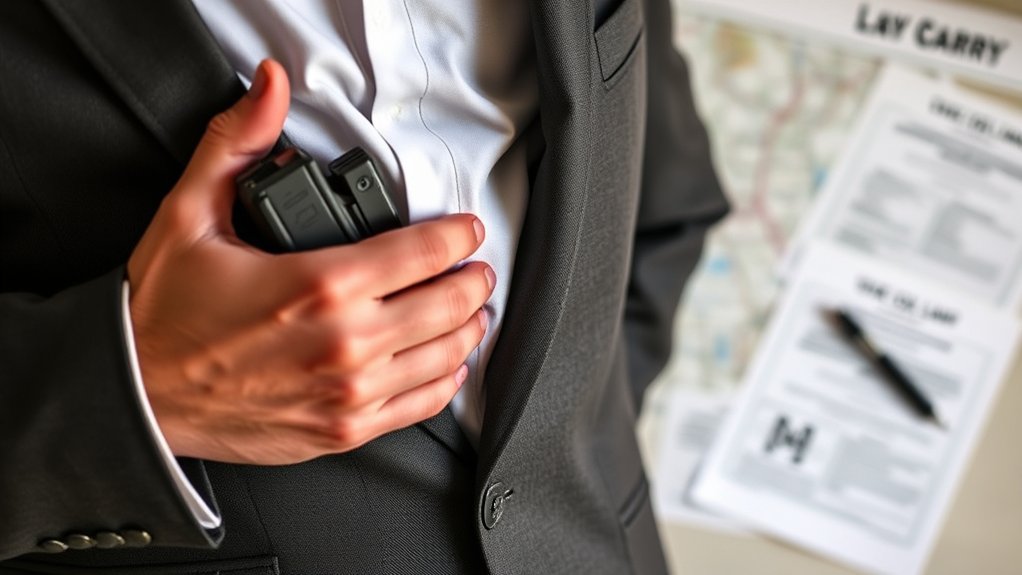
Before you carry concealed, you need to know your state’s specific laws and permit requirements. Concealed carry laws vary widely. Some states require permits, licensing, training, and background checks. Others allow permitless carry for residents above a certain age.
Federal law requires you to complete ATF Form 4473 and pass a NICS background check when purchasing from licensed dealers.
You must also understand where legal carry is permitted. Many states restrict concealed weapons in schools, government buildings, or private property with posted signs.
Staying informed about your state’s current carry laws is essential because they often change through legislation or court rulings. Knowing these details ensures you carry legally and responsibly without risking penalties or losing your rights.
Choose the Right Handgun and Caliber for Concealed Carry
Once you understand your state’s concealed carry laws, the next step is selecting a handgun and caliber that suit your daily needs. Choose a compact, small firearm like a Glock 43 or SIG P365 for easier concealment and comfortable carry.
Understanding your state’s laws is key before choosing a compact handgun like the Glock 43 for daily concealed carry.
Opt for a reliable caliber such as 9mm or .380 ACP, balancing manageable recoil with effective stopping power.
Prioritize a concealed carry gun with simple operation and easy access to guarantee quick drawing and reholstering during high-stress situations. Test different handguns at the range to find one that fits your hand comfortably and allows accurate shooting.
Always confirm your chosen caliber and firearm comply with state regulations.
Proper selection supports firearm safety and integrates smoothly with your chosen carry methods for effective daily protection. It’s all about finding what works best for you and makes you feel confident every day.
Pick a Holster That Keeps Your Gun Safe and Hidden
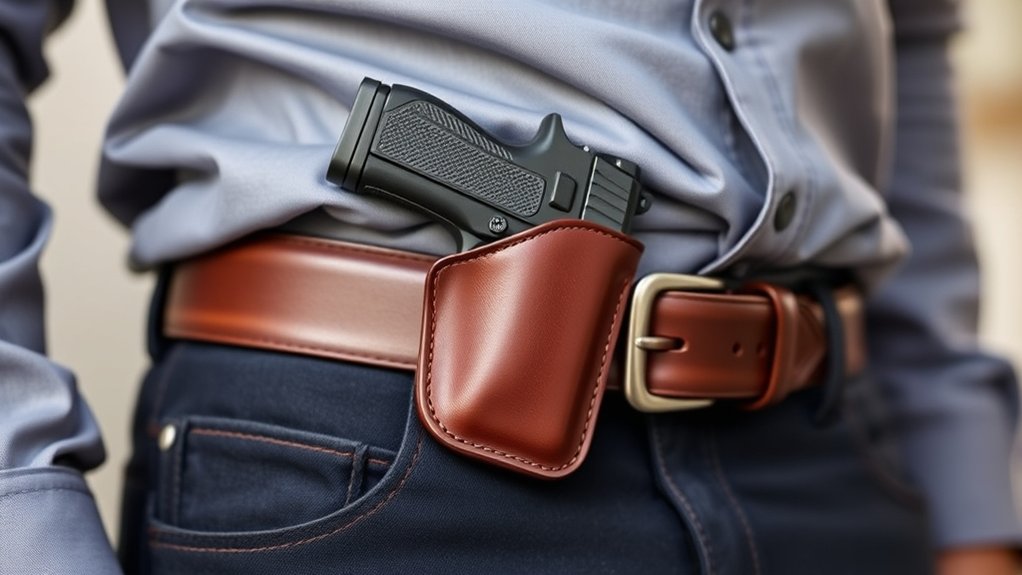
Although choosing the right handgun is essential, selecting a holster that keeps your gun safe and hidden is just as important for effective concealed carry. You want to pick a holster that fully covers the trigger guard to prevent accidental discharge and prioritize safety.
Make sure your holster fits your firearm model precisely. This helps with reliable retention and secure concealment. It’s also smart to opt for durable materials like Kydex or reinforced leather.
Don’t forget to consider adjustable retention and cant angles. These features can really help optimize comfort and concealment when you’re moving around.
| Key Factor | Why It Matters |
|---|---|
| Trigger Guard | Prevents accidental discharge |
| Fit | Ensures safety and retention |
| Retention | Keeps firearm secure |
| Concealment | Maintains hidden carry |
Choose wisely to keep your gun safe and concealed at all times.
Choose Comfortable and Accessible Concealed Carry Gear
You want to pick a holster that really fits your body and matches your clothing style. That way, you stay comfortable and avoid any printing.
Then, pair it with a sturdy, purpose-built gun belt — that’s key to supporting the weight and keeping everything secure.
Make sure your gear allows for quick access and adjustability, so you can stay comfortable no matter what your day throws at you.
Holster Selection Criteria
When selecting a holster for concealed carry, prioritize safety and comfort by choosing one that fully covers the trigger guard and fits your firearm securely. Proper holster selection prevents accidental discharges and ensures reliable retention.
Look for holsters made from durable materials like Kydex or quality leather, which provide a secure fit and resist wear.
Adjustable retention and cant settings let you tailor comfort and draw speed according to your carry method. Make sure the holster matches your firearm’s size to avoid movement or accidental drops.
Also, opt for holsters with belt clips or loops that fit your belt width securely, maintaining stability throughout daily activities.
By focusing on these criteria, you’ll carry safely, comfortably, and confidently every day. It really makes a difference when you have the right fit and feel.
Gun Belt Importance
Why does your gun belt matter as much as your holster? Your gun belt provides essential belt support, preventing sagging that can compromise your carry position and concealment.
A sturdy, purpose-built gun belt made from reinforced leather or polymer resists stretching, maintaining shape and guaranteeing consistent holster attachment. The ideal width, usually 1.5 to 1.75 inches, distributes your firearm’s weight evenly. This reduces fatigue and improves comfort during extended concealed carry.
Adjustable sizing and a heavy-duty buckle keep your belt snug and secure. This enhances firearm safety by preventing shifting or loosening.
Choosing a high-quality gun belt ensures quick, reliable access to your firearm and supports proper carry concealment.
Learn Proper Firearm Handling and Safety for Concealed Carry
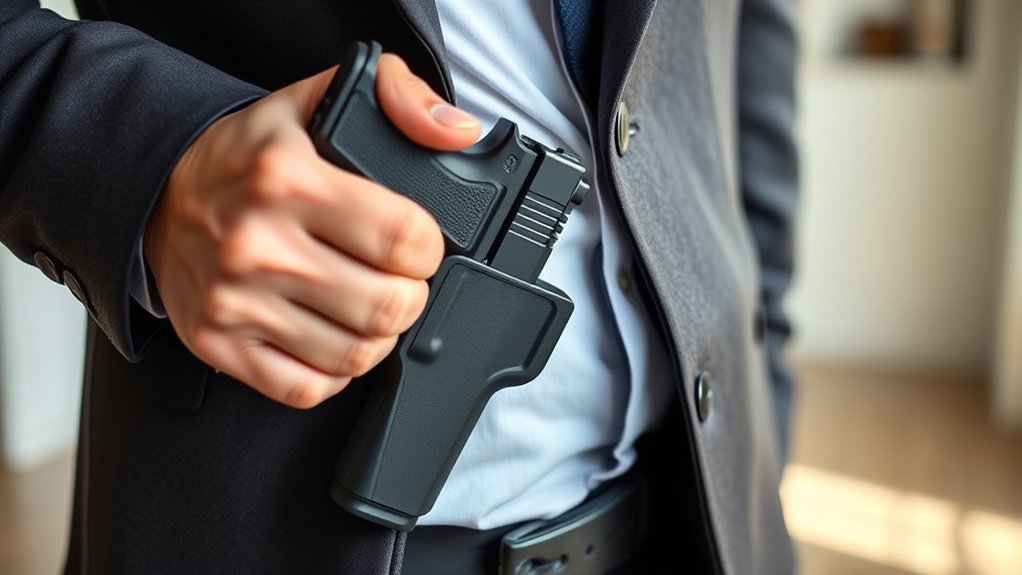
You should always handle your firearm with the utmost care. Keep it holstered with the trigger guard fully covered, and make sure your finger stays off the trigger until you’re ready to shoot.
It’s also important to maintain your firearm regularly.
Using a secure, well-fitting holster helps ensure safe operation and can prevent accidents.
Taking certified training courses is a great idea, too. These courses teach you proper handling, shooting, and storage techniques — all critical for responsible concealed carry.
Firearm Safety Fundamentals
How do you guarantee safe and responsible handling of your firearm while carrying concealed? Mastering firearm safety fundamentals is essential for responsible gun ownership. You must practice safe handling at all times. Keep your finger off the trigger until you’re ready to shoot, and always point the firearm in a safe direction.
Use a reliable holster that fully covers the trigger guard to prevent accidental discharge. Regular firearm inspection ensures your weapon functions properly and remains safe to carry.
Key firearm safety tips include:
- Keep your finger off the trigger until firing
- Use a secure holster covering the trigger guard
- Inspect your firearm regularly before concealed carry
- Verify chamber and magazine are unloaded when not in use
Following these steps helps ensure safe concealed carry and responsible gun ownership. It’s all about staying aware and prepared.
Handling And Maintenance Practices
Mastering safe firearm handling extends beyond basic safety rules to include regular maintenance and proper care. To maintain firearm safety, always keep your firearm pointed in a safe direction and your finger off the trigger until you’re ready to shoot. Use correct handling techniques during loading and unloading to avoid accidental discharges or damage.
Perform routine safety checks before each use to verify your firearm operates reliably. Regular cleaning and lubrication, following the manufacturer’s guidelines, are essential to preserve your firearm’s reliability and function.
When not in use, store your firearm securely and out of reach of unauthorized persons to prevent accidents.
Develop Consistent Practice Routines for Concealed Carry Drawing and Shooting
Although carrying concealed requires more than just owning a firearm, developing consistent practice routines for drawing and shooting is essential to guarantee quick, reliable access and accuracy under pressure.
Establish a regular firearm training schedule that focuses on drawing from your concealed carry position to build muscle memory. Incorporate dry-fire drills to refine your technique and trigger control safely.
Practice drawing from various concealment setups to prepare for real-world scenarios. Use live-fire sessions to simulate actual conditions, emphasizing grip, stance, and smooth presentation.
Track your progress with timed drills and review your technique to identify improvements.
- Schedule weekly drawing and shooting practice routines
- Use dry-fire drills for muscle memory and technique
- Practice from different concealment methods and clothing
- Conduct live-fire exercises focusing on grip and stance
Plan for Safe Storage and Transport of Your Firearm
Practicing your draw and shooting skills regularly keeps you prepared. But proper storage and transport of your firearm protect both you and others when it’s not in use. Always use safe storage methods like a lockbox or secure compartment to prevent unauthorized access.
When transporting your firearm, make sure it is unloaded and kept in a dedicated holster or container that meets legal compliance. Keep firearms out of sight, especially when they’re in vehicles. And of course, follow all local laws.
Regular maintenance of your storage and transport equipment helps ensure ongoing security and accessibility. It’s a simple step that can make a big difference.
| Item | Storage Tip | Transport Tip |
|---|---|---|
| Firearm | Store unloaded in lockbox | Use secure compartment in vehicle |
| Accessibility | Locked, away from children | Out of sight, unloaded |
| Maintenance | Check lockbox integrity | Inspect holsters regularly |
| Legal | Follow local/state laws | Comply with transport regulations |
Prepare for Legal Issues and Situational Awareness When Carrying Concealed
When you carry a concealed firearm, you must know the federal, state, and local laws that apply, including permit requirements and restricted areas. Staying informed on self-defense laws and maintaining legal knowledge is essential for responsible gun ownership.
Equally important is situational awareness to recognize and avoid potential threats before they escalate. Prepare for legal challenges by understanding your rights and how to carry legally under varying circumstances.
Keep your training current to adapt to evolving regulations.
- Know all applicable laws and permit requirements
- Maintain situational awareness to prevent conflicts
- Be ready to address legal issues after a self-defense incident
- Continuously update your legal knowledge and training
Frequently Asked Questions
Can I Carry Concealed While Jogging or Exercising?
Yes, you can carry concealed while jogging or exercising, but you need gear designed for active movement. Choose athletic or compression holsters that stay secure and prevent shifting.
Make certain your firearm is easily accessible yet firmly held, like in waistband or thigh holsters.
Keep your equipment clean and check it regularly to avoid sweat-related damage.
Always follow local laws and prioritize safety to guarantee responsible concealed carry during exercise.
It’s all about being prepared and comfortable while staying safe.
How Do I Discreetly Carry With a Dress or Formal Wear?
To discreetly carry with dress or formal wear, use a tuckable inside-the-waistband (IWB) holster to avoid printing. Choose high-waisted or loose-fitting garments that hide your firearm’s outline.
Opt for a lightweight, compact handgun for easier concealment.
Wearing a blazer or jacket adds extra coverage, especially if you carry appendix.
Alternatively, consider a concealed carry purse designed with firearm compartments to keep your weapon accessible yet hidden.
It’s all about finding what works best for you while staying comfortable and confident.
What Should I Do if My Concealed Firearm Is Lost or Stolen?
Losing your concealed firearm is like dropping a key to a locked treasure chest. You need to act fast.
First, report the loss or theft to local law enforcement to create an official record.
Then, notify the manufacturer or dealer if your firearm has a serial number.
It’s also important to contact your insurance company and change any security codes you use.
Finally, review your storage methods to prevent future incidents.
Taking swift, responsible steps helps keep you and others safe.
Are There Special Considerations for Carrying Concealed in Extreme Weather?
Yes, you do need special considerations for extreme weather.
In hot conditions, wear lightweight, breathable clothes and choose carry methods like appendix or fanny packs to avoid sweat affecting your grip.
In cold weather, use layers like coats or sweaters to conceal larger firearms comfortably.
Always check your holster’s security and adjust clothing to prevent printing or accidental exposure.
This way, you ensure quick access regardless of temperature or weather challenges.
How Do I Handle a Malfunction or Jam While Carrying Concealed?
Don’t worry about panicking during a jam. You’ve got this. First, keep a firm grip and immediately identify the malfunction type.
Lock the slide back and remove the magazine if needed. Then perform a controlled tap, rack, and reassess. Always keep your finger off the trigger and muzzle pointed safely.
Practice these drills regularly to build muscle memory. That way, you’ll clear jams quickly and confidently when it counts.
Conclusion
Carrying concealed responsibly means knowing the laws, choosing the right gear, and practicing regularly.
Did you know that nearly 60% of self-defense gun uses involve quick, effective drawing skills? That just shows how important it is to train consistently and stay prepared.
By understanding legal requirements, handling your firearm safely, and staying aware, you’ll carry confidently and protect yourself and others without unnecessary risks.
Stay informed, stay safe, and carry smart.