Can You Have A Concealed Carry And Medical Card – Laws And Restrictions Explained
You can legally carry a concealed weapon in Florida while holding a medical marijuana card. State law explicitly permits this without needing an additional permit.
However, federal law classifies marijuana as a controlled substance. This makes firearm possession illegal for users and creates serious legal risks.
Also, disclosing marijuana use on federal forms can lead to purchase denial or prosecution. So, understanding these conflicting laws is really important if you want to maintain your rights and stay compliant moving forward.
Holding Both Concealed Carry and Medical Marijuana Cards in Florida
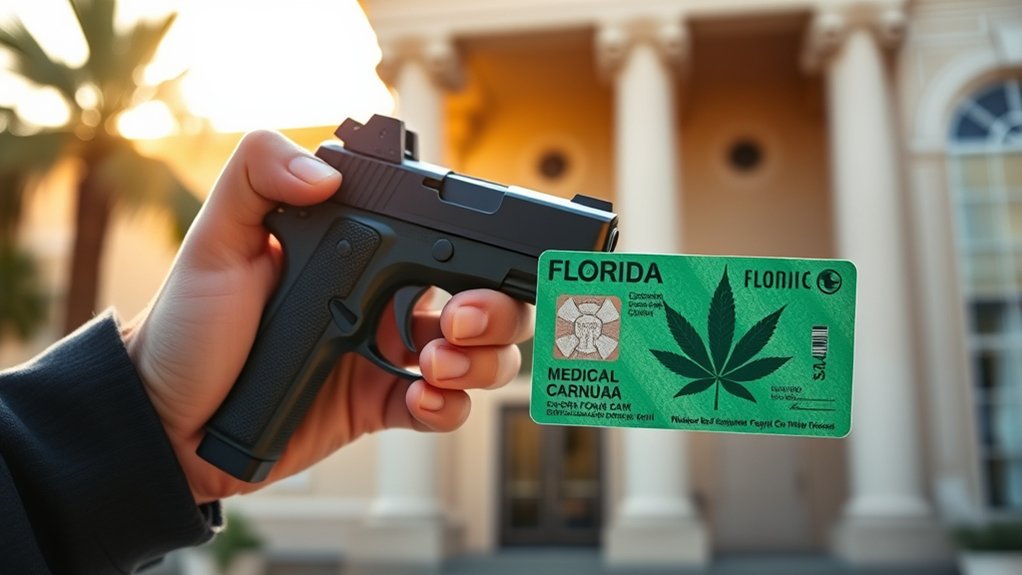
Although federal law complicates matters, Florida allows you to hold both a concealed carry permit and a medical marijuana card without automatic restrictions.
Under Florida law, medical marijuana patients are legally permitted to carry concealed firearms, as established in Statute 790.06. You don’t need a separate permit to carry concealed if you qualify as a medical marijuana patient.
State officials, including Commissioner Nikki Fried, have clarified that possessing a medical marijuana card doesn’t conflict with carrying a concealed weapon under state regulations.
This legal framework means you can maintain both your medical marijuana use and your concealed carry rights simultaneously within Florida’s jurisdiction.
However, it’s important to recognize that this dual status applies strictly under state law and doesn’t address federal legal conflicts.
How Federal Law Affects Medical Marijuana Users and Firearms
Because federal law classifies marijuana as a controlled substance, you face strict prohibitions if you use medical marijuana and possess firearms. Under 18 U.S.C. §922, federal law bars unlawful users of controlled substances, including medical marijuana users, from firearm possession.
Federal law prohibits firearm possession by medical marijuana users, regardless of state laws or medical cards.
Holding a medical marijuana card or complying with state laws doesn’t exempt you from these federal restrictions.
When buying firearms, you must honestly disclose marijuana use during background checks. Admitting use risks legal consequences since recent use signals unlawful status federally.
This creates a legal conflict: despite state-level medical marijuana legality, federal law disqualifies you from firearm possession if you use marijuana.
So, medical marijuana users need to carefully consider federal law implications before trying to own or carry firearms. Otherwise, they might unintentionally violate firearm possession statutes.
It’s definitely a tricky area to navigate.
Impact of Medical Marijuana Use on Firearm Purchases in Florida
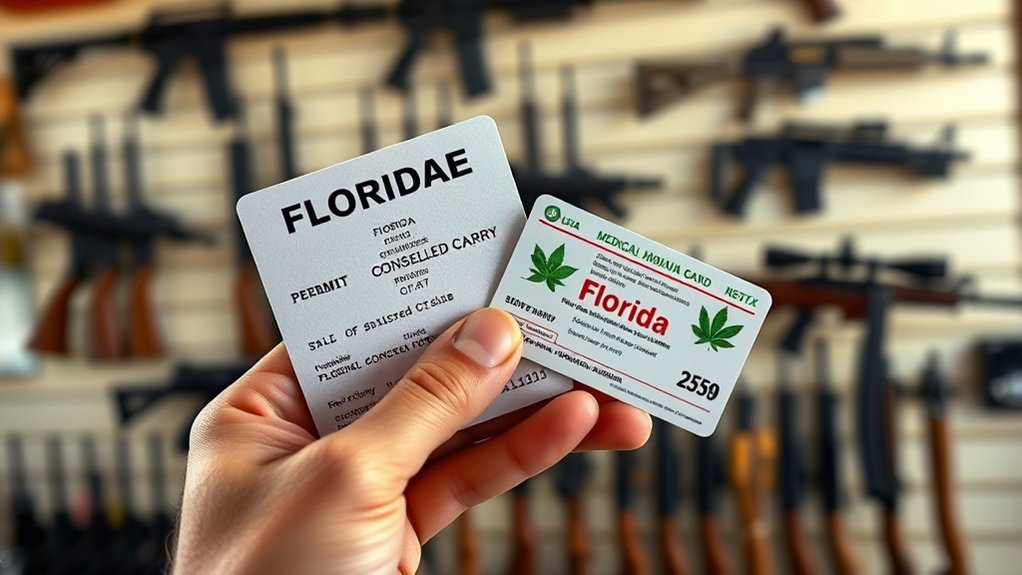
While Florida law allows you to carry a concealed firearm with a medical marijuana card, federal regulations make firearm purchases more complicated. Federal law still classifies marijuana as illegal. So, if you admit to using medical marijuana during the ATF background check, you might be disqualified from buying firearms.
Florida doesn’t take away concealed carry rights just because you have a medical marijuana card. But that state protection doesn’t override federal restrictions on buying guns.
When you apply to purchase a gun, you have to honestly disclose any controlled substance use, including medical marijuana. Doing so can prevent you from legally acquiring a firearm under federal law.
This creates a tricky legal situation. You can possess and carry concealed weapons under state law, but your ability to purchase firearms is limited by federal rules related to medical marijuana use.
Carrying Concealed Weapons While Using Medical Marijuana in Florida
You can legally carry a concealed weapon in Florida if you have a medical marijuana card. The state law explicitly allows this and doesn’t require a separate permit.
That said, federal law still sees marijuana use as incompatible with firearm possession. So, there’s a chance for some legal conflicts to pop up.
It’s really important to understand the differences between state and federal rules, and to follow practical tips for carrying. This way, you can stay both compliant and safe.
State Law Overview
Although federal law complicates matters, Florida clearly allows qualified medical marijuana patients to carry concealed firearms without needing a separate permit.
Under state law, using medical marijuana doesn’t disqualify you from being eligible for concealed carry.
Florida Statute 790.06 explicitly protects your right to carry concealed weapons if you meet the other firearm criteria.
The state commissioner confirms there’s no conflict between medical marijuana use and concealed carry permits.
Here’s the deal: you don’t need a special permit for concealed carry just because you have a medical marijuana card.
But, you still have to pass the usual background checks and meet all the standard firearm eligibility requirements.
State law really prioritizes your concealed carry rights even if you’re a medical marijuana patient.
This framework helps you understand how Florida handles concealed carry when you’re using medical marijuana.
Federal Legal Conflicts
How does federal law impact your ability to carry concealed weapons if you use medical marijuana in Florida?
Federal law classifies marijuana as a Schedule I controlled substance, which means it’s still illegal even with state medical marijuana laws in place. This creates a significant legal conflict if you use medical marijuana and want to carry concealed weapons.
Federal law prohibits users of controlled substances, including medical marijuana users, from possessing firearms or ammunition. When you apply to purchase a firearm, federal forms require you to disclose marijuana use.
If you admit to using marijuana, it can lead to the denial of your purchase.
Having a medical marijuana card doesn’t automatically revoke your firearm rights. But federal restrictions still apply and can prevent you from carrying concealed weapons.
Practical Carrying Tips
Because Florida law permits medical marijuana patients to carry concealed weapons without a separate permit, you still need to navigate the complexities of federal restrictions. State statutes do allow concealed carry with a medical marijuana card.
But federal law prohibits firearm possession by users of controlled substances, including marijuana.
So, to carry responsibly, you have to balance these conflicting regulations carefully.
Practical carrying tips include:
- Keep your firearm discreetly stored and concealed to guarantee compliance with state laws.
- Avoid disclosing marijuana use on federal firearm purchase forms to prevent legal complications.
- Stay informed about updates in both Florida and federal laws to maintain lawful concealed carry.
Legal Risks of Carrying Firearms While Using Medical Marijuana
When you use medical marijuana and carry a firearm, you face significant legal risks because state and federal laws don’t always agree.
Federal law, specifically 18 U.S.C. §922, prohibits anyone who unlawfully uses controlled substances from possessing firearms. This includes medical marijuana, even if it’s legal where you live.
Federal law bans firearm possession for anyone using controlled substances, including medical marijuana, regardless of state legality.
Having a medical marijuana card doesn’t automatically take away your firearm rights under federal law. But if you admit to recent marijuana use on federal background checks, it can lead to denial of firearm purchases and possibly other legal trouble.
Some states, like Florida, allow medical marijuana patients to carry concealed weapons legally. However, federal law still takes precedence in practice.
Using medical marijuana while carrying firearms creates a tough legal conflict that could lead to prosecution, loss of firearm rights, or other serious penalties under federal law.
Staying Legal When Carrying With Medical Marijuana
Although Florida law permits medical marijuana patients to carry concealed firearms without a permit, federal regulations still prohibit firearm possession by users of controlled substances like marijuana. This creates a legal conflict that you need to navigate carefully to stay compliant.
When dealing with firearm purchases or law enforcement, admitting medical marijuana use can trigger federal restrictions. This might lead to denial or other legal consequences.
To stay legal while carrying with medical marijuana, consider these steps:
- Avoid disclosing marijuana use on federal background check forms.
- Stay informed about evolving federal and state laws.
- Consult legal professionals to understand your rights and risks.
Balancing Florida’s concealed carry allowances with federal law demands caution and ongoing awareness. It’s important to stay up to date to minimize your legal exposure.
Comparing Florida and Illinois: Concealed Carry and Medical Marijuana
While both Florida and Illinois regulate concealed carry and medical marijuana, their approaches differ markedly. In Florida, medical marijuana users can carry concealed weapons without a permit. Having a medical marijuana card doesn’t affect your concealed carry rights.
Illinois, on the other hand, demands a Concealed Carry License (CCL) with strict background checks. However, it doesn’t explicitly address medical marijuana.
Both states face federal law conflicts. Federal regulations bar firearm possession by unlawful users of controlled substances, including medical marijuana. This creates legal uncertainty for users in both states.
| Aspect | Florida | Illinois |
|---|---|---|
| Concealed Carry Permit | Not required for medical marijuana users | Required with strict eligibility |
| Medical Marijuana Impact | No effect on concealed carry rights | No explicit mention |
| Open Carry | Illegal | Legal with CCL |
| Background Checks | Not automatically revoked for users | Detailed checks with objections |
| Federal Law Conflict | Creates ambiguity | Creates ambiguity |
When to Consult a Lawyer About Firearm and Medical Marijuana Rights
Because laws governing firearms and medical marijuana intersect with complex federal and state regulations, you should consult a qualified attorney to understand how your medical marijuana use might impact your firearm rights.
Legal counsel helps you navigate federal restrictions, which often prohibit firearm ownership for controlled substance users, despite state allowances.
When law enforcement questions your eligibility, having clear legal guidance is essential to avoid violations.
Consider consulting a lawyer if you:
- Need clarity on how medical marijuana affects your firearm rights under federal law
- Face legal issues or investigations involving both your medical marijuana card and firearms
- Seek personalized advice tailored to your state’s regulatory environment
An attorney ensures you comply with all laws, protecting your rights effectively.
Frequently Asked Questions
Can Non-Residents With Medical Marijuana Cards Carry Concealed Weapons in Florida?
No, if you’re a non-resident with a medical marijuana card, Florida law generally prohibits you from carrying a concealed weapon.
Florida disqualifies anyone who uses cannabis, even for medical reasons, from obtaining or holding a concealed carry permit. This restriction applies regardless of residency or state-issued medical marijuana cards.
You have to follow both federal and Florida state laws. Right now, these laws don’t recognize medical marijuana use as compatible with concealed carry eligibility.
Are There Specific Medical Conditions That Affect Concealed Carry Eligibility?
Like a filter sifts out impurities, certain medical conditions can bar you from concealed carry eligibility. Conditions such as severe mental illness, substance abuse, or cognitive impairments often disqualify you because of safety concerns.
Each state’s regulations vary, so you really need to review local laws carefully.
Your medical history, especially if it affects judgment or motor skills, plays a critical role in whether you’re legally allowed to carry concealed. It’s important to be honest with yourself and understand how these factors might impact your eligibility.
If you have questions, consulting a legal expert or medical professional can help clarify things.
How Does Law Enforcement Verify Medical Marijuana Card Status During a Stop?
During a stop, law enforcement typically asks to see your medical marijuana card along with your ID. They’ll verify its authenticity by checking the card’s expiration date, issuing state, and matching it to your identity.
Some states provide online databases officers can access for real-time verification.
You should carry your card and any relevant documentation to avoid complications. Possession laws vary, so officers need to confirm your legal status precisely.
It’s always better to be prepared and have everything ready if you’re stopped.
Can Medical Marijuana Patients Store Firearms Safely at Home Without Restrictions?
You can store firearms at home, but you must follow specific legal requirements to do so safely and lawfully. Many states require locked storage or safes, especially if you have a medical marijuana card.
This is because federal law restricts firearm ownership for users of controlled substances.
It’s essential you understand both state and federal laws to avoid legal issues. Plus, you want to guarantee your firearms are secure from unauthorized access.
Staying informed helps keep everything above board and safe.
Does Medical Marijuana Use Affect Concealed Carry Insurance or Liability Coverage?
Yes, medical marijuana use can affect your concealed carry insurance or liability coverage. Insurance providers often see marijuana use as a risk factor, even if it’s legal for medical reasons.
This could mean higher premiums, coverage exclusions, or even denial of claims related to firearm use.
It’s really important to carefully review your policy terms. Make sure you disclose any medical marijuana use to avoid complications or potential legal issues with your liability coverage.
Being upfront can save you a lot of trouble down the line.
Conclusion
Managing concealed carry while holding a medical marijuana card feels like walking a legal tightrope over a pit of alligators. One wrong move could mean serious trouble. You can’t just wing it; federal and state laws clash fiercely here.
Staying fully informed and consulting a lawyer isn’t optional. It’s essential. Don’t risk your rights or freedom by guessing. Understand the complex rules, follow them precisely, and carry responsibly to stay out of harm’s way.