What States Recognize Virginia Concealed Carry Permit – Reciprocity Guide
You can carry concealed with a Virginia permit in over 40 states, including Alabama, Florida, and Texas, plus territories like Puerto Rico, provided your permit meets Virginia’s strict background and training standards.
Keep in mind, recent changes revoked agreements with 25 states, so always verify current reciprocity before traveling. Your permit must be valid and comply with each state’s specific rules to avoid violations.
Exploring these details further will help you stay fully informed and compliant.
Key Takeaways
- Virginia concealed carry permits are recognized by over 40 states, including Alabama, Florida, and Texas, subject to meeting Virginia’s permit standards.
- Reciprocity includes certain U.S. territories like Puerto Rico and Guam, expanding carry rights beyond the mainland.
- Permit recognition depends on compliance with Virginia’s training, background checks, and valid permit issuance requirements.
- Reciprocity agreements can change; recent revocations affect 25 states, so verifying current status before travel is essential.
- Recognition applies regardless of residency, but non-residents must carry valid permits from their home states for lawful carry in Virginia.
Virginia’s Concealed Carry Reciprocity Status and Recent Changes
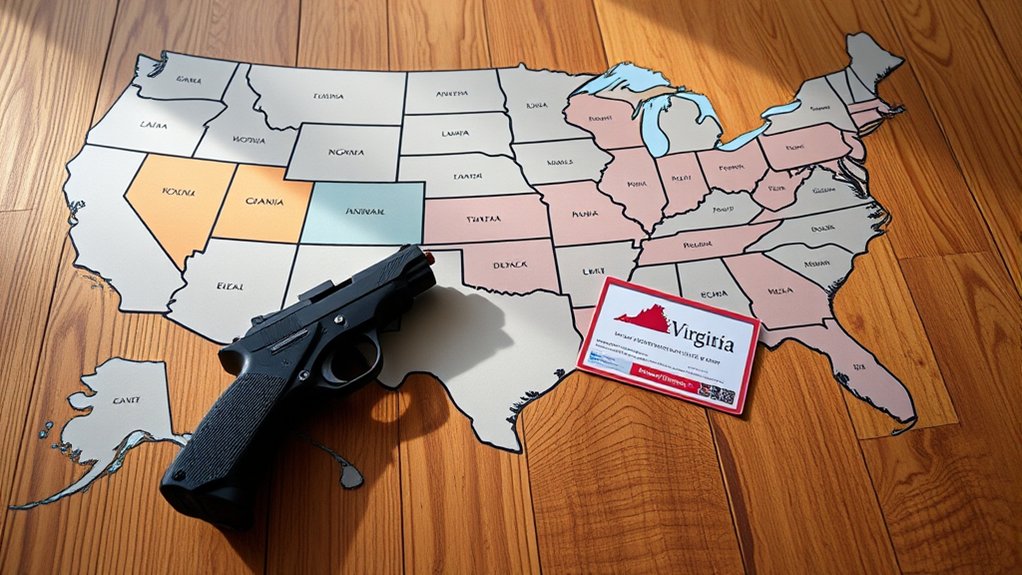
Although Virginia has historically recognized concealed carry permits from many states, recent changes have narrowed this reciprocity quite a bit. As of February 1, Virginia revoked agreements with 25 states because of concerns over their permit eligibility standards. This affects your ability to carry concealed firearms legally when traveling here.
You really need to understand Virginia’s concealed carry laws to stay compliant and keep gun safety a top priority, especially if your permit comes from states like Alaska, Arizona, or Pennsylvania. Permits from states still in good standing remain valid, but it’s a good idea to double-check your permit’s reciprocity status before you enter Virginia.
If you’re military personnel or part of a military family, please be extra careful—these changes impact you directly. Staying up-to-date with these updates helps you avoid legal trouble and promotes responsible firearm handling as the rules evolve.
Which States Recognize the Virginia Concealed Carry Permit
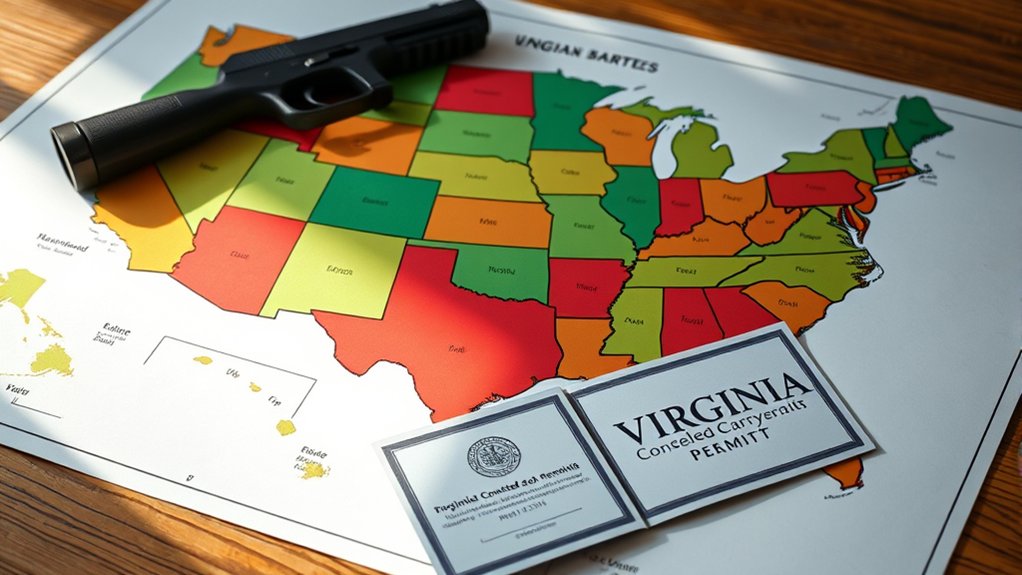
If you have a Virginia concealed carry permit, it’s important to know which other states recognize it so you can carry legally outside of Virginia. Right now, more than 40 states honor Virginia’s permit. That includes places like Alabama, Florida, and Texas.
Just remember, to carry in those states, you need to be at least 21 years old and have a valid government-issued photo ID with you.
Also, keep in mind that recognition rules can change depending on local laws, and Virginia occasionally updates its reciprocity agreements. So, it’s always a good idea to double-check before you travel.
Recognized States List
When carrying a Virginia concealed carry permit, you’ll find that most U.S. states recognize it, provided the permit meets Virginia Code §18.2-308.014 requirements.
This recognition extends to states like Alabama, Arizona, Florida, and others with varying state regulations, including those enforcing constitutional carry and those requiring permit training, such as Idaho, Michigan, and Texas.
Additionally, U.S. territories like Puerto Rico and Guam honor Virginia permits for both residents and non-residents holding valid permits.
However, while states acknowledge your Virginia permit, some impose specific restrictions or conditions.
It’s essential to review each state’s current regulations before carrying to guarantee compliance.
Understanding this recognized states list allows you to navigate concealed carry reciprocity confidently and responsibly across jurisdictions.
Permit Carry Conditions
Understanding which states recognize your Virginia concealed carry permit means looking at the specific legal criteria and conditions set by both Virginia and those other states. Virginia honors concealed carry permits from states that meet the regulations outlined in VA Code §18.2-308.014. These standards are designed to prevent disqualified individuals from getting permits.
Your permit must be current, valid, and issued by a qualifying state, whether you’re a resident or non-resident.
Plus, you need to be at least 21 years old and carry a government-issued photo ID while you’re armed.
Keep in mind, permit limitations vary by state. So even if your Virginia permit is recognized, it’s always a good idea to double-check local laws before carrying.
Staying informed helps you follow reciprocal agreements and respect each state’s legal rules.
How Reciprocity Agreements Impact Virginia Permit Holders’ Carry Rights

Although Virginia honors concealed carry permits from numerous states under VA Code §18.2-308.014, the extent of your carry rights depends heavily on each state’s reciprocity policies. Mutual agreements play a critical role in defining where and how you can legally carry outside Virginia.
Some states recognize only resident permits, while others include non-resident permits, directly affecting your legal standing.
Permit recognition varies; some states accept only resident permits, others also honor non-resident permits.
Changes to these agreements, often influenced by legal and political considerations, carry significant legal implications. They can potentially restrict your carry rights without notice. So, it’s really important to stay informed about these changes.
To stay compliant, you must verify that the state you visit respects your Virginia permit. Also, make sure your permit remains valid.
Understanding these dynamic reciprocity frameworks is essential to safeguarding your rights and avoiding unintended violations while carrying concealed.
Conditions to Carry With a Virginia Concealed Carry Permit in Reciprocity States
If you want to carry concealed in reciprocity states with your Virginia permit, first make sure your permit is current and valid. It’s really important to keep that up to date.
On top of that, you’ll need to follow each state’s specific rules for carrying. This can include things like age limits or having the right identification with you.
Knowing and sticking to these rules is key. It helps you avoid any legal trouble and keeps your carry rights intact.
Permit Validity Requirements
Before carrying concealed in a reciprocity state with your Virginia permit, you must meet several essential conditions. Your Virginia concealed carry permit must be valid, unexpired, and issued through the proper application process by authorized state officials. Staying current requires timely permit renewal.
If you don’t renew on time, your ability to carry legally in reciprocity states is invalidated. You must be at least 21 years old and carry a government-issued photo ID that matches the name on your permit.
Remember, reciprocity states recognize your permit only if all these validity requirements are met. Always be prepared to display your permit and ID when law enforcement asks.
Ensuring your permit’s validity through proper application and renewal safeguards your right to carry across state lines.
Carrying Rules Compliance
When you carry a concealed firearm in reciprocity states with your Virginia permit, you must strictly follow each state’s specific laws and restrictions. This means you need to carry a valid government-issued photo ID, be at least 21 years old, and verify your permit is current and legally recognized.
Pay close attention to ammunition regulations, as some states limit the type or quantity you can carry. Also, storage requirements vary. Certain states mandate secure storage when your firearm is unattended.
You must also comply with local restrictions, including prohibited locations and any verbal disclosure obligations to law enforcement. Remember, reciprocity doesn’t override state-specific rules.
Your responsibility is to understand and adhere to each jurisdiction’s conditions to legally carry and avoid violations.
Differences Between Resident and Non-Resident Virginia Permits
Although Virginia issues concealed carry permits exclusively to its residents, it recognizes valid permits from other states regardless of whether you’re a resident or not. The key distinction lies in permit processing and fee structure: Virginia handles these aspects only for residents applying within the state.
Non-residents must obtain permits through their home states, which Virginia may recognize under reciprocity agreements if those states meet Virginia’s standards. This means while you can carry concealed in Virginia with a valid out-of-state permit, you won’t receive a Virginia-issued non-resident permit.
Understanding this difference is essential for compliance and planning.
Ultimately, Virginia’s system centralizes permit issuance to residents but extends accommodation to non-residents through recognition, balancing regulatory control with practical reciprocity.
What Out-of-State Visitors Need to Know About Virginia Permit Recognition
Since Virginia strictly enforces its concealed carry laws, you need a valid, current permit from your home state that Virginia recognizes under VA Code §18.2-308.014 to carry concealed while visiting.
Before traveling, make sure your permit meets Virginia’s reciprocity criteria. The state honors permits from all qualifying states regardless of residency.
Keep in mind that just because your home state requires permit training and license fees, it doesn’t mean you’re exempt from Virginia’s legal requirements. You still have to follow all Virginia carry regulations, including where you can carry and the rules about concealed versus open carry.
Also, reciprocity agreements can change, so it’s a good idea to check for the latest updates on permit recognition before your visit. That way, you can make sure your concealed carry privileges stay valid and avoid any legal issues while you’re in Virginia.
Important Restrictions on Virginia Permit Reciprocity You Should Know
Because Virginia maintains strict standards for recognizing out-of-state concealed carry permits, you need to verify that your permit meets specific criteria outlined in VA Code §18.2-308.014. This includes thorough background checks and mandated training that align with Virginia’s requirements. Not all states’ permits qualify.
Virginia requires out-of-state permits to meet strict background checks and training standards under VA Code §18.2-308.014.
Virginia regularly updates reciprocity agreements, which can limit recognition or revoke permits from states with insufficient safeguards. You should also know that carry privileges granted by reciprocity require full compliance with Virginia laws. Violations can lead to serious legal consequences.
Additionally, differences in permit fees and the application process between states can affect your eligibility and recognition status. To make sure your permit is valid in Virginia, stay informed about legislative changes.
Always confirm your permit meets these rigorous standards.
How Reciprocity Changes Affect Permit Renewal and Application
Understanding how changes in reciprocity agreements influence your ability to renew or apply for a Virginia concealed carry permit is essential. Reciprocity updates may require you to perform permit verification to confirm whether your home state’s permit remains recognized by Virginia.
If your state loses reciprocity, you must obtain a Virginia-specific permit to carry legally. While Virginia’s renewal process itself hasn’t changed, out-of-state permit holders affected by revoked reciprocity may need to reapply rather than renew.
Before initiating renewal or application, confirm your permit’s validity in Virginia to avoid legal complications. Staying informed about reciprocity updates ensures compliance and smooth processing, preventing unexpected permit denials due to altered recognition statuses.
Vigilant permit verification safeguards your ability to carry lawfully within Virginia’s jurisdiction.
Frequently Asked Questions
How Do I Apply for a Virginia Concealed Carry Permit Initially?
You’ll need to meet application eligibility and complete approved firearms training. After that, submit your application with your ID and proof of training.
Make sure to pay the required fee, then wait about 45 days for processing. It’s a good idea to keep an eye on your permit status while you wait.
Don’t forget to track your permit renewal well before it expires. Staying on top of this helps avoid any lapses in your carry privileges.
What Training or Courses Are Required for Virginia Permit Applicants?
Think of training requirements as the foundation stone. You’ll need course certification from state-approved programs like NRA or USCCA, or equivalent.
This certification proves your readiness to carry responsibly and lawfully under Virginia’s precise permit standards. It’s all about making sure you know what you’re doing and follow the rules closely.
Can My Virginia Permit Be Suspended or Revoked, and Why?
Yes, your Virginia permit can be suspended or revoked for providing false information, violating laws, or failing permit renewal requirements.
If that happens, there’s a process to follow. Revocation procedures usually involve a hearing conducted by the Virginia State Police or the courts. They review your conduct and whether you’ve complied with the rules.
Are There Age Restrictions for Obtaining a Virginia Concealed Carry Permit?
You’re not old enough to wield that power until 21. Virginia’s age restrictions make permit eligibility crystal clear. No shortcuts here.
Those under 21 can dream but can’t legally conceal carry. Age matters, period.
How Do Private Property Gun Policies Affect Concealed Carry in Virginia?
You must respect private property gun policies in Virginia. Even if you have a concealed carry permit, you can’t carry where firearms are prohibited.
Properly posted signs or direct notice legally enforce these restrictions. Ignoring them risks trespassing charges. So, it’s important to pay attention and follow the rules.
Conclusion
Understanding which states recognize your Virginia concealed carry permit empowers you to carry confidently, comply responsibly, and avoid legal pitfalls. Knowing reciprocity agreements helps you plan travel wisely, respect local laws, and protect your rights.
Staying informed about restrictions guarantees you carry safely, renew permits timely, and apply correctly. By mastering these key points, you secure your ability to carry legally and confidently across state lines without surprises or setbacks.