Do Shooting Ranges Teach You How To Shoot – Training Options Explained
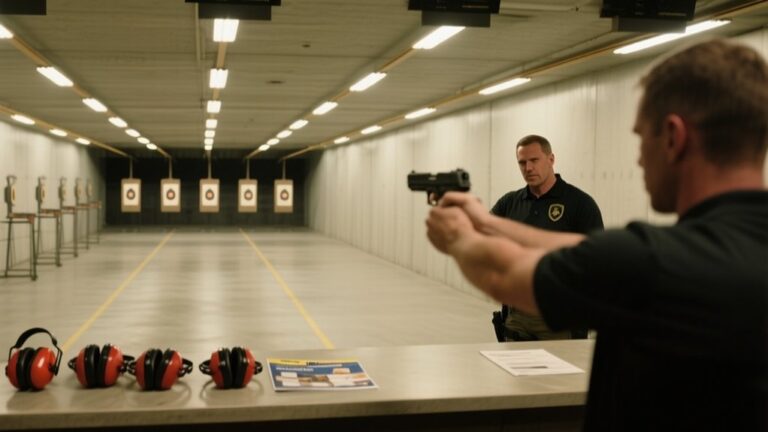
Yes, shooting ranges teach you how to shoot through various training options tailored to your skill level and goals. You can take courses on home firearm safety, pistol, rifle, and shotgun handling, plus personal protection classes that build defensive skills.
Indoor ranges offer controlled environments, while outdoor and specialty ranges provide diverse training experiences. With skilled instructors guiding you, you’ll gain confidence and safety knowledge.
Keep exploring to discover which training fits you best.
Types of Training Offered at Shooting Ranges
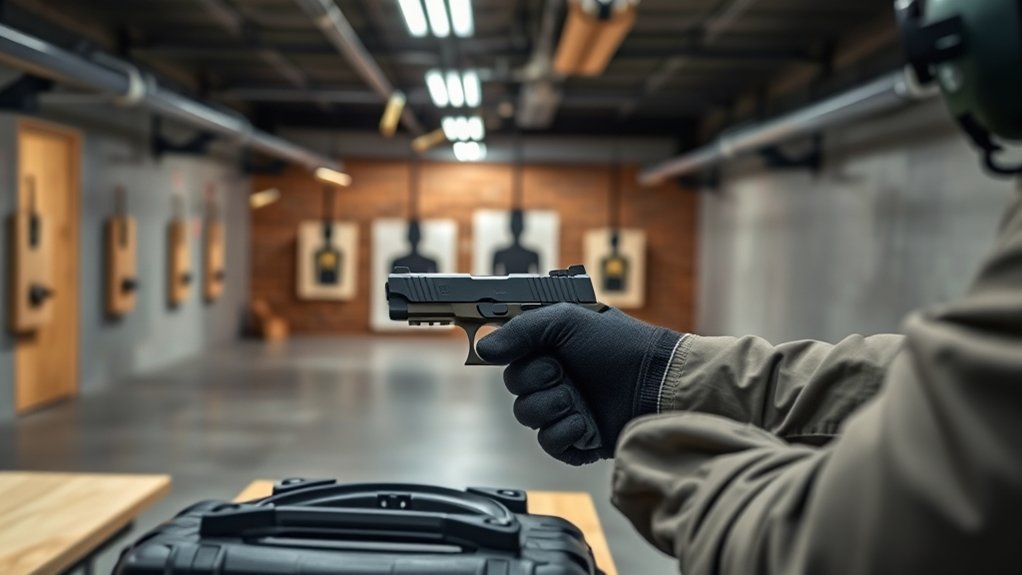
Shooting ranges offer several types of training to suit your needs, whether you’re a beginner or an experienced shooter. You can start with home firearm safety courses that cover safe handling and storage in a four-hour classroom setting, earning certification upon completion.
If you want to improve pistol skills, courses like the NRA Defensive Pistol Course provide live-fire training tailored to all experience levels.
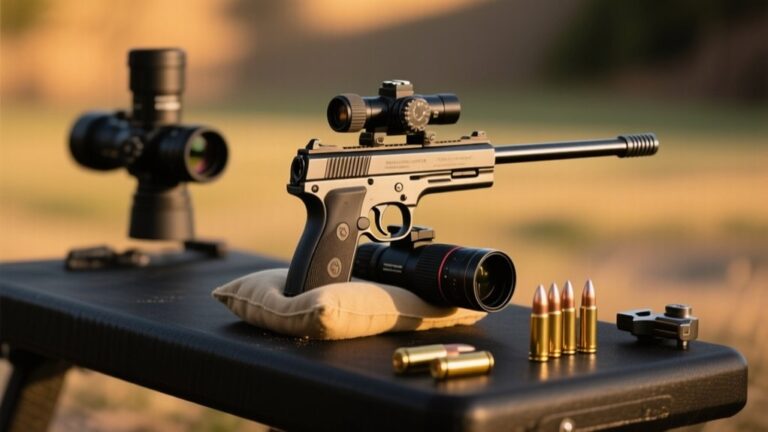
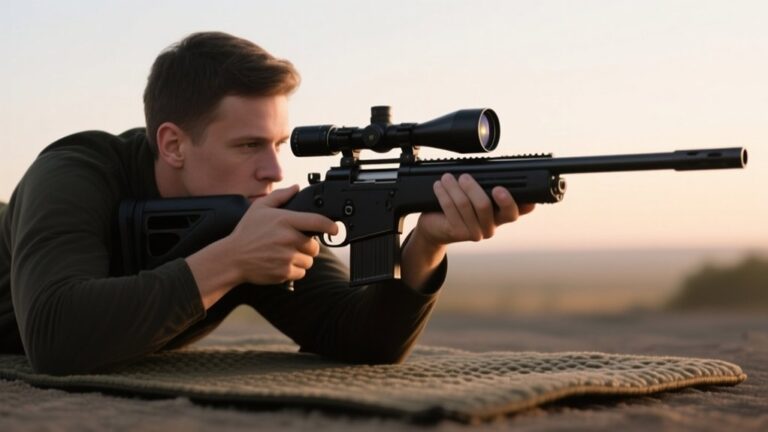
Rifle and shotgun training options include hands-on orientations and longer classes focused on fundamentals.
For advanced learners, personal protection courses teach defensive handgun skills and legal knowledge.
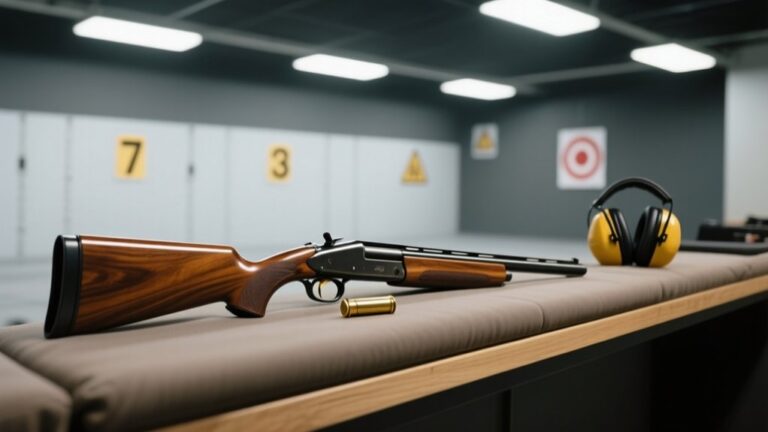
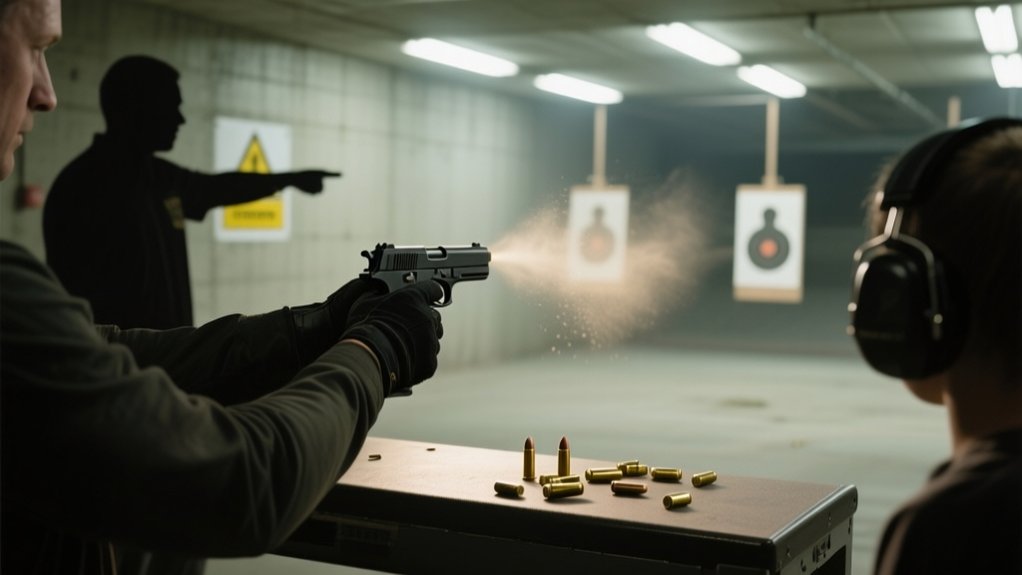
Indoor shooting ranges provide a controlled, safe environment for year-round firearm training, making them ideal for skill development regardless of weather.
These varied training options guarantee you gain competence and confidence with your firearm.
How to Choose the Right Shooting Range Course for You
You’ll want to start by thinking about your skill level so you can find courses that really match your experience.
Then, take a look at the course content to make sure it lines up with what you’re aiming for—whether that’s self-defense or sport shooting.
And finally, check out the training environment. Make sure the instructors are certified and that the course format fits your schedule and how you learn best.
Assess Your Skill Level
How do you know which shooting range course fits your skill level best? First, assess your skill level by honestly evaluating your prior experience and familiarity with gun safety rules. This helps you pick a course that matches your needs.
Consider these factors:
- Your experience: beginner or advanced courses like NRA Defensive Pistol
- Course length and format: classroom plus range time for thorough learning
- Your goals: personal protection, competitive shooting, or general skill building
- Instructor credentials: NRA certified instructors guarantee quality and safety
- Training environment: indoor for handguns, outdoor for varied firearms and distances
Consider Course Content
When selecting a shooting range course, consider the specific content to guarantee it aligns with your training goals and experience.
If you’re a beginner, courses like the NRA Basics of Pistol Shooting offer foundational skills. Advanced options such as the NRA Defensive Pistol Course focus on concealed carry techniques.
Pay attention to the firearm type covered, whether pistol, rifle, or shotgun, as each course content caters to different skills.
Confirm the class includes hands-on and live fire training so you get practical experience in a controlled setting.
Check prerequisites carefully because some personal protection courses require prior experience.
Also, look for NRA-certified instructors and materials to verify quality and safety.
Choosing the right course content assures your time on the range builds the skills you need effectively.
Evaluate Training Environment
Although selecting the right shooting range course depends heavily on content, evaluating the training environment is just as essential to match your goals and comfort level.
You’ll want to assess whether indoor ranges or outdoor settings fit your needs. Indoor ranges often provide enhanced range safety through video monitoring.
To choose wisely, focus on:
- Distance requirements (indoor ranges offer 25-50 yards; outdoor ranges go up to 500 yards)
- Your experience level and course alignment
- Safety features and restrictions on ammunition types
- Course duration and scheduling flexibility
- Opportunities for hands-on practice and skill reinforcement
Indoor vs. Outdoor Shooting Range Training
Because your training goals and environment matter, choosing between indoor and outdoor shooting ranges can greatly impact your experience.
Indoor ranges typically focus on handguns and offer controlled, year-round training in urban settings with shooting distances up to 50 yards. They feature enhanced safety measures like video monitoring and motion sensors, helping you stay focused.
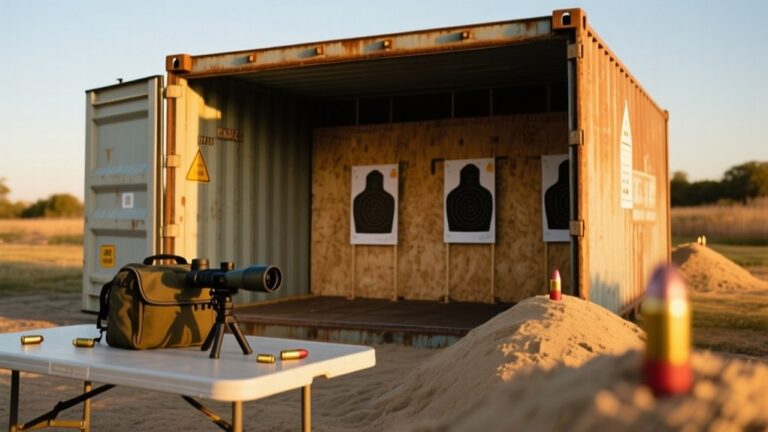
Outdoor ranges provide expansive areas for longer distances, up to 500 yards, letting you practice more dynamic shooting affected by weather. You’ll find fewer caliber restrictions outdoors, which supports a wider variety of firearms and ammo.
Both indoor and outdoor ranges offer unique benefits. Indoor ranges emphasize consistency and safety, while outdoor ranges allow for realistic, extended shooting practice.
Your choice depends on what skills you want to build and the environment you prefer.
Specialty and Modular Shooting Range Options Explained
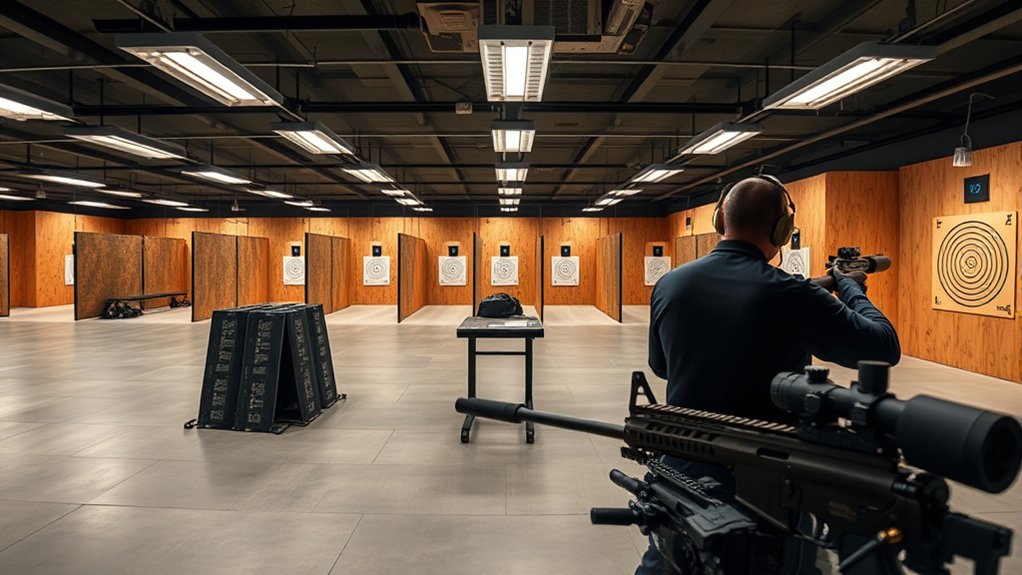
Beyond the choice between indoor and outdoor ranges, you can explore specialty and modular shooting options tailored to specific training demands.
Specialty shooting ranges focus on realistic, mission-specific environments. Modular shooting ranges offer flexible, portable setups for various locations. Here’s what makes these options stand out:
Specialty ranges feature moving targets and varied terrain to mimic real-world conditions.
Modular ranges are easily deployable, adapting quickly to training needs. Simulation tech in modular ranges enhances safety without live ammo.
Both range types support law enforcement and military training with advanced scenarios. They maximize resource use by allowing diverse, high-quality training anywhere.
Choosing these options helps you prepare for unpredictable situations with more immersive, efficient training.
How Home Firearm Safety Courses Build Your Shooting Range Skills
When you take a Home Firearm Safety Course, you gain a solid foundation in handling guns responsibly, which directly improves your skills at the shooting range. These courses focus on the NRA’s three essential range rules, helping you build safe habits before live shooting.
You’ll receive the NRA Home Firearm Safety handbook, a valuable guide to range etiquette and safety protocols. By understanding how to prevent firearm accidents and recognize potential hazards, you become more confident and prepared.
The NRA Home Firearm Safety handbook guides you in preventing accidents and recognizing hazards for greater confidence.
This readiness guarantees you follow range rules effectively and practice your shooting skills safely.
Ultimately, home firearm safety courses equip you with the knowledge and mindset necessary to create a secure environment for yourself and others at the shooting range.
What You Learn in Pistol Training Classes
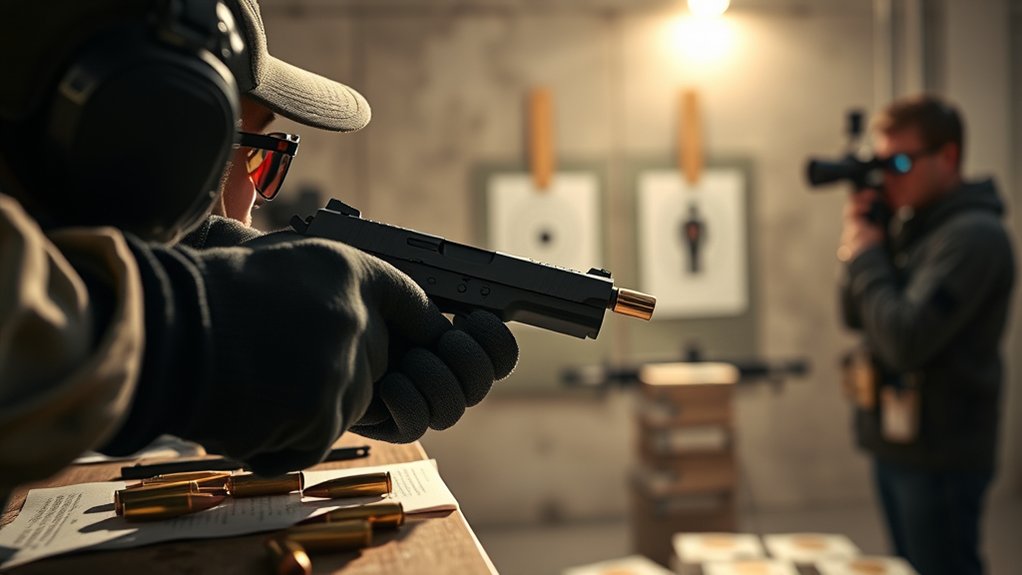
In pistol training classes, you’ll get the hang of the essential handling fundamentals that keep you safe and in control.
Plus, you’ll pick up defensive shooting skills designed to prepare you for real-world situations.
These courses really help build your confidence, so you feel ready and sure of yourself.
Defensive Shooting Skills
Pistol training classes like the NRA Defensive Pistol Course teach you the essential skills and mindset needed for safe concealed carry and effective defensive shooting.
At the gun range, you’ll develop defensive shooting skills that go beyond basic marksmanship. These courses focus on real-world scenarios and mental readiness to prepare you for high-pressure situations.
You’ll learn to:
- Draw quickly and safely from a holster
- Manage common firearm stoppages
- Apply the NRA’s three fundamental safety rules
- Improve situational awareness and decision-making
- Engage in live fire drills simulating self-defense encounters
Pistol Handling Fundamentals
Mastering the fundamentals of pistol handling is essential for every shooter, whether you’re new to firearms or looking to sharpen your skills. Pistol training classes, like the NRA Basics of Pistol Shooting, teach you critical gun safety rules, pistol operation, and shooting fundamentals.
You’ll practice the NRA’s three key rules for safe gun handling and get hands-on experience through live fire sessions. These classes also cover defensive techniques such as drawing from a holster and situational awareness.
After completing the course, you’ll receive a certificate and extensive materials for ongoing reference.
| Skill Area | What You Learn |
|---|---|
| Gun Safety Rules | NRA’s 3 fundamental safety rules |
| Pistol Operation | Handling, loading, and maintenance |
| Defensive Techniques | Concealed carry and drawing |
| Live Fire Practice | Applying skills in real scenarios |
Key Rifle and Shotgun Training Courses Explained
You can choose from several key rifle and shotgun training courses designed to build your skills safely and effectively.
Whether you’re new to rifle shooting or want to improve your shotgun shooting, these courses cover essential techniques and safety.
NRA FIRST Steps Rifle Orientation: 3 hours focused on safe rifle handling and operation
NRA Basic Rifle Shooting Course: 8 hours combining classroom and range time on fundamentals
NRA Basic Metallic Cartridge Reloading Course: 8 hours on safe rifle ammunition reloading
NRA FIRST Steps Shotgun Orientation: 3 hours introducing shotgun handling
NRA Basic Shotgun Shooting Course: 10 hours teaching shooting at moving targets and safety
Each course helps you develop confidence and accuracy while emphasizing safety protocols on the range.
How Personal Protection Courses Boost Defensive Skills
Building proficiency with rifles and shotguns lays a strong foundation, but developing defensive skills requires focused training tailored to personal protection scenarios.
Personal protection courses, like the NRA Basic Personal Protection In The Home and Outside the Home programs, hone your defensive shooting skills through hands-on training and practical scenarios.
These courses emphasize safe handgun use, home safety strategies, and legal aspects of self-defense, ensuring you understand your rights and responsibilities.
Experienced shooters benefit from structured drills and live-fire exercises, reinforcing safe gun handling and boosting confidence under pressure.
With around 8 to 9 hours of training and range time using real ammunition, you’ll leave with valuable knowledge, course completion certificates, and handbooks to continue refining your defensive skills beyond the range.
Frequently Asked Questions
Are Shooting Range Instructors Certified or Licensed?
Yes, shooting range instructors usually hold instructor qualifications and training certifications to guarantee safety and proper guidance.
When you choose a range, you can expect instructors to be certified through recognized programs like NRA or state-specific courses.
These certifications prove they’ve completed necessary training to teach you how to shoot safely and effectively.
Always ask about their qualifications before starting your lessons to feel confident in their expertise.
Can Minors Participate in Shooting Range Training?
Yes, minors can often participate in shooting range training, but it depends on the range’s age restrictions.
You’ll usually need to provide parental consent for anyone under 18 to join.
Some ranges allow younger kids with supervision, while others set a minimum age limit.
Always check the specific rules beforehand so you’re prepared with the right documentation and understand any safety requirements for minors at the range.
What Safety Equipment Is Provided During Training Sessions?
During training sessions, you’ll be provided with essential protective gear, including ear protection and safety glasses, to shield your hearing and eyes.
Shooting ranges strictly enforce safety protocols to keep you safe throughout your time there.
Instructors will also guide you on how to use the gear properly and follow all safety rules.
This guarantees you focus on learning while minimizing any risks during your shooting practice.
How Long Does a Typical Shooting Course Last?
You won’t be stuck in a never-ending action movie montage. Typical course duration ranges from a quick two-hour intro to a few days for more advanced skills.
The training structure keeps you engaged without turning you into a sleep-deprived zombie.
Do Ranges Offer Firearm Rental for Training Purposes?
Yes, many shooting ranges offer firearm rental for training purposes, so you don’t have to bring your own gun. This makes it easier to try different types and models while focusing on learning proper handling and safety.
When you rent a firearm, the range usually provides guidance on its use, helping you build confidence and skills.
Always check the range’s rental policies before you go to guarantee a smooth experience.
Conclusion
Choosing the right shooting range course is like finding the perfect key to access your full potential. Whether you opt for indoor or outdoor training, specialty modules, or home safety courses, each step sharpens your skills and confidence.
By investing in pistol, rifle, or personal protection classes, you build a strong foundation that keeps you safe and prepared. So, take the leap. Your training journey starts with the first shot you take.