How Much Is A Gun Safe – Price And Cost Guide
Gun safes typically cost between $200 and over $10,000, depending on size, steel thickness, fire protection, and security features.
Budget models offer basic security and minimal fire resistance. Mid-range safes add electronic locks and better fire ratings. Premium safes include ballistic plates and long fire protection.
Your choice hinges on balancing protection, capacity, and budget. Understanding how these factors affect price helps you select the right safe for your needs. It also guarantees your investment matches your priorities.
What You Need to Know Before Buying a Gun Safe
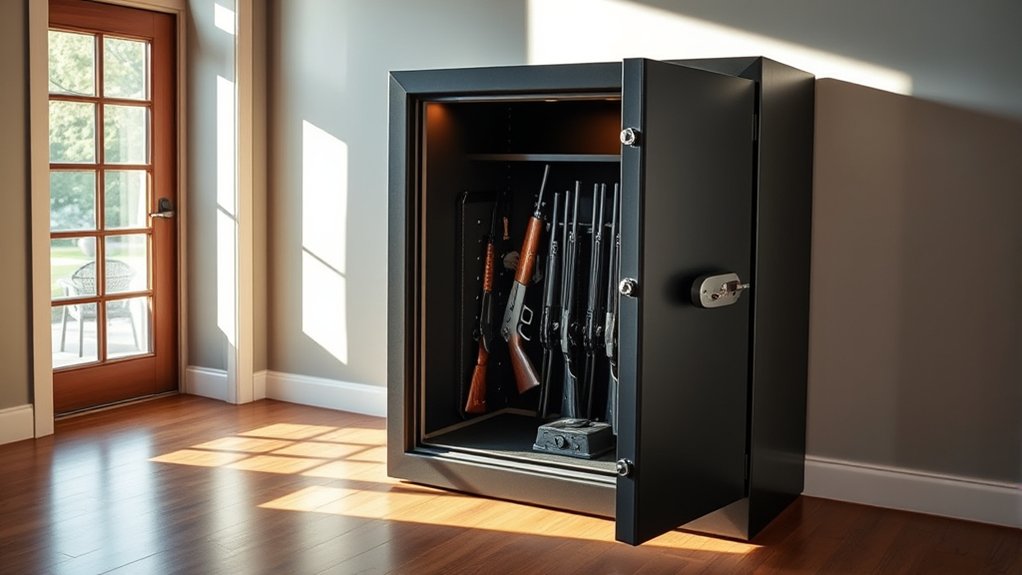
Before you invest in a gun safe, it’s important to understand how different factors affect its price and security.
Understanding key factors helps you choose a gun safe that balances price and security effectively.
The quality of the build is a big deal. Thicker steel and reinforced construction mean better protection.
Fire protection is also crucial. Safe fire ratings vary, and higher ratings usually cost more but offer better fire resistance.
Think about storage capacity too. Larger safes cost more but give you space for more firearms and accessories.
Advanced features like biometric sensors can boost security. They allow quick, authorized access and prevent unauthorized entry.
Keep in mind, cheaper models often cut corners on security and fire resistance. This can make them less reliable when you really need them.
How Much Do Gun Safes Cost on Average?
While gun safes come in a wide price range, knowing your budget is key to finding the right one for your needs. The average cost varies quite a bit depending on size and features.
For smaller firearms, budget safes usually cost between $200 and $500. They offer basic security and limited fire resistance, making them suitable for casual use.
Mid-range safes tend to fall between $1,000 and $2,500. These provide better security features and improved fire ratings, giving you more reliable protection.
If you’re looking for a large gun safe, prices start at around $2,000 and go up from there. These high-security models feature advanced locking mechanisms and superior fire ratings, making them perfect for extensive collections.
Key Factors That Drive Gun Safe Prices (Size, Fire Protection, Security)
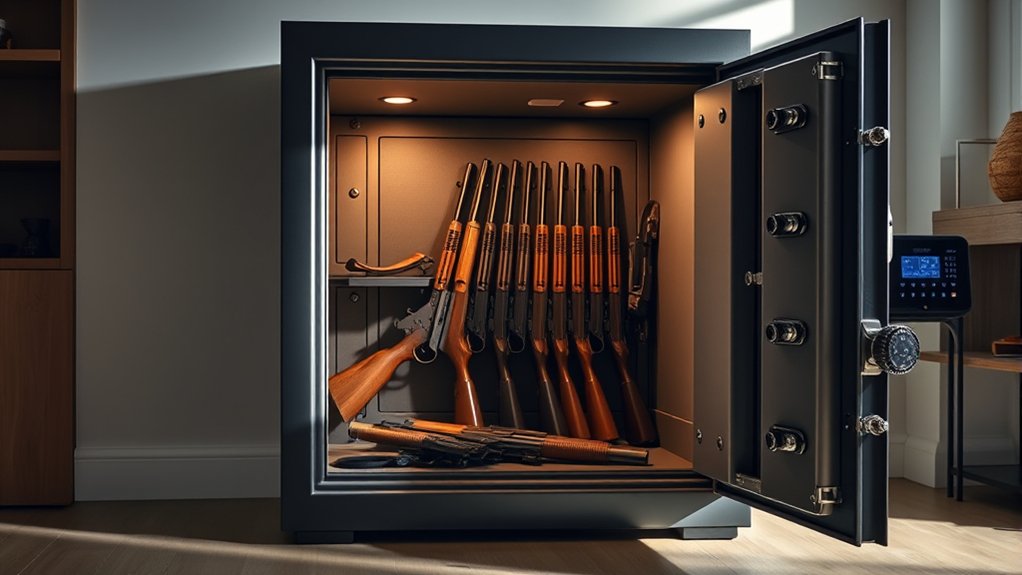
Because gun safes vary widely in size, fire protection, and security features, these factors directly influence their price. Larger safes cost more because they require heavier steel and offer greater capacity to store firearms.
Fire protection is really important. Safes with higher fire ratings, longer fire durations, and advanced sealing tend to cost more.
Security also plays a big role in pricing. Thicker steel, multiple locking bars, and sophisticated lock systems like electronic or biometric options increase the cost.
All these elements—size, fire protection, and security—work together to define the safe’s overall value.
When you’re choosing a gun safe, you’ll want to think about how much capacity you need, the level of fire resistance you’re after, and the security features necessary to protect your firearms effectively.
Comparing Budget, Mid-Range, and Premium Gun Safes: What You Get for Your Money
Although gun safes come in a wide range of prices, understanding what you get at each level helps you make an informed choice. Here’s a clear price comparison of budget, mid-range, and premium gun safes.
Budget gun safes (under $500) offer basic security features with a simple steel body. They usually lack fire protection and advanced locks. These safes are good for basic storage but mightn’t be enough if you’re worried about fire or theft.
Mid-range safes ($900–$3,000) provide better fire protection and thicker steel walls. They often come with electronic or biometric scanner access for added security. These options are a solid step up if you want more peace of mind.
Premium safes (above $10,000) give extended fire protection and ballistic armor. They also feature customizable interiors and high-security locking systems. These safes are ideal for serious collectors or those with high-value items.
Knowing these differences helps you balance cost against security features and fire protection. That way, you can pick a safe that fits your needs without overspending.
How Fire Protection Levels Affect Gun Safe Pricing
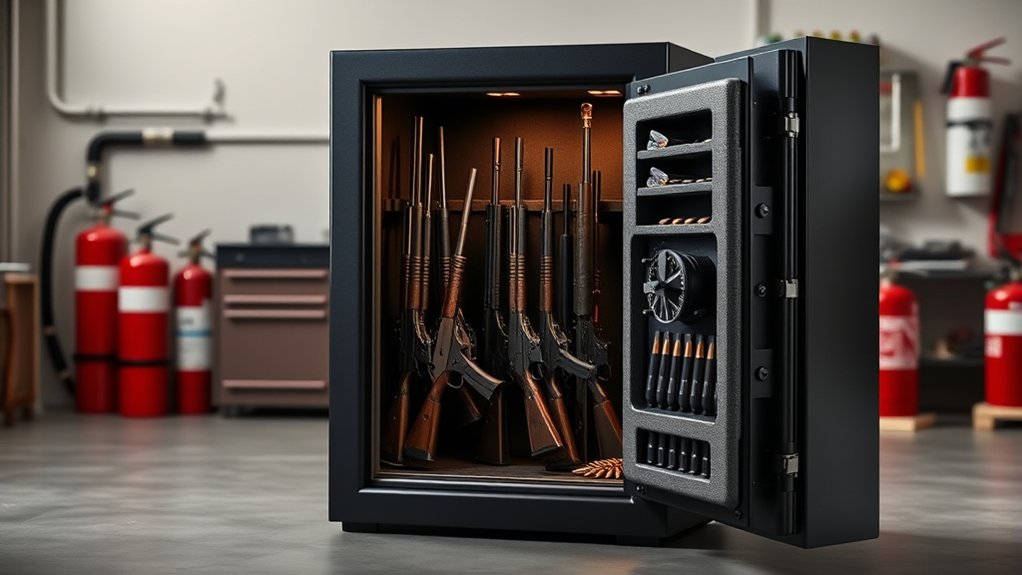
When you’re shopping for a gun safe, you’ll probably see that safes with longer fire resistance ratings tend to be more expensive.
That’s because safes built to withstand fires for 120 minutes or more need thicker insulation and more advanced fireproof materials.
Knowing how the fire protection duration affects the price can really help you make a smart decision and find a safe that fits both your needs and your budget.
Fire Resistance Duration
How long do you need your gun safe to withstand fire? Fire resistance is a key factor when choosing the right safe for your needs.
Fire ratings show how long a safe can handle high temperatures. This helps you decide based on how much fire protection you want.
Safes with a 30 to 60-minute fire rating provide basic protection. They use standard fireproofing materials and seals.
If you want more protection, look for safes rated over 90 minutes. These have advanced fire-resistant seals and thicker insulation. They help keep the internal temperature lower for longer.
For even longer fire resistance, safes rated for 120 minutes or more are ideal. They include fire-resistant outlets and specialized fireproofing materials. These features ensure your valuables stay safe for a prolonged period.
Keep in mind, fire-resistant features affect both durability and price. Choose a fire resistance duration that fits your risk level and budget.
Impact On Price
Several factors cause the price of gun safes to go up as their fire protection levels increase.
Higher fire ratings mean thicker walls, better insulation, and fire-resistant seals. All of these improvements add to manufacturing costs.
For example, upgrading from a 60-minute to a 120-minute fire rating can cost several hundred to over a thousand dollars more.
Knowing how fire protection impacts the price can help you make a smarter choice. It allows you to pick a safe that fits your budget and security needs.
Security Features That Make a Gun Safe Worth It
When you’re looking at gun safes, one of the most important things is the locking mechanism. You want something that’s tough to tamper with, like UL-listed electronic locks.
Especially when they’re paired with multiple locking bolts. That combo really adds an extra layer of security.
And don’t forget about the thickness of the steel. Safes made with 10-gauge steel or even ballistic armor are much better at preventing forced entry.
Knowing these features can help you pick a safe that genuinely keeps your firearms secure.
Locking Mechanism Types
A gun safe’s locking mechanism is key to keeping your firearms secure from unauthorized access, while still allowing quick retrieval when you need them.
Choosing the right one depends on what matters most to you—speed, security, or reliability.
Mechanical locks, like dials or Simplex, don’t need power and are super dependable. But they can take a bit longer to open.
Electronic keypad locks are quick and programmable, so you can set your own code. Just remember, they need backup power so you don’t get locked out during a blackout.
Biometric fingerprint locks offer fast, keyless entry and high security. The catch is, they require regular maintenance to keep the sensors accurate.
Some safes use a combination of these locks, creating a multi-lock system. This boosts security and ensures you can open your safe even if one system fails.
No matter which lock type you choose, strong locking bolts made from thick steel are essential. They prevent forced entry and make your safe a real fortress.
Steel Thickness Impact
Although locking mechanisms are important, the thickness of the steel in your gun safe really matters. It directly affects how well the safe can withstand forced entry and power tool attacks.
Steel gauge is a big deal here. Lower gauge numbers mean thicker, tougher metal plates that resist brute force better. Reinforced steel options, like ballistic or manganese plates, can boost security even more.
Here’s a quick guide to steel gauge and security levels:
| Steel Gauge | Security Level |
|---|---|
| 10 gauge or less | High resistance to brute force and drilling |
| 12 gauge | Moderate resistance with some reinforcement |
| 14 gauge | Lighter, more affordable, less secure |
| 16 gauge | Minimal resistance, vulnerable to power tools |
Choosing thicker, reinforced steel is a smart move for better protection. It guarantees a safer investment against potential attacks.
Tips to Choose the Right Gun Safe Within Your Budget
When selecting a gun safe, start by evaluating your specific storage needs and the level of fire and security protection required. This helps you focus your budget on what truly matters.
To choose wisely, consider these three tips:
First, assess the lock type carefully. Mechanical locks offer reliable security and are often more affordable than electronic or biometric options.
Next, prioritize safes with strong fire ratings and reinforced construction. Good anchoring and solid installation can improve security without adding too much to the cost.
Finally, balance features like interior organization and finish against your budget. Opt for necessary extras that make the safe more usable without pushing the price too high.
Frequently Asked Questions
How Do I Properly Maintain and Clean My Gun Safe?
To properly maintain and clean your gun safe, regularly dust and wipe the interior shelving with a soft cloth. This helps keep dust and dirt from building up, which can cause scratches or damage over time.
Use moisture control methods like silica gel packs to prevent rust. It’s a simple step that can really extend the life of your firearms and the safe itself.
Perform lock lubrication and hinge adjustments as needed to ensure everything operates smoothly. Checking these parts periodically keeps your safe functioning properly and prevents any sticking or problems.
Keep your keypad clean by gently wiping it down and inspecting for signs of wear. This helps ensure your lock remains reliable and responsive.
Avoid using harsh chemicals on any part of the safe, as they can cause damage or corrosion. Instead, stick with gentle cleaning methods to protect your investment.
While drain cleaning isn’t typically necessary, make sure no moisture builds up inside. Keeping everything dry is key to protecting your firearms and maintaining your safe in the long run.
Can I Install a Gun Safe Myself, or Should I Hire a Professional?
You can try installing a gun safe yourself if you have the right tools, understand the space requirements, and follow safety precautions closely.
It’s important to be confident in handling heavy safes and technical steps before attempting a DIY installation.
However, many people recommend hiring a professional to make sure everything is done correctly.
Professionals can guarantee that all security measures are properly implemented, especially for heavy or high-security safes.
They ensure correct anchoring and the best placement, which reduces the risk of theft and accidents.
If you’re unsure about managing the weight or technical details, it’s usually safer and more practical to hire an expert.
Are There Insurance Benefits to Owning a Gun Safe?
Yes, owning a gun safe can unlock insurance discounts by improving theft protection and home safety.
Insurers often give discounts for security upgrades like UL-listed safes that meet legal standards and are installed correctly. This can make a real difference during claims, helping to lower your premiums by up to 20%.
Just make sure to check with your insurance provider to see if your safe qualifies. Investing in a compliant gun safe not only keeps your firearms secure but also boosts your overall security profile.
What Is the Average Lifespan of a Typical Gun Safe?
You can expect the average lifespan of a typical gun safe to range between 10 and 30 years. This largely depends on the quality of the materials used, the lock mechanisms, fire protection, and security features.
Size considerations and cost factors also play a role in how durable the safe will be.
Generally, investing in a high-quality safe and maintaining it regularly can help extend its lifespan.
Cheaper models tend to fail sooner, so it’s worth prioritizing robust construction.
Regular upkeep and proper care will ensure your investment stays protected for years to come.
How Do Temperature and Humidity Affect Gun Safe Performance?
Temperature and humidity directly impact your gun safe’s performance by affecting corrosion prevention and overall protection.
You’ll want a safe with proper temperature regulation and humidity control to prevent rust and damage. Moisture barriers and climate sensors help monitor and maintain ideal conditions inside.
Using dehumidifiers inside your safe further reduces moisture buildup. This helps keep your firearms in top condition and ensures your safe stays structurally sound over time.
Conclusion
When choosing a gun safe, keep in mind that 60% of buyers prioritize fire protection over size or security features.
This really shows how important it is to safeguard your firearms from fire damage.
Balancing your budget with key features like fire rating and lock type will help you get the best value.
Don’t just go for the cheapest option.
Invest smartly to protect your valuables and enjoy peace of mind for years to come.